Patagotitan is the #5 seed in the Sauropods division of the Dinosaur Tournament.
Patagotitan is one of the largest dinosaurs ever discovered and stands as a symbol of the immense size sauropods could reach during the age of dinosaurs. This massive herbivore roamed South America during the Late Cretaceous period and belongs to a group of long-necked, plant-eating dinosaurs known as titanosaurs. Though only discovered in recent years, Patagotitan has quickly gained attention for its enormous size and the completeness of its fossil remains.
When and Where It Lived
Patagotitan lived approximately 100 million years ago during the Early to mid-Cretaceous period. Fossils were discovered in the Patagonia region of southern Argentina, specifically in the Chubut Province. This area is known for its rich fossil beds and has produced several other gigantic dinosaur species.
During the Cretaceous, Patagonia was a lush, forested region with rivers, lakes, and abundant vegetation. These conditions supported a variety of large herbivores like Patagotitan, as well as carnivorous dinosaurs such as Mapusaurus and Megaraptor. The region would have been warm and humid, providing the perfect environment for giant sauropods to thrive.
Size and Physical Characteristics
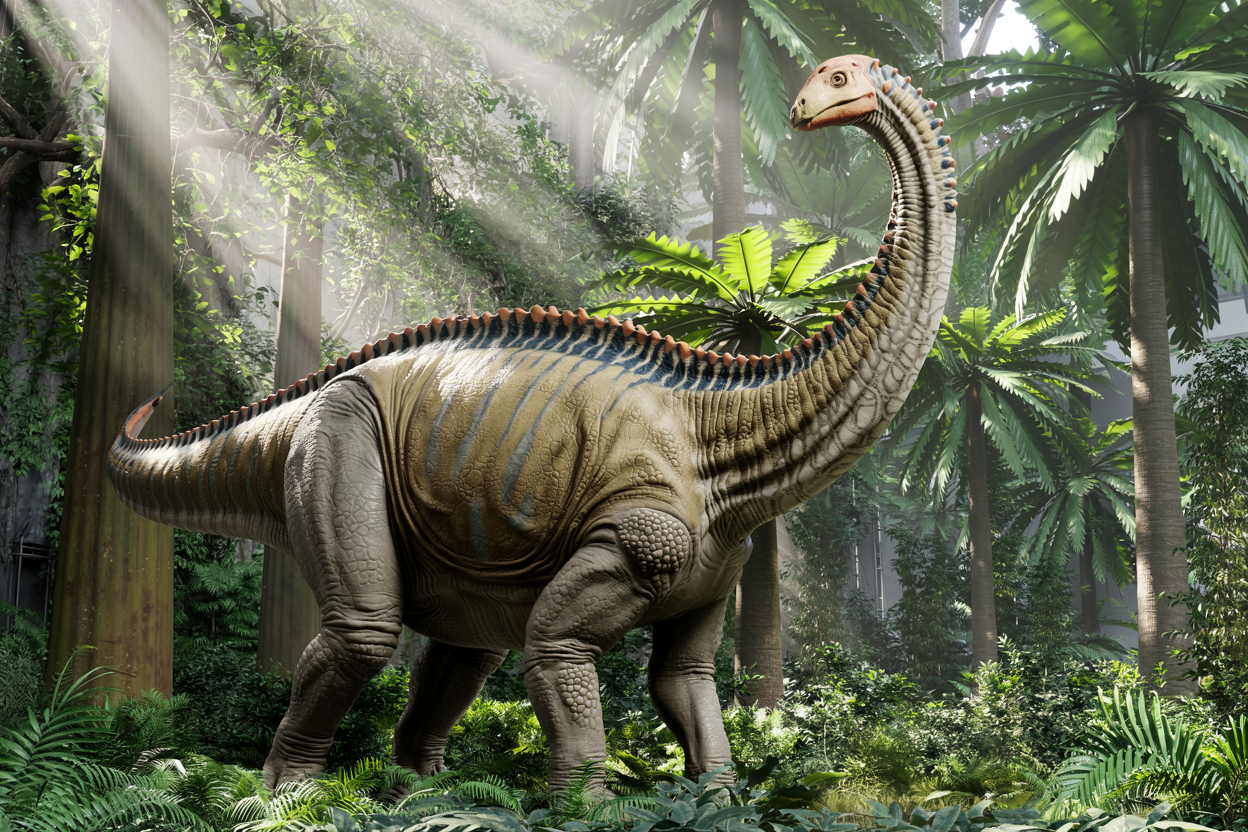
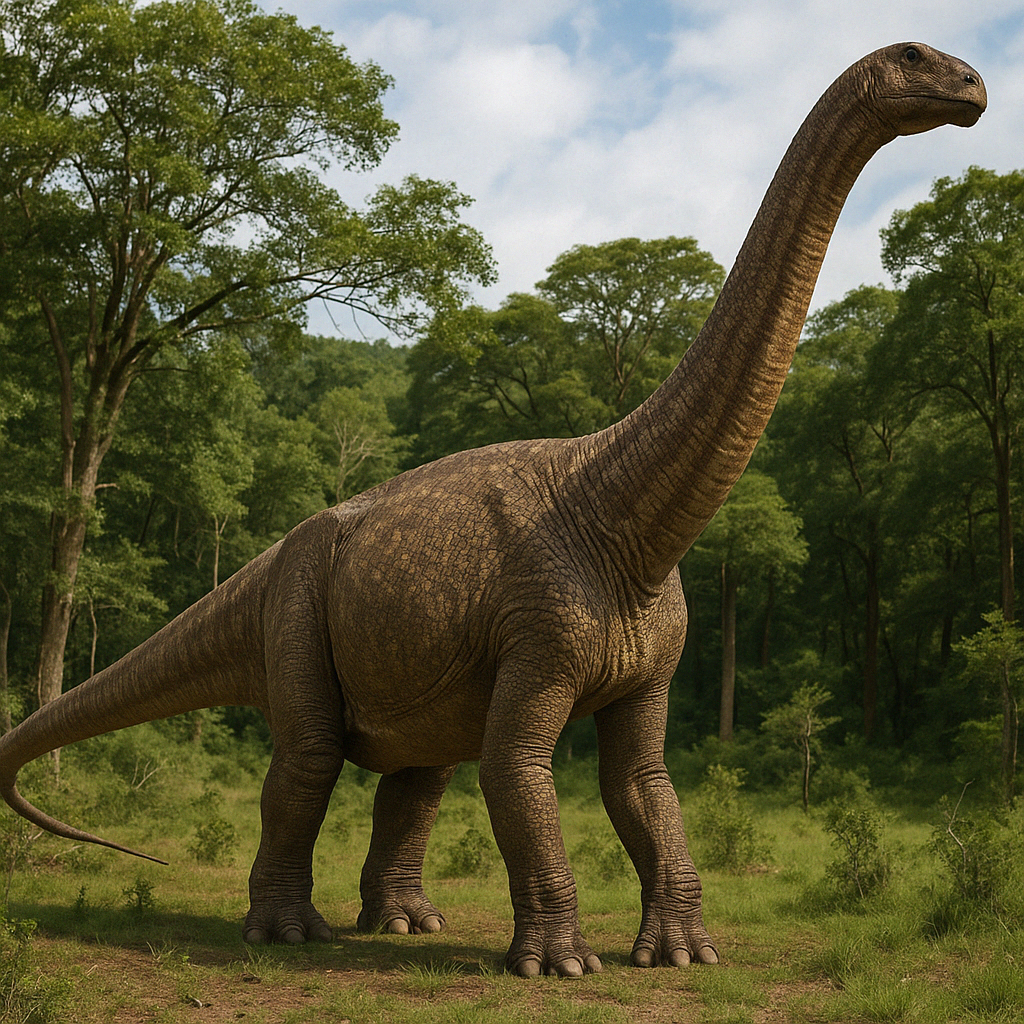
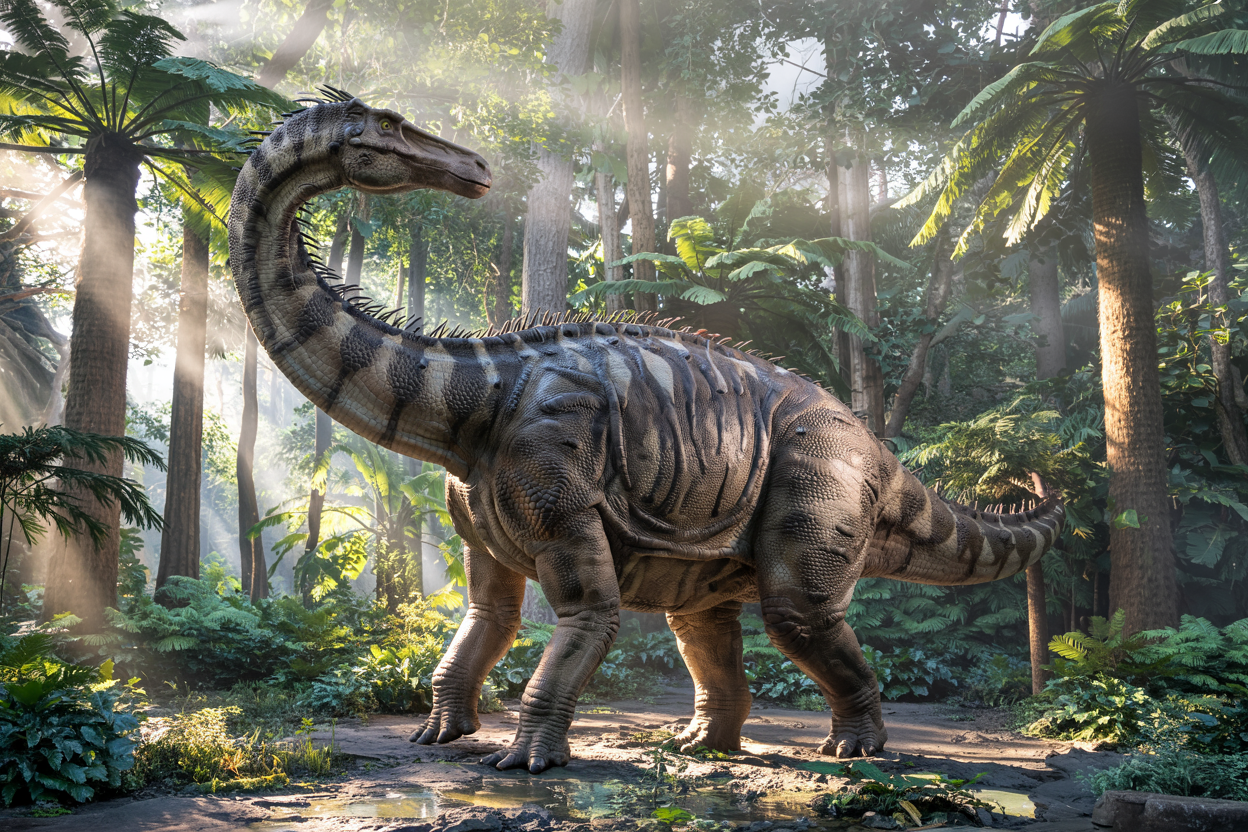
Patagotitan is among the largest land animals ever known. Estimates suggest it reached lengths of around 120 feet (37 meters) and weighed between 60 and 75 tons. That’s roughly as long as a blue whale and heavier than a dozen elephants combined.
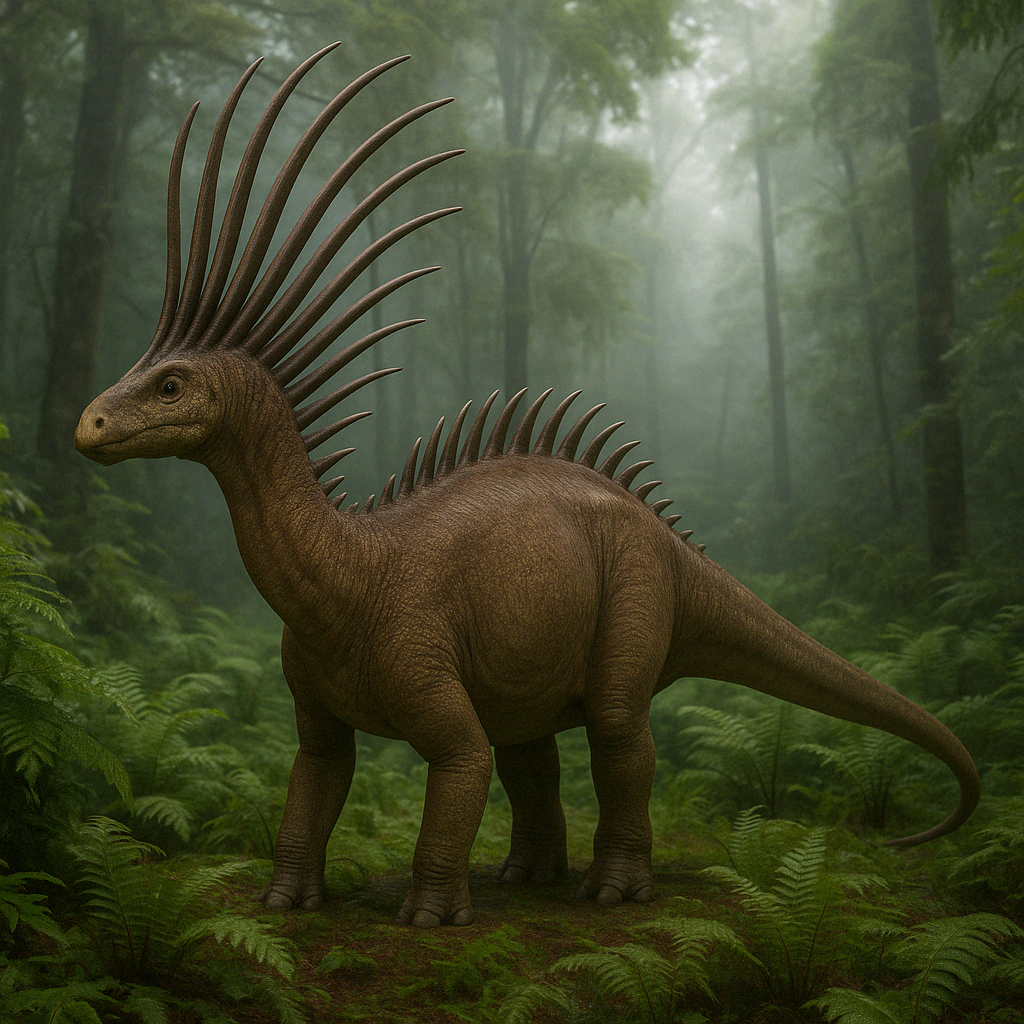
Like other titanosaurs, Patagotitan had a long neck, a relatively small head, a bulky body, and a long tail that helped it balance its massive frame. Its legs were thick and column-like, built to support its incredible weight. Its neck allowed it to feed on tall trees, while its tail may have helped with balance or defense.
Despite its massive size, Patagotitan likely moved slowly but steadily. Its sheer scale would have deterred most predators, especially once it reached adulthood.
Diet and Feeding Behavior
Patagotitan was a herbivore, feeding primarily on vegetation like ferns, conifers, and flowering plants. Its peg-like teeth were adapted for stripping leaves, but not for chewing. Instead, it swallowed plant material whole and relied on its large digestive system to break down the food.
To support its enormous size, Patagotitan would have needed to eat hundreds of pounds of plant matter each day. Like other sauropods, it may have swallowed stones called gastroliths to help grind food in its stomach. It likely spent most of its day feeding to fuel its massive body.
Discovery and Fossil Record
Patagotitan was discovered in 2010 when a local farm worker in Argentina noticed large bones sticking out of the ground. Paleontologists from the Museo Paleontológico Egidio Feruglio excavated the site and uncovered a remarkable collection of fossils. The discovery included bones from at least six individuals, making it one of the most complete giant sauropod finds in history.
The dinosaur was officially named Patagotitan mayorum in 2017. The name means “Patagonian titan,” and the species name honors the Mayo family, who owned the land where the fossils were found. The fossil remains included vertebrae, limb bones, and parts of the pelvis and shoulder, which helped scientists make accurate size and weight estimates.
The Patagotitan fossils are now displayed in several museums, including an enormous full-scale mount at the American Museum of Natural History in New York City.
Scientific Importance
Patagotitan has provided paleontologists with some of the best evidence yet of how large sauropods could grow. The completeness of the fossils allowed researchers to study its bone structure, growth patterns, and biomechanics in greater detail than many other giant sauropods.
Its discovery helped refine the understanding of titanosaur evolution, showing that several different lineages of sauropods reached massive sizes independently. It also raised new questions about how these giants were able to grow so large—what they ate, how their bodies functioned, and how they reproduced.
Patagotitan also contributes to our understanding of the ecosystems of Cretaceous South America and how these enormous animals coexisted with predators and other herbivores.
Patagotitan in Popular Culture
While still relatively new to the public eye, Patagotitan has quickly become a favorite among dinosaur enthusiasts. Its impressive size and dramatic discovery story have been featured in documentaries, museum exhibits, and books. The life-sized mount at the American Museum of Natural History is one of the largest dinosaur reconstructions ever created and draws thousands of visitors every year.
As more people learn about Patagotitan, it’s becoming a new symbol of prehistoric gigantism—joining the ranks of Argentinosaurus, Brachiosaurus, and Diplodocus as one of the true giants of the dinosaur world.
Final Thoughts
Patagotitan stands as a testament to the extremes of dinosaur evolution. Its enormous size, well-preserved fossils, and fascinating history make it one of the most important sauropod discoveries in recent memory. As scientists continue to study this incredible dinosaur, Patagotitan will no doubt remain a centerpiece in the story of Earth’s largest land animals.