Sauroposeidon is the #7 seed in the Sauropods division of the Dinosaur Tournament.
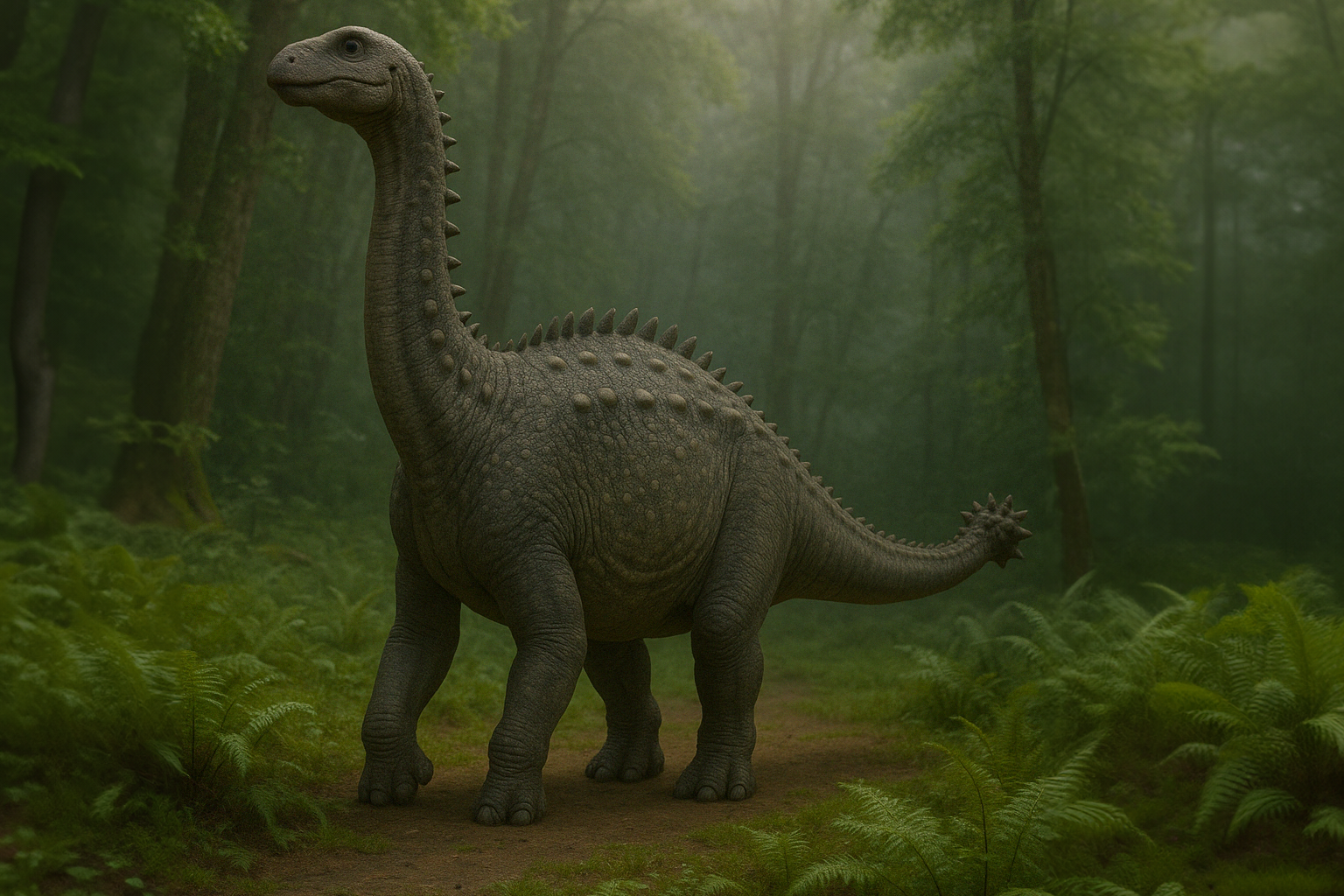
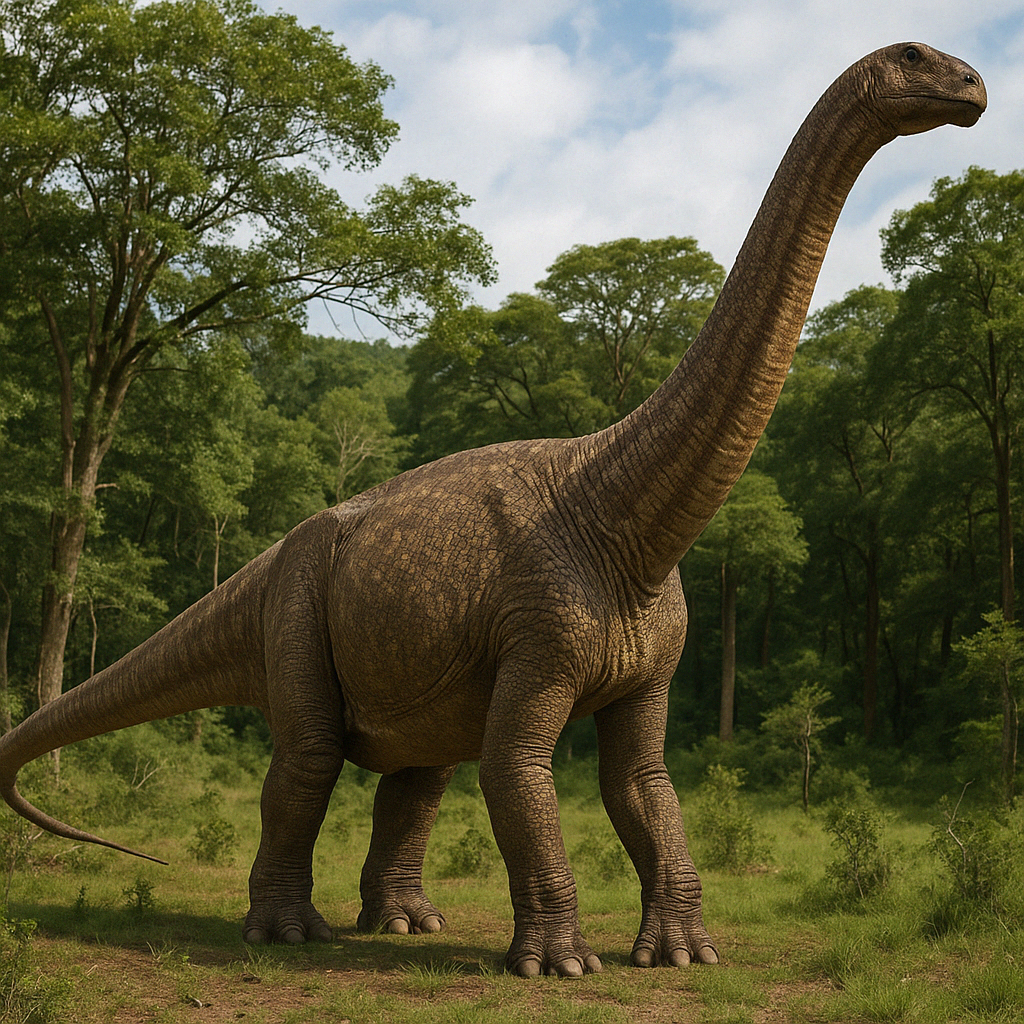
Sauroposeidon was one of the tallest dinosaurs to ever live. With its incredibly long neck and towering stature, it likely reached heights that rivaled or exceeded any known land animal. As a member of the sauropod group of dinosaurs, Sauroposeidon was a long-necked, plant-eating giant that roamed North America during the Early Cretaceous period. Though only a few fossils have been found, what we do know paints a picture of a dinosaur built to reach the highest branches and tower over its environment.
When and Where It Lived
Sauroposeidon lived around 110 million years ago during the Early Cretaceous period. Its fossils have been discovered in several U.S. states, including Oklahoma, Texas, and Wyoming. The first and most notable discovery was made in Oklahoma in the late 1990s, in rocks that are part of the Antlers Formation.
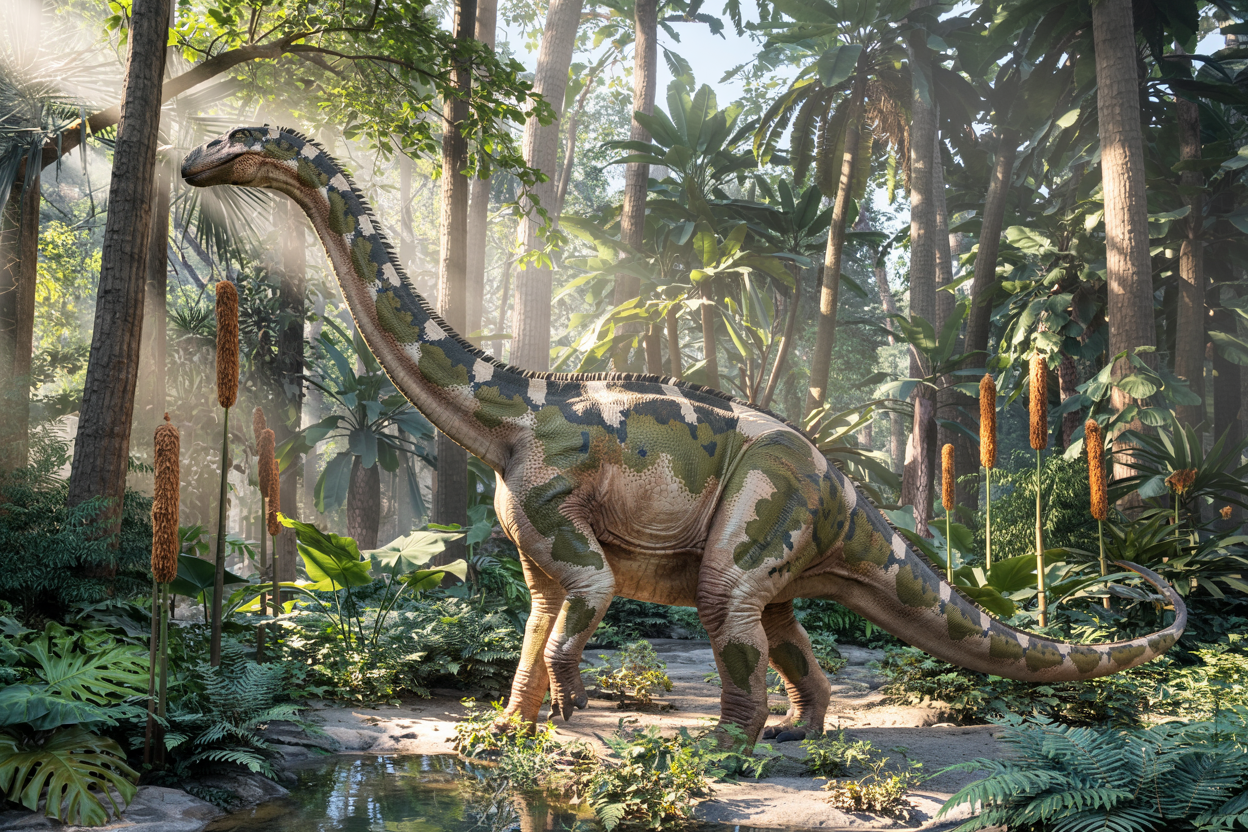
During the Early Cretaceous, the region where Sauroposeidon lived was warm and wet, with lush vegetation and numerous rivers. It shared its habitat with a range of other dinosaurs, including predators like Acrocanthosaurus and smaller herbivores such as Tenontosaurus. These environments provided plenty of food and space for a massive dinosaur like Sauroposeidon to thrive.
Size and Physical Characteristics
Sauroposeidon was a massive dinosaur, with estimates suggesting it reached lengths of 100 to 112 feet (30 to 34 meters) and weighed between 50 and 60 tons. What really sets it apart, however, is its height. Based on fossilized neck vertebrae, paleontologists believe Sauroposeidon could have stood about 55 to 60 feet (17 to 18 meters) tall—about the height of a six-story building.
Its neck alone may have been over 39 feet (12 meters) long, making it one of the longest necks of any known dinosaur. Despite this extreme size, its neck bones were hollow and lightweight, similar to those of birds, which helped reduce the overall weight and made it easier to support.
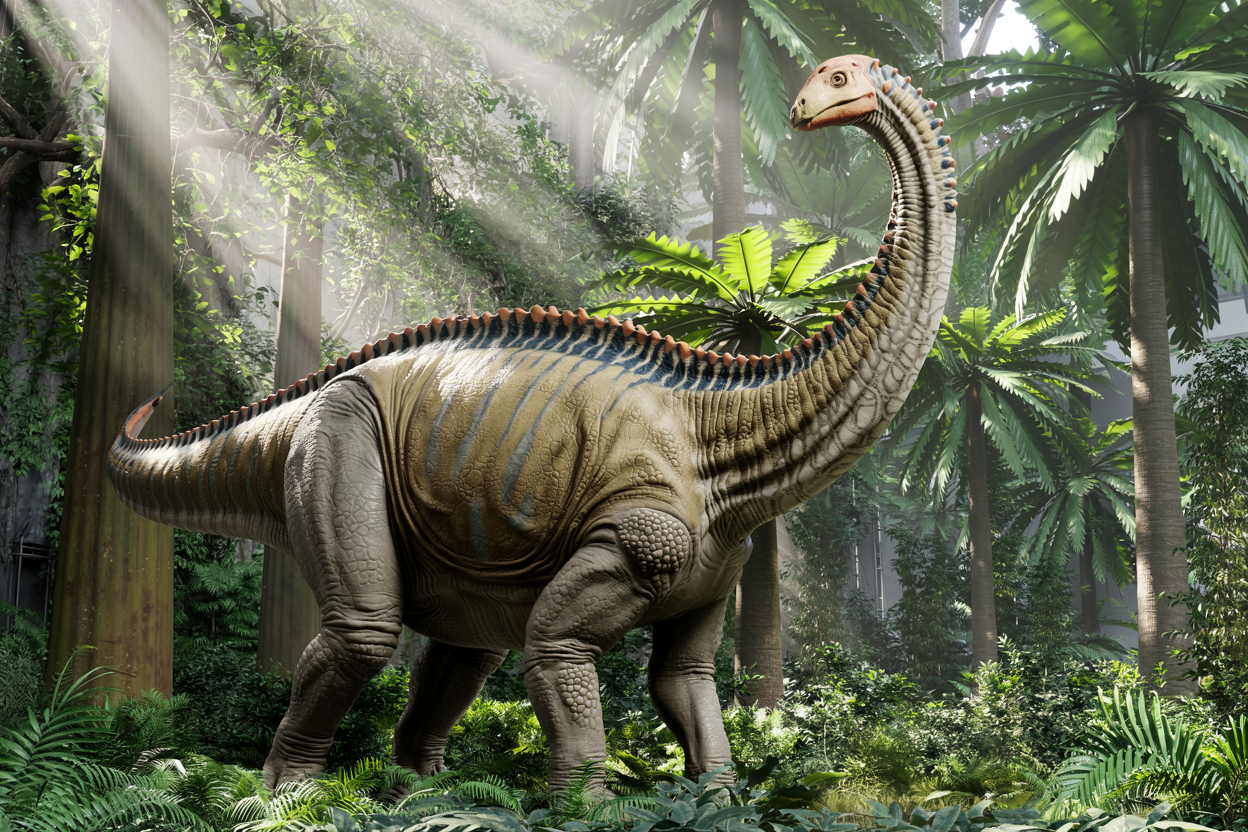
Like other sauropods, Sauroposeidon had a long tail, pillar-like legs, and a small head. Its teeth were peg-shaped and suited for stripping leaves from trees rather than chewing. The shape of its neck and posture suggests it was capable of feeding at very high levels, possibly giving it access to vegetation that other herbivores couldn’t reach.
Diet and Feeding Behavior
As a herbivore, Sauroposeidon likely fed on a wide variety of plant material, including leaves from conifers, cycads, and early flowering plants. Its incredible height allowed it to browse from the tops of tall trees, avoiding competition with lower-feeding herbivores.
It probably spent most of its day slowly moving through forests and open areas, using its long neck to reach food without having to move its entire body. Like other sauropods, Sauroposeidon likely swallowed its food whole and relied on fermentation in a large digestive system to break down the tough plant material. It may have also swallowed stones (gastroliths) to help grind food in its stomach.
Discovery and Fossil Record
The first fossils of Sauroposeidon were discovered in 1994 by a team from the Oklahoma Geological Survey. At first, the bones were mistaken for fossilized tree trunks due to their enormous size. They were later identified as neck vertebrae belonging to a giant sauropod.
In 2000, the dinosaur was officially named Sauroposeidon proteles. The name means “earthquake god lizard,” a fitting title for such a massive creature. “Proteles” means “perfected before the end,” referring to its position as one of the last of the giant sauropods in North America before their decline later in the Cretaceous.
Though the fossil record for Sauroposeidon is limited, the preserved bones are among the longest vertebrae ever found, and their structure has provided key insights into the anatomy and biology of these towering dinosaurs.
Scientific Importance
Sauroposeidon is one of the best examples of sauropod gigantism. Its extreme height, long neck, and lightweight vertebrae have helped scientists understand how these dinosaurs grew so large and how they were able to support such massive structures. It also provides evidence that giant sauropods persisted in North America longer than previously thought, extending into the Early Cretaceous.
Its discovery has sparked new interest in the environments of the Early Cretaceous and the adaptations that allowed sauropods to survive and evolve alongside other dinosaur groups.
Sauroposeidon in Pop Culture
Although not as widely recognized as Tyrannosaurus rex or Brachiosaurus, Sauroposeidon has appeared in books, educational documentaries, and museum displays. Its immense height and dramatic appearance make it a favorite among dinosaur enthusiasts who are fascinated by the biggest creatures in Earth’s history.
As more discoveries are made and interest in lesser-known dinosaurs grows, Sauroposeidon continues to gain popularity for its impressive size and unique place in the dinosaur family tree.
Final Thoughts
Sauroposeidon was a record-breaker among dinosaurs—an animal that pushed the boundaries of how tall land animals could grow. With its sky-scraping neck and massive frame, it dominated the landscape of Early Cretaceous North America. Even with limited fossil material, this dinosaur has earned its place as one of the most awe-inspiring creatures ever to walk the Earth.