Agustinia is the #11 seed in the Sauropods division of the Dinosaur Tournament.
Agustinia was a truly unusual member of the sauropod family—the group of long-necked, plant-eating dinosaurs that includes giants like Brachiosaurus and Argentinosaurus. What sets Agustinia apart is its potential body armor. Unlike most sauropods, which had smooth or lightly armored backs, Agustinia may have had a row of bony plates or spikes along its spine, making it one of the most distinctive sauropods ever discovered. Though known from only fragmentary remains, Agustinia has sparked great interest among paleontologists and dinosaur fans alike.
When and Where It Lived
Agustinia lived during the Early Cretaceous period, approximately 116 to 100 million years ago. Its fossils were discovered in what is now Argentina, specifically in the Neuquén Province of Patagonia. This region has produced many important dinosaur discoveries, particularly large sauropods and fierce theropod predators.
During Agustinia’s time, the area was part of the southern supercontinent Gondwana and was covered in forests, floodplains, and rivers. The environment supported a wide variety of herbivores and carnivores, and Agustinia would have been one of the many sauropods grazing on the rich vegetation that flourished in this warm, semi-tropical climate.
Size and Physical Characteristics
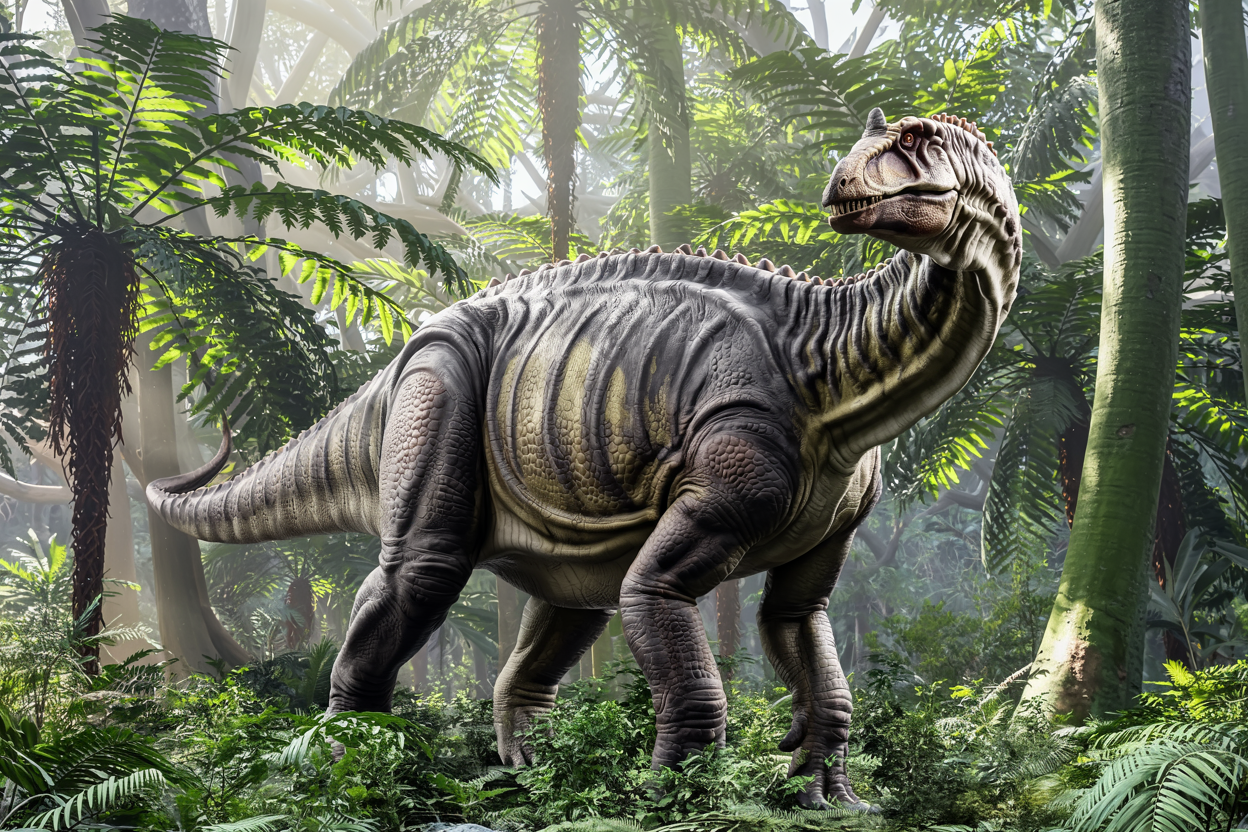
Agustinia is estimated to have reached lengths of about 50 to 65 feet (15 to 20 meters), making it a large but not record-breaking sauropod. Like other members of its family, it had a long neck, a large, barrel-shaped body, and a long tail used for balance. It walked on four sturdy legs and had a relatively small head with simple, peg-like teeth suited for a plant-based diet.
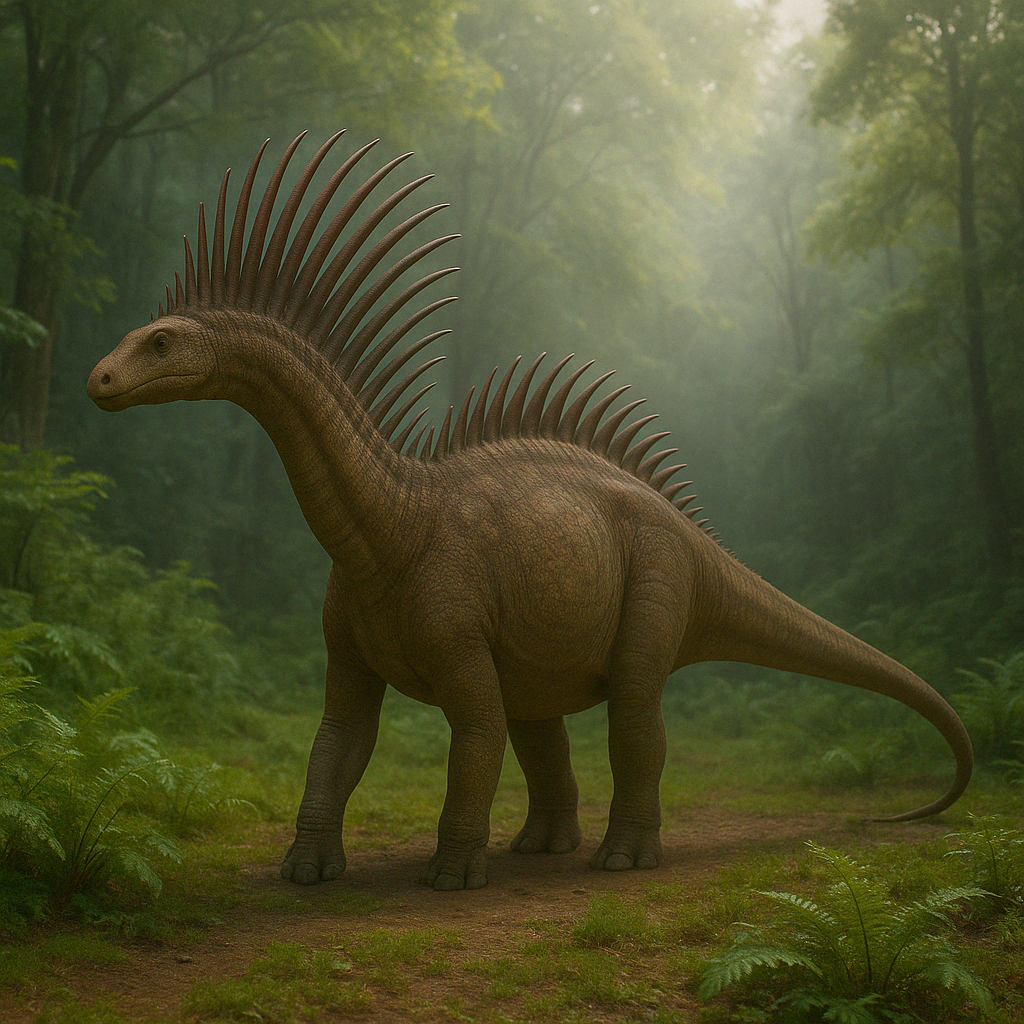
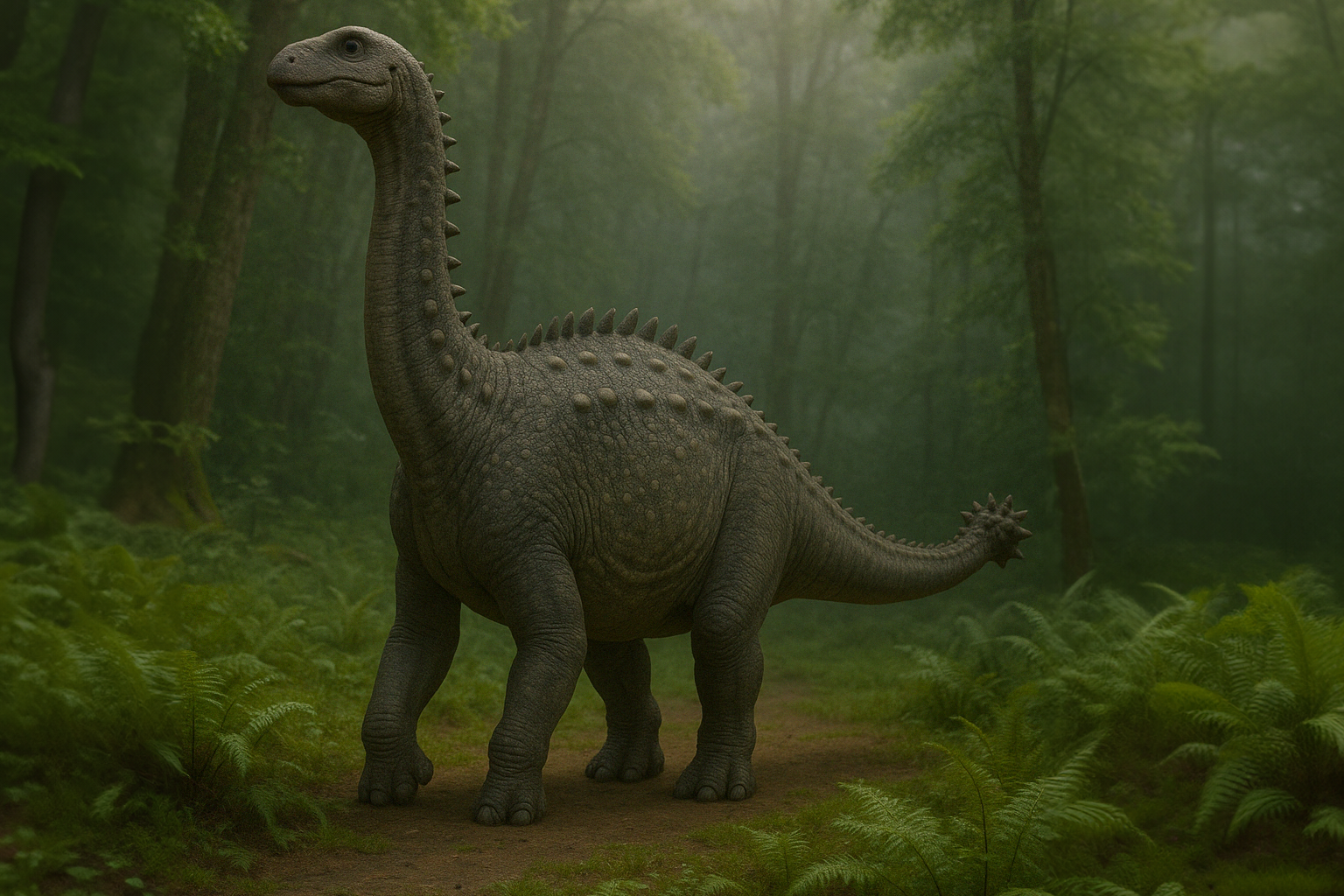
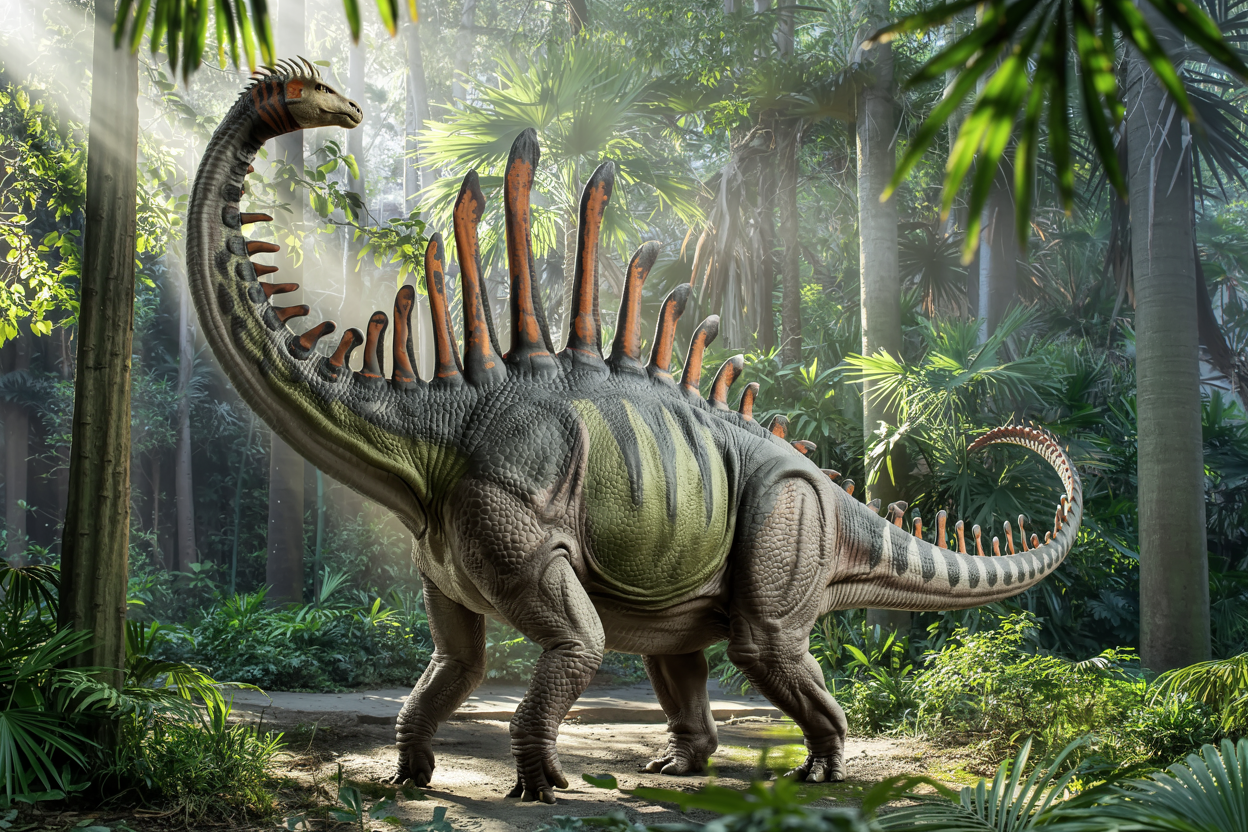
What made Agustinia stand out were the fossilized structures found along its back. These appear to be elongated, flat, and spine-like bones, possibly forming a row of bony plates or spikes that ran down its neck and back. This type of armor is highly unusual for a sauropod, as most of them lacked such elaborate protective features. The only other sauropods known to have armor were titanosaurs like Saltasaurus, which had small bony nodules rather than tall plates or spikes.
Because only fragments of these structures have been recovered, their exact arrangement and function remain a mystery. They may have served as a defensive adaptation, a display feature to attract mates or intimidate rivals, or possibly even helped regulate body temperature.
Diet and Feeding Behavior
Like all sauropods, Agustinia was a herbivore. It likely fed on a wide range of plant material, including ferns, conifers, cycads, and early flowering plants. With its long neck, it could browse from a variety of heights, allowing it to reach vegetation that other herbivores couldn’t.
Its teeth were not designed for chewing but for stripping leaves. Agustinia likely swallowed its food whole and relied on its large digestive system to break down the tough plant material through fermentation. It may also have swallowed stones—called gastroliths—to aid in grinding up its food inside the stomach.
Discovery and Fossil Record
Agustinia was discovered in 1997 by Argentine paleontologist José Bonaparte, one of the most prominent dinosaur researchers in South America. The fossils were found near the town of Plaza Huincul in Patagonia and were officially described and named Agustinia ligabuei in 1999. The genus name honors Agustin Martinelli, a student who assisted with the discovery, while the species name pays tribute to Italian philanthropist Giancarlo Ligabue.
The fossil material includes partial vertebrae, limb bones, and the distinctive bony structures from its back. While incomplete, the fossils were enough to establish Agustinia as a new and highly unusual sauropod.
Due to the fragmentary nature of the remains, scientists have debated where Agustinia fits on the sauropod family tree. Some have placed it among the titanosaurs, while others suggest it may be more closely related to diplodocoids. The unique armor complicates classification, and more complete fossil material will be needed to resolve its exact evolutionary position.
Scientific Importance
Agustinia is important because it challenges assumptions about sauropod anatomy and diversity. Its possible body armor is unlike anything seen in other known sauropods and suggests that these dinosaurs were more varied in their appearance and adaptations than previously thought.
Its discovery also highlights the richness of South America’s fossil record and the potential for uncovering new and surprising types of dinosaurs. Agustinia serves as a reminder that many prehistoric animals are still poorly understood, and even a few bones can lead to big scientific questions.
Agustinia in Popular Culture
Although not as well-known as Stegosaurus or T. rex, Agustinia has started to appear in dinosaur encyclopedias, museum exhibits, and digital reconstructions. Its spiny back and mysterious look make it a favorite among fans of unusual dinosaurs, and as more discoveries are made, it may gain even more attention.
Final Thoughts
Agustinia is one of the more curious members of the sauropod world. With its possible armor and unusual anatomy, it stands out from the crowd of long-necked giants. Though still only known from a handful of fossils, Agustinia has already made a big impact on how we think about dinosaur evolution, adaptation, and diversity—especially in the southern hemisphere.