Barapasaurus is the #15 seed in the Sauropods division of the Dinosaur Tournament.
Barapasaurus is one of the earliest known large sauropod dinosaurs, and one of the most important dinosaur discoveries from India. With its long neck, strong legs, and massive body, Barapasaurus was a classic example of a sauropod—but it lived during a time when few dinosaurs had reached such large sizes. Its fossils provide valuable insight into the early evolution of long-necked dinosaurs and the prehistoric ecosystems of the Indian subcontinent.
When and Where It Lived
Barapasaurus lived during the Early Jurassic period, around 196 to 183 million years ago. Its fossils were discovered in the Godavari Valley of central India, specifically in the Kota Formation of Andhra Pradesh. During the Jurassic, this region was part of the southern supercontinent Gondwana and had a warm, seasonal climate with rivers, floodplains, and forests.
This environment supported a variety of plant-eating dinosaurs, early meat-eating theropods, and other ancient reptiles. Barapasaurus would have been one of the largest animals in its ecosystem, using its size to deter predators and reach vegetation that smaller herbivores couldn’t access.
Size and Physical Characteristics
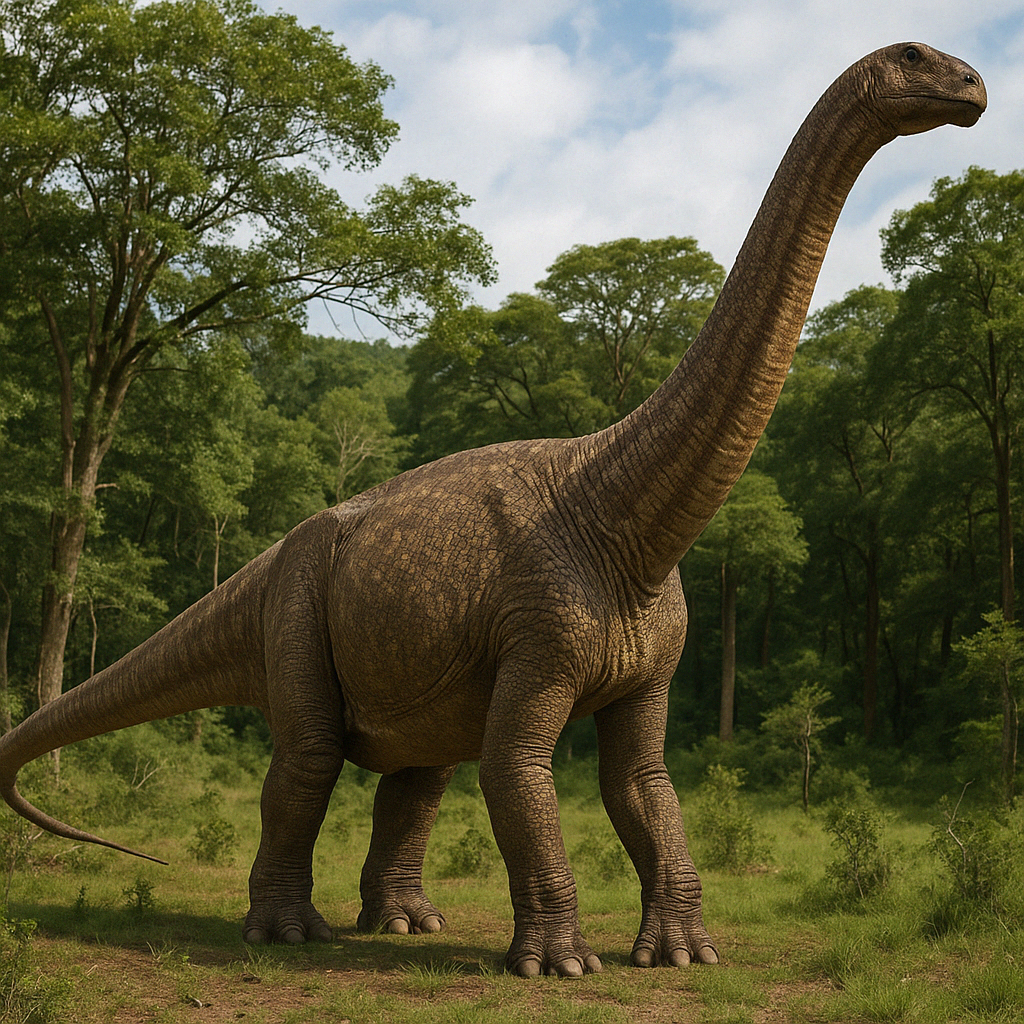
Barapasaurus was large for its time. It measured about 40 to 50 feet (12 to 15 meters) in length and weighed an estimated 10 to 15 tons. While this is small compared to later sauropods like Argentinosaurus, it was impressive for the Early Jurassic, when most dinosaurs were still relatively modest in size.
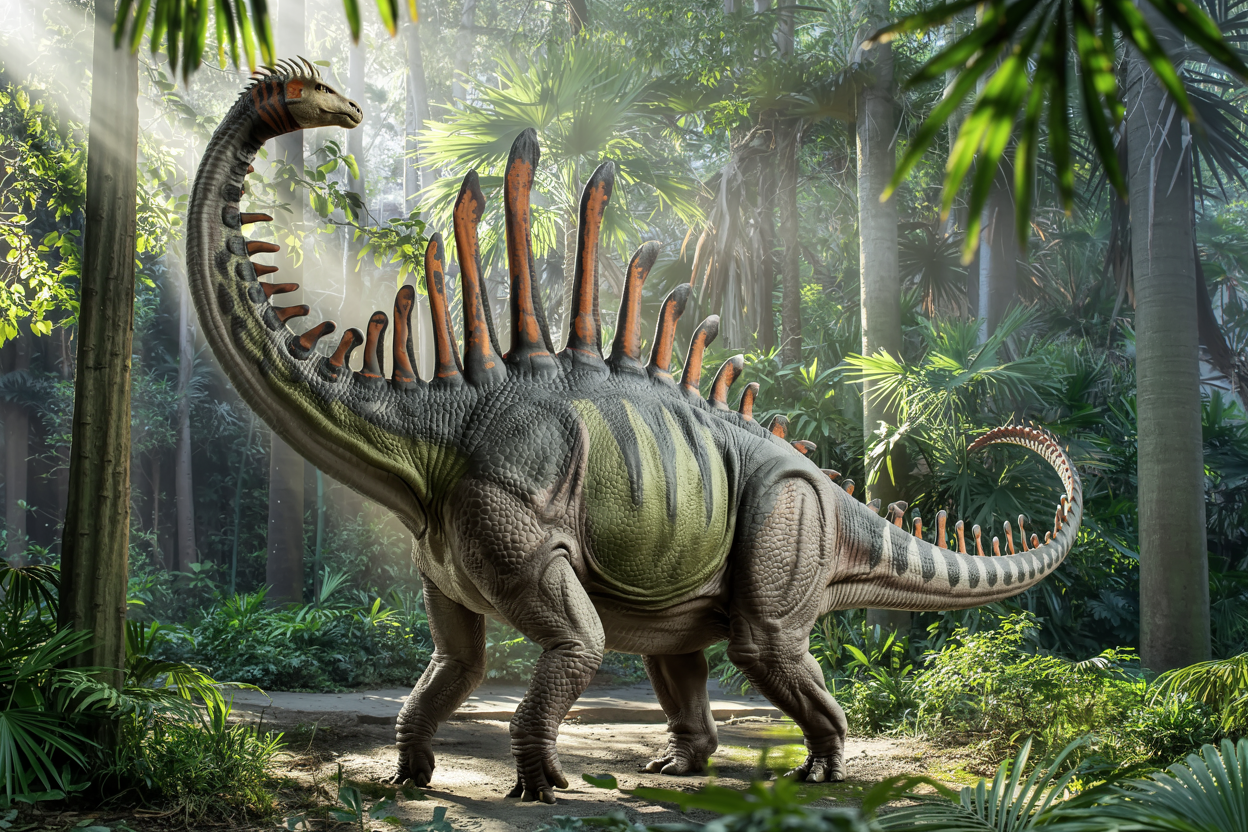
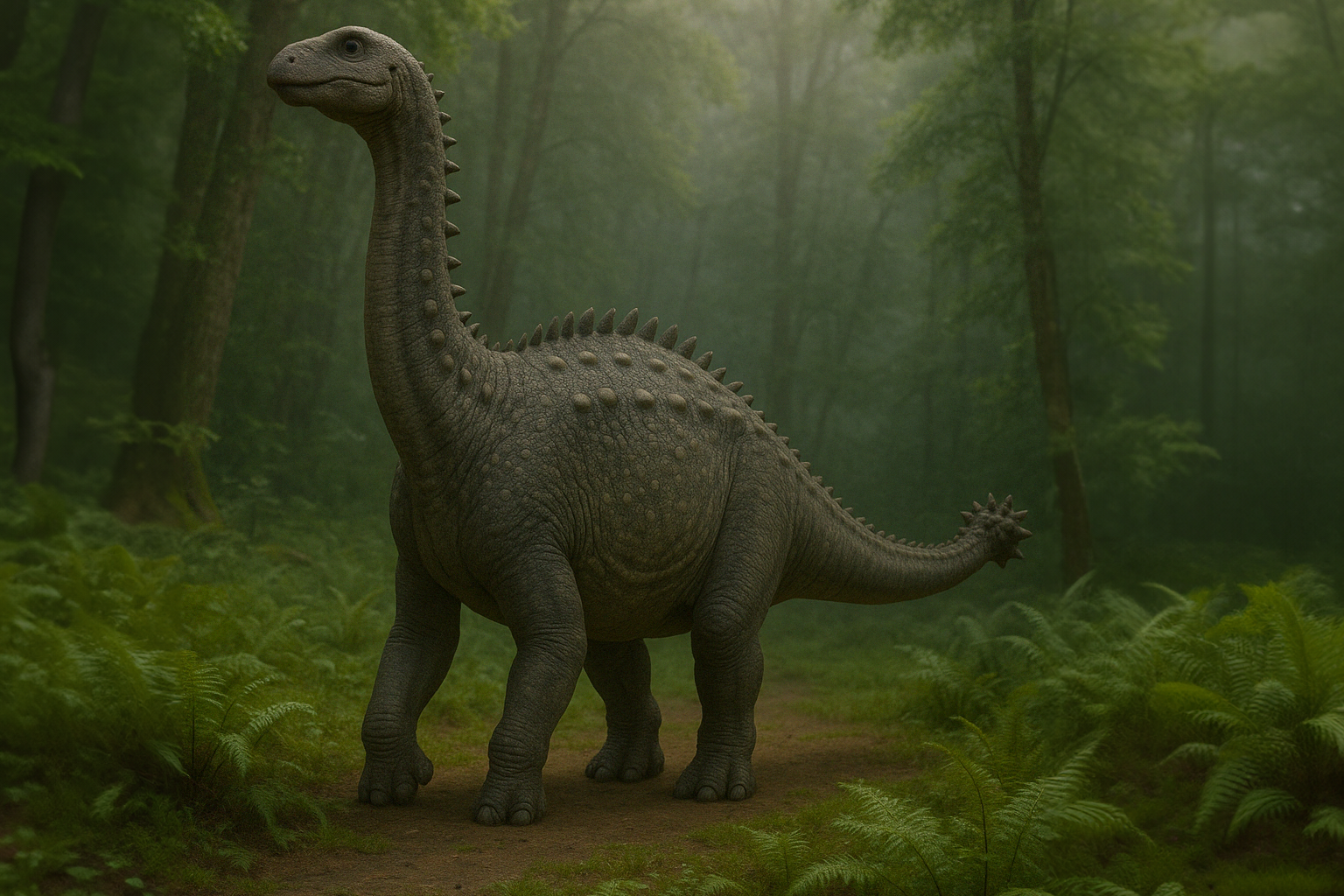
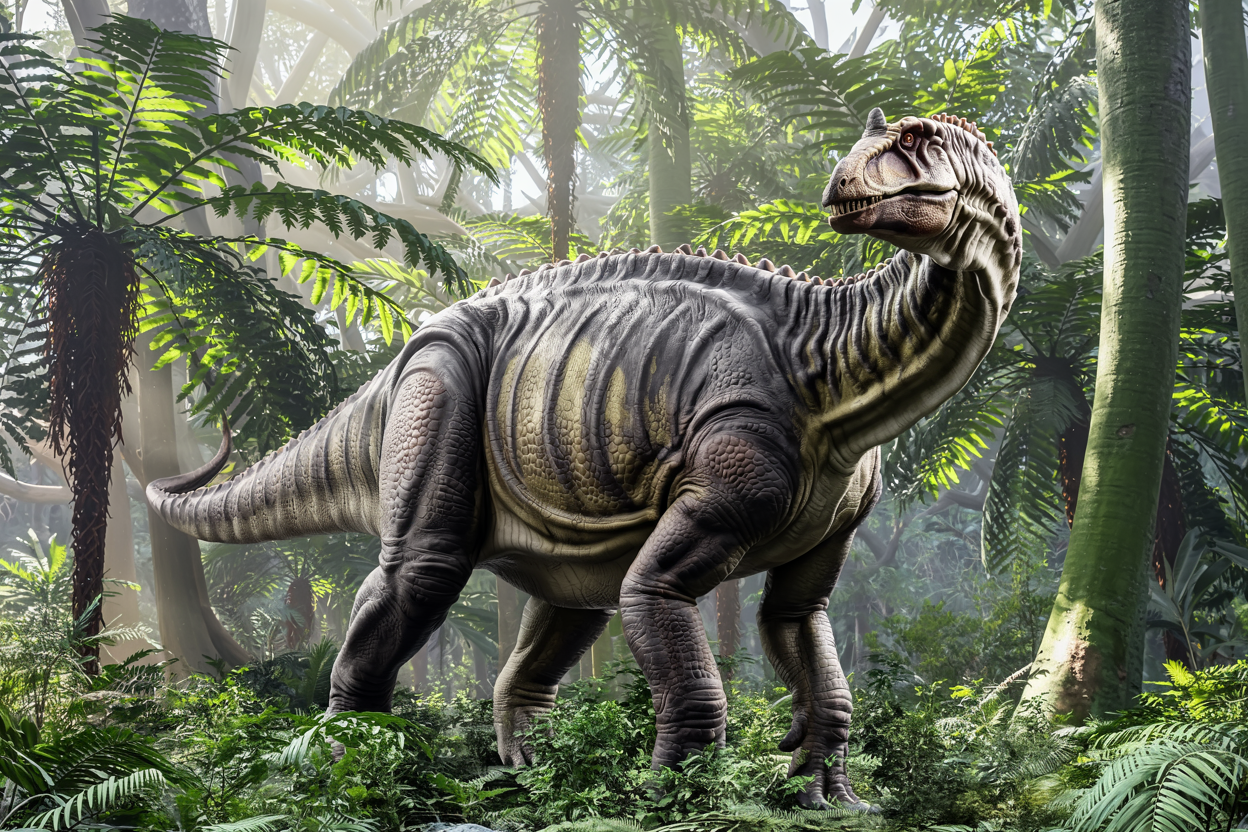
It had a long neck, a bulky body, and a long tail. Its legs were thick and pillar-like, supporting its great weight. Its skull was small compared to its body and featured simple, spoon-shaped teeth adapted for a plant-based diet.
Barapasaurus’s limb bones were solid and not hollow like those of later sauropods, suggesting that it retained some primitive features. Its vertebrae were also less specialized, giving paleontologists clues about the transition from early sauropod ancestors to the giant, more derived species of the later Jurassic and Cretaceous.
Diet and Feeding Behavior
As a herbivore, Barapasaurus fed on a variety of vegetation, including ferns, cycads, horsetails, and early conifers. Its long neck allowed it to reach higher branches, giving it access to food that was out of reach for smaller herbivores.
Its spoon-shaped teeth were designed for stripping leaves from plants rather than chewing. Like many other sauropods, Barapasaurus likely swallowed its food whole and relied on fermentation in a large gut to digest it. It may also have used gastroliths—swallowed stones that helped grind up plant material in its stomach.
Given its size and slow metabolism, Barapasaurus probably spent much of its day feeding to meet its energy needs.
Discovery and Fossil Record
Barapasaurus was first discovered in the early 1960s during an excavation in the Godavari Valley by a joint Indian and German research team. The name Barapasaurus tagorei was officially published in 1975. “Barapasaurus” means “big-legged lizard,” a reference to its large, sturdy limbs. The species name “tagorei” honors the famous Indian poet Rabindranath Tagore.
The fossil site yielded multiple individuals, including partial skeletons, vertebrae, limb bones, and teeth. Although no complete skull has been found, the recovered bones provided enough material to study its anatomy and classify it as an early sauropod.
Barapasaurus is one of the most complete Jurassic dinosaurs found in India and remains one of the best-known dinosaurs from the subcontinent.
Scientific Importance
Barapasaurus is considered a basal sauropod, meaning it lived early in the evolutionary history of the group. It shares traits with both prosauropods (earlier, smaller relatives of sauropods) and more advanced sauropods, making it a key species for studying the transition between the two.
Its discovery has helped paleontologists understand how sauropods began to grow larger and develop the specialized features that would define the group. Barapasaurus also adds to the fossil record of Gondwana and helps show how dinosaurs were distributed across the southern continents during the Jurassic.
Barapasaurus in Popular Culture
Barapasaurus is not as well known internationally as some other sauropods, but it holds a special place in Indian paleontology. It has been featured in books, museum exhibits, and documentaries focused on India’s prehistoric past. In particular, the fossil-rich site where it was discovered has become a point of interest for researchers and science educators in the region.
As interest grows in Asian and Gondwanan dinosaurs, Barapasaurus continues to gain attention as one of the continent’s earliest giants.
Final Thoughts
Barapasaurus may not be the biggest sauropod ever found, but it was a trailblazer in its time. As one of the first truly large dinosaurs, it paved the way for the enormous long-necked giants that would come later. With its strong legs, long neck, and role in early sauropod evolution, Barapasaurus remains an important and fascinating dinosaur—especially for those interested in India’s rich prehistoric history.