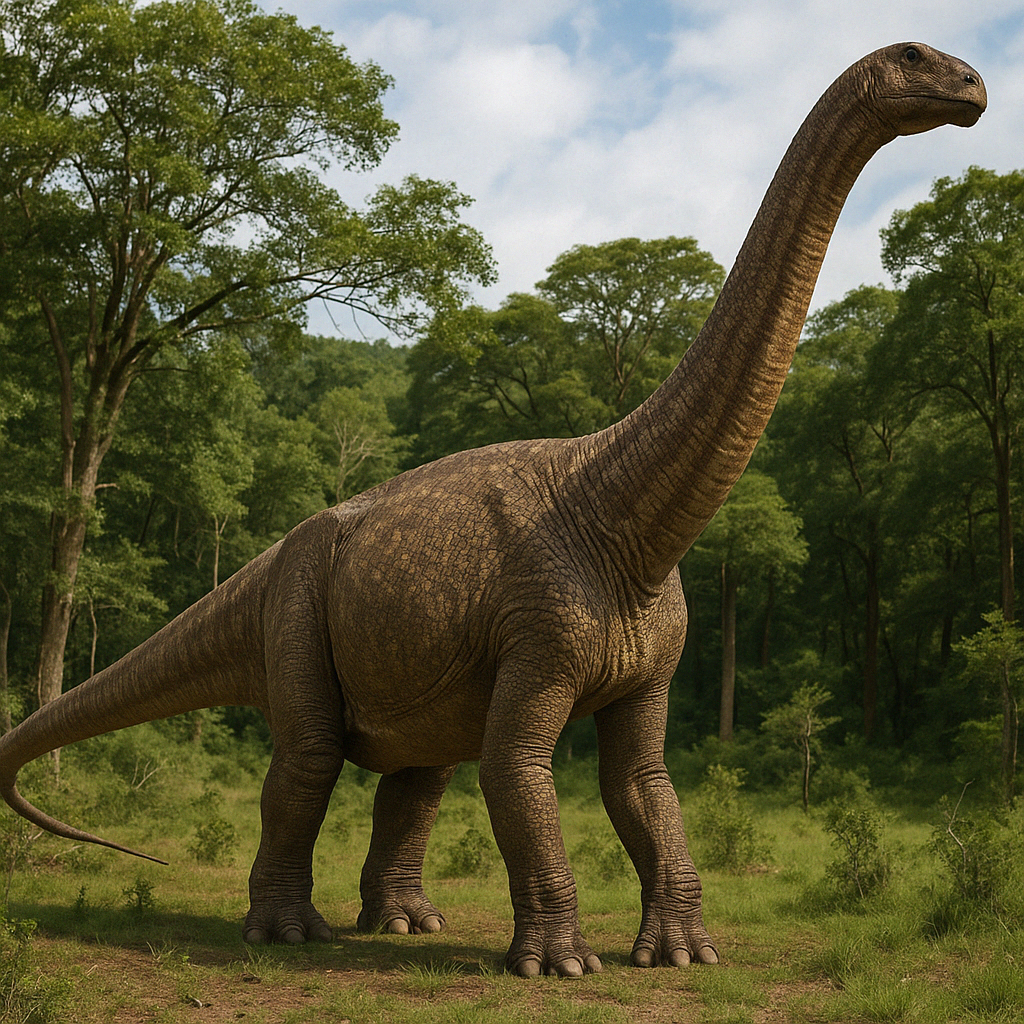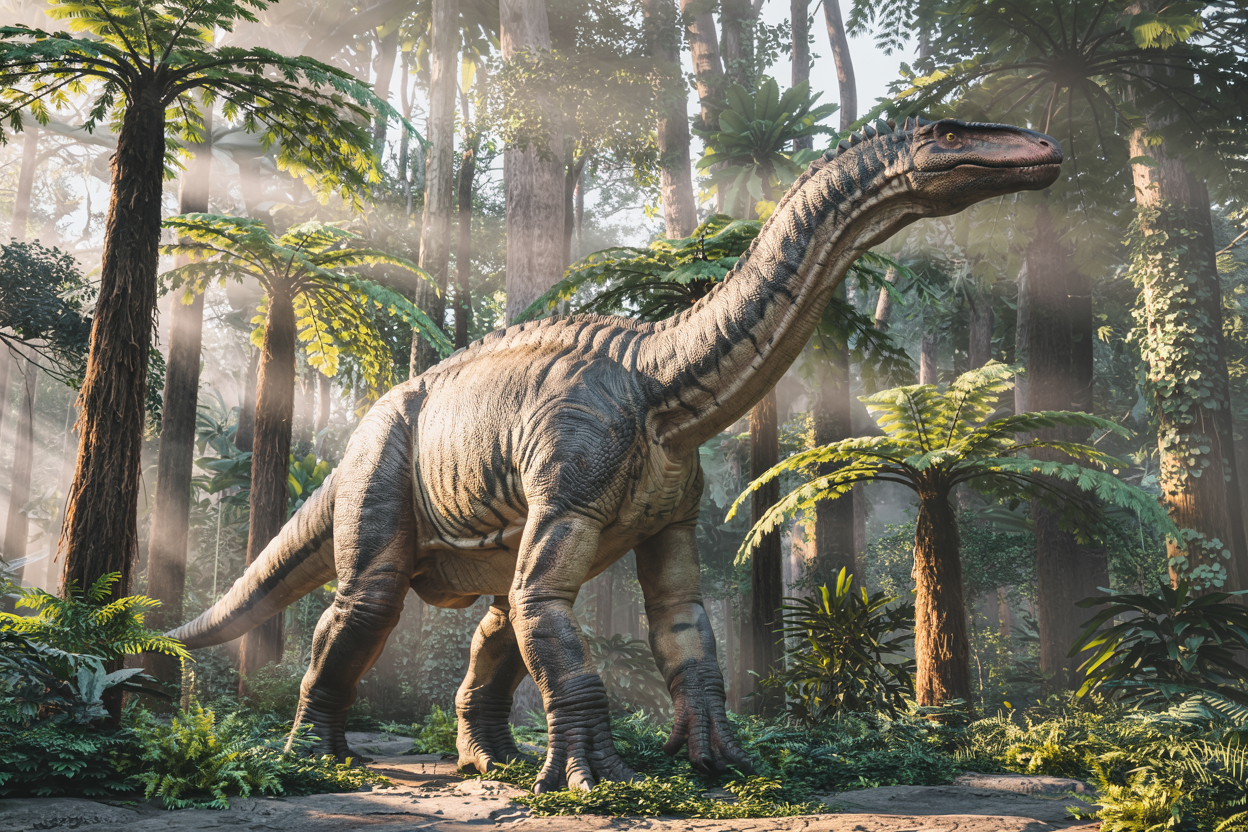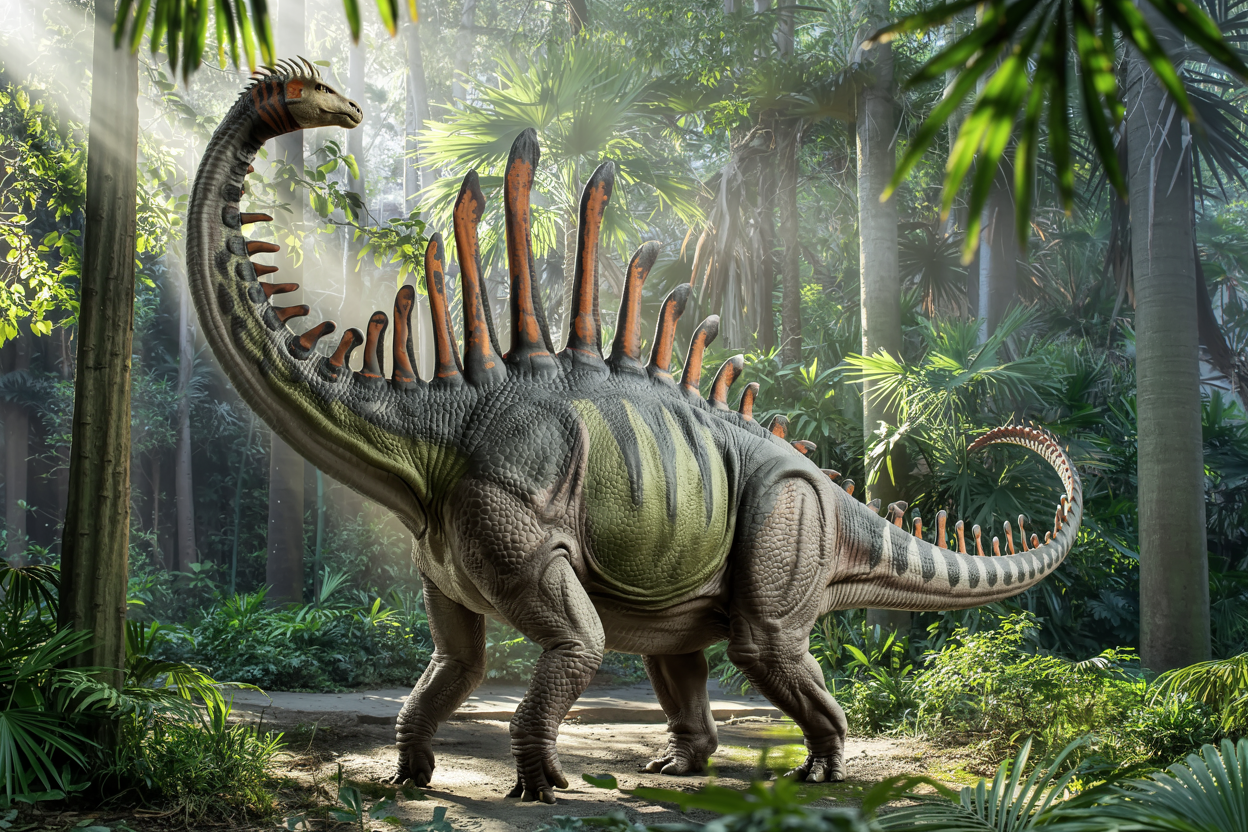
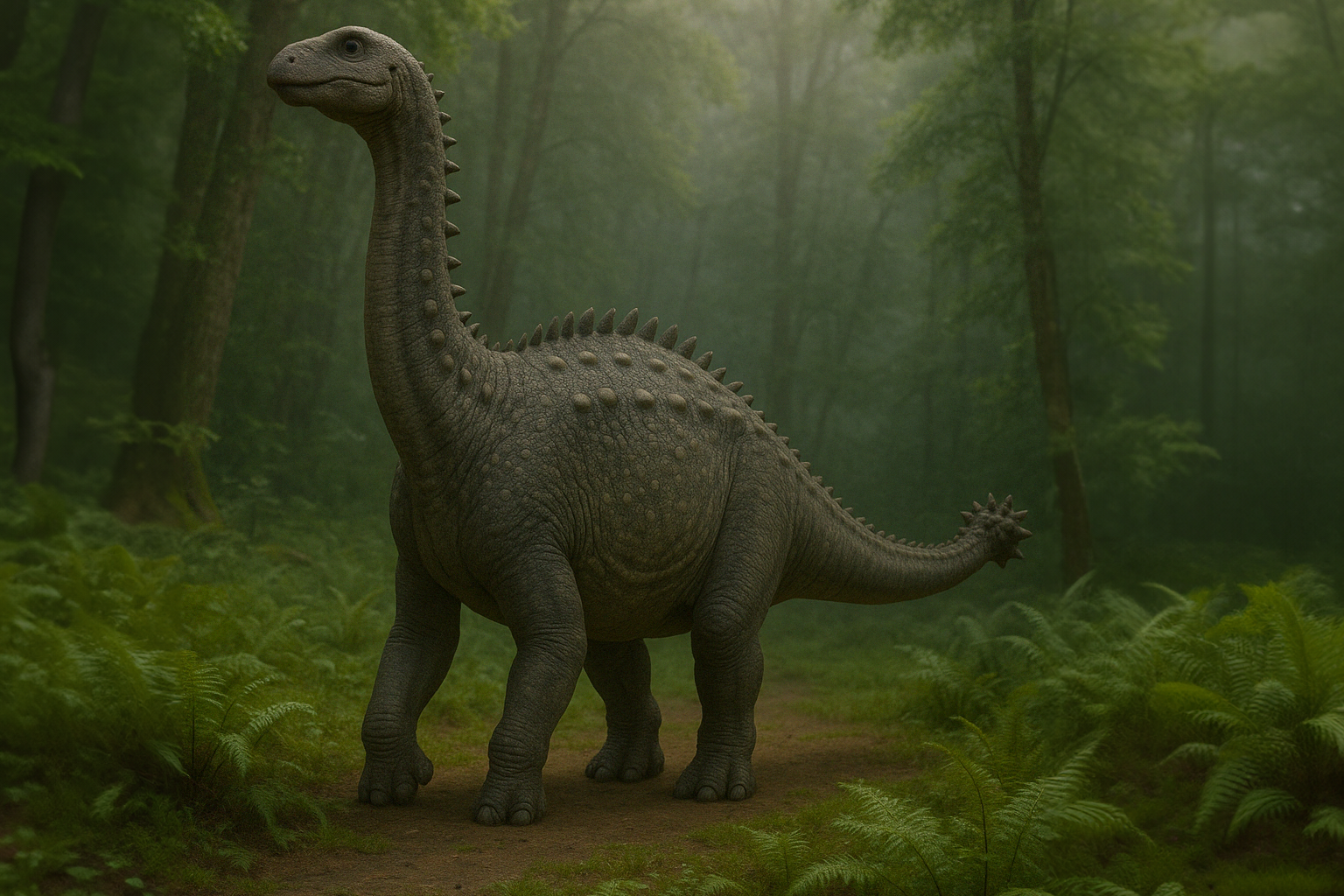
Shunosaurus is the #9 seed in the Sauropods division of the Dinosaur Tournament.
Shunosaurus was a unique sauropod dinosaur known for combining the classic features of long-necked plant-eaters with an unusual twist—a clubbed tail. While most sauropods are famous for their immense size and sweeping tails, Shunosaurus stood out with a shorter frame and a defensive weapon at the end of its tail. Discovered in China, it offers an important glimpse into sauropod evolution during the Middle Jurassic period.
When and Where It Lived
Shunosaurus lived approximately 170 million years ago during the Middle Jurassic period. Its fossils were found in the Sichuan Province of southwestern China, specifically in the Dashanpu Formation near the city of Zigong. This area has become one of the richest sources of Jurassic dinosaur fossils in Asia.
During Shunosaurus’s time, the region was part of a warm, humid environment with rivers, floodplains, and dense forests. It was home to a variety of other dinosaurs, including theropods, stegosaurs, and early ornithopods. This lush ecosystem provided plenty of plant life for herbivores like Shunosaurus to feed on and also housed predators that may have posed a threat—making defensive adaptations especially useful.
Size and Physical Characteristics
Shunosaurus was smaller than many of its later sauropod relatives. It measured about 30 to 35 feet (9 to 11 meters) in length and weighed around 3 tons. It had a bulky body, a long neck, and a relatively short tail for a sauropod. Its legs were sturdy and pillar-like, built to support its weight as it moved through the forests and floodplains of Jurassic China.
The most distinctive feature of Shunosaurus was its tail. At the end of it was a bony club—something rarely seen in sauropods. This tail club may have served as a defensive weapon against predators. It’s one of the earliest known examples of tail weaponry in a long-necked dinosaur.
Shunosaurus also had a relatively short and boxy skull compared to later sauropods. Its teeth were spoon-shaped and suited for stripping and processing soft vegetation.
Diet and Feeding Behavior
Shunosaurus was a herbivore, feeding on low- to mid-growing plants. Its neck wasn’t as long as that of later sauropods like Diplodocus or Brachiosaurus, so it likely browsed at or just above head height. Its teeth suggest it was well-adapted to feeding on ferns, cycads, horsetails, and other soft vegetation common in the Jurassic landscape.
Like other sauropods, it probably swallowed food whole and used fermentation in its large gut to break down the tough plant material. It may have also used gastroliths—stones swallowed to help grind food internally—though direct evidence of this behavior in Shunosaurus is limited.
Discovery and Fossil Record
Shunosaurus was first discovered in 1977 during excavations near Zigong, Sichuan Province. It was officially named and described in 1983 as Shunosaurus lii. Since then, dozens of Shunosaurus specimens have been uncovered, making it one of the most completely known sauropods from the Jurassic of Asia.
These fossils include skulls, vertebrae, limb bones, and complete tails—including the tail club. The large number of well-preserved skeletons has made Shunosaurus one of the most thoroughly studied sauropods in the world.
Because it comes from an earlier period than many of the giant sauropods, Shunosaurus has helped paleontologists understand how sauropods evolved and diversified over time.
Scientific Importance
Shunosaurus is a key species for studying the early evolution of sauropods. Its anatomy blends primitive and more advanced features, providing a snapshot of sauropod development in the Middle Jurassic.
Its tail club is particularly significant, as it shows that defensive adaptations existed in sauropods much earlier than previously believed. Later sauropods, such as Saltasaurus, also had defensive features like armored backs or tail spikes, but Shunosaurus may have been one of the first to develop a tail-based weapon.
The wealth of fossil material from Shunosaurus has also been invaluable in reconstructing the environments and ecosystems of Jurassic Asia.
Shunosaurus in Popular Culture
While not as famous as Brontosaurus or Tyrannosaurus rex, Shunosaurus has appeared in museum exhibits, documentaries, and educational materials—especially in China, where it’s considered one of the country’s most important dinosaur discoveries.
Its unique tail club and compact size make it a favorite for paleontology displays, and as interest in Asian dinosaurs continues to grow, Shunosaurus is gaining more recognition worldwide.
Final Thoughts
Shunosaurus may not have been the biggest sauropod, but it was certainly one of the most distinctive. Its tail club, sturdy build, and well-preserved fossils offer a fascinating glimpse into the early evolution of sauropods. As one of the best-known dinosaurs from Jurassic China, Shunosaurus continues to play a vital role in our understanding of prehistoric life and the amazing diversity of long-necked dinosaurs.