Allosaurus is the #7 seed in the Theropods division of the Dinosaur Tournament.
Allosaurus was one of the most successful and well-known predators of the Jurassic period. With its sharp teeth, strong legs, and powerful jaws, it ruled the prehistoric landscapes of North America and beyond. As one of the first major carnivorous dinosaurs discovered and studied in detail, Allosaurus continues to be an important figure in paleontology and a favorite among dinosaur fans.
When and Where It Lived
Allosaurus lived approximately 155 to 145 million years ago during the Late Jurassic period. Fossils have been found in several parts of the world, including the United States, Portugal, and Tanzania. However, the best-known fossils come from the Morrison Formation in the western United States, a fossil-rich area that was once home to many famous dinosaurs like Stegosaurus, Apatosaurus, and Camarasaurus.
This region during the Jurassic was a warm, semi-arid environment with rivers, floodplains, and conifer forests, offering plenty of prey for a large carnivore.
Size and Appearance
Allosaurus was a large theropod dinosaur, walking on two strong legs with a long tail for balance. Adults could grow up to 28 to 35 feet (8.5 to 10.5 meters) in length and weigh around 2 to 3 tons. Some rare specimens may have reached even larger sizes.
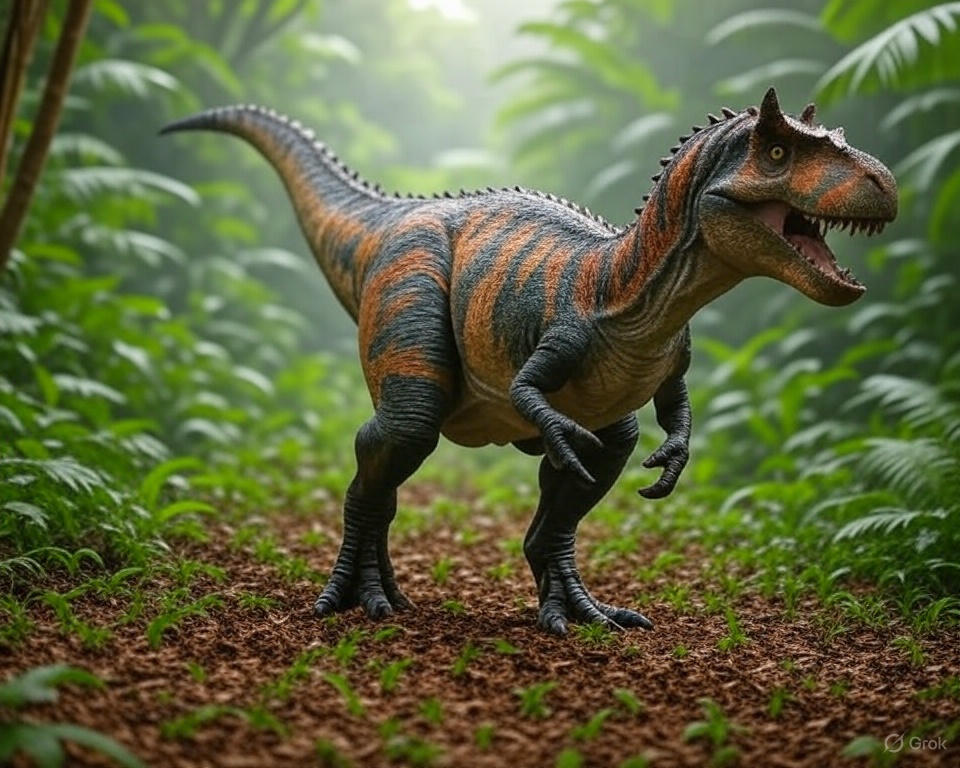
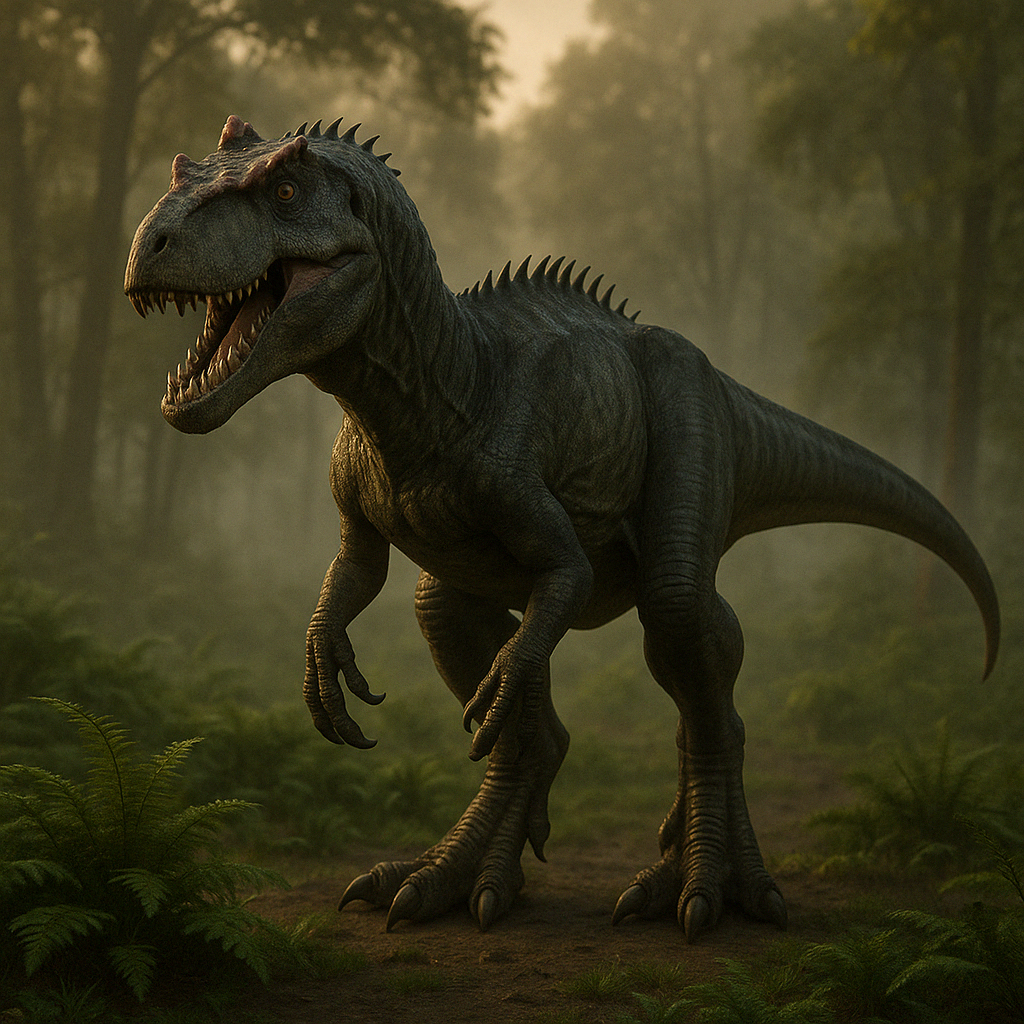
Its skull was large and equipped with dozens of sharp, serrated teeth. These teeth were ideal for slicing through flesh, and they were continuously replaced throughout the dinosaur’s life. One of its defining features was the pair of short crests above its eyes, which may have been used for display or species recognition.
Allosaurus also had long arms with three-fingered hands tipped with sharp claws. These limbs were likely used to grip prey or assist in feeding. Compared to later predators like Tyrannosaurus rex, it had a lighter build and more flexible neck, which may have allowed for quick strikes and agile movement.
Hunting and Diet
Allosaurus was a carnivore and likely hunted a wide range of prey, from smaller dinosaurs to large herbivores. It may have targeted juvenile or injured sauropods, like Apatosaurus or Diplodocus, and also scavenged when the opportunity arose.
There is some debate about how Allosaurus used its jaws. Some scientists believe it could open its mouth extremely wide and deliver slashing bites using its upper jaw like a hatchet. Others think it may have used a combination of quick bites and pulling motions to tear flesh from its prey.
It’s also possible that Allosaurus hunted in groups. Evidence from fossil sites where multiple individuals have been found near a single prey animal suggests some form of pack behavior, although this remains speculative.
Fossil Discoveries
The first Allosaurus fossils were discovered in the late 1800s during the famous “Bone Wars” between rival paleontologists Othniel Charles Marsh and Edward Drinker Cope. Marsh gave the dinosaur its name in 1877, meaning “different lizard,” due to its unique vertebrae compared to earlier discoveries.
Since then, dozens of Allosaurus skeletons have been found, making it one of the best-known theropods of the Jurassic period. The Cleveland-Lloyd Dinosaur Quarry in Utah, in particular, has yielded a large number of well-preserved specimens.
These fossils have provided scientists with a detailed look at the animal’s growth, anatomy, and possible behavior, making Allosaurus one of the most studied meat-eating dinosaurs.
Role in Evolution
Allosaurus belonged to a group of dinosaurs called allosaurids, which were early members of the larger group known as theropods—the same group that includes modern birds. It was a dominant predator in its time and paved the way for later giants like Carcharodontosaurus and Tyrannosaurus.
Its mix of speed, strength, and adaptability made it one of the top carnivores in the Late Jurassic ecosystem.
Pop Culture and Public Interest
Allosaurus has long been a favorite in museums, documentaries, and dinosaur books. It has appeared in many films and educational programs, often portrayed as the “villain” in stories featuring Stegosaurus or Diplodocus. While it may not be as famous as T. rex, Allosaurus was every bit as important in its own time.
Its fossils can be seen in major natural history museums, and it continues to be a symbol of Jurassic predators in popular media.
Final Thoughts
Allosaurus was a powerful, agile predator that dominated the Jurassic landscape. Its well-preserved fossils have helped scientists learn a great deal about how large carnivorous dinosaurs lived, hunted, and evolved. With its sharp teeth, keen senses, and strong limbs, Allosaurus was truly one of the top predators of its era—and its legacy continues to captivate us today.