Carnotaurus is the #5 seed in the Theropods division of the Dinosaur Tournament.
Carnotaurus is one of the most distinctive and unusual predatory dinosaurs ever discovered. With its short snout, tiny arms, and prominent horns above its eyes, this Late Cretaceous theropod has fascinated paleontologists and dinosaur fans alike. Its name means “meat-eating bull,” a reference to those horn-like structures that give it a one-of-a-kind appearance among large carnivorous dinosaurs.
When and Where It Lived
Carnotaurus sastrei lived about 71 to 69 million years ago during the Late Cretaceous period. Its fossils were discovered in what is now Argentina, which during that time was part of a warm, semi-arid region with rivers and open plains. This environment would have been home to a variety of other dinosaurs, including large sauropods and armored species, making it a rich hunting ground for a top predator.
Size and Appearance
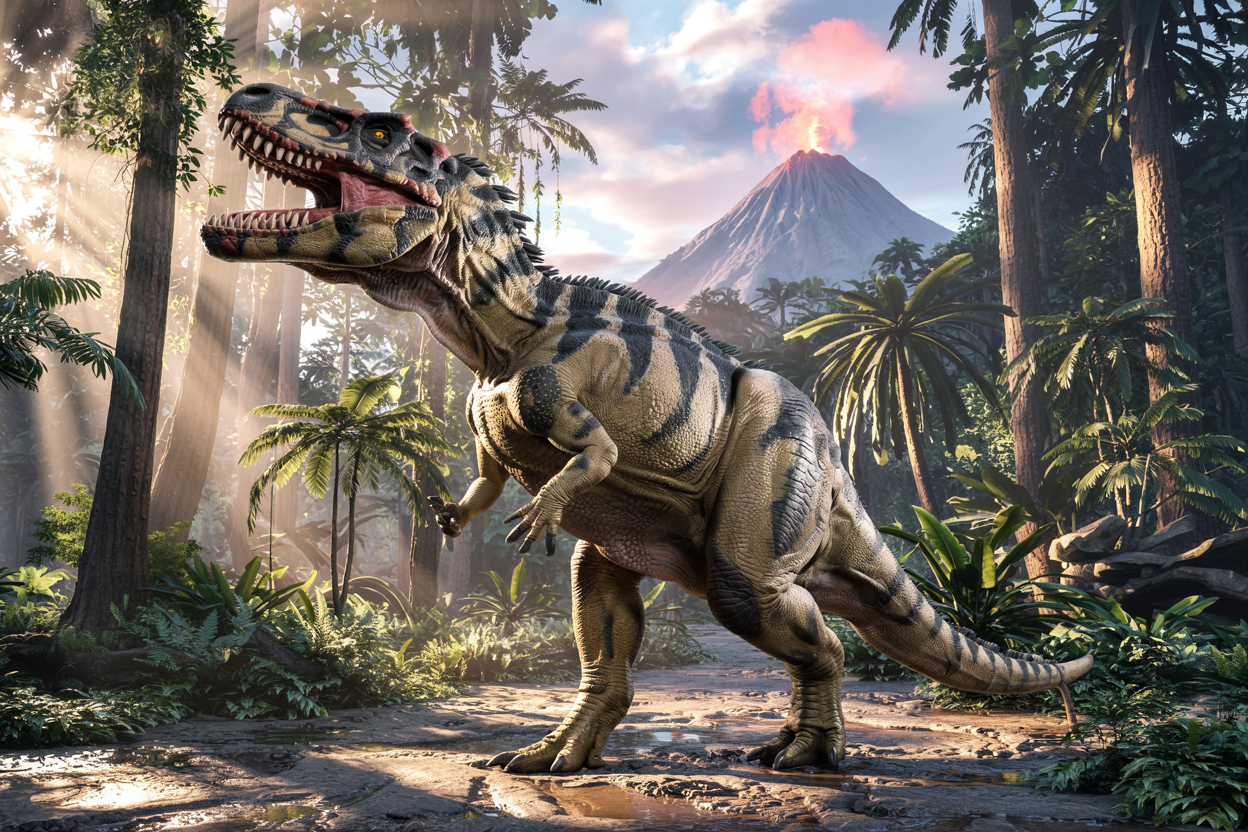
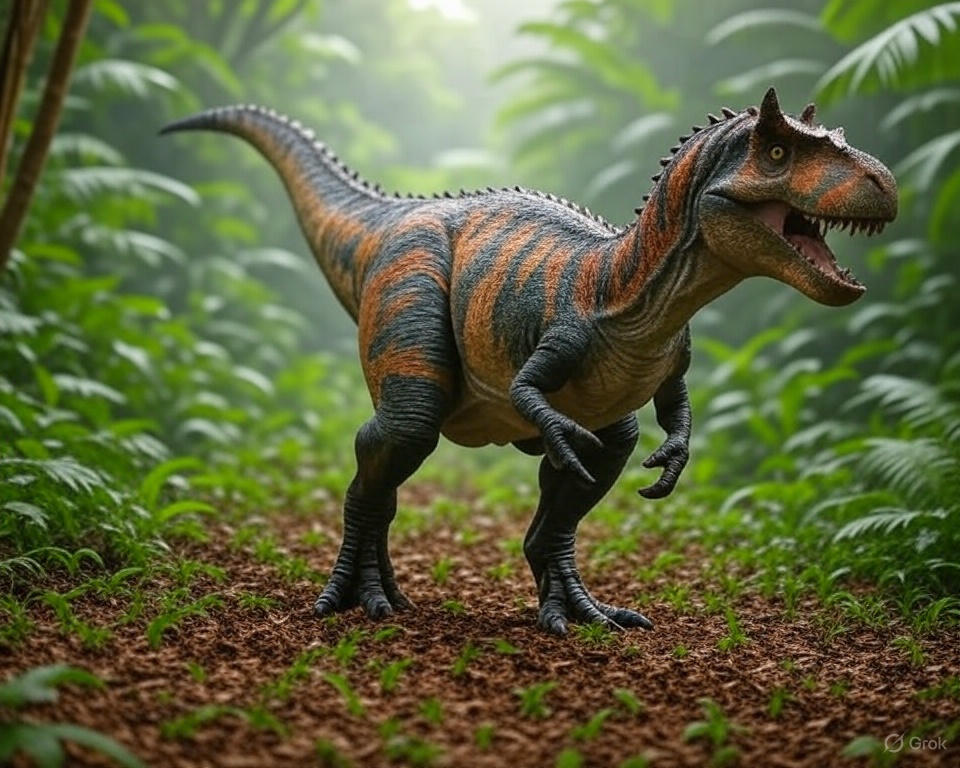
Carnotaurus was a large bipedal carnivore, measuring around 25 to 30 feet (7.5 to 9 meters) in length and weighing an estimated 1.5 to 2 tons. It walked on two strong hind legs and had a long tail that helped it balance while moving.
One of the most striking features of Carnotaurus was its skull. It had a short, deep snout and a pair of thick, conical horns just above its eyes. These horns may have been used in display, combat with rivals, or possibly even to help pin down prey. The skull also had large openings, which made it lighter, and forward-facing eyes, giving it decent depth perception.
Another notable trait was its arms—or lack thereof. Carnotaurus had some of the shortest arms of any known theropod. They were even smaller than those of Tyrannosaurus rex and appear to have had very limited movement. Scientists still aren’t sure what purpose, if any, they served.
Its body was covered in small, pebbly scales, and fossil impressions show a row of larger, bony bumps running down its back and sides. This gives us one of the clearest pictures of dinosaur skin among large predators.
Hunting and Diet
Carnotaurus was a carnivore, and it likely preyed on smaller dinosaurs, juvenile sauropods, and possibly scavenged when the opportunity arose. Its teeth were long and sharp but not as thick or bone-crushing as those of T. rex. Instead, they were probably better suited for slashing through flesh.
Its deep skull and muscular neck suggest it could deliver powerful bites. It may have relied on speed and surprise to take down prey. Some studies have proposed that Carnotaurus was capable of fast, agile movement, possibly making it one of the quicker large theropods.
Its unique build—lightweight skull, long legs, and stiff tail—suggests it was well-adapted for chasing prey across open landscapes.
Discovery and Fossil Evidence
Carnotaurus was discovered in 1984 by Argentine paleontologist José Bonaparte, one of the most influential figures in South American dinosaur research. The fossil was remarkably complete, including most of the skeleton and even skin impressions—an extremely rare find for a large theropod.
It was formally described in 1985 and given the full name Carnotaurus sastrei, with the species name honoring Ángel Sastre, the landowner where the fossil was found.
Because the original skeleton was so well-preserved, it has provided a wealth of information about this dinosaur’s anatomy, appearance, and possible behavior.
Role in Paleontology
Carnotaurus is a member of a group of theropods called abelisaurids. These dinosaurs were common in the Southern Hemisphere, especially in South America, India, and Madagascar. Compared to other theropods, abelisaurids had shorter snouts, shorter arms, and stockier builds.
Carnotaurus is one of the best-known and most complete members of this group, giving paleontologists important clues about how these dinosaurs lived and evolved. Its discovery helped shine a light on the diversity of predatory dinosaurs outside North America and Asia.
Pop Culture and Public Recognition
Thanks to its dramatic appearance, Carnotaurus has become increasingly popular in books, documentaries, and films. It appeared in Disney’s animated movie Dinosaur (2000), as well as in Jurassic World: Fallen Kingdom. Its horned head and menacing look make it a standout among theropod dinosaurs.
While it may not be as instantly recognizable as T. rex, Carnotaurus has earned a dedicated following among dinosaur fans and researchers alike.
Final Thoughts
Carnotaurus was a fast, fierce, and highly specialized predator with a look unlike any other dinosaur. Its small arms, bold horns, and strong legs made it a unique figure in the prehistoric world—and an important piece of the puzzle when it comes to understanding dinosaur diversity in the Southern Hemisphere.
As new discoveries continue, Carnotaurus remains one of the most intriguing and well-studied meat-eaters from the Late Cretaceous.