Microraptor is the #9 seed in the Theropods division of the Dinosaur Tournament.
Microraptor was a small, feathered dinosaur that lived around 120 million years ago during the Early Cretaceous period. What makes this species especially fascinating is its unique body structure—Microraptor had long feathers on both its arms and legs, giving it what some scientists call “four wings.” This unusual feature, along with evidence of flight or gliding, has made Microraptor one of the most important discoveries in understanding the link between dinosaurs and birds.
When and Where It Lived
Microraptor lived in what is now northeastern China, specifically in the Liaoning Province. At the time, the region was covered in dense forests filled with conifer trees, lakes, and volcanoes. These ancient ecosystems were home to many small feathered dinosaurs, mammals, early birds, and insects, all preserved in extraordinary detail thanks to the fine-grained volcanic ash that settled over the area.
Fossils from this region, including Microraptor, come from the famous Jiufotang and Yixian formations—sites that have produced some of the most important specimens in modern paleontology.
Size and Appearance
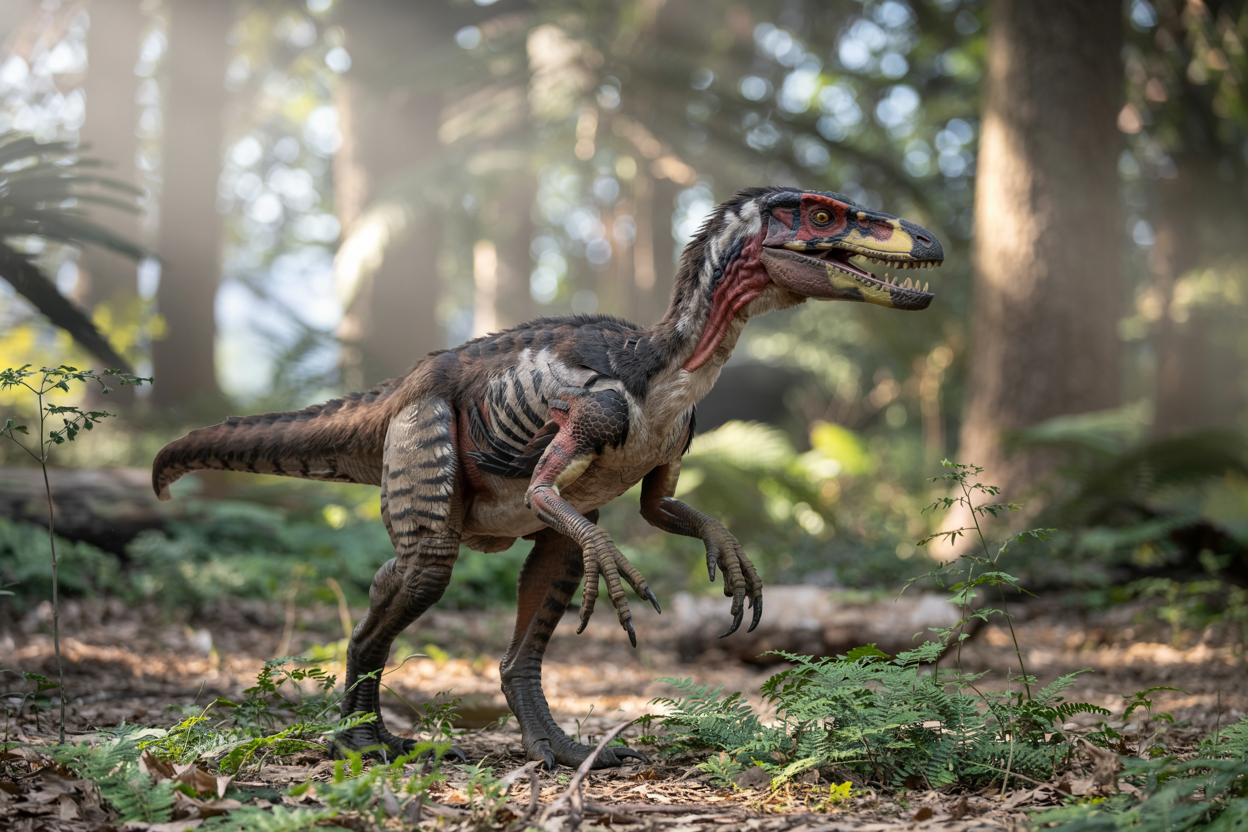
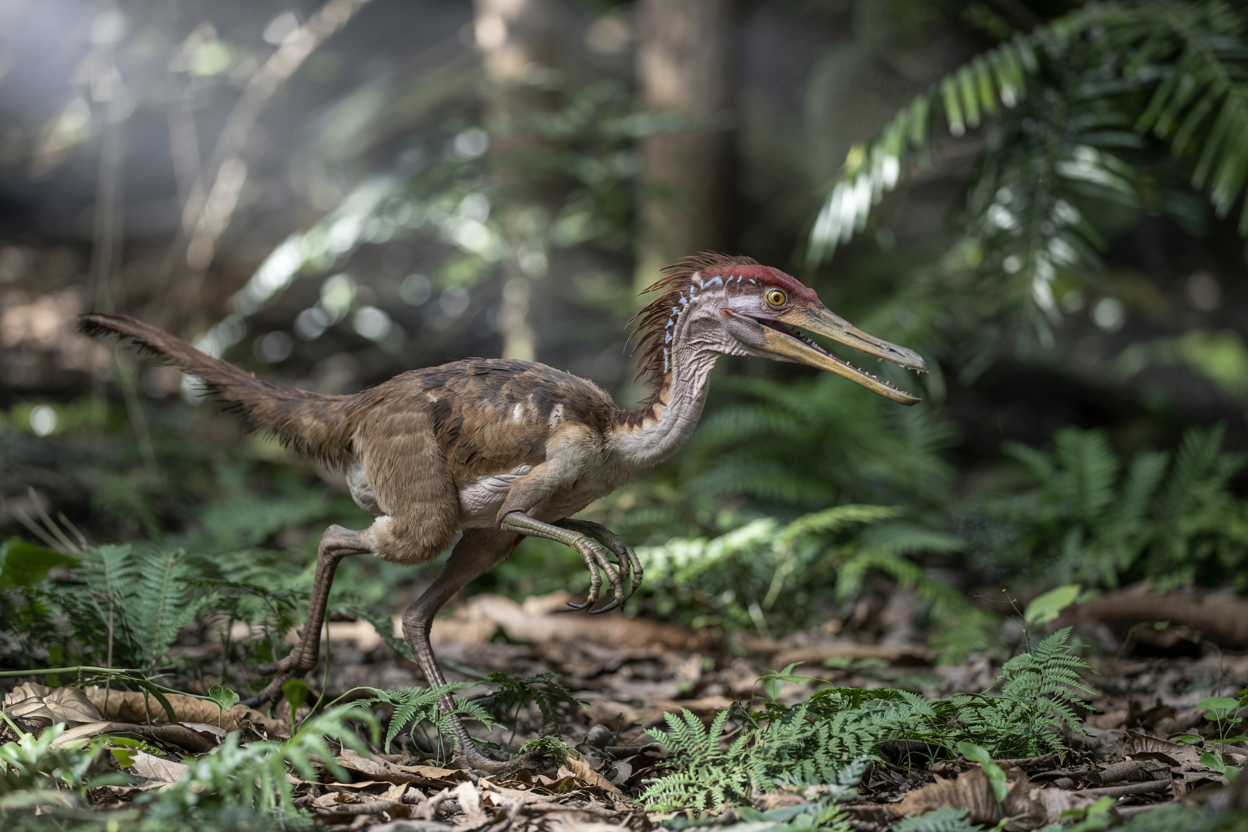
Microraptor was a small, lightweight dinosaur. Most specimens measure about 2.5 to 3 feet (around 80 to 90 cm) long and weighed roughly 2 to 3 pounds (1 to 1.5 kilograms). Its body was slender and bird-like, with a long tail, large eyes, and a narrow snout filled with sharp, pointed teeth.
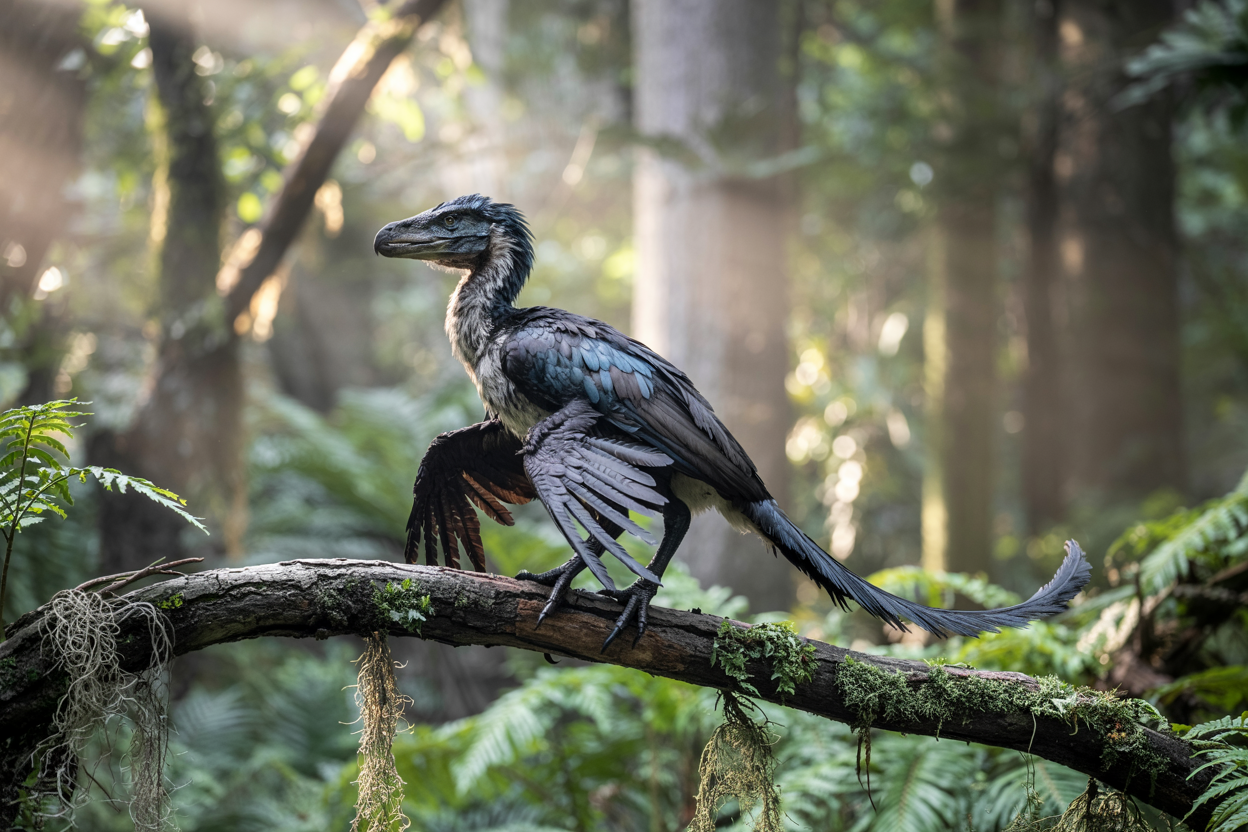
The most distinctive feature of Microraptor was its feather arrangement. It had fully feathered arms, legs, and a fan of feathers at the end of its tail. The leg feathers were so well-developed that they acted like wings, leading scientists to believe that Microraptor could glide or even perform controlled aerial maneuvers between trees.
Preserved melanosomes—microscopic structures responsible for color—suggest that Microraptor may have had glossy, black, iridescent feathers, much like modern crows or grackles.
Movement and Flight
One of the biggest questions about Microraptor has been whether it could truly fly or if it simply glided from tree to tree. While it didn’t have the full range of flapping flight seen in modern birds, fossil and biomechanical studies suggest that Microraptor was capable of powered gliding and possibly short bursts of flight.
Its four-winged design would have created lift from both its arms and legs. It also had a long, feathered tail that likely helped it steer and stabilize itself in the air.
Researchers believe it lived in forested environments where gliding between branches and tree trunks would have helped it travel, escape predators, or catch prey.
Diet and Hunting
Microraptor was a carnivore, and fossil evidence gives us a rare look at its varied diet. Some specimens have been found with remains of fish, birds, mammals, and lizards in their stomachs. This suggests that Microraptor was an opportunistic feeder, capable of hunting both in trees and on the ground—or even along the edges of water sources.
Its sharp teeth and grasping claws were well-suited for catching small animals, while its keen eyesight would have helped it spot prey from above.
Discovery and Scientific Significance
The first Microraptor fossils were described in the early 2000s, and since then, over two dozen well-preserved specimens have been found. The quality of these fossils—many with complete feather impressions—has helped paleontologists better understand the evolution of feathers, flight, and the transition from dinosaurs to birds.
Microraptor belongs to a group of dinosaurs called dromaeosaurids, often referred to as “raptors.” While most raptors are known for their fierce claws and ground-based hunting, Microraptor shows that even this group had members adapted for life in the trees.
It also serves as a key piece of evidence supporting the theory that birds evolved from small, feathered dinosaurs. With its combination of bird-like and dinosaur-like features, Microraptor is often described as a “missing link” in the evolutionary story of flight.
Pop Culture and Public Interest
Although not as famous as Tyrannosaurus rex or Velociraptor, Microraptor has gained attention in documentaries, books, and museums for its unique anatomy and importance in the story of bird evolution. Its small size, four-winged structure, and glossy feathers make it one of the most visually striking dinosaurs ever discovered.
Some museum exhibits feature life-sized models or animations showing how Microraptor may have glided through ancient forests, sparking interest among both kids and adults.
Final Thoughts
Microraptor may have been small, but its impact on our understanding of dinosaur evolution is enormous. With its feathered limbs, aerial abilities, and well-preserved fossils, it helps bridge the gap between ground-dwelling dinosaurs and the first flying birds.
As researchers continue to study its fossils, Microraptor remains a key figure in the prehistoric past—a tiny glider that soared through the trees long before birds took over the skies.