Ankylosaurus is the #2 seed in the Thyreophorans division of the Dinosaur Tournament.
Ankylosaurus is one of the most iconic armored dinosaurs to ever walk the Earth. Known for its heavy body, bony armor, and a massive club at the end of its tail, Ankylosaurus looked like a prehistoric tank. Despite its intimidating appearance, it was a peaceful plant-eater that relied on its armor and low profile to stay safe from predators. As one of the last non-avian dinosaurs to roam North America, Ankylosaurus holds a special place in the story of the Late Cretaceous.
When and Where It Lived
Ankylosaurus lived during the Late Cretaceous period, around 68 to 66 million years ago. That puts it right at the end of the dinosaur era, just before the mass extinction that wiped out most dinosaurs.
Fossils of Ankylosaurus have been found in western North America, particularly in areas that are now Montana, Alberta, and possibly Wyoming. During the Cretaceous, this region was covered in coastal plains and forests, with a warm, humid climate and a wide variety of plant and animal life. Ankylosaurus shared its environment with famous dinosaurs like Tyrannosaurus rex, Triceratops, and Edmontosaurus.
Size and Physical Characteristics
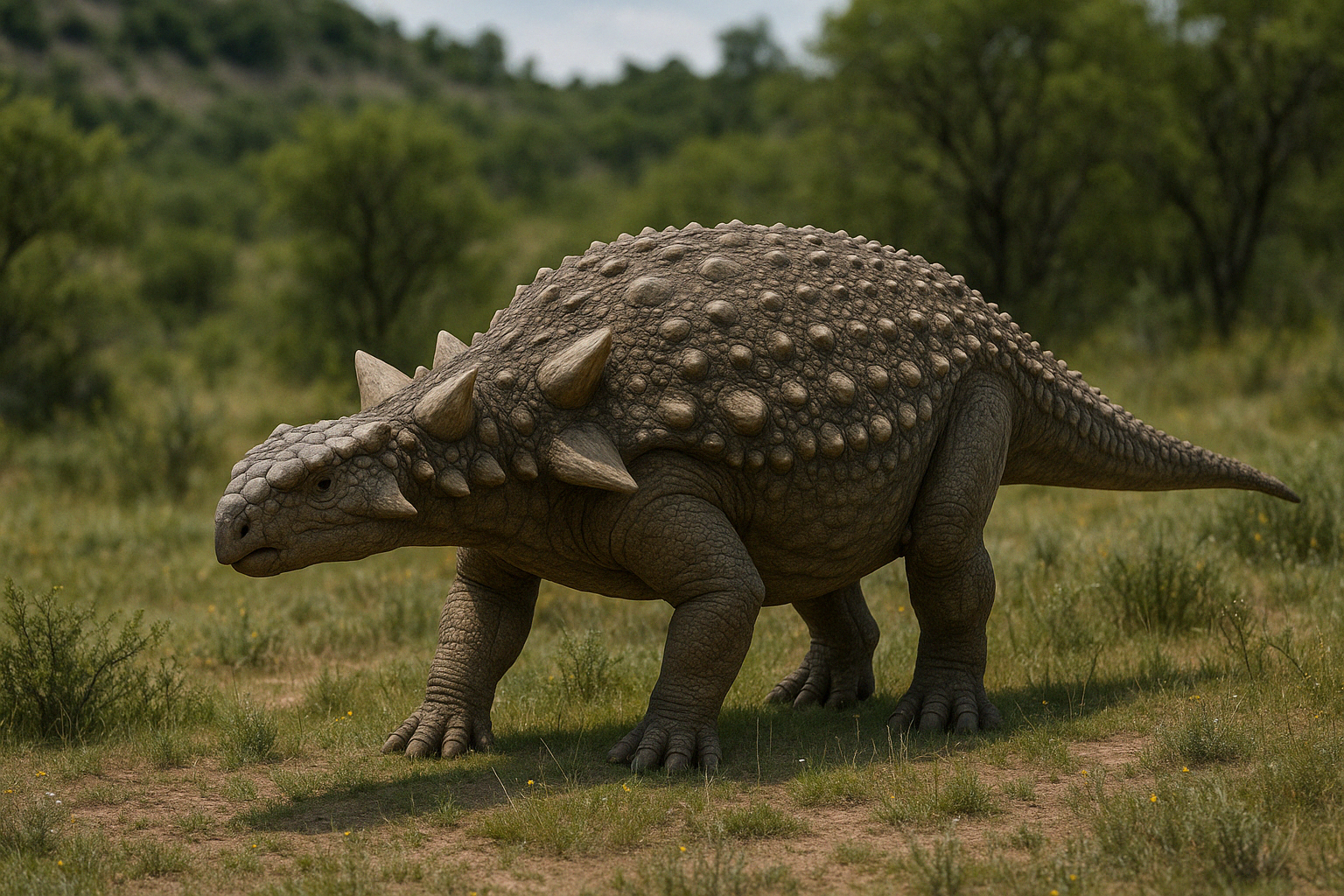
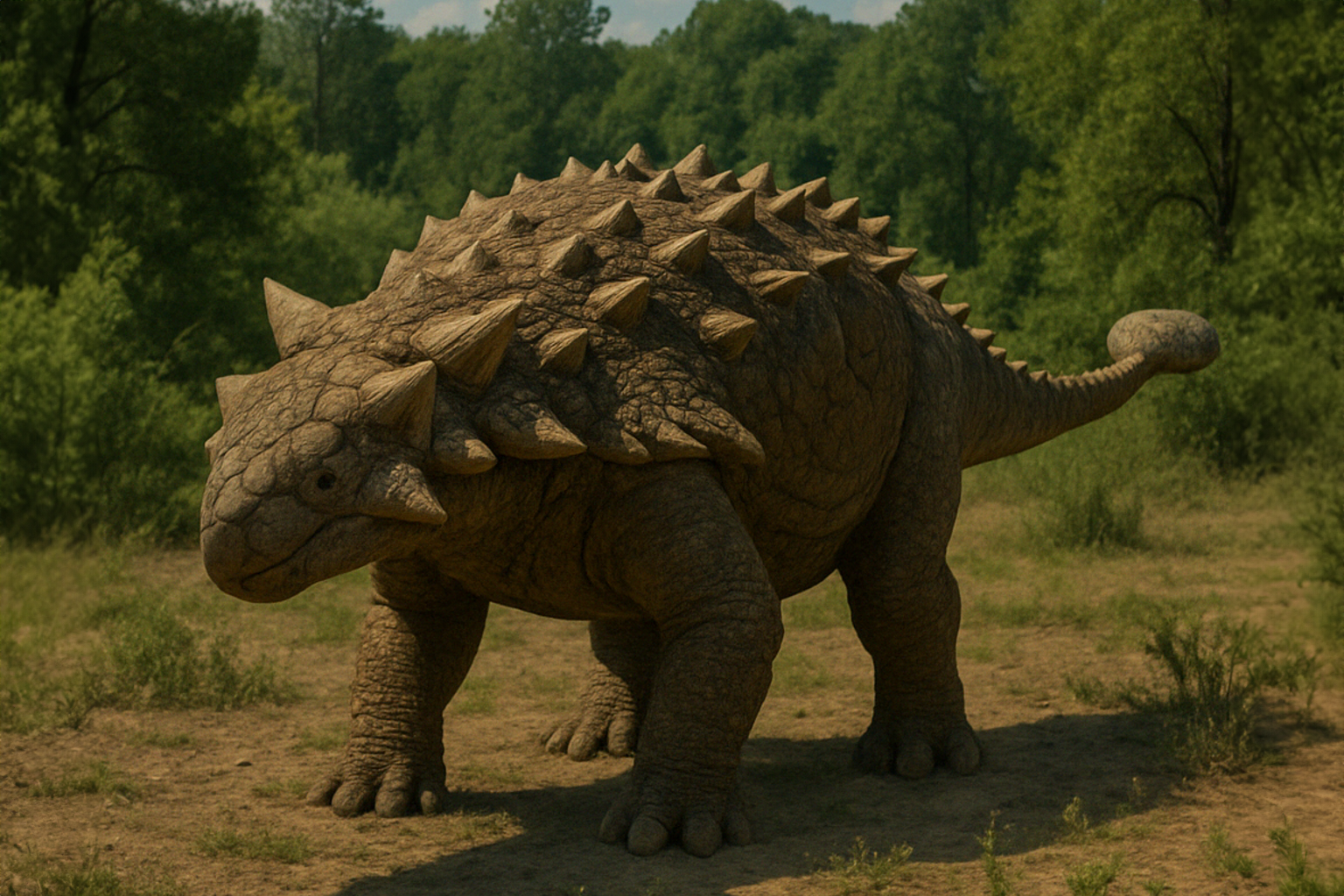
Ankylosaurus was a heavily built, quadrupedal dinosaur. It measured up to 25 to 30 feet (7.5 to 9 meters) in length and weighed around 5 to 8 tons. It had a wide, low-slung body supported by four sturdy legs. Its head was broad and low, with a beak at the front of its mouth for clipping plants.
What really sets Ankylosaurus apart was its armor. Its back, head, and sides were covered in thick, bony plates called osteoderms, which were embedded in the skin. These plates came in various shapes and sizes and formed an effective shield against predators. Some were small and rounded, while others were large and shaped like flat tiles or spikes.
At the end of its tail, Ankylosaurus had a large bony club made of fused vertebrae and thickened armor. This club was likely used as a defensive weapon and could have delivered powerful blows to the legs or lower bodies of attacking predators.
Diet and Feeding Behavior
Ankylosaurus was an herbivore, feeding on low-growing plants. Its beak and small, leaf-shaped teeth were suited for cropping and chewing ferns, cycads, and other soft vegetation. Because it was so low to the ground, it likely fed close to the forest floor, using its broad snout to sweep vegetation into its mouth.
Unlike some other herbivorous dinosaurs, Ankylosaurus didn’t have complex chewing mechanisms, so it probably relied on its large digestive system to process tough plant material through fermentation. It may have swallowed stones, called gastroliths, to help grind up food in its stomach.
Discovery and Fossil Record
Ankylosaurus was first described in 1908 by American paleontologist Barnum Brown, based on fossils found in Montana. Since then, additional remains—including skull fragments, armor plates, and parts of the tail club—have been discovered in North America. However, complete skeletons are rare, and much of what we know about Ankylosaurus is based on comparisons with related species.
Despite its popularity, Ankylosaurus remains somewhat mysterious because of the limited fossil material. Ongoing discoveries continue to refine our understanding of its size, armor layout, and place in the ankylosaur family tree.
Scientific Importance
Ankylosaurus is the largest and most famous member of the ankylosaurid family—a group of heavily armored dinosaurs that evolved unique ways to protect themselves. It represents the peak of ankylosaur evolution, combining full-body armor with an active defensive weapon.
Its anatomy helps scientists understand how different dinosaur groups adapted to their environments and developed specialized features for survival. The tail club, in particular, is a remarkable example of evolution producing a highly specialized structure for defense.
Ankylosaurus also plays an important role in studying dinosaur behavior and predator-prey relationships, especially in ecosystems that included large carnivores like T. rex.
Ankylosaurus in Popular Culture
Ankylosaurus is a fan favorite and appears frequently in books, documentaries, movies, and toys. Its armored appearance and tail club make it one of the most easily recognized dinosaurs.
It’s featured in several entries of the Jurassic Park and Jurassic World franchises and often appears in museum exhibits as a symbol of prehistoric defense. Despite not being as flashy as some other dinosaurs, Ankylosaurus’s unique design continues to capture imaginations worldwide.
Final Thoughts
Ankylosaurus was a dinosaur built for defense. With its heavy armor, low center of gravity, and powerful tail club, it had little to fear from even the fiercest predators of its time. As one of the last surviving armored dinosaurs, it stands as a fascinating example of evolution’s creativity and a reminder that not all dinosaurs were towering hunters or swift runners—some were simply built to endure.