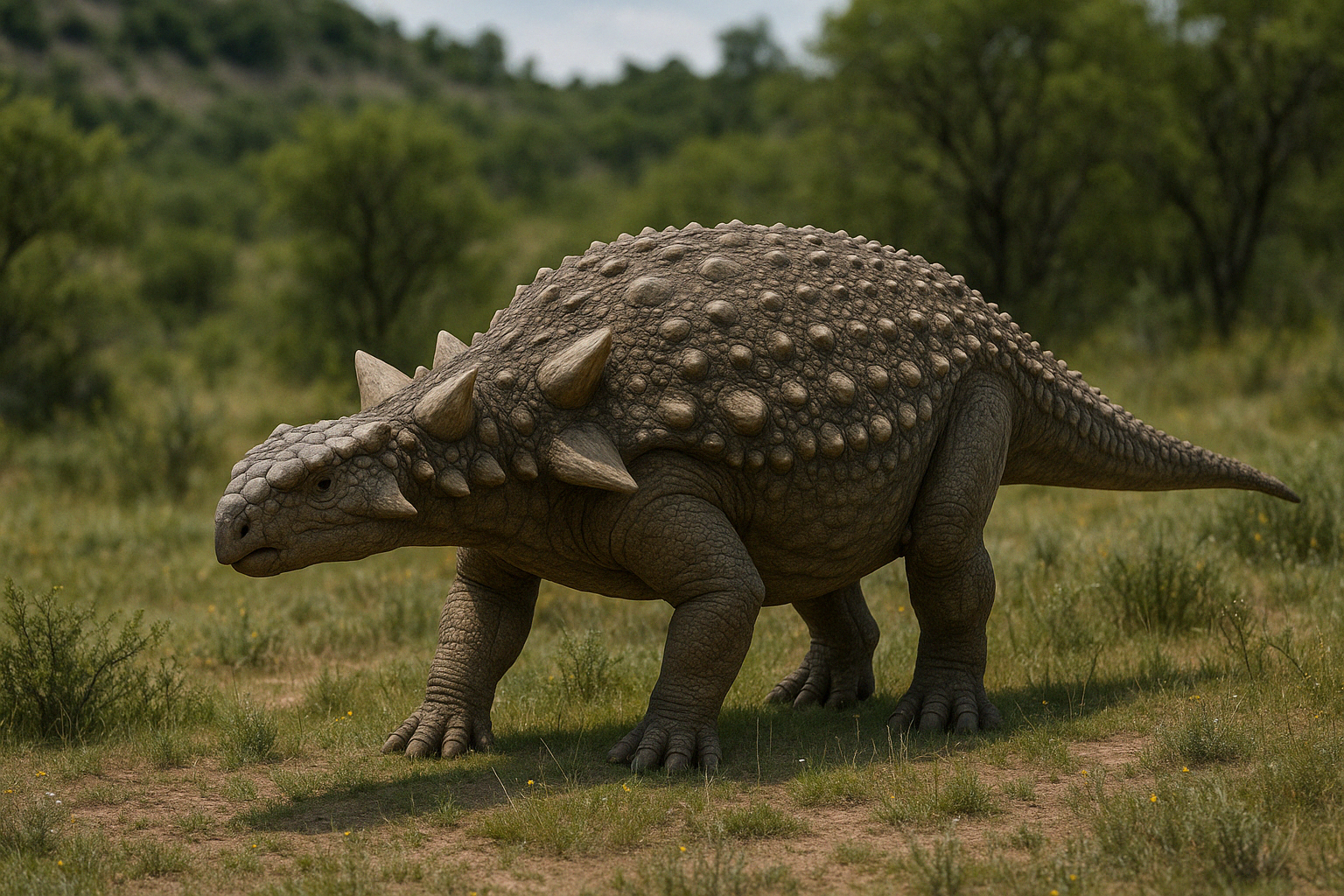
Edmontonia is the #3 seed in the Thyreophorans division of the Dinosaur Tournament.
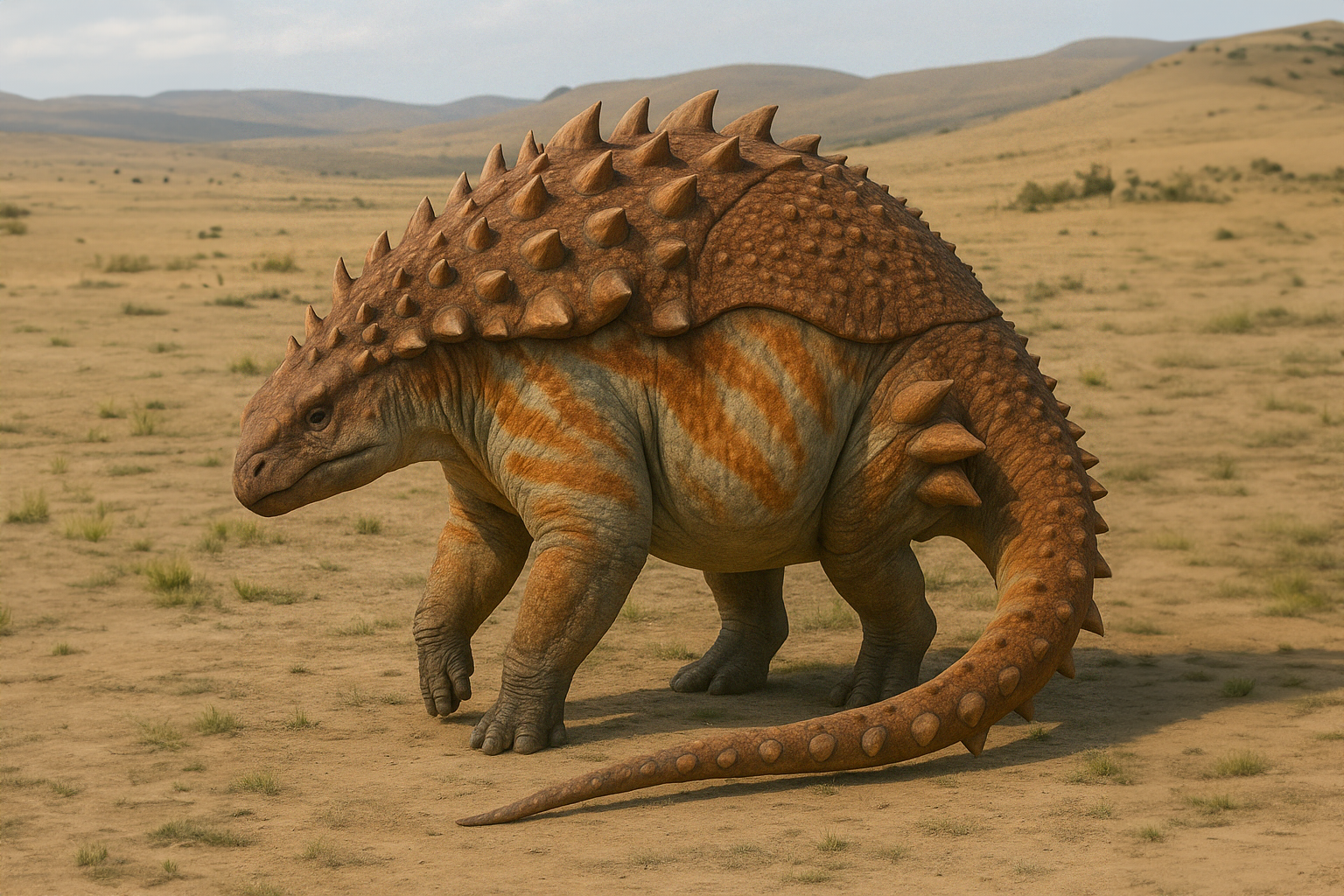
Edmontonia was a heavily armored dinosaur that lived during the Late Cretaceous period. With its low-slung body, rows of bony plates, and large shoulder spikes, Edmontonia looked like a living tank. Despite its intimidating appearance, it was a peaceful herbivore that relied on its natural defenses to stay safe from predators. As a member of the nodosaur family, Edmontonia is a classic example of how plant-eating dinosaurs evolved strong armor to survive in a dangerous world.
When and Where It Lived
Edmontonia lived between 76 and 66 million years ago during the Late Cretaceous period. Its fossils have been found primarily in western North America, particularly in Alberta, Canada, and the U.S. states of Montana and Wyoming. It gets its name from Edmonton, the capital city of Alberta, near where some of its first fossils were discovered.
During Edmontonia’s time, the region was part of a broad coastal plain with forests, swamps, and rivers. This environment was rich in plant life and home to many other dinosaurs, including Tyrannosaurus rex, Ankylosaurus, Triceratops, and various duck-billed dinosaurs. Edmontonia likely shared its habitat with both predators and fellow herbivores.
Size and Physical Characteristics
Edmontonia was a medium-sized dinosaur, growing to around 20 to 23 feet (6 to 7 meters) in length and weighing approximately 3 to 4 tons. It walked on four short, sturdy legs and had a broad, low body. Its skull was relatively small and narrow, with a beaked mouth for cropping vegetation.
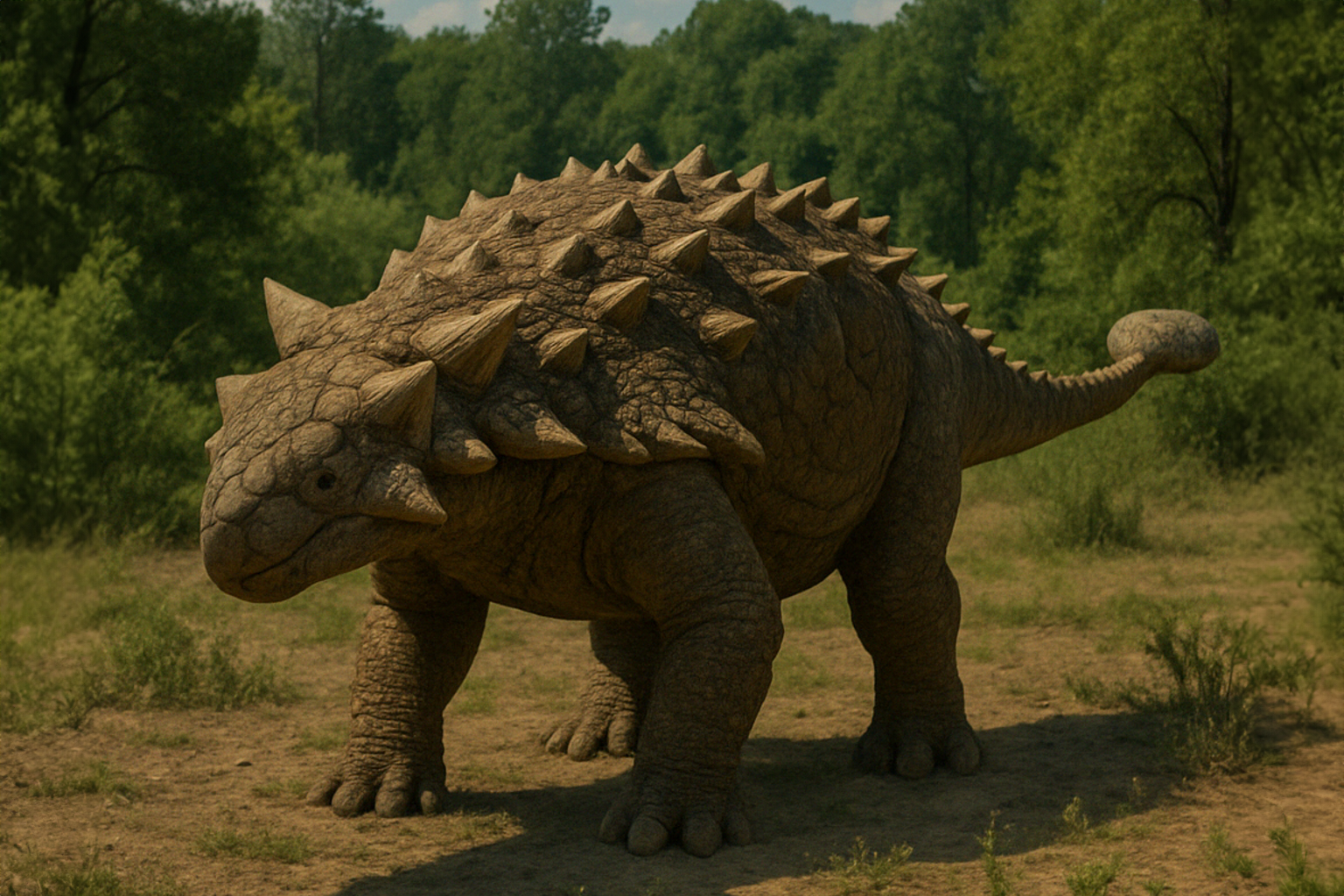
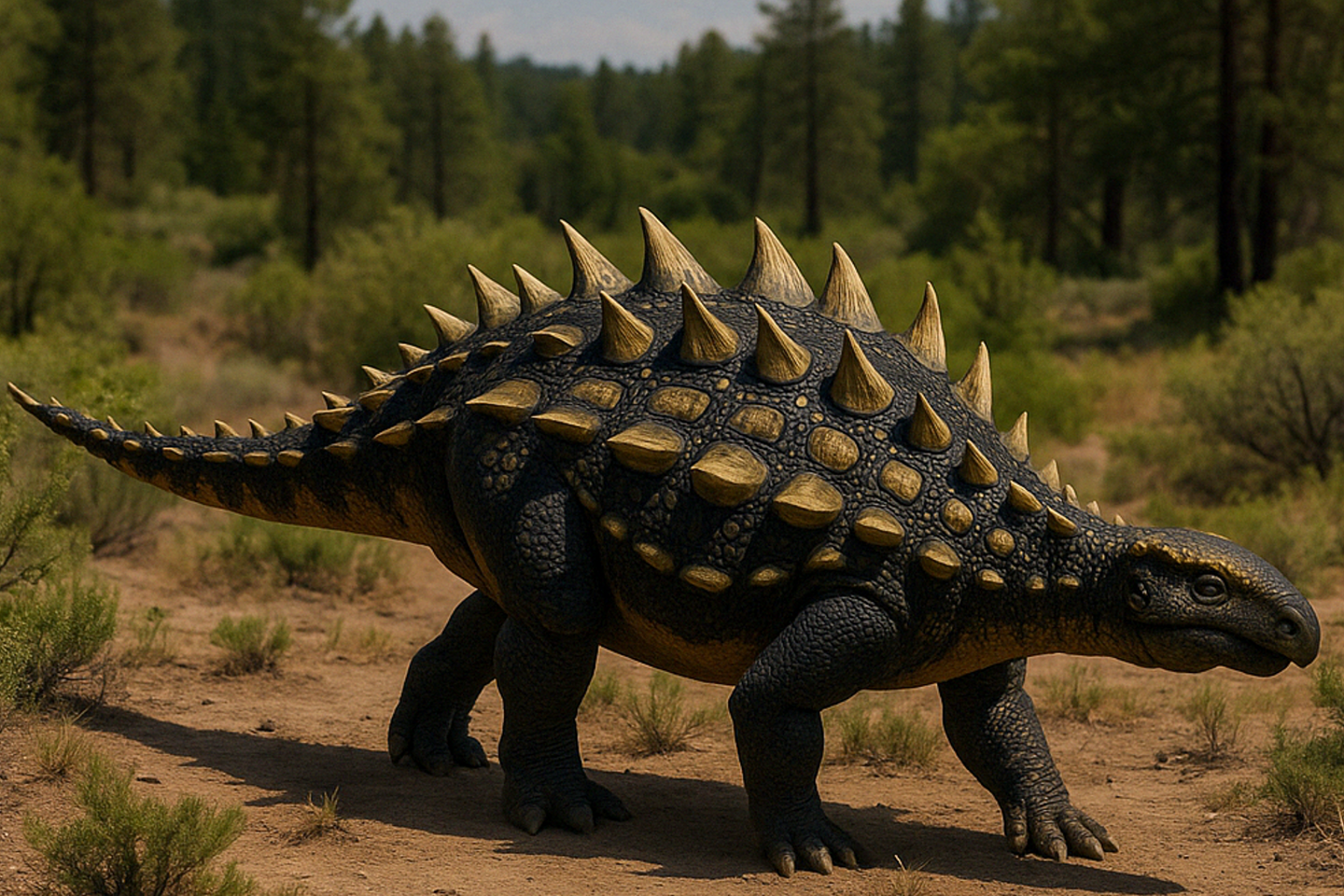
What really set Edmontonia apart was its armor. The dinosaur’s back, neck, and tail were covered in thick bony plates, called osteoderms, which were embedded in its skin. These plates formed a natural shield that protected it from attacks. Along its shoulders were large, sharp spikes that pointed outward—likely used to deter predators or even rivals.
Unlike its relative Ankylosaurus, Edmontonia did not have a tail club. Instead, its primary defense was its thick armor and intimidating array of shoulder spikes. Its body design suggests it relied on passive defense rather than fighting back with swinging tail blows.
Diet and Feeding Behavior
Edmontonia was a herbivore that fed on low-growing vegetation. With its low head and strong, beak-like mouth, it was well suited to eating ferns, cycads, horsetails, and flowering plants close to the ground. Its teeth were small and leaf-shaped, designed more for slicing than chewing, so it probably swallowed plant material in chunks and relied on its digestive system to break it down.
Like other herbivorous dinosaurs, Edmontonia likely spent much of its day feeding. It may have moved slowly through the landscape, grazing on whatever plants were within reach. It’s also possible that it swallowed stones (gastroliths) to help grind up tough plant fibers in its stomach.
Discovery and Fossil Record
The first fossils that would later be named Edmontonia were discovered in the early 20th century. The genus was officially described in 1928 by Canadian paleontologist Charles M. Sternberg. Several species have been named, with Edmontonia longiceps and Edmontonia rugosidens being the most well-known.
Fossils have included partial and nearly complete skeletons, giving scientists a good understanding of its body structure and armor layout. Some specimens have even been found with the armor in its original position, helping paleontologists reconstruct its appearance more accurately.
Edmontonia belongs to the nodosaurids, a subgroup of ankylosaurs that lacked tail clubs but had even more elaborate body armor and spikes.
Scientific Importance
Edmontonia provides valuable insight into the diversity and specialization of armored dinosaurs. Its defensive adaptations are a great example of how some herbivores evolved to deal with large predators in their environment.
Its fossils also help paleontologists understand the ecosystems of Late Cretaceous North America. As one of the last surviving nodosaurids before the mass extinction event, Edmontonia helps fill in the picture of dinosaur life just before the end of the Cretaceous.
Edmontonia in Popular Culture
While not as well-known as Tyrannosaurus or Triceratops, Edmontonia has made appearances in documentaries, books, and museum exhibits. Its spiked armor gives it a distinctive and memorable look, often earning it the nickname “the walking tank” among dinosaur enthusiasts.
It occasionally shows up in dinosaur toy lines, video games, and educational materials, especially those that highlight dinosaur defense strategies or the diversity of Cretaceous herbivores.
Final Thoughts
Edmontonia might not have had sharp teeth or claws, but it was built to survive. With its low body, tough armor, and impressive shoulder spikes, it was more than capable of fending off the dangers of its world. As one of the most heavily armored dinosaurs of the Late Cretaceous, Edmontonia stands as a remarkable example of nature’s ability to build a fortress on legs—and a quiet reminder that sometimes the best offense is a good defense.