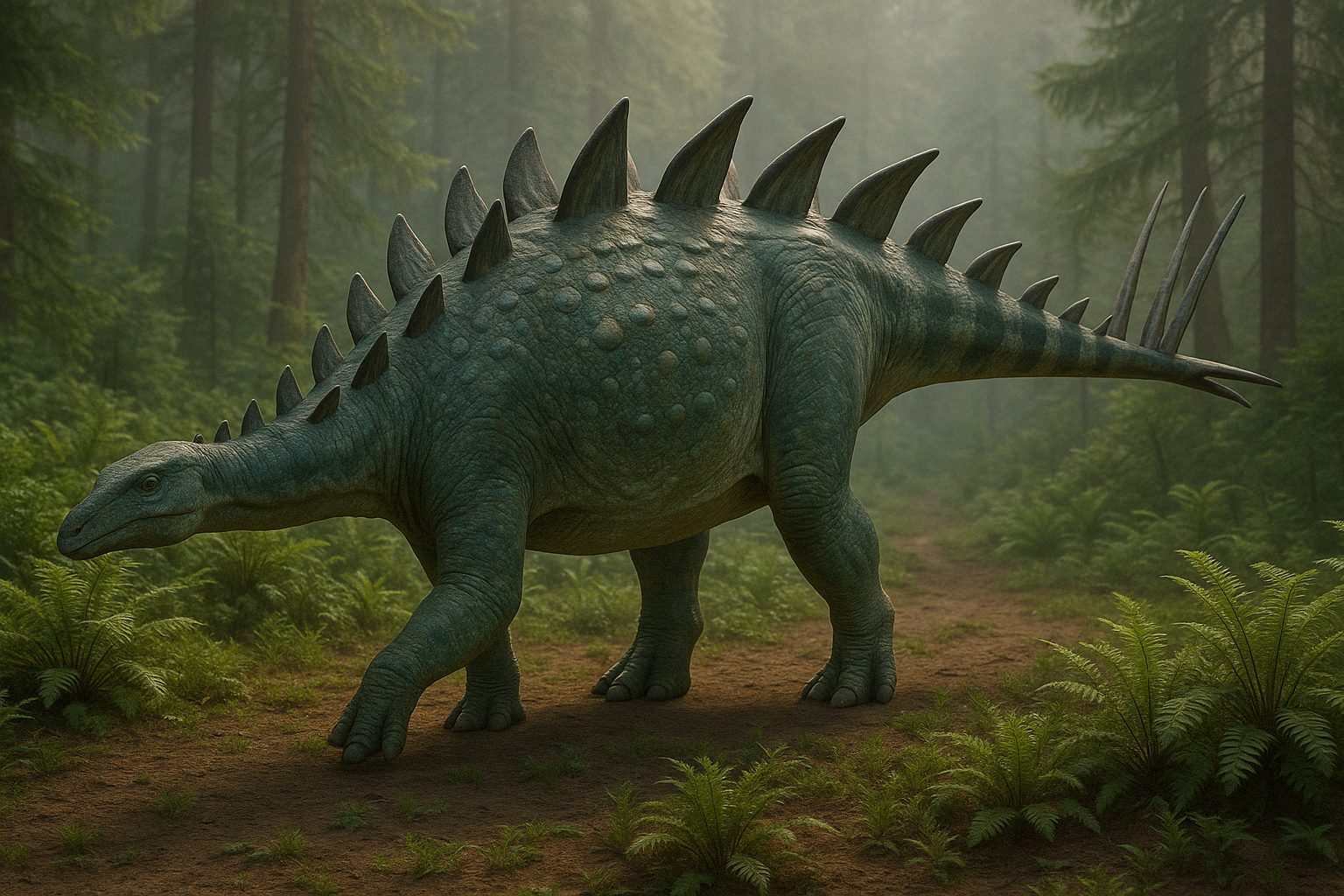
Tuojiangosaurus is the #9 seed in the Thyreophorans division of the Dinosaur Tournament.
Tuojiangosaurus was a remarkable stegosaurid dinosaur that lived in what is now China during the Late Jurassic period. Known for the two rows of upright plates along its back and a powerful tail armed with long spikes, Tuojiangosaurus was built for defense. It’s one of the best-known stegosaurs from Asia and provides important clues about how this group of dinosaurs evolved and diversified across different continents.
When and Where It Lived
Tuojiangosaurus lived around 160 to 155 million years ago during the Late Jurassic period. Its fossils were discovered in the Dashanpu Formation in Sichuan Province, China, a region famous for its rich collection of Jurassic-era dinosaurs. The environment during that time was lush and warm, filled with rivers, forests, and abundant vegetation—ideal for a plant-eating dinosaur.
This part of prehistoric Asia was home to a diverse range of dinosaurs, including large sauropods, early theropods, and other ornithischians. Tuojiangosaurus shared its world with massive plant-eaters and swift predators, making its defensive adaptations especially important.
Size and Physical Characteristics
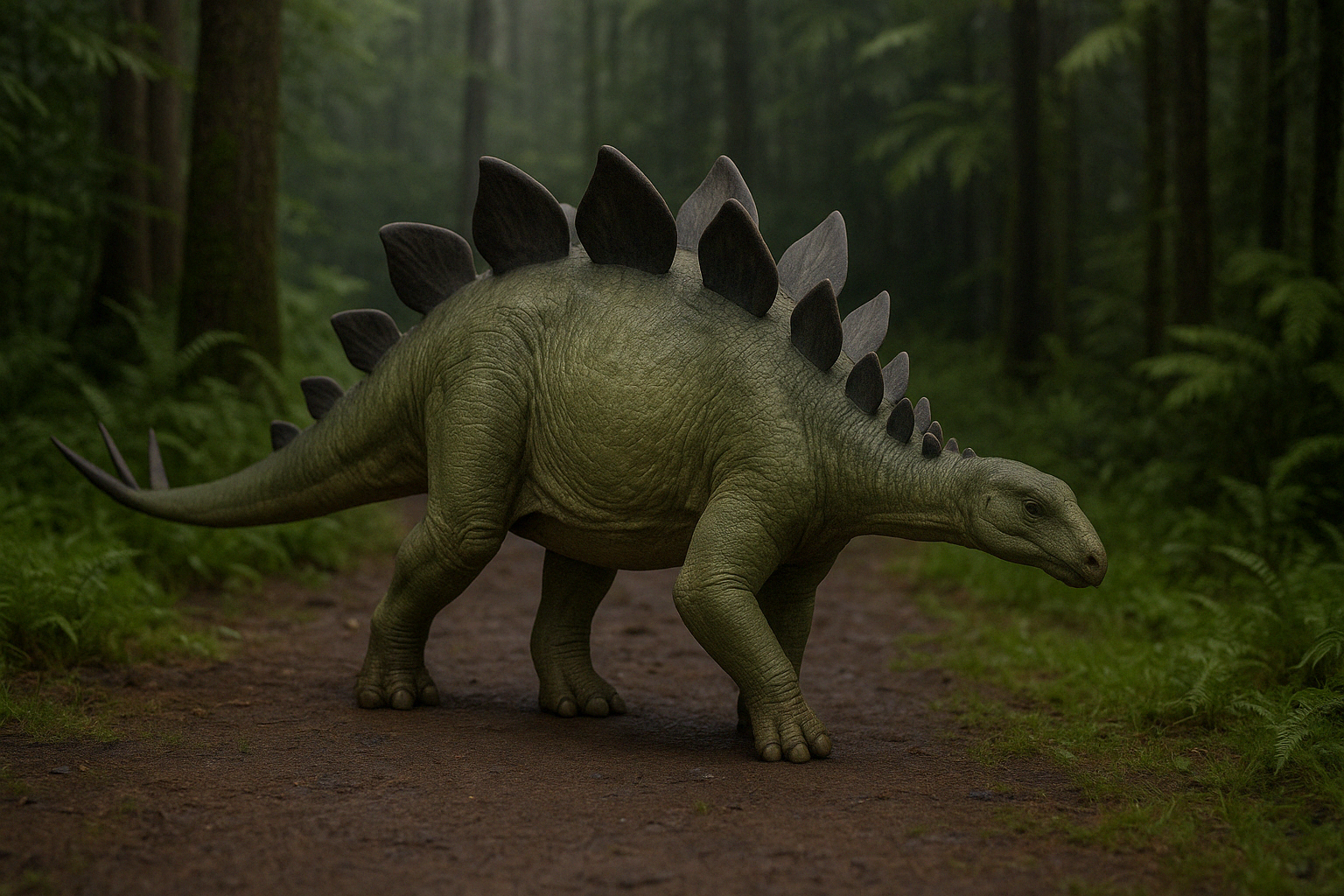
Tuojiangosaurus was a medium-sized stegosaur. It grew to about 20 to 25 feet (6 to 7.5 meters) long and weighed approximately 3 to 4 tons. Like other stegosaurs, it had a small, narrow head, a long tail, and a low-slung body supported by four strong legs. Its back legs were longer than its front legs, giving its body a distinctive sloping shape.
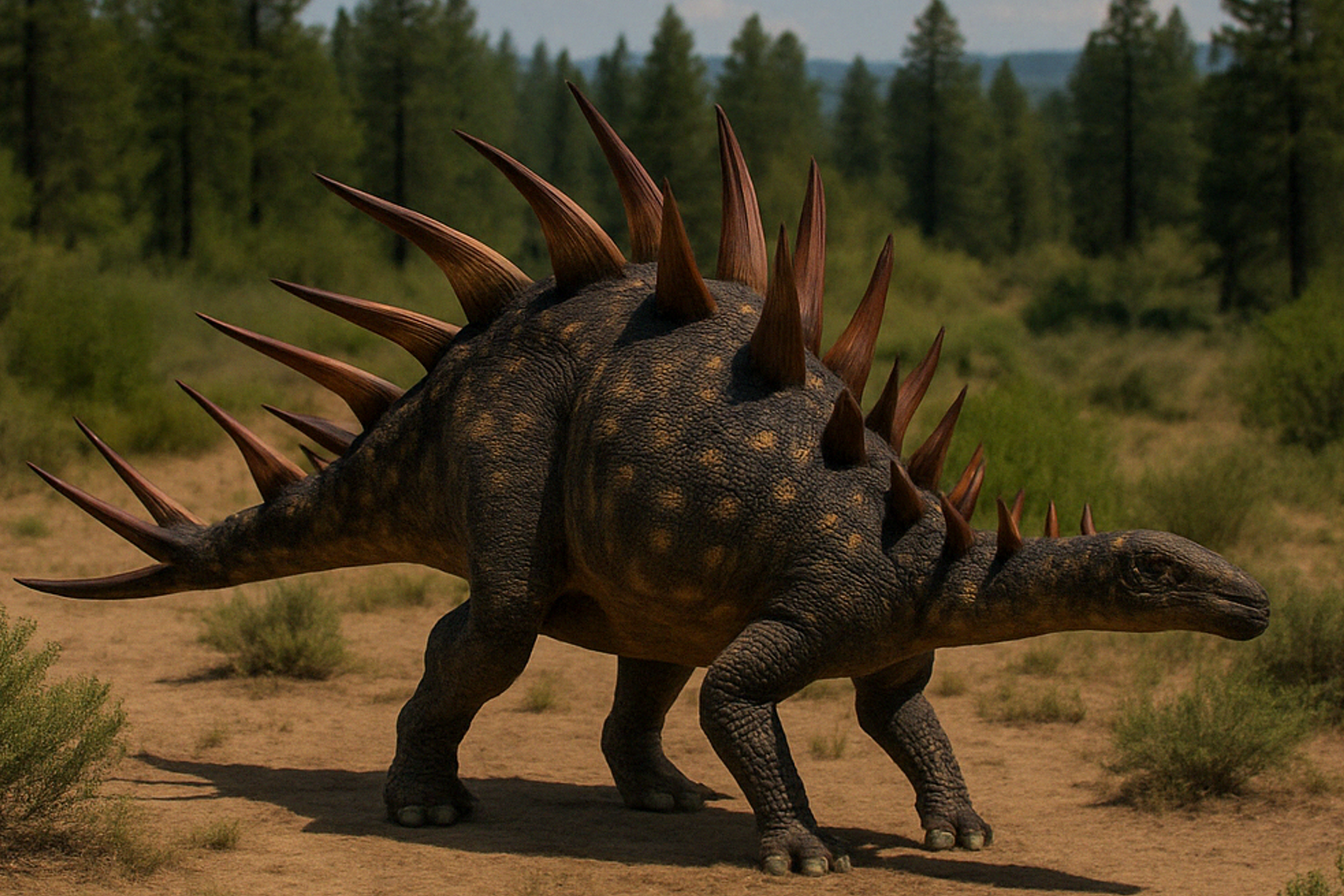
Its most noticeable features were the two parallel rows of bony plates running from its neck down to its hips. These plates were tall and narrow, possibly used for display or regulating body temperature. Toward the end of its tail, the plates gave way to sharp, paired spikes—known as a thagomizer. These long spikes could be swung at predators as a powerful deterrent.
Tuojiangosaurus’s overall appearance was similar to its more famous cousin Stegosaurus, but it had more numerous and closely spaced plates and slightly different proportions.
Diet and Feeding Behavior
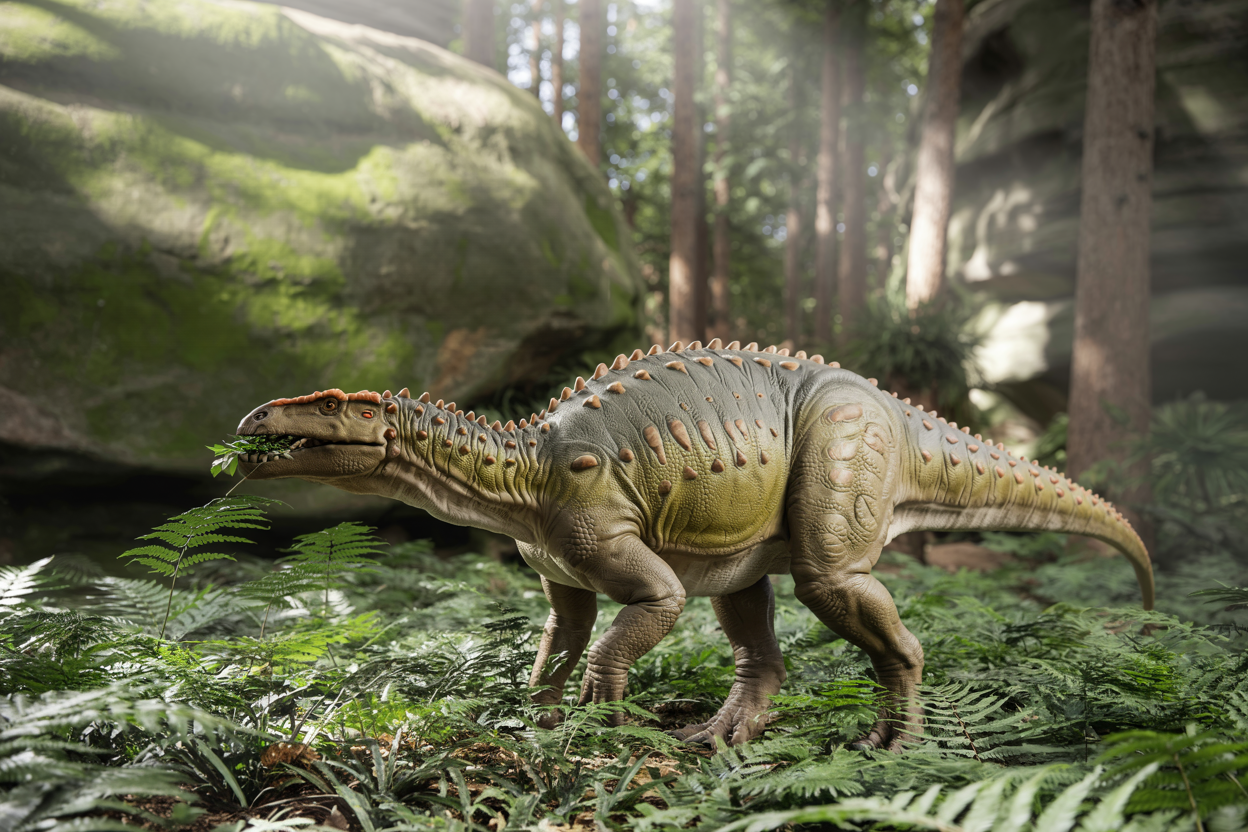
Tuojiangosaurus was a herbivore that fed on low-growing plants. With its small head and low browsing height, it most likely ate ferns, cycads, horsetails, and other soft vegetation. It had a beak at the front of its mouth for cropping plants and small, leaf-shaped teeth suited for minimal chewing.
Like other stegosaurs, Tuojiangosaurus probably relied on a large gut to digest its food through fermentation, breaking down fibrous plant material slowly. It may have spent much of its day feeding, moving slowly through dense vegetation and using its size and armor for protection rather than speed.
Discovery and Fossil Record
Tuojiangosaurus was first discovered in the 1970s in Sichuan Province and formally described in 1977. Its name means “Tuo River lizard,” named after the nearby Tuo River. The type species is Tuojiangosaurus multispinus, meaning “many-spined,” a reference to its numerous back plates and tail spikes.
The fossils found include a nearly complete skeleton, making Tuojiangosaurus one of the most complete stegosaur fossils found in Asia. This level of preservation has allowed paleontologists to study its anatomy in detail and compare it with other stegosaurs from different regions.
Today, a mounted skeleton of Tuojiangosaurus is displayed at the Zigong Dinosaur Museum in China, one of the leading institutions for Jurassic dinosaur research.
Scientific Importance
Tuojiangosaurus is one of the earliest stegosaurs discovered in Asia and remains one of the best-known members of the group from the continent. Its fossils have helped scientists understand the evolutionary relationships between Asian and North American stegosaurs and how these animals adapted to different environments.
Its anatomy shows both shared and unique features compared to stegosaurs like Stegosaurus and Kentrosaurus, offering insight into how different lineages within the group developed their armor, body shape, and feeding strategies.
Studying Tuojiangosaurus also helps paleontologists explore how dinosaurs spread and evolved across ancient landmasses, particularly during the Jurassic period when Asia, Europe, and North America were still connected by land bridges.
Tuojiangosaurus in Popular Culture
While not as well-known as Stegosaurus, Tuojiangosaurus has gained popularity through museum exhibits and dinosaur-themed books and documentaries. Its dramatic appearance—with tall plates and spiked tail—makes it a favorite among fans of armored dinosaurs.
It’s occasionally featured in dinosaur toy lines and educational materials, especially those focused on Asian dinosaur discoveries or stegosaur diversity.
Final Thoughts
Tuojiangosaurus was a well-armored herbivore that knew how to stand its ground. With its spiky tail, distinctive plates, and strong build, it was well-equipped to survive in a world filled with large predators. As one of the most complete and well-understood stegosaurs from Asia, Tuojiangosaurus continues to play an important role in unraveling the story of dinosaur evolution and the rich ecosystems of the Jurassic world.