Huayangosaurus is the #14 seed in the Thyreophorans division of the Dinosaur Tournament.
Huayangosaurus may not be the most famous plated dinosaur, but it holds an important place in history as one of the earliest known members of the stegosaur family. Living long before its more famous cousin Stegosaurus, Huayangosaurus helps paleontologists understand how this unique group of plant-eating dinosaurs first evolved. With its distinctive plates and spikes, small size, and ancient age, Huayangosaurus is a fascinating window into the early days of armored dinosaurs.
When and Where It Lived
Huayangosaurus lived during the Middle Jurassic period, around 165 million years ago. Its fossils were discovered in what is now Sichuan Province, China, specifically in the Dashanpu Formation near the city of Zigong. This region has become one of the richest dinosaur fossil sites in Asia.
During Huayangosaurus’s time, the area was part of a warm, humid environment filled with rivers, lush vegetation, and diverse prehistoric wildlife. It shared its habitat with early sauropods, meat-eating theropods, and a variety of other herbivorous dinosaurs. This ecosystem provided plenty of food—and plenty of danger—which is where Huayangosaurus’s armor came in handy.
Size and Physical Characteristics
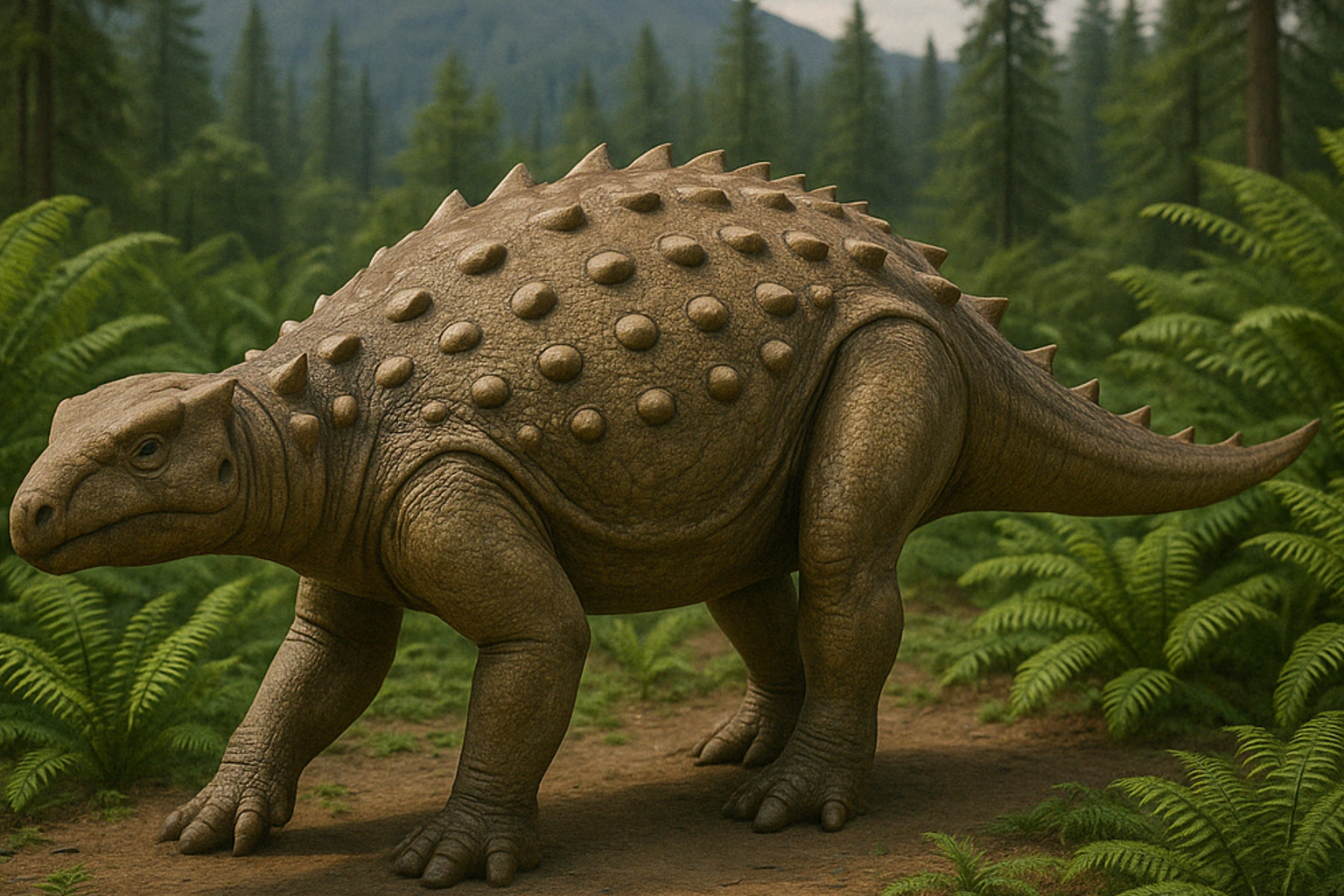
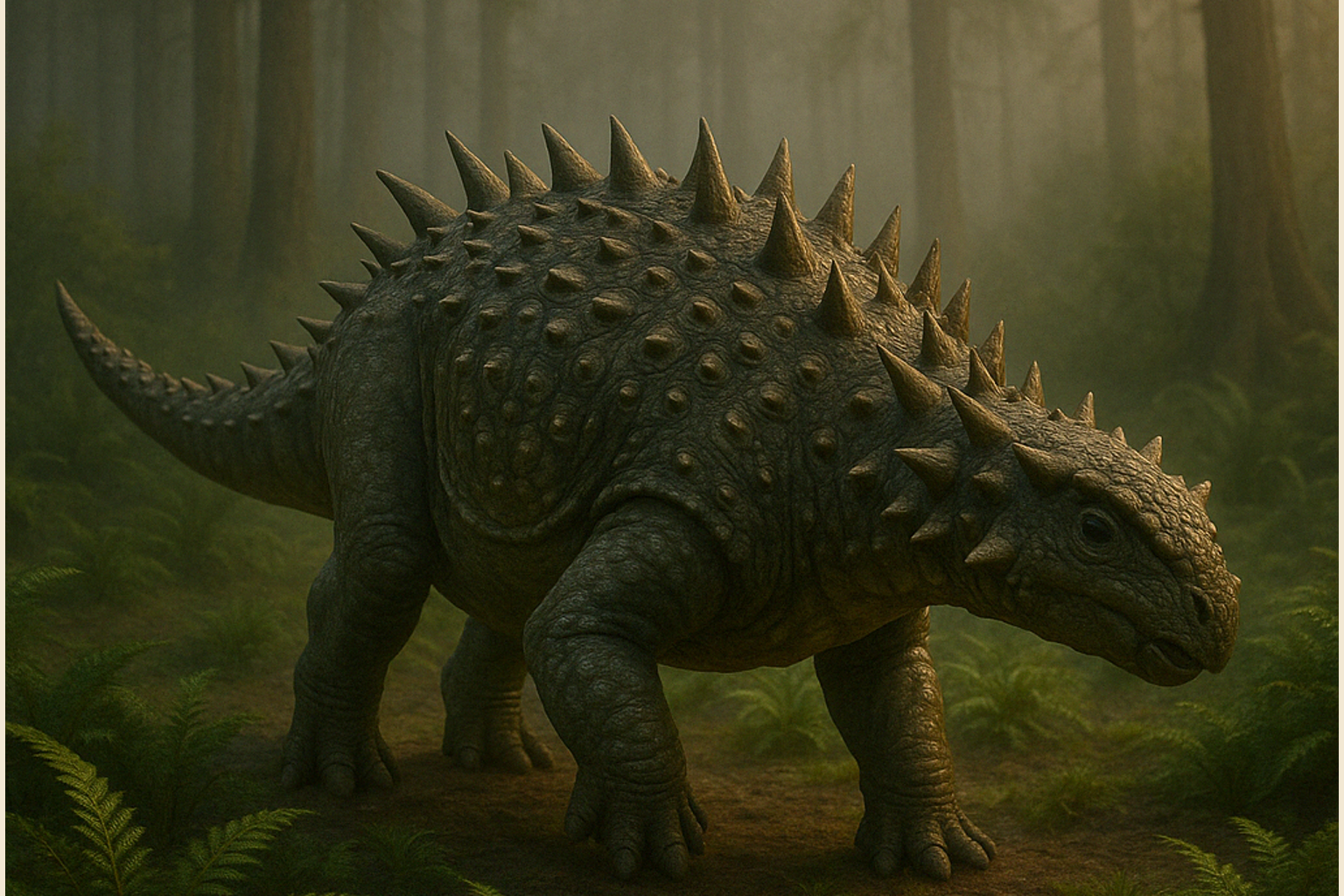
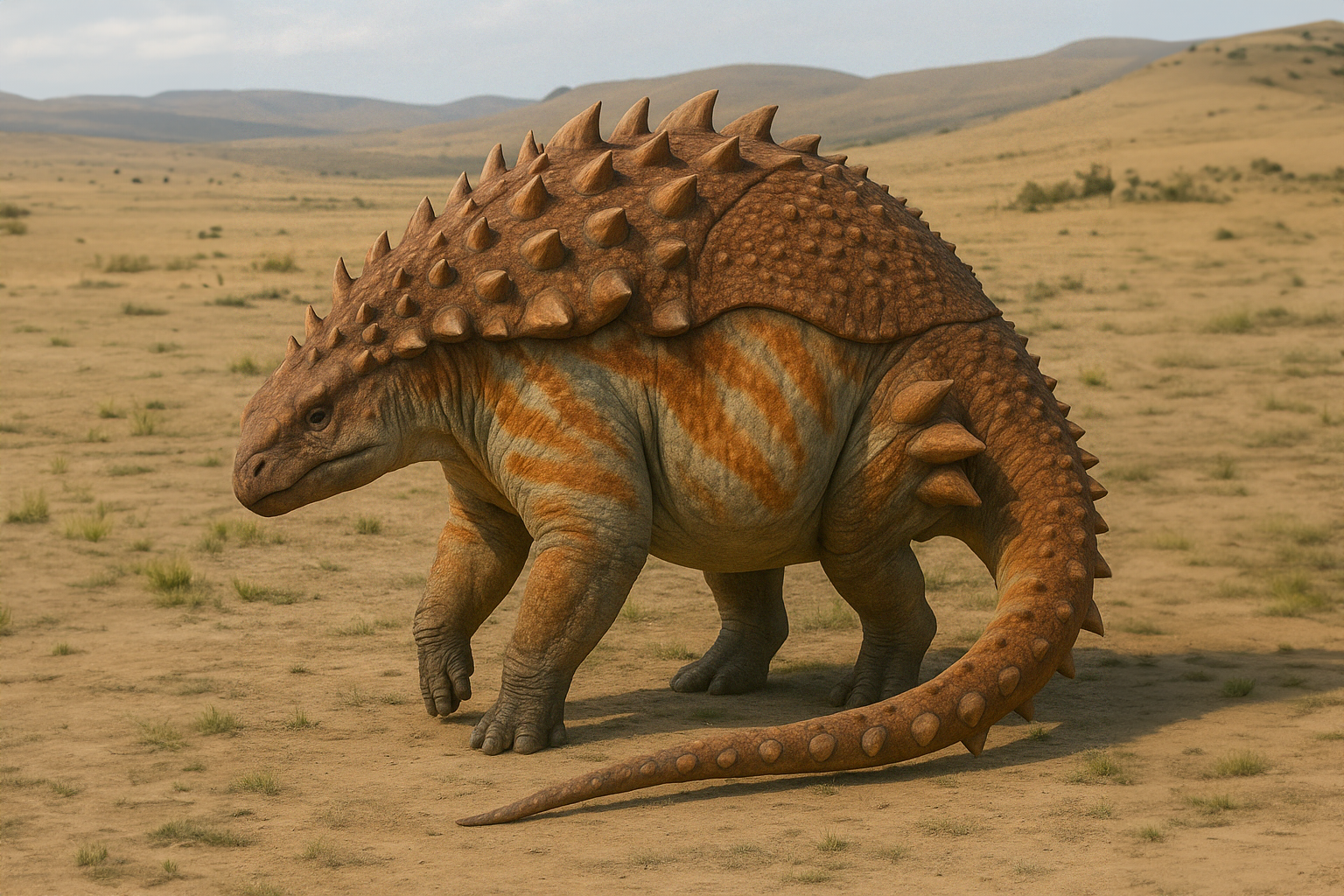
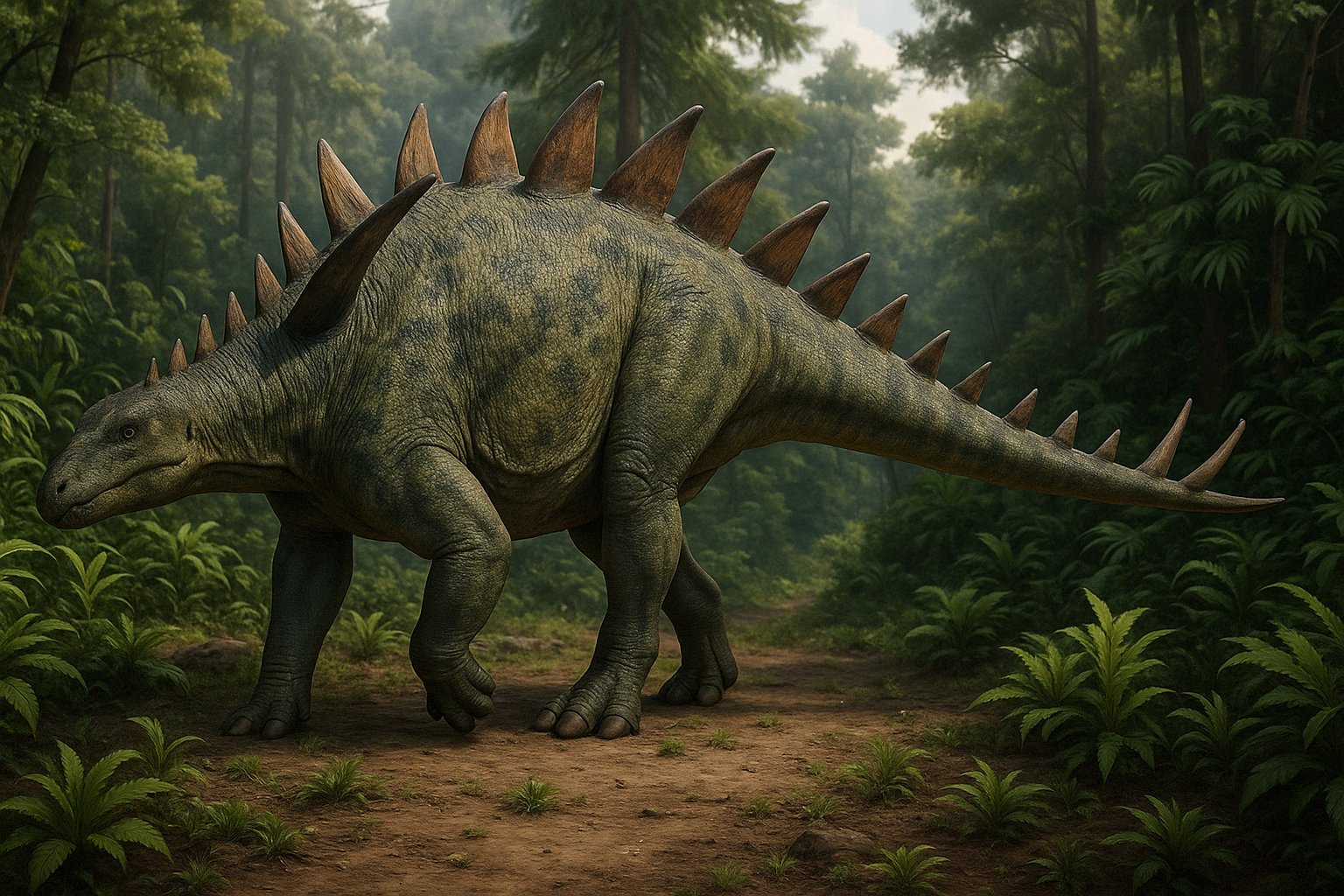
Huayangosaurus was smaller than many of its later stegosaur relatives. It measured about 13 to 15 feet (4 to 4.5 meters) long and weighed an estimated 1,000 pounds (450 kilograms). Its body was low and broad, supported by four sturdy legs. Like other stegosaurs, it had a small head, a short neck, and a long tail.
The most distinctive feature of Huayangosaurus was its armor. Two rows of bony plates, called osteoderms, ran along its back from the neck to the hips. These plates were smaller and more triangular than those of Stegosaurus. Along its tail were two pairs of sharp spikes, likely used for defense—a structure commonly referred to as a “thagomizer.”
Huayangosaurus also had additional small spikes protruding from its shoulders or flanks, offering extra protection from the sides. Its skull had some unique traits too, such as teeth in the front of its jaw—unlike later stegosaurs, which had toothless beaks.
Diet and Feeding Behavior
Huayangosaurus was a herbivore. With its low head and body, it likely fed on ground-level plants, including ferns, cycads, and other soft vegetation that grew close to the forest floor. Its teeth were small and leaf-shaped, suited for slicing rather than grinding.
Like other herbivorous dinosaurs, Huayangosaurus probably swallowed its food with minimal chewing and relied on a large digestive system to break down tough plant fibers through fermentation. It may also have swallowed small stones (gastroliths) to help grind up food in its stomach, though direct evidence of this behavior hasn’t been found in this species.
Discovery and Fossil Record
Huayangosaurus was first discovered in the 1970s and formally described in 1982 by Chinese paleontologists Dong Zhiming, Tang Zilu, and Zhou Shiwu. The name Huayangosaurus taibaii comes from “Huayang,” an ancient name for Sichuan Province, and honors Chinese poet Li Taibai (also known as Li Bai).
The fossils included a partial skeleton with a well-preserved skull, back plates, tail spikes, and various bones. This made Huayangosaurus one of the most completely known stegosaurs at the time of its discovery and the oldest stegosaur described from a nearly complete skeleton.
Since then, more specimens have been found, helping to confirm its place as one of the most primitive stegosaurs and offering clues about how this group first developed their armor and body shape.
Scientific Importance
Huayangosaurus is a key dinosaur in understanding the early evolution of stegosaurs. Its combination of primitive and advanced features—such as its front jaw teeth and relatively small plates—shows how stegosaurs gradually changed over time. It serves as a bridge between more basic ornithischian dinosaurs and the larger, more specialized stegosaurs that appeared later in the Jurassic.
The presence of Huayangosaurus in Asia also helps paleontologists trace how different dinosaur groups spread and diversified across continents during the Jurassic period.
Huayangosaurus in Popular Culture
While not as well-known as Stegosaurus, Huayangosaurus has appeared in some books, museum exhibits, and educational media focused on early dinosaurs or Asian fossil discoveries. Its spiky look and important evolutionary role make it a favorite among dinosaur enthusiasts who enjoy learning about lesser-known but significant species.
The Zigong Dinosaur Museum in China, located near where its fossils were found, features Huayangosaurus prominently and highlights its importance in Chinese paleontology.
Final Thoughts
Huayangosaurus may not have been the biggest or most famous dinosaur, but it was a trailblazer in the world of armor-plated plant eaters. As one of the earliest known stegosaurs, it shows how this fascinating group got its start—small, spiky, and well-equipped for defense. With its well-preserved fossils and its role in the early evolution of stegosaurs, Huayangosaurus remains an important and intriguing dinosaur from the heart of Jurassic China.