Archaeopteryx is the #10 seed in the Theropods division of the Dinosaur Tournament.
Archaeopteryx is one of the most iconic and scientifically important fossils ever discovered. Known as the “first bird,” it represents a key moment in the evolutionary transition between non-avian dinosaurs and modern birds. With features of both groups—teeth and a long tail like a dinosaur, feathers and wings like a bird—Archaeopteryx has helped shape our understanding of how flight evolved.
When and Where It Lived
Archaeopteryx lived during the Late Jurassic period, about 150 million years ago. Its fossils have been found exclusively in the Solnhofen Limestone of Bavaria, in southern Germany. During the Jurassic, this area was a series of tropical islands surrounded by shallow seas and lagoons. The fine-grained sediment in these waters created perfect conditions for fossil preservation, capturing incredible detail—including feathers.
So far, about a dozen specimens of Archaeopteryx have been discovered, most of them remarkably complete and well-preserved.
Size and Appearance
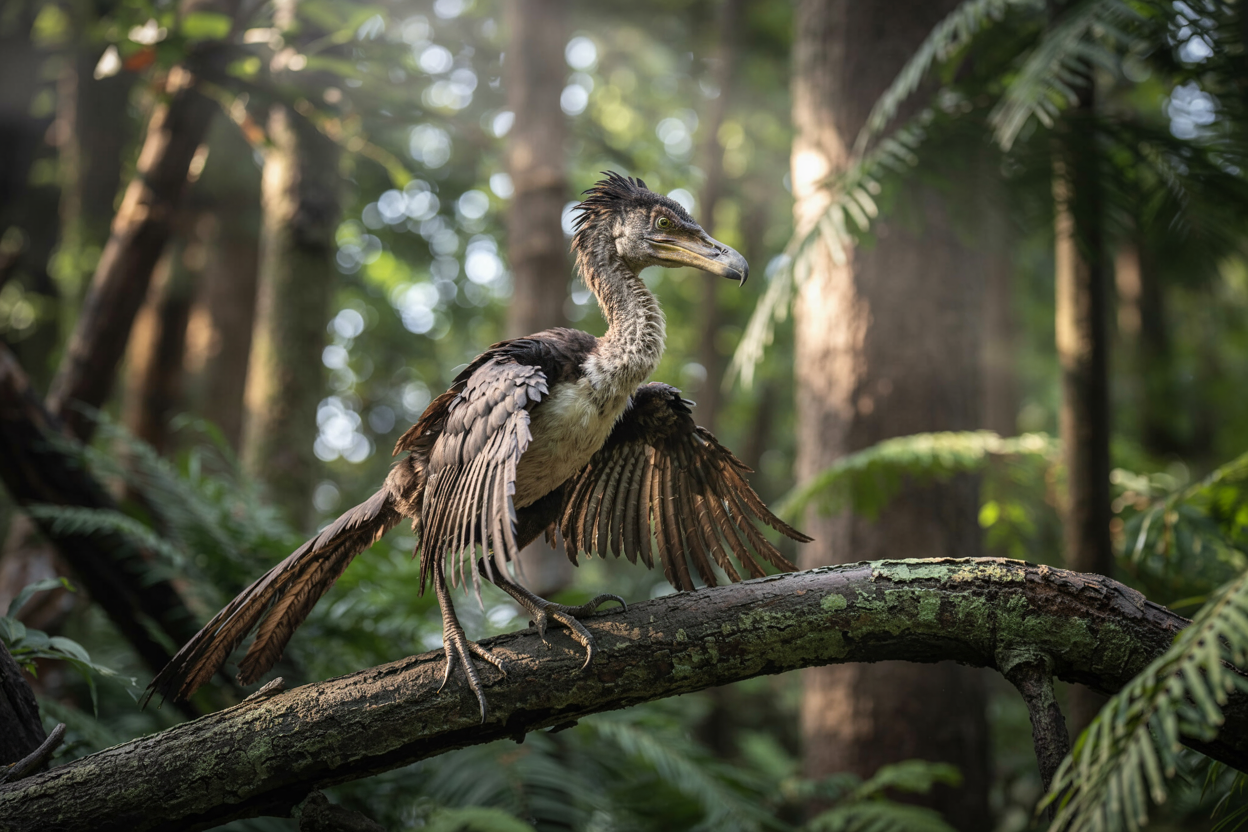
Despite its fame, Archaeopteryx was a small animal. It was about the size of a modern raven, measuring around 20 inches (50 cm) from head to tail and weighing roughly 1 to 2 pounds (0.5 to 1 kg). It had a combination of features seen in both dinosaurs and birds.
Its skeleton included a long, bony tail, claws on its wings, and small teeth—traits typical of theropod dinosaurs. But it also had well-developed feathers on its wings and tail, suggesting some ability to glide or possibly even fly.
The structure of its feathers is nearly identical to those of modern birds, with asymmetrical vanes that help create lift during flight. Its wings had three clawed fingers, which may have been used for climbing or grasping.
Flight Capabilities
Whether or not Archaeopteryx could truly fly is still debated. Its feather structure and lightweight body suggest it had some level of flight capability—perhaps similar to how modern birds like pheasants or turkeys take off in short bursts.
However, it lacked some of the adaptations that make strong, sustained flight possible in modern birds, such as a large breastbone (sternum) for anchoring powerful flight muscles. It may have been a weak flier or a glider, using trees or elevated surfaces to launch itself into the air.
Its curved claws and long arms suggest it may have been adapted for climbing, which supports the idea that it could leap or glide from branch to branch in a forested environment.
Diet and Lifestyle
Archaeopteryx was likely a carnivore, feeding on small reptiles, insects, and possibly other small animals. Its teeth, claws, and sharp beak would have helped it catch and consume prey.
It probably lived in or near forested areas and lagoons, using both its climbing and gliding abilities to navigate its environment. Like many small theropods, it likely relied on speed, agility, and stealth to survive.
Discovery and Scientific Importance
The first Archaeopteryx fossil was discovered in 1861, just two years after Charles Darwin published On the Origin of Species. The timing couldn’t have been more significant. The fossil showed a clear link between reptiles and birds, providing strong support for the idea of evolution and the concept that birds evolved from dinosaurs.
Over time, additional specimens were found, including the famous “Berlin specimen,” which preserved the entire skeleton along with feather impressions. These fossils showed that Archaeopteryx had many features of small theropod dinosaurs, especially dromaeosaurs and troodontids.
Today, Archaeopteryx is considered one of the most important transitional fossils ever found. It sits near the base of the avian family tree and is often used in textbooks and documentaries to illustrate how flight and feathers evolved.
Evolutionary Significance
Archaeopteryx belongs to a group of dinosaurs called Avialae, which includes all birds and their closest dinosaur relatives. It helps bridge the gap between ground-dwelling, meat-eating dinosaurs and the birds we see today.
Its discovery helped scientists understand that feathers likely evolved before flight—possibly for insulation or display—and were later adapted for gliding and flying.
As more feathered dinosaur fossils have been discovered in China and elsewhere, Archaeopteryx remains a crucial reference point for understanding early bird evolution.
Pop Culture and Public Recognition
Archaeopteryx has become a symbol of evolutionary science. It frequently appears in museum exhibits, documentaries, and books. Its dramatic appearance—feathers combined with a dinosaur-like skeleton—captures the imagination and makes it one of the most recognized prehistoric animals.
It’s also one of the few fossils known by name outside the scientific community, thanks to its role in one of the most compelling scientific stories ever told.
Final Thoughts
Archaeopteryx may not have been the first bird in the strictest sense, but it remains one of the most important fossils in the history of paleontology. Its blend of dinosaur and bird features offers a snapshot of evolution in action—a time when flight was just beginning to take shape.
With its feathered wings, toothy grin, and dinosaurian tail, Archaeopteryx is a reminder that the line between ancient reptiles and modern birds is much thinner than it once seemed.