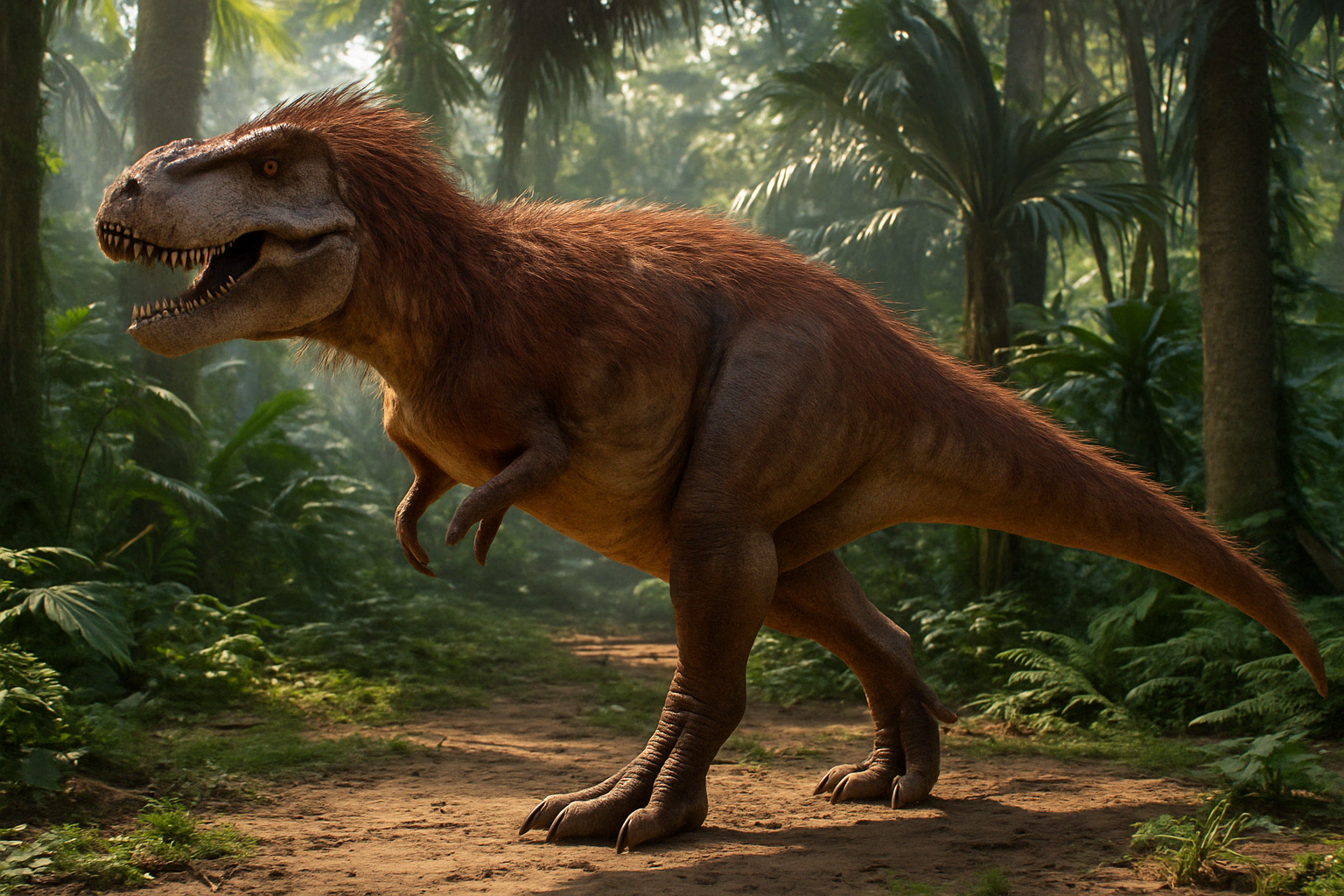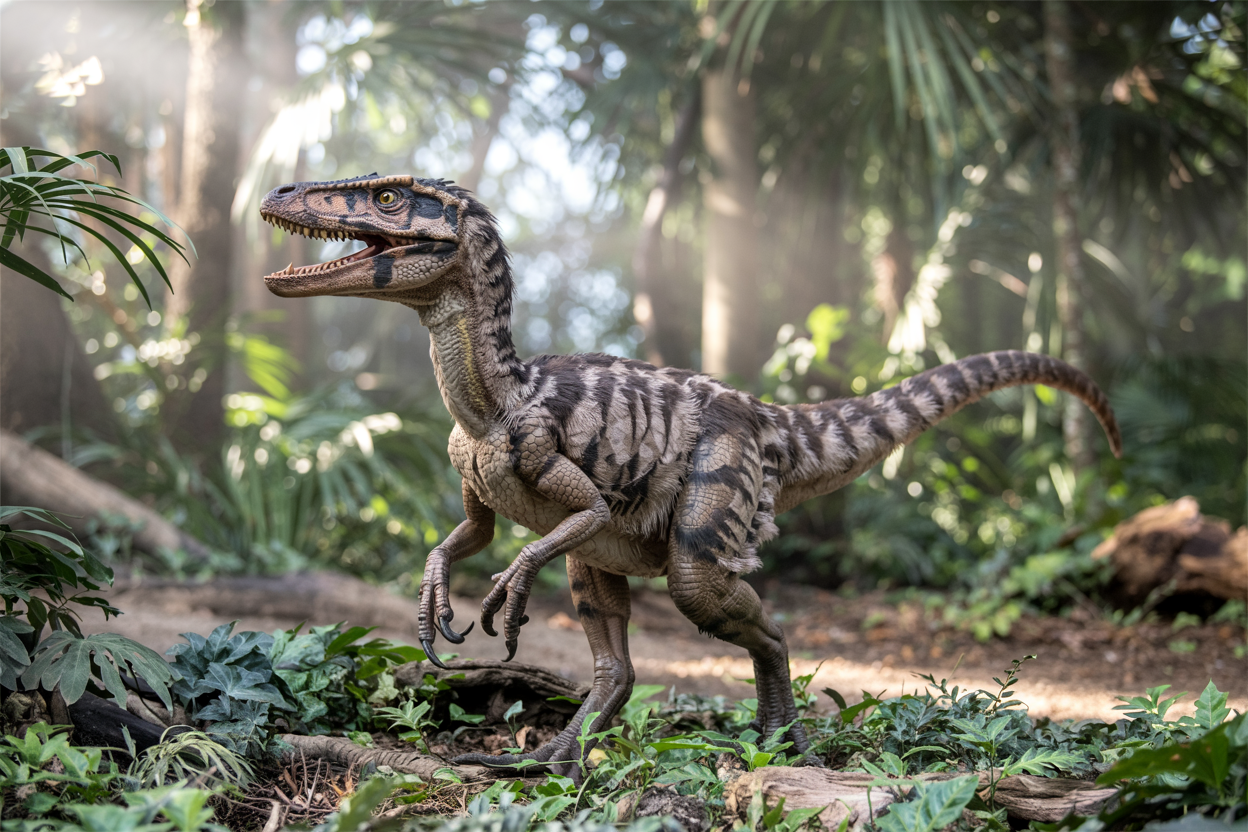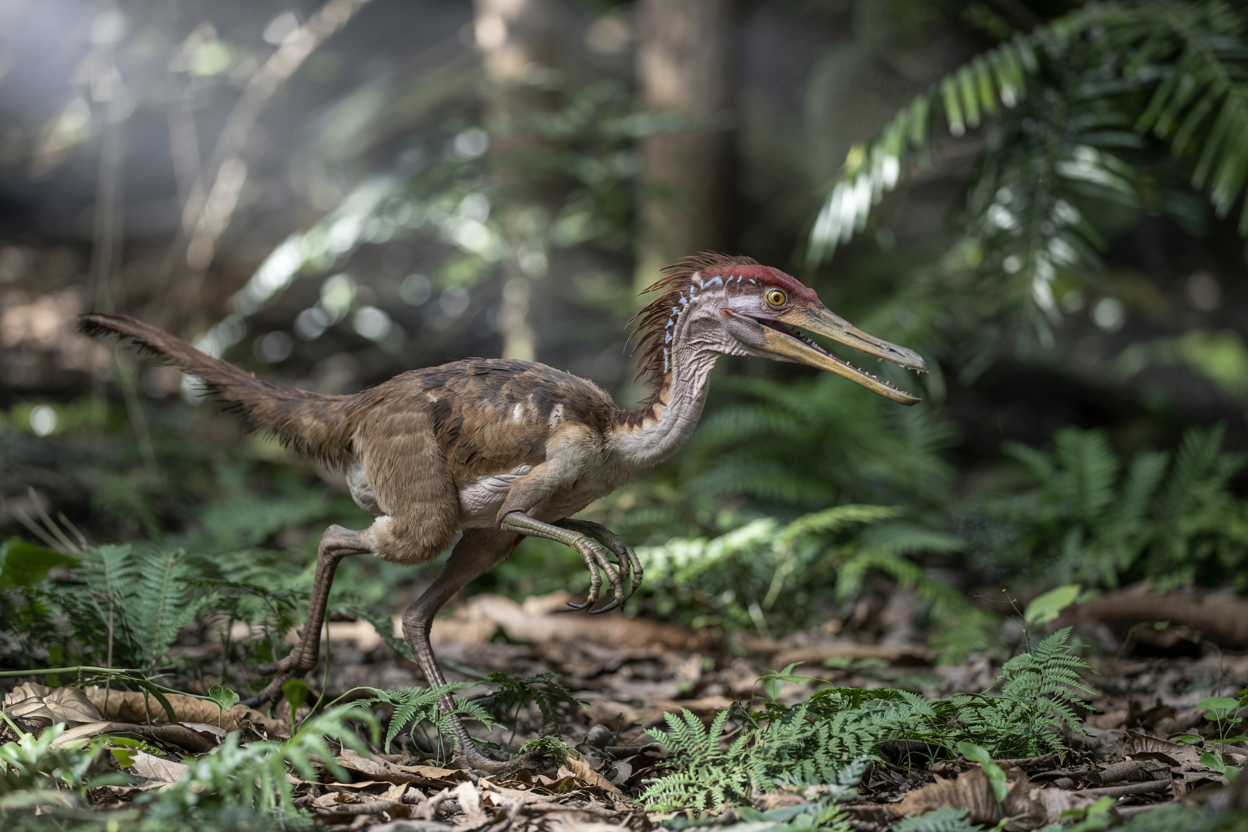
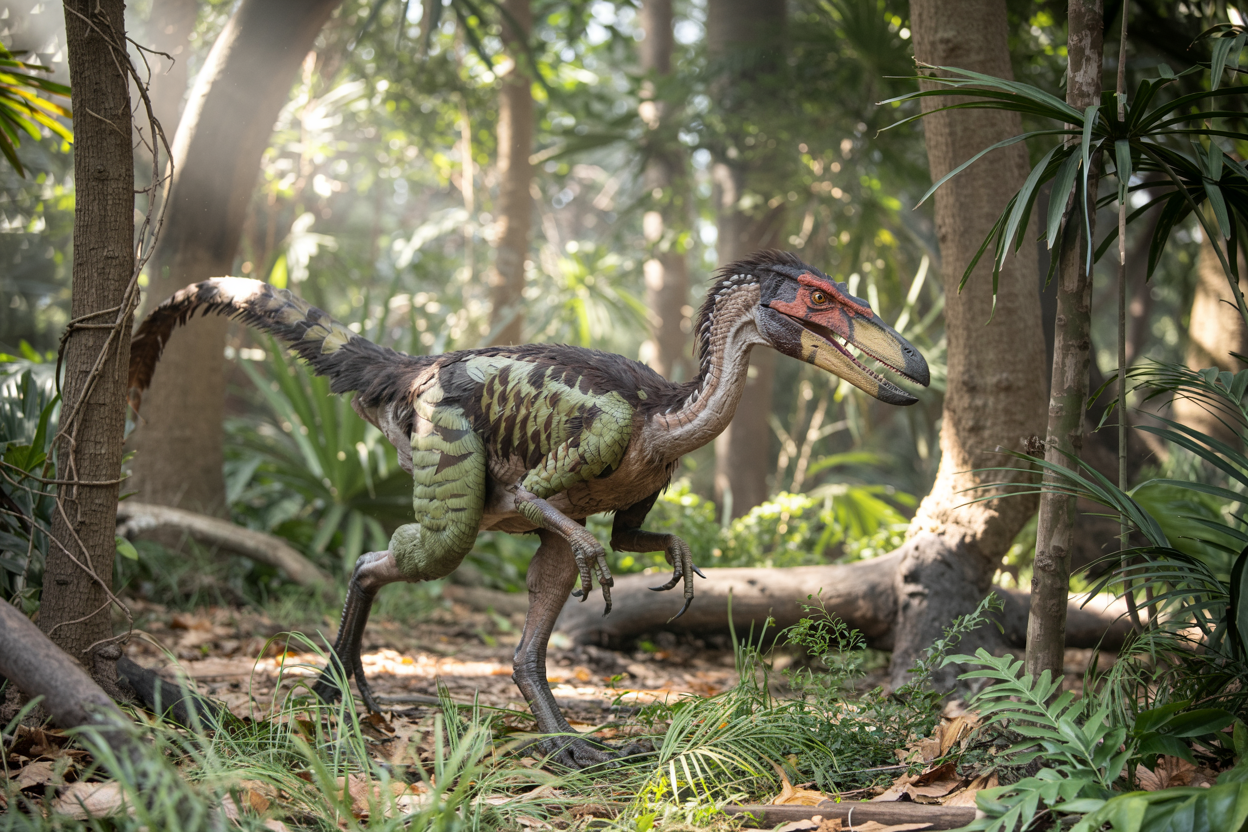
Deinonychus is the #11 seed in the Theropods division of the Dinosaur Tournament.
Deinonychus is one of the most influential dinosaur discoveries in modern paleontology. This agile, intelligent predator helped reshape our understanding of dinosaurs—showing they were not just slow, cold-blooded reptiles but active, dynamic animals more closely related to birds. With its sharp claws, lightweight frame, and possible pack behavior, Deinonychus was a fearsome hunter of the Early Cretaceous period.
When and Where It Lived
Deinonychus antirrhopus lived approximately 115 to 108 million years ago during the Early Cretaceous period. Fossils have been found in the western United States, particularly in Montana, Oklahoma, Utah, and Wyoming.
During that time, the landscape was warm and filled with rivers, forests, and floodplains. This region supported a variety of life, including large herbivorous dinosaurs like Tenontosaurus, which may have been common prey for Deinonychus.
Size and Appearance
Although not as large as its Hollywood cousin Velociraptor is often portrayed, Deinonychus was still an impressive predator. It measured about 10 to 12 feet (3 to 3.5 meters) in length and stood roughly 3 feet (1 meter) tall at the hips. It likely weighed around 150 to 200 pounds (70 to 90 kilograms), about the size of a large wolf or small bear.
One of its most distinctive features was the large sickle-shaped claw on the second toe of each foot. This claw, which could grow up to 5 inches (13 cm) long, was held off the ground while walking and likely used to slash or grip prey. Its long, stiff tail helped with balance, especially when running or making quick turns.
Deinonychus had long arms with three-fingered hands tipped with sharp claws. Its skull was relatively large with a strong jaw and serrated teeth designed for slicing through flesh. Fossil evidence and comparisons with related species suggest that it was likely covered in feathers, further supporting its close relationship to modern birds.
Behavior and Hunting Style
Deinonychus was a fast, agile carnivore. It likely hunted smaller dinosaurs, reptiles, and possibly scavenged when necessary. Its anatomy points to a highly active lifestyle—strong legs for running, sharp claws for grasping, and a keen brain for processing information.
Some paleontologists believe that Deinonychus may have hunted in coordinated groups, especially given the discovery of multiple individuals near the remains of large prey animals like Tenontosaurus. However, this idea is still debated, as it’s unclear whether the fossils represent cooperative hunting or simply a feeding frenzy after the kill.
Regardless of whether it hunted alone or in groups, Deinonychus was clearly an effective predator.
Discovery and Impact on Paleontology
Deinonychus was first described in 1969 by paleontologist John H. Ostrom. Its discovery was groundbreaking. At the time, the common image of dinosaurs was of slow, lumbering reptiles. But Deinonychus had long legs, a lightweight body, and features associated with high activity levels.
Ostrom’s study of Deinonychus played a key role in what’s known as the “dinosaur renaissance”—a period in the late 20th century when scientists began to seriously reconsider the biology and behavior of dinosaurs. It also helped revive the idea that birds evolved from small theropod dinosaurs.
Many features of Deinonychus—feathers, hollow bones, upright posture, and the structure of its hands and feet—are now recognized as bird-like traits. Its discovery helped bridge the gap between traditional dinosaur models and the evolutionary story of birds.
Deinonychus vs. Velociraptor
Thanks to popular films like Jurassic Park, many people are more familiar with Velociraptor, often depicted as a human-sized, intelligent hunter. In reality, the dinosaurs portrayed in the movies were more accurately based on Deinonychus in size and behavior.
Velociraptor was actually much smaller—about the size of a turkey—and lived in Asia rather than North America. The movie creators likely chose the name Velociraptor because it sounded more dramatic, but the real-life traits seen on screen largely came from Deinonychus.
Evolutionary Connections
Deinonychus is a member of the dromaeosaurid family, a group of feathered theropods that share a close evolutionary relationship with birds. Its bird-like features and likely feathered body make it an important species in understanding how flight and other avian traits evolved.
While Deinonychus itself wasn’t capable of flight, it shows that many features we associate with birds—like feathers and high activity levels—evolved in ground-dwelling dinosaurs first.
Final Thoughts
Deinonychus was more than just a sharp-toothed predator—it was a dinosaur that changed how we think about all dinosaurs. Its bird-like anatomy, dynamic movement, and role in sparking new scientific ideas make it one of the most important fossil discoveries of the 20th century.
Today, Deinonychus continues to inspire scientists, educators, and dinosaur enthusiasts alike. It reminds us that prehistoric life was far more complex, active, and fascinating than we ever imagined.