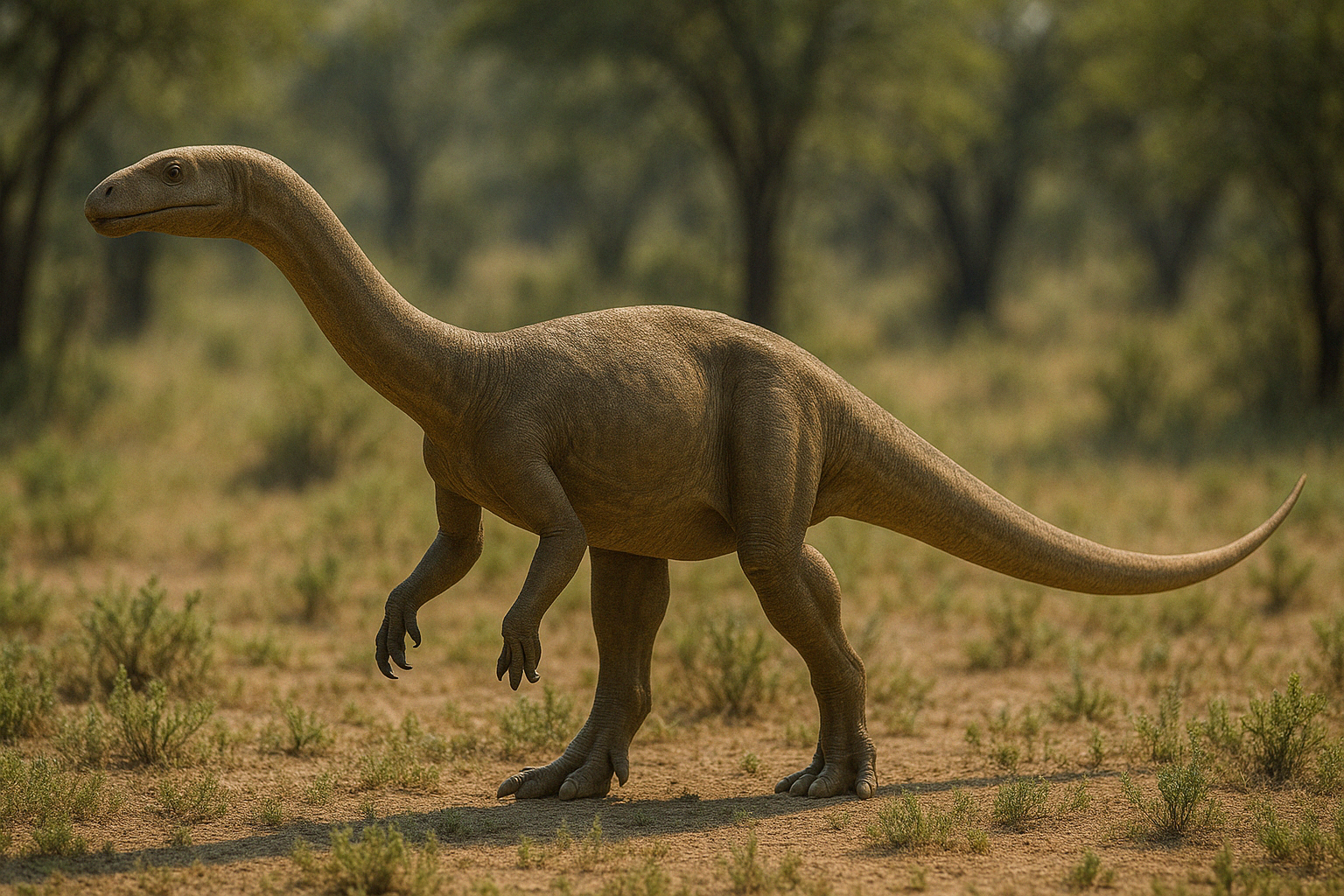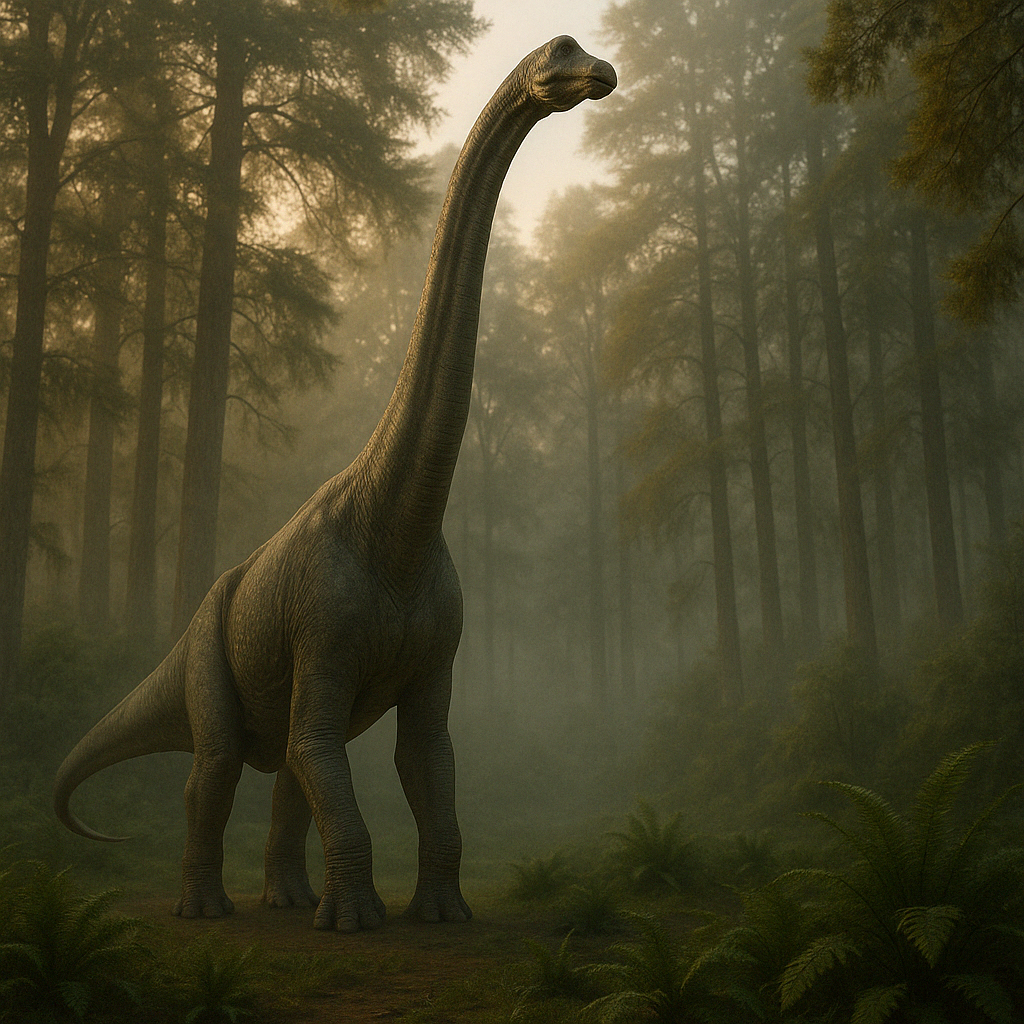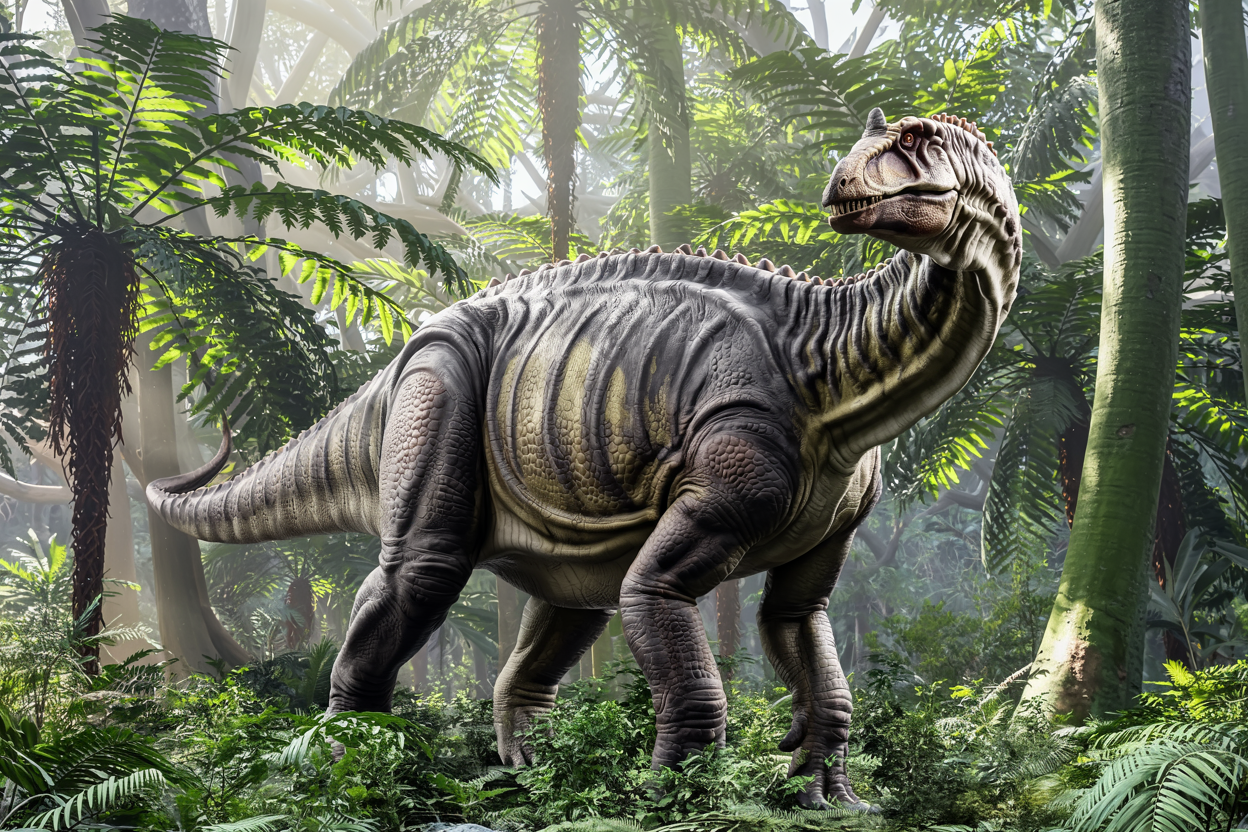
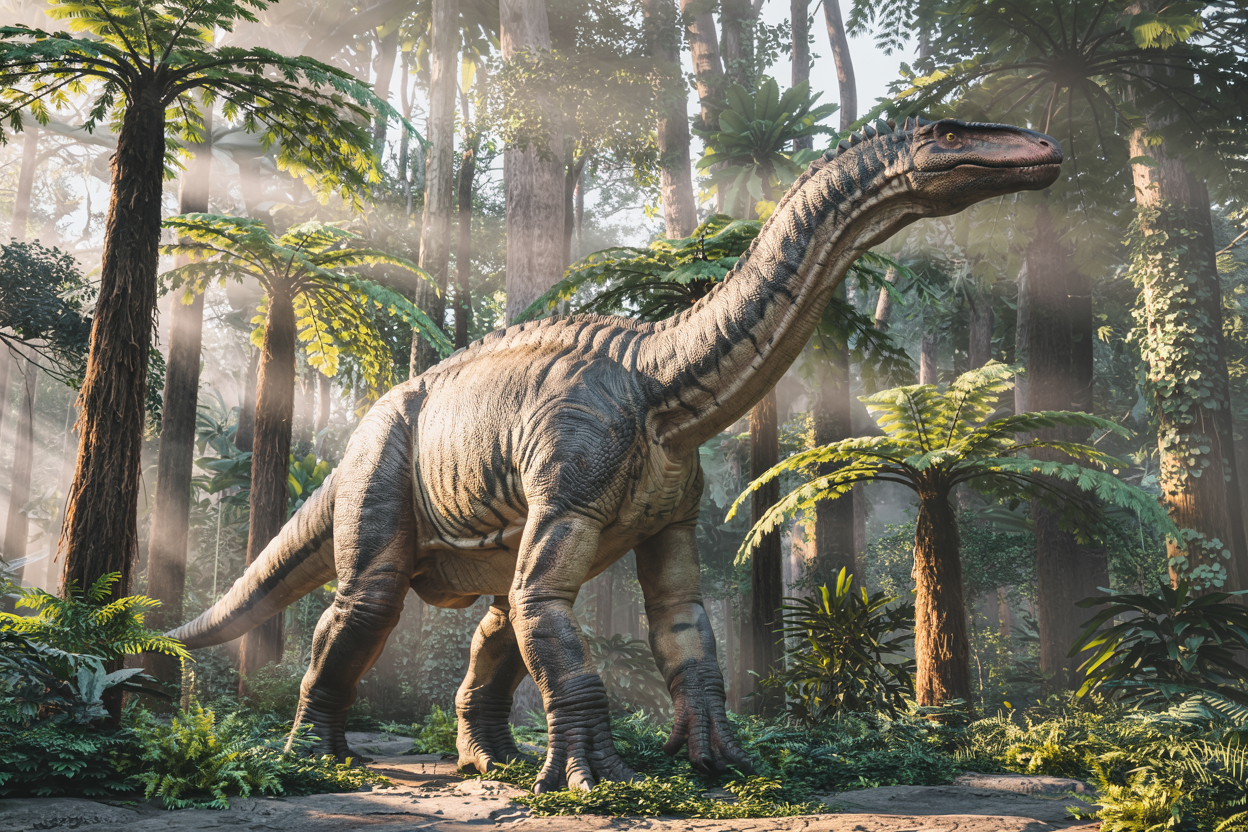
Argentinosaurus is the #4 seed in the Sauropods division of the Dinosaur Tournament.
Argentinosaurus was a truly colossal dinosaur. Believed to be one of the largest land animals to have ever lived, this massive sauropod belonged to a group of long-necked, plant-eating dinosaurs that dominated the prehistoric world. Despite being known from only partial remains, Argentinosaurus has become one of the most famous examples of dinosaur gigantism.
When and Where It Lived
Argentinosaurus lived during the Late Cretaceous period, about 94 to 97 million years ago. Its fossils were discovered in South America, specifically in what is now the Neuquén Province of Argentina. During the Cretaceous, this region was part of a warm, semi-arid landscape with river systems, woodlands, and an abundance of plant life to support large herbivores.
This giant sauropod lived alongside other massive dinosaurs, including fellow titanosaurs, armored dinosaurs, and large predators like Mapusaurus, which may have hunted in groups to take down large prey. Argentinosaurus was part of a diverse and complex ecosystem that included a mix of towering herbivores and agile carnivores.
Size and Physical Characteristics
Argentinosaurus is estimated to have reached lengths of up to 100 feet (30 meters) or more and may have weighed between 70 and 100 tons. That’s heavier than a dozen African elephants combined. While its full body has never been found, scientists have used related species and the partial skeleton to estimate its size and proportions.
Like other titanosaurs, Argentinosaurus had a long neck for reaching high vegetation, a massive body, and a long tail that helped with balance. Its legs were thick and column-like, built to support its enormous weight. Its head was small compared to its body and likely had peg-like teeth for stripping leaves off trees.
Despite its size, Argentinosaurus probably moved slowly and steadily, using its sheer size as a defense against predators. Fully grown adults would have had few natural enemies.
Diet and Feeding Behavior
Argentinosaurus was an herbivore, feeding on a variety of plants available in its environment. With its long neck, it could likely browse high up in the forest canopy, eating leaves, conifers, and possibly flowering plants. It may have also swept wide areas of low vegetation without needing to move its entire body.
Its teeth were not designed for chewing. Instead, Argentinosaurus probably stripped leaves and swallowed them whole, relying on a large digestive system to break down the plant material over time. Like many sauropods, it may have swallowed stones, known as gastroliths, to help grind food in its stomach.
To maintain its size, Argentinosaurus would have needed to consume massive amounts of food each day—likely spending much of its time feeding.
Discovery and Fossil Record
Argentinosaurus was first discovered in the early 1990s when a farmer in Argentina stumbled upon a massive fossilized bone on his land. Paleontologists later identified it as a vertebra from an enormous sauropod, and the species Argentinosaurus huinculensis was officially named in 1993.
The fossils found so far include several vertebrae, ribs, and parts of the pelvis and limbs. No complete skull has ever been recovered, so reconstructions rely heavily on related titanosaurs to fill in the gaps. Despite the incomplete skeleton, the sheer size of the bones found has allowed scientists to make reasonable estimates about the dinosaur’s overall size and appearance.
Scientific Importance
Argentinosaurus is one of the most significant discoveries in the study of dinosaur gigantism. It represents the upper limit of how large a land animal could grow while still being able to move and function. Studying Argentinosaurus helps scientists understand how sauropods evolved to reach such massive sizes and how their bodies supported this weight.
It also provides insight into the ecosystems of the Late Cretaceous in South America, a region that produced some of the largest and most fascinating dinosaurs ever found.
Argentinosaurus in Pop Culture
Though not as commonly featured as Tyrannosaurus rex or Triceratops, Argentinosaurus has gained popularity in recent years thanks to documentaries, books, and museum exhibits focused on giant dinosaurs. It has been featured in animated shows, paleontology specials, and educational programs that explore the limits of dinosaur size.
Because of its enormous scale, it’s often highlighted in comparisons to other giants and continues to captivate audiences with its almost unimaginable size.
Final Thoughts
Argentinosaurus stands as one of the most awe-inspiring dinosaurs ever discovered. Even with only partial remains, its massive bones tell the story of a creature that pushed the boundaries of what was physically possible for a land-dwelling animal. With its towering neck, immense weight, and peaceful plant-eating lifestyle, Argentinosaurus remains a symbol of prehistoric grandeur and a favorite among dinosaur fans of all ages.