Brachiosaurus is the #1 seed in the Sauropods division of the Dinosaur Tournament.
Brachiosaurus is one of the most iconic dinosaurs to have ever lived. With its towering neck, long front legs, and massive body, it stood out even among the other giants of the Jurassic period. Often portrayed in books, museums, and movies, Brachiosaurus has become a symbol of what many people imagine when they think of a “gentle giant” dinosaur.
When and Where It Lived
Brachiosaurus lived during the Late Jurassic period, around 154 to 150 million years ago. Its fossils have been found in North America, particularly in the Morrison Formation, a fossil-rich area that stretches across parts of Colorado, Utah, and Wyoming. Some similar fossils from Africa were once thought to belong to Brachiosaurus but have since been reclassified into their own genus, Giraffatitan.
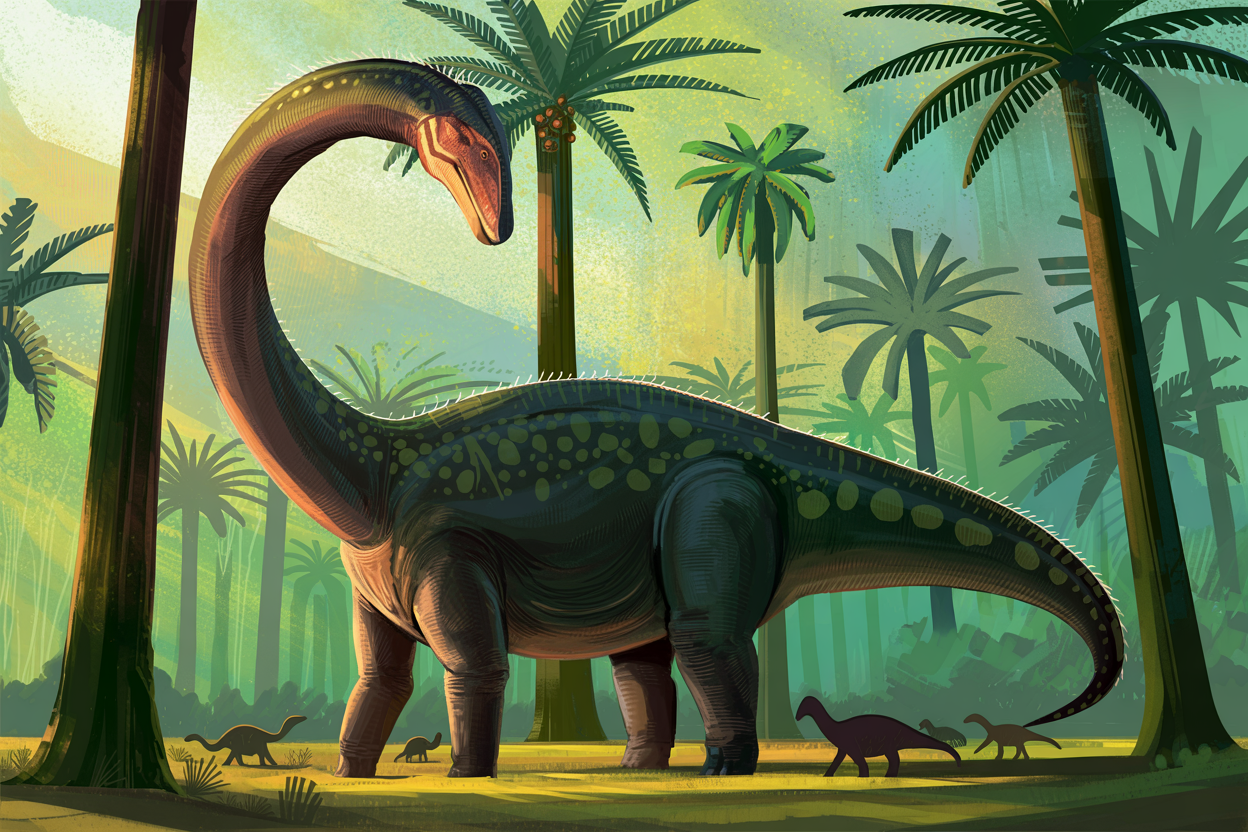
During the Late Jurassic, North America was a warm and semi-arid environment with a mix of floodplains, forests, and river systems. It was home to a wide variety of dinosaurs, including Allosaurus, Diplodocus, and Stegosaurus. Brachiosaurus was one of the largest herbivores in this ancient ecosystem, and it likely had few predators once fully grown.
Size and Appearance
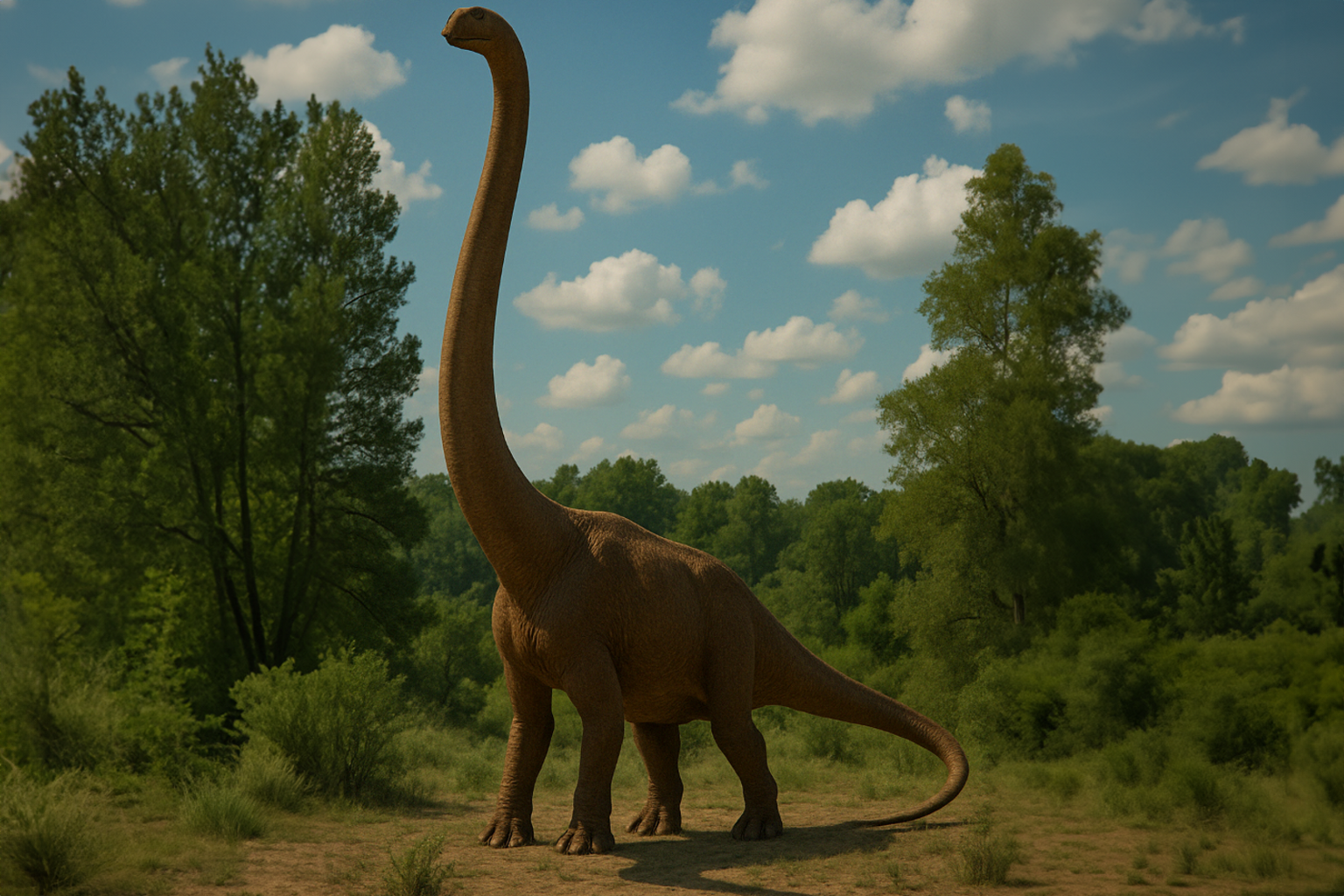
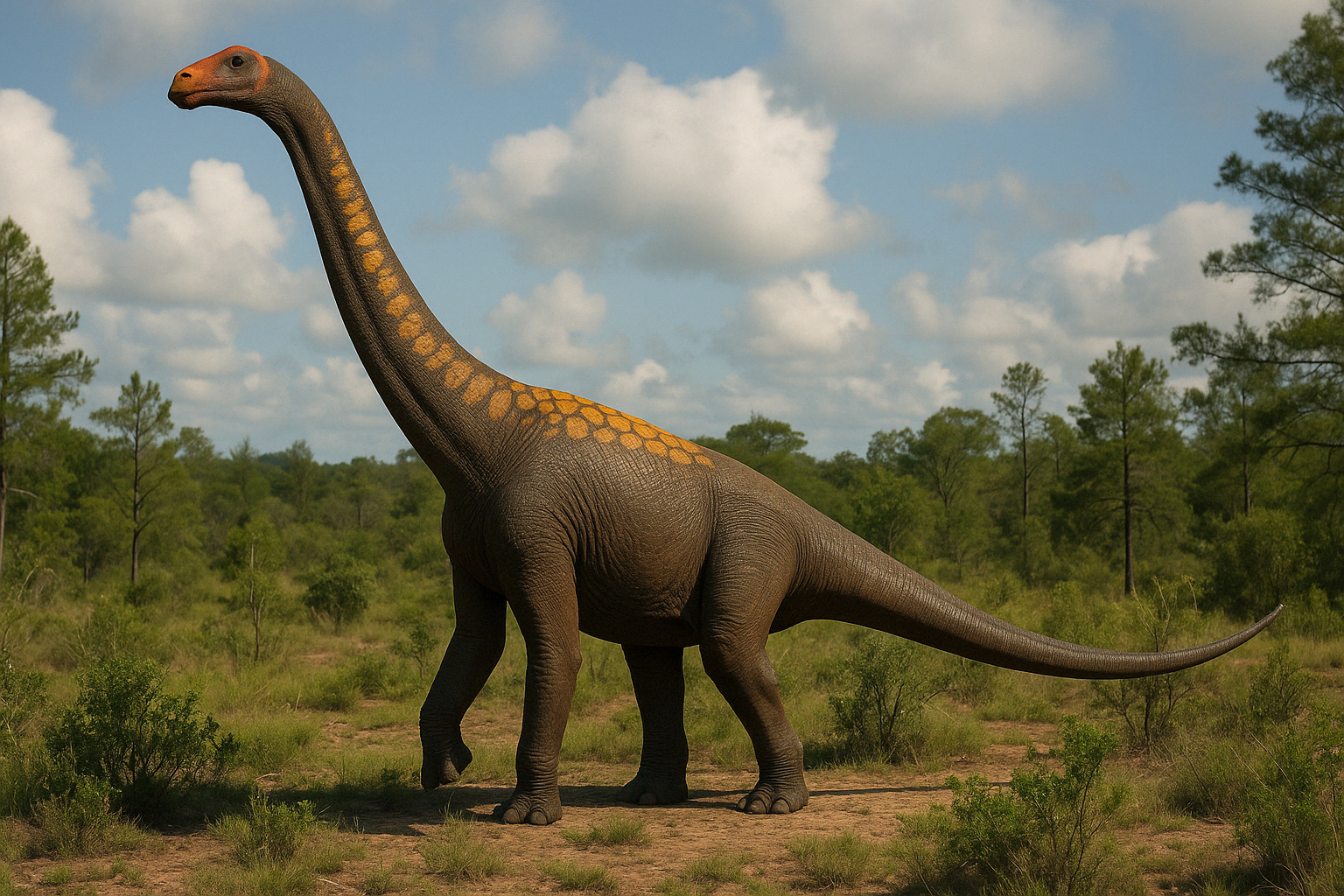
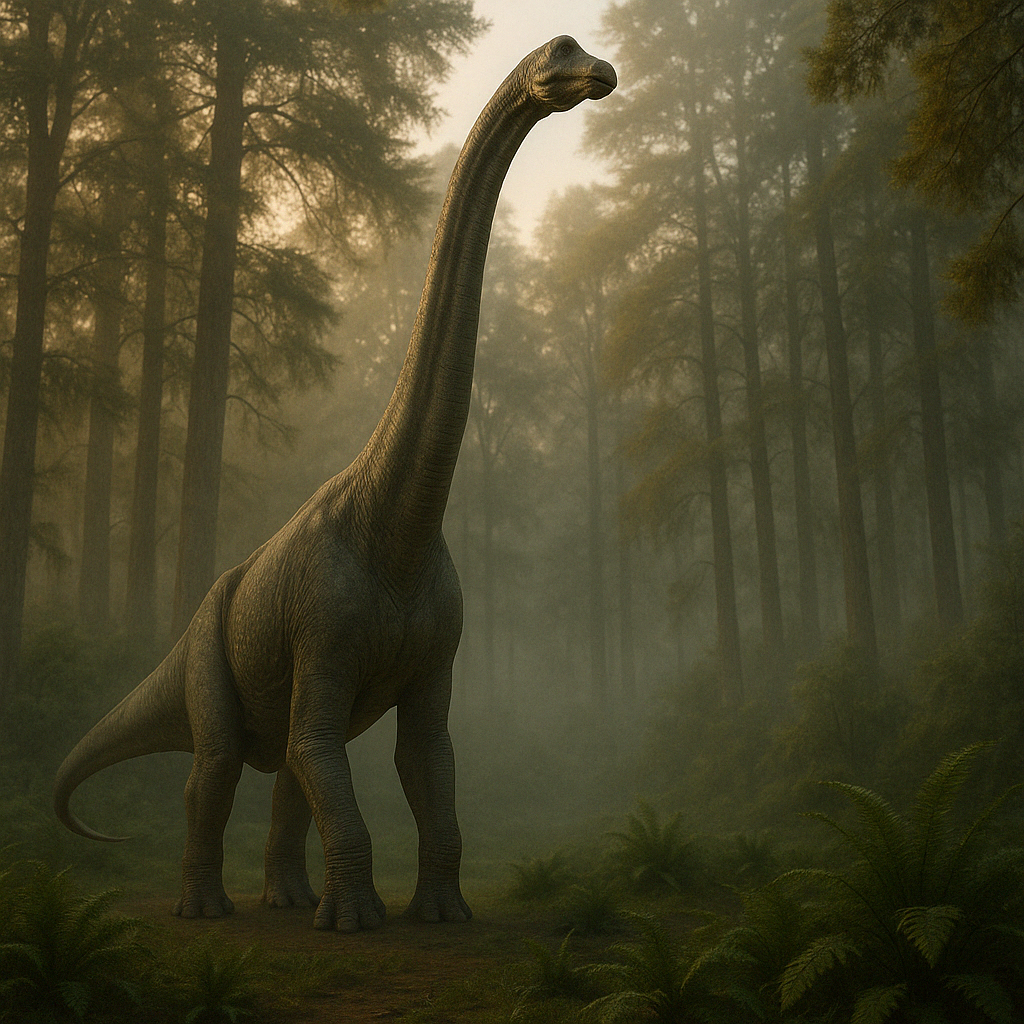
Brachiosaurus was enormous. Estimates suggest it could reach lengths of 80 feet (24 meters) and weigh as much as 60 tons. What made it especially distinctive was its unique body shape. Unlike most other sauropods, Brachiosaurus had longer front legs than back legs, giving its body a sloped appearance and elevating its head higher off the ground.
Its long neck allowed it to browse for food high in the tree canopy—well above the reach of other herbivorous dinosaurs. Its small head had spoon-shaped teeth, ideal for stripping leaves from tall trees. Its tail was long and thick but not as whip-like as the tails of other sauropods like Diplodocus.
This upright, giraffe-like posture is one of the reasons Brachiosaurus is often depicted stretching its neck into the treetops, feeding calmly while other dinosaurs move below.
Diet and Feeding Behavior
Brachiosaurus was a herbivore, feeding mainly on leaves, conifers, and possibly ferns and ginkgoes. Its high-reaching neck allowed it to eat vegetation that most other herbivores couldn’t reach, which may have reduced competition for food.
Its peg-like teeth weren’t designed for chewing. Instead, it likely stripped leaves and swallowed them whole, relying on fermentation in a large digestive system to break down the plant material. Like many modern herbivores, Brachiosaurus may have swallowed stones (gastroliths) to help grind food in its stomach.
Its massive size meant it had to consume vast amounts of vegetation each day to sustain itself, and it probably spent most of its time feeding.
Discovery and Fossil Record
Brachiosaurus was first described in 1903 by American paleontologist Elmer Riggs, based on fossils found in western Colorado. Riggs recognized its unique limb proportions and named it Brachiosaurus altithorax, meaning “arm lizard with a deep chest.”
Since then, more fossils have been discovered in North America, helping paleontologists better understand its anatomy. For many years, fossils from Africa were also classified as Brachiosaurus, but further study led to the creation of a separate genus, Giraffatitan, which is similar but slightly different in shape and size.
Despite its fame, complete Brachiosaurus skeletons are rare. Most museum reconstructions are composites or based partly on related species. Even so, Brachiosaurus remains one of the best-known sauropods thanks to its distinctive look and frequent appearance in popular media.
Scientific Importance
Brachiosaurus belongs to the sauropod group of dinosaurs, known for their long necks, long tails, and massive bodies. It’s part of a subgroup called Macronaria, which includes other high-browsing sauropods.
Its unusual limb proportions and upright posture make it a key species for studying sauropod diversity and evolution. It also helps scientists understand how such enormous animals moved, fed, and survived in prehistoric ecosystems.
Ongoing research into Brachiosaurus and its relatives continues to shed light on how these massive animals functioned—and how they managed to grow to such incredible sizes.
Brachiosaurus in Popular Culture
Brachiosaurus has been featured in countless books, documentaries, and films. It made a memorable appearance in the 1993 movie Jurassic Park, where it was the first dinosaur shown on-screen, standing on its hind legs to reach high branches. That scene helped cement Brachiosaurus as a favorite among dinosaur fans of all ages.
Its gentle giant image, long neck, and towering size make it one of the most recognizable dinosaurs in the world. Whether in science or entertainment, Brachiosaurus continues to inspire awe and curiosity.
Final Thoughts
Brachiosaurus was one of the tallest and most impressive dinosaurs to ever live. With its towering neck, massive body, and peaceful feeding habits, it stood out among the giants of the Jurassic. Although its fossils are incomplete, what we do know paints the picture of a truly remarkable creature—one that continues to fascinate scientists and dinosaur lovers over a century after its discovery.