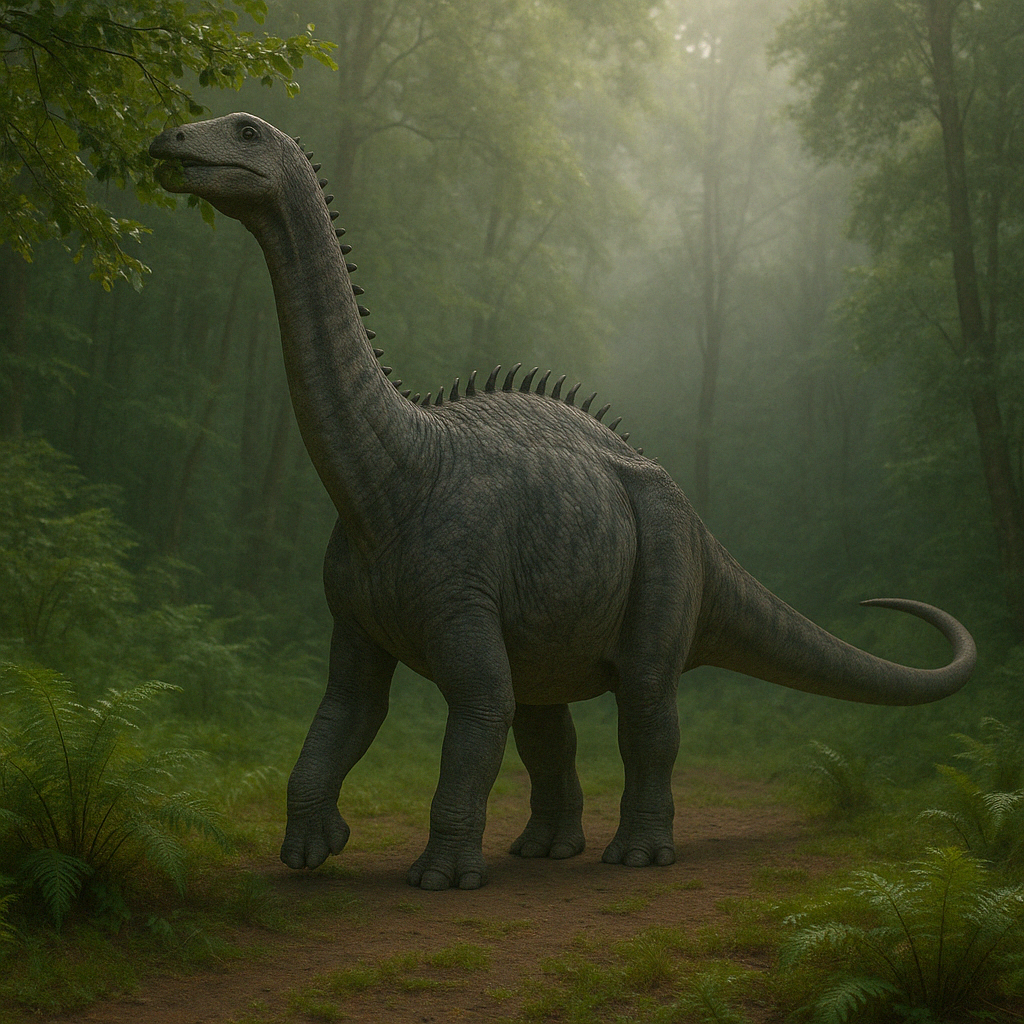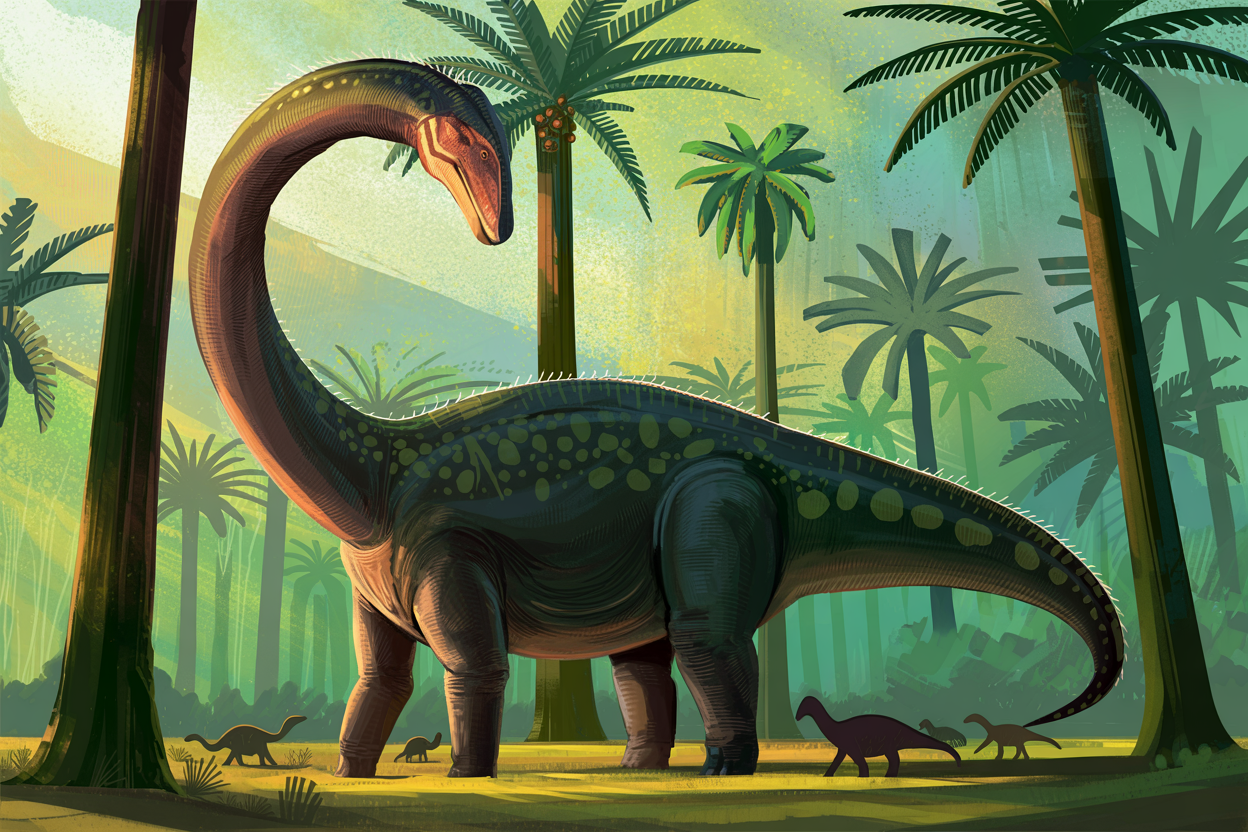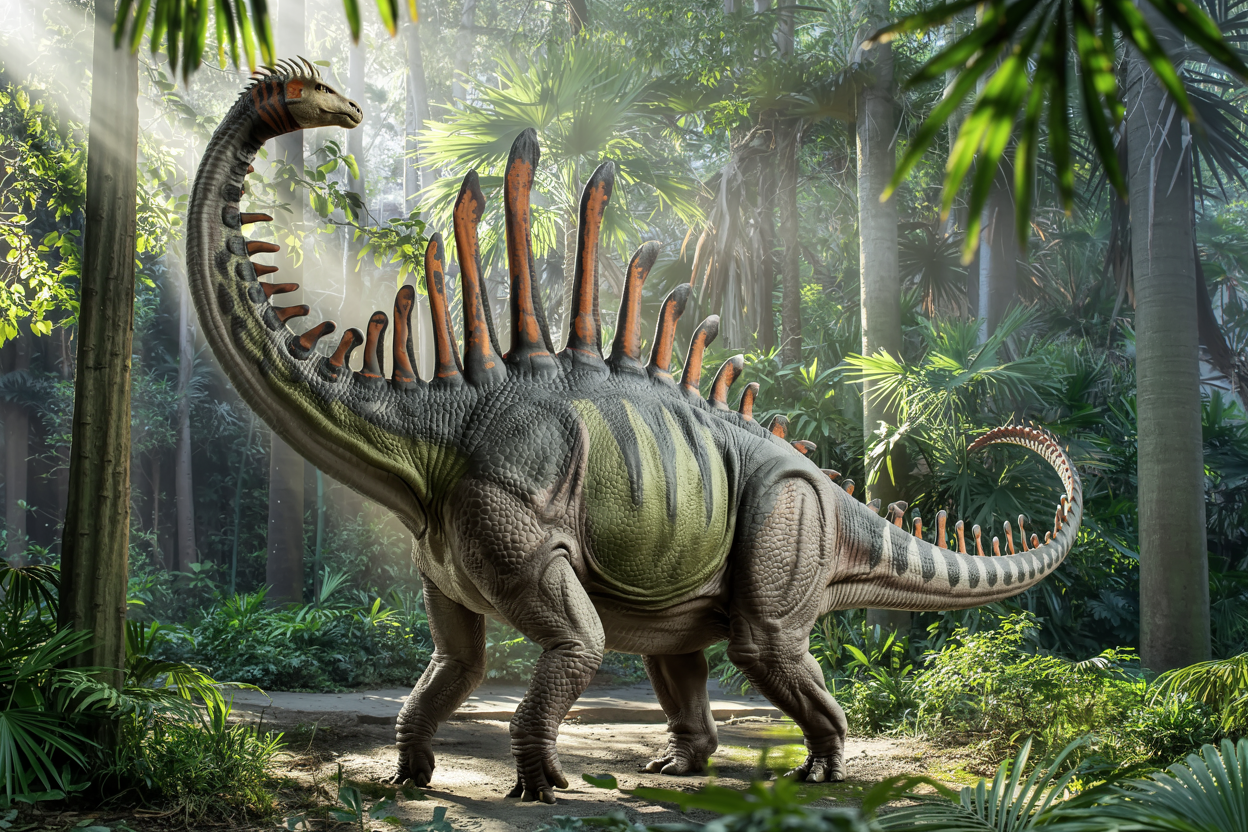
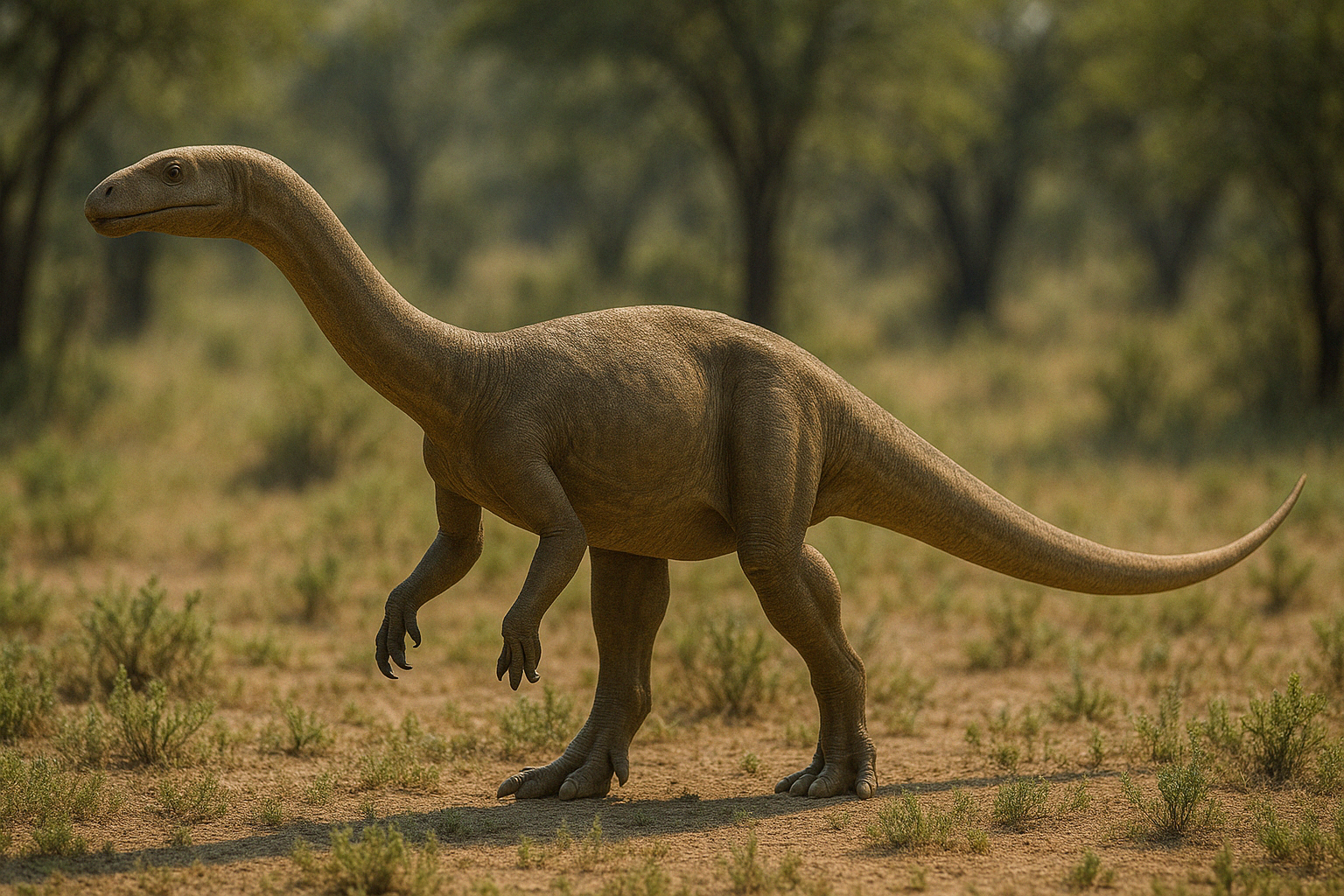
Massospondylus is the #16 seed in the Sauropods division of the Dinosaur Tournament.
Massospondylus was a long-necked, herbivorous dinosaur that lived during the Early Jurassic period. Small compared to its later sauropod cousins, it played an important role in the early evolution of long-necked dinosaurs. Known for its slender body, long tail, and flexible limbs, Massospondylus was a fast and agile plant-eater—and one of the most well-known dinosaurs from early Jurassic Africa.
When and Where It Lived
Massospondylus lived approximately 200 to 183 million years ago during the Early Jurassic. Its fossils have been found in South Africa, Zimbabwe, and Lesotho, with additional remains reported in Argentina and possibly India. It lived during a time when dinosaurs were beginning to dominate ecosystems worldwide, and it shared its environment with other early dinosaurs, reptiles, and small mammal-like creatures.
The environment Massospondylus inhabited was part of the ancient supercontinent Gondwana. During the Early Jurassic, this region featured seasonal climates with river valleys, conifer forests, and open landscapes—a suitable home for herbivores that needed a steady supply of vegetation.
Size and Physical Characteristics
Massospondylus was a medium-sized dinosaur, measuring about 13 to 20 feet (4 to 6 meters) in length and weighing up to 1,000 pounds (450 kilograms). It had a long neck and tail, a small head, and a lightweight, bipedal body. Its forelimbs were shorter than its hind limbs, and it likely walked on two legs most of the time but may have occasionally used all fours when feeding or moving slowly.
Its head was narrow, with large eyes and a mouth filled with leaf-shaped teeth. These teeth were well-suited for eating plants, although some paleontologists believe it may have been an omnivore—especially in its early life stages.
Massospondylus had a long, flexible neck, which would have helped it reach vegetation at various heights. Its body was relatively light and built for mobility, allowing it to move quickly when needed.
Diet and Feeding Behavior
Massospondylus is generally considered an herbivore, although it may have been an omnivore in its juvenile stages. Its teeth were not adapted for chewing tough plants, but instead for nipping and slicing softer vegetation like ferns and cycads. The jaw muscles suggest it could make side-to-side movements, which may have helped it process plant material more efficiently.
Like other early sauropodomorphs, it likely used its forelimbs to grasp or pull down branches, especially if feeding while balanced on its hind legs. It probably swallowed food whole and used a large, fermentation-based digestive system to break it down slowly.
Some evidence from juvenile fossils suggests young Massospondylus may have had slightly different diets than adults, possibly eating small insects or other protein-rich foods to support faster growth.
Discovery and Fossil Record
Massospondylus has a long history in paleontology. It was first described in 1854 by British paleontologist Richard Owen, making it one of the earliest named dinosaurs. The original fossils were discovered in South Africa’s Karoo Basin, a region now famous for its rich fossil beds.
Since its initial discovery, dozens of Massospondylus specimens have been unearthed, including some of the best-preserved dinosaur embryos ever found. These fossilized embryos, still inside their eggs, provided key information about dinosaur development, growth, and behavior.
The fossil record includes adults, juveniles, and eggs, making Massospondylus one of the most completely known early dinosaurs.
Scientific Importance
Massospondylus is part of a group called basal sauropodomorphs, often referred to as “prosauropods.” These dinosaurs were early relatives of the giant sauropods like Brachiosaurus and Diplodocus. Studying Massospondylus helps scientists understand how small, bipedal plant-eaters evolved into the massive, four-legged giants of the later Jurassic and Cretaceous.
Its well-preserved fossils, including embryos and growth stages, have given paleontologists valuable data on dinosaur reproduction, development, and changes through life. It’s also one of the best examples of an early herbivorous dinosaur, showing how dinosaurs were adapting to new food sources and environments early in their history.
Massospondylus in Popular Culture
Although not as famous as T. rex or Stegosaurus, Massospondylus has been featured in books, documentaries, and museum exhibits. In South Africa, where it was first discovered, it’s considered a national fossil treasure and appears in educational programs and displays across the country.
Its relatively small size and unique features make it a favorite in discussions about early dinosaur evolution and life in the Jurassic.
Final Thoughts
Massospondylus may not have been the biggest dinosaur, but it played a big role in the story of dinosaur evolution. As one of the earliest long-necked dinosaurs, it shows how sauropods began their journey from fast, two-legged browsers to the massive giants that came later. With its long neck, nimble body, and rich fossil history, Massospondylus remains a key piece in understanding the dawn of the dinosaur age.