Brontosaurus is the #2 seed in the Sauropods division of the Dinosaur Tournament.
Brontosaurus is one of the most famous names in dinosaur history. Known as the “thunder lizard,” it has long been a symbol of massive, long-necked dinosaurs. For decades, scientists debated whether Brontosaurus was a valid genus or simply another name for Apatosaurus. But in recent years, new research has brought Brontosaurus back into the spotlight as a distinct dinosaur once again.
When and Where It Lived
Brontosaurus lived during the Late Jurassic period, about 155 to 150 million years ago. Its fossils have been found primarily in the Morrison Formation of the western United States, including areas of Wyoming, Utah, and Colorado. This region was a warm, semi-arid environment during the Jurassic, filled with rivers, floodplains, and diverse plant life.
Brontosaurus shared its ecosystem with other giant herbivores like Diplodocus and Camarasaurus, as well as predators such as Allosaurus and Torvosaurus. These ancient environments were rich with ferns, cycads, and conifer trees—providing plenty of food for the massive sauropods that roamed the land.
Size and Physical Features
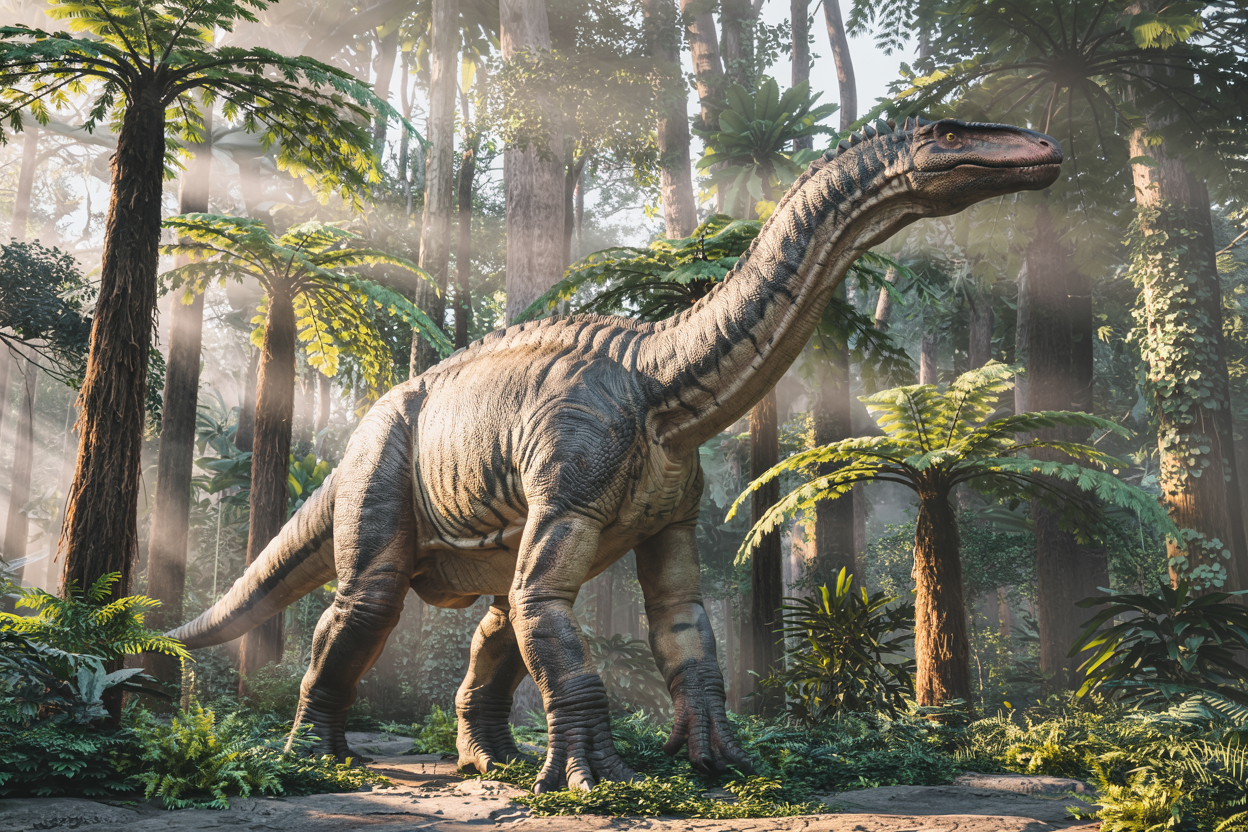
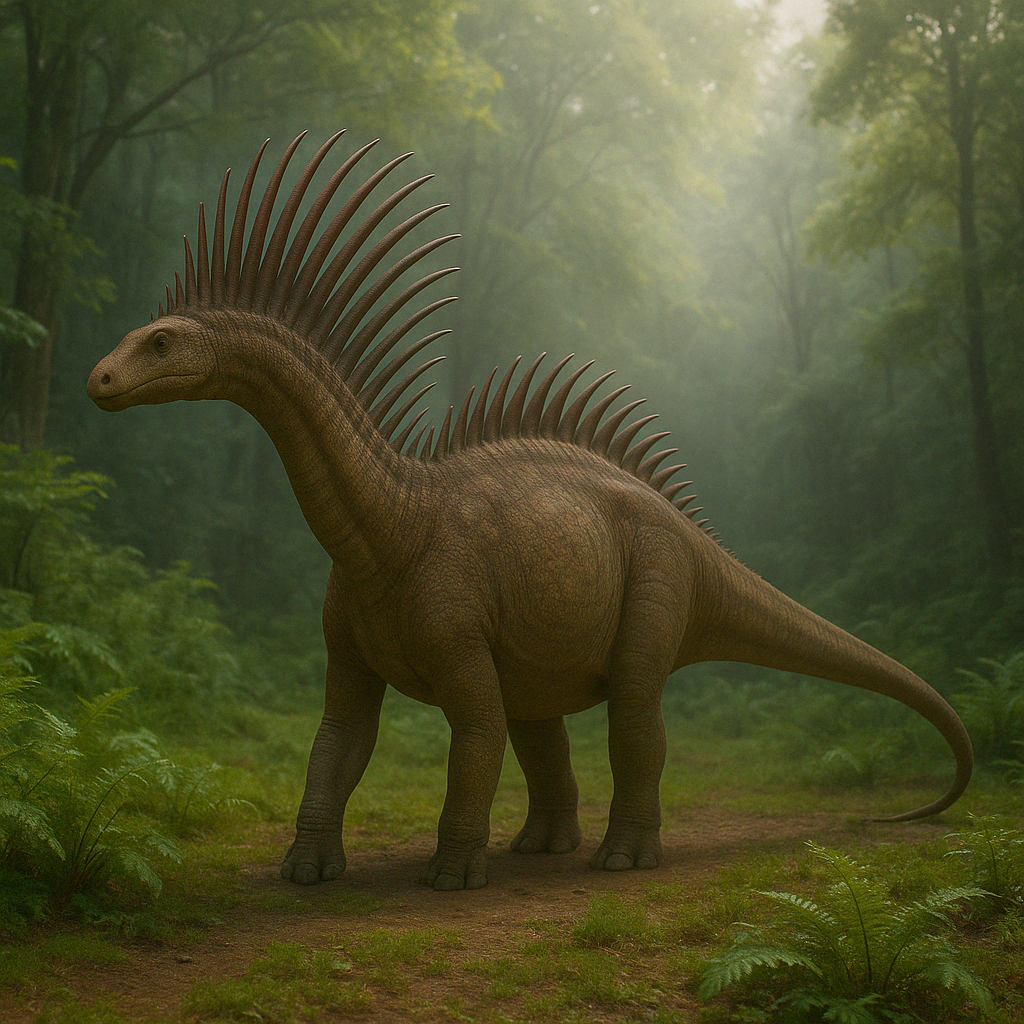
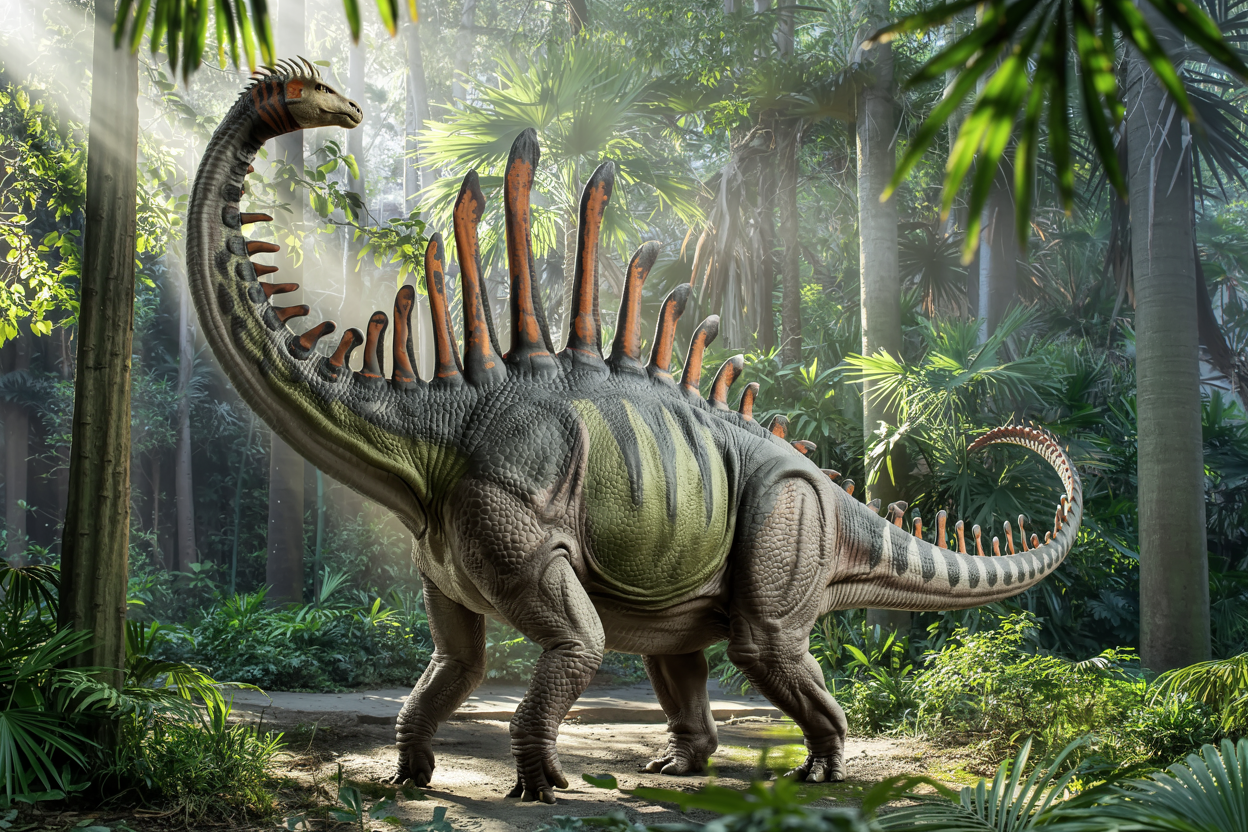
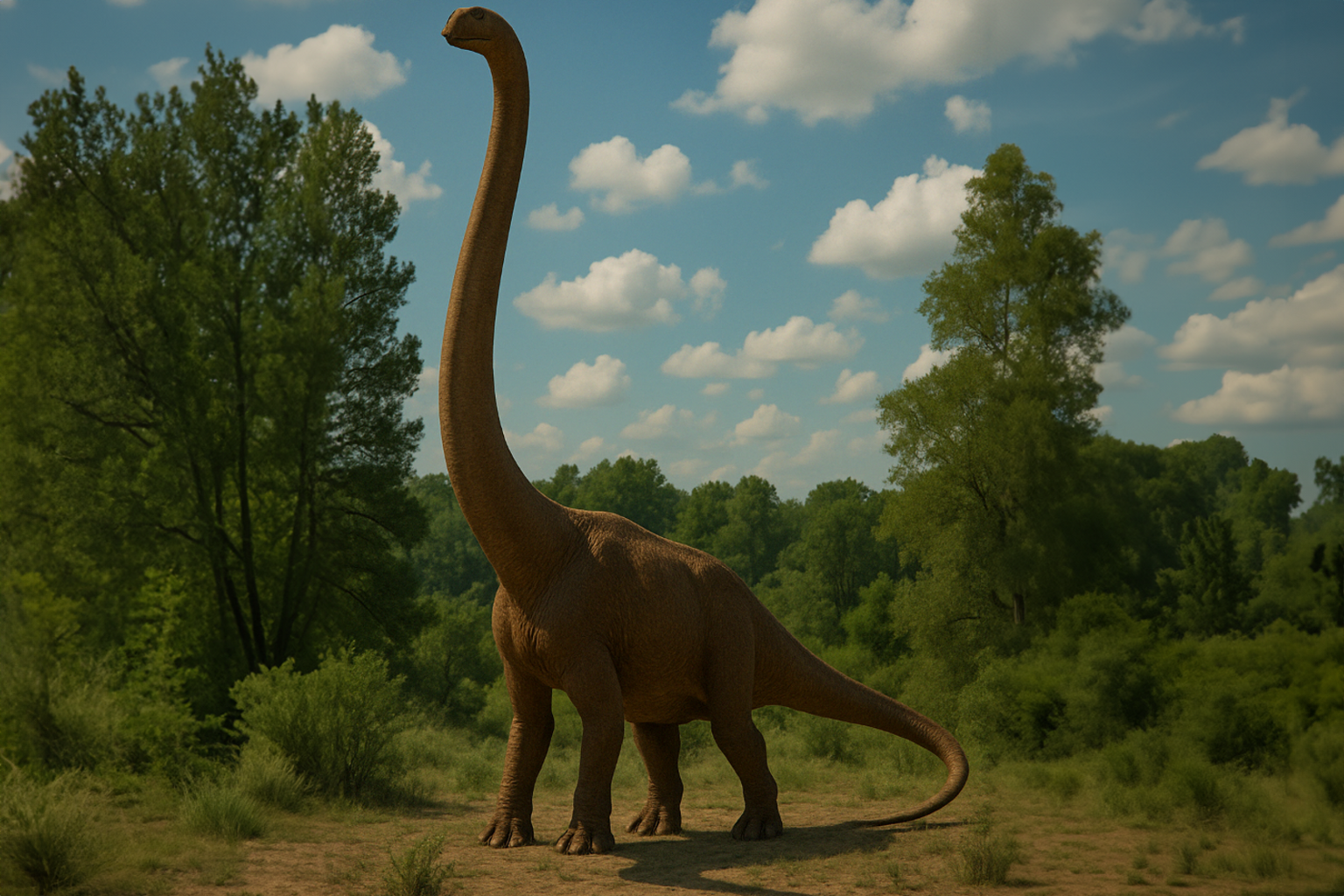
Brontosaurus was a large, four-legged herbivore with a long neck, long tail, and a relatively short, boxy head. It could grow up to 70 to 75 feet (21 to 23 meters) in length and weigh as much as 15 tons. Its body was built for strength and stability, with thick, column-like legs to support its enormous weight.
Unlike some of its relatives, Brontosaurus had a more robust neck and a deeper chest. Its tail was long and flexible, tapering to a whip-like end that may have been used for communication or defense. Its head was relatively small for its body and was positioned on the end of a long neck that it likely held at a moderate angle, rather than completely upright.
Brontosaurus had peg-like teeth suited for stripping leaves off plants. Like other sauropods, it likely swallowed vegetation whole and relied on a large gut to help digest tough plant material over time.
Discovery and Naming History
Brontosaurus has one of the most complicated naming stories in paleontology. It was first described in 1879 by Othniel Charles Marsh, who named it Brontosaurus excelsus based on fossils found in Wyoming. Just two years earlier, Marsh had named another dinosaur, Apatosaurus ajax, based on a different skeleton from the same region.
Later studies showed that the two dinosaurs were very similar, and in 1903, scientists determined that they actually belonged to the same genus. Because Apatosaurus was named first, it took priority, and Brontosaurus was considered a junior synonym. For most of the 20th century, paleontologists used the name Apatosaurus, even though Brontosaurus remained more popular with the public.
In 2015, a detailed scientific study re-examined the fossils and found enough differences between the two dinosaurs to justify bringing Brontosaurus back as its own genus. According to this research, Brontosaurus had distinct skeletal features that set it apart from Apatosaurus, making it a valid name once again.
Behavior and Lifestyle
Brontosaurus, like other sauropods, was a slow-moving herbivore that likely traveled in groups. Herd behavior may have helped protect individuals—especially juveniles—from predators. Its long neck allowed it to feed on vegetation from trees, shrubs, and low-growing plants without needing to move its entire body frequently.
Because of its size, adult Brontosaurus likely had few natural predators. Its massive tail may have served as a defensive weapon or a way to communicate through sound or motion. It likely spent much of its time feeding, using its peg-like teeth to strip leaves and its large digestive system to process huge volumes of plant matter.
Scientific Importance
Brontosaurus belongs to the sauropod family Diplodocidae, which includes other long-necked dinosaurs like Diplodocus, Barosaurus, and Apatosaurus. Studying Brontosaurus helps paleontologists understand how sauropods evolved and how different species adapted to their environments.
The debate over its name also highlights the importance of detailed fossil comparisons and how scientific understanding can change with new evidence. The 2015 study that restored Brontosaurus as a distinct genus was one of the largest of its kind and showed how modern methods can reshape long-held views.
Brontosaurus in Pop Culture
Even during the years it was considered scientifically invalid, Brontosaurus remained one of the most popular and recognizable dinosaurs. It appeared in books, cartoons, museum exhibits, and films—including the original Jurassic Park series, where it was mistakenly labeled as a Brontosaurus.
Its towering size and gentle image made it a favorite among children and dinosaur enthusiasts. With the name now officially recognized again, Brontosaurus has reclaimed its place in both science and pop culture.
Final Thoughts
Brontosaurus is more than just a famous name—it’s a fascinating dinosaur with a story that reflects the dynamic nature of science. From its discovery in the 19th century to its reclassification in the 21st, Brontosaurus continues to inspire curiosity and awe. With its massive size, long neck, and rich history, it remains one of the most iconic dinosaurs of all time.