Zhuchengtitan is the #12 seed in the Sauropods division of the Dinosaur Tournament.
Zhuchengtitan is one of the many enormous sauropod dinosaurs that once roamed prehistoric Asia. Belonging to the titanosaur group—a lineage known for producing some of the largest land animals in Earth’s history—Zhuchengtitan lived during the Late Cretaceous period in what is now China. Although known from limited fossil material, it adds to our growing understanding of sauropod diversity in Asia and offers intriguing clues about the evolution and spread of titanosaurs during the final chapters of the dinosaur era.
When and Where It Lived
Zhuchengtitan lived approximately 73 to 66 million years ago, during the Late Cretaceous period. Its fossils were discovered in Zhucheng, a city located in Shandong Province, eastern China. This area has become one of the richest dinosaur fossil sites in the world, yielding an impressive number of species including hadrosaurs, ceratopsians, and large theropods like Zhuchengtyrannus.
During the Late Cretaceous, this region was a humid, low-lying floodplain dotted with rivers and forests. It was home to a wide range of plant-eating dinosaurs, including duck-billed dinosaurs and other sauropods, as well as powerful predators. Zhuchengtitan would have been one of the largest herbivores in this ecosystem.
Size and Physical Characteristics
Like many titanosaurs, Zhuchengtitan was massive. While complete skeletons haven’t been found, paleontologists estimate it may have reached lengths of around 80 to 100 feet (24 to 30 meters), based on comparisons with related species. Its weight could have easily exceeded 40 tons.
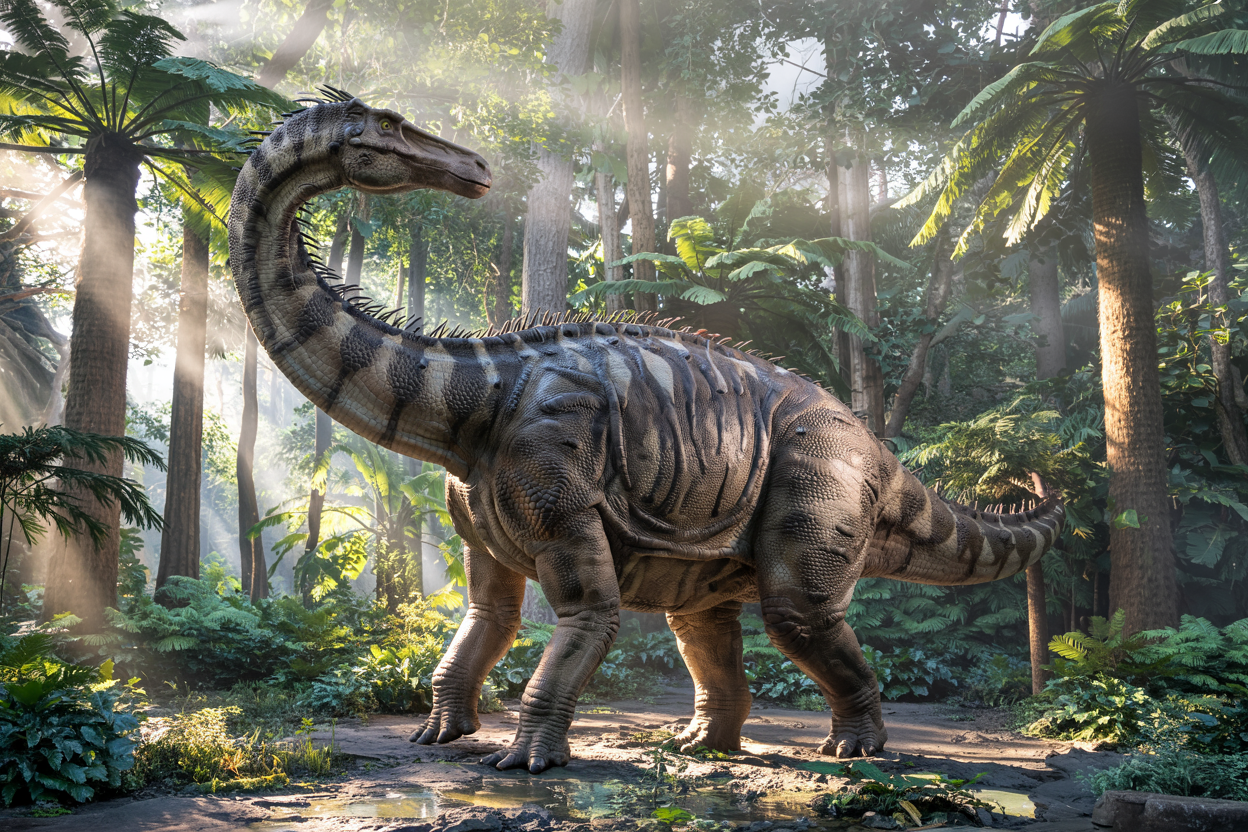
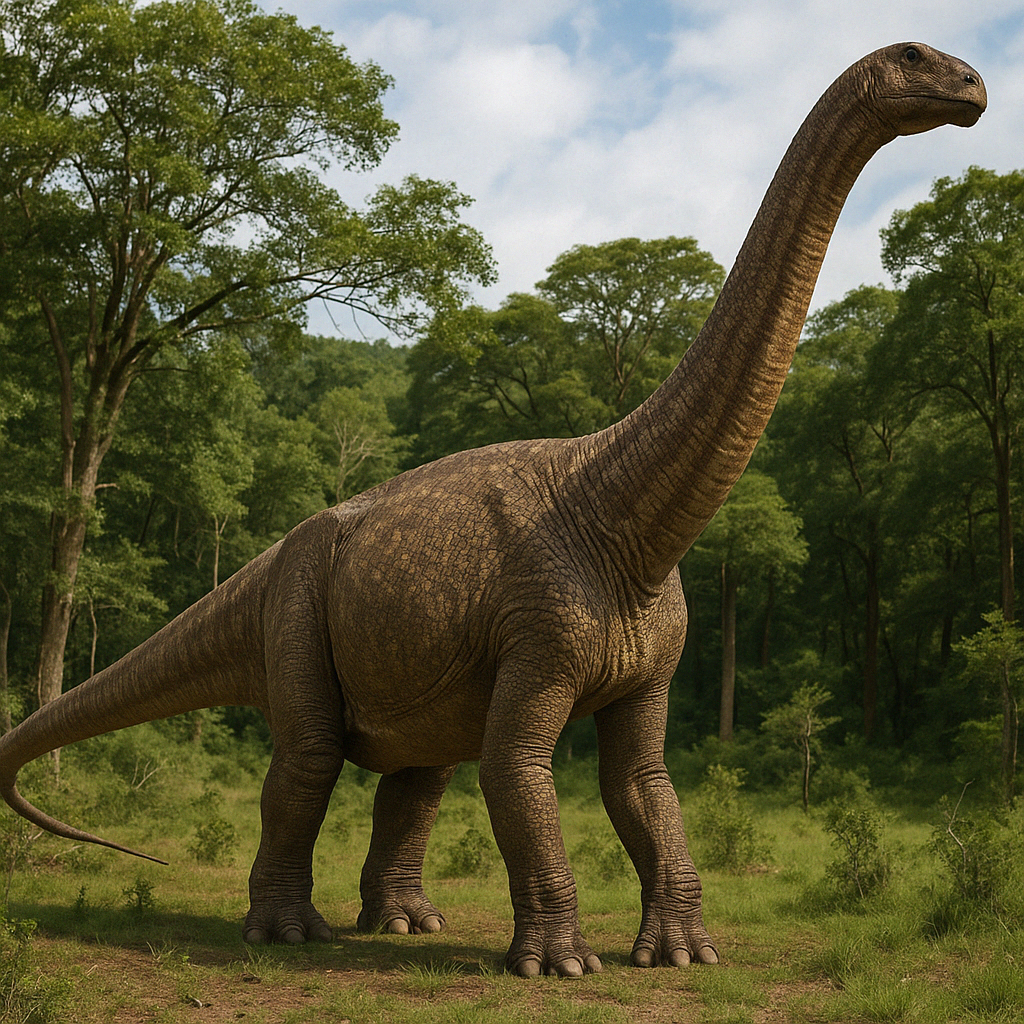
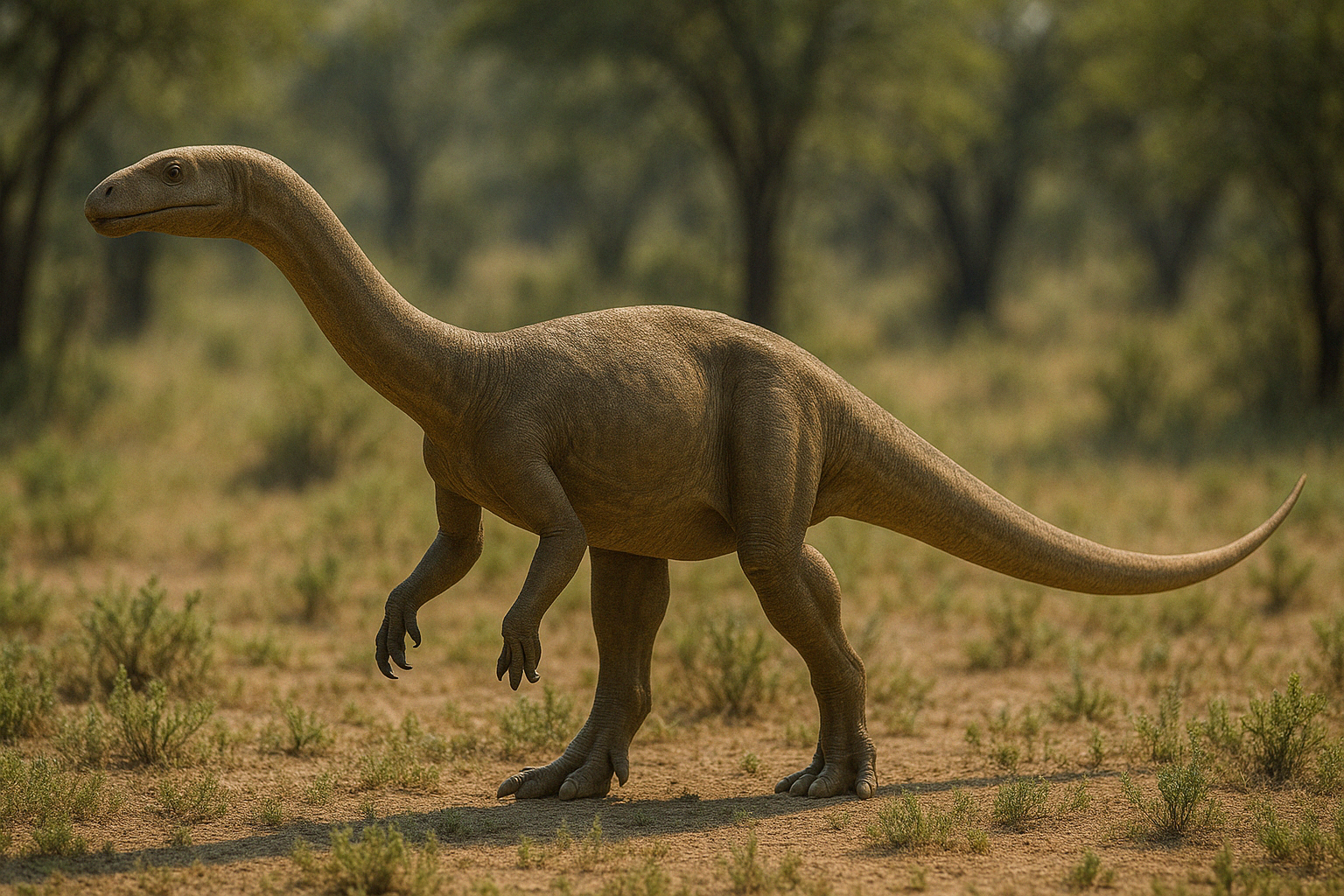
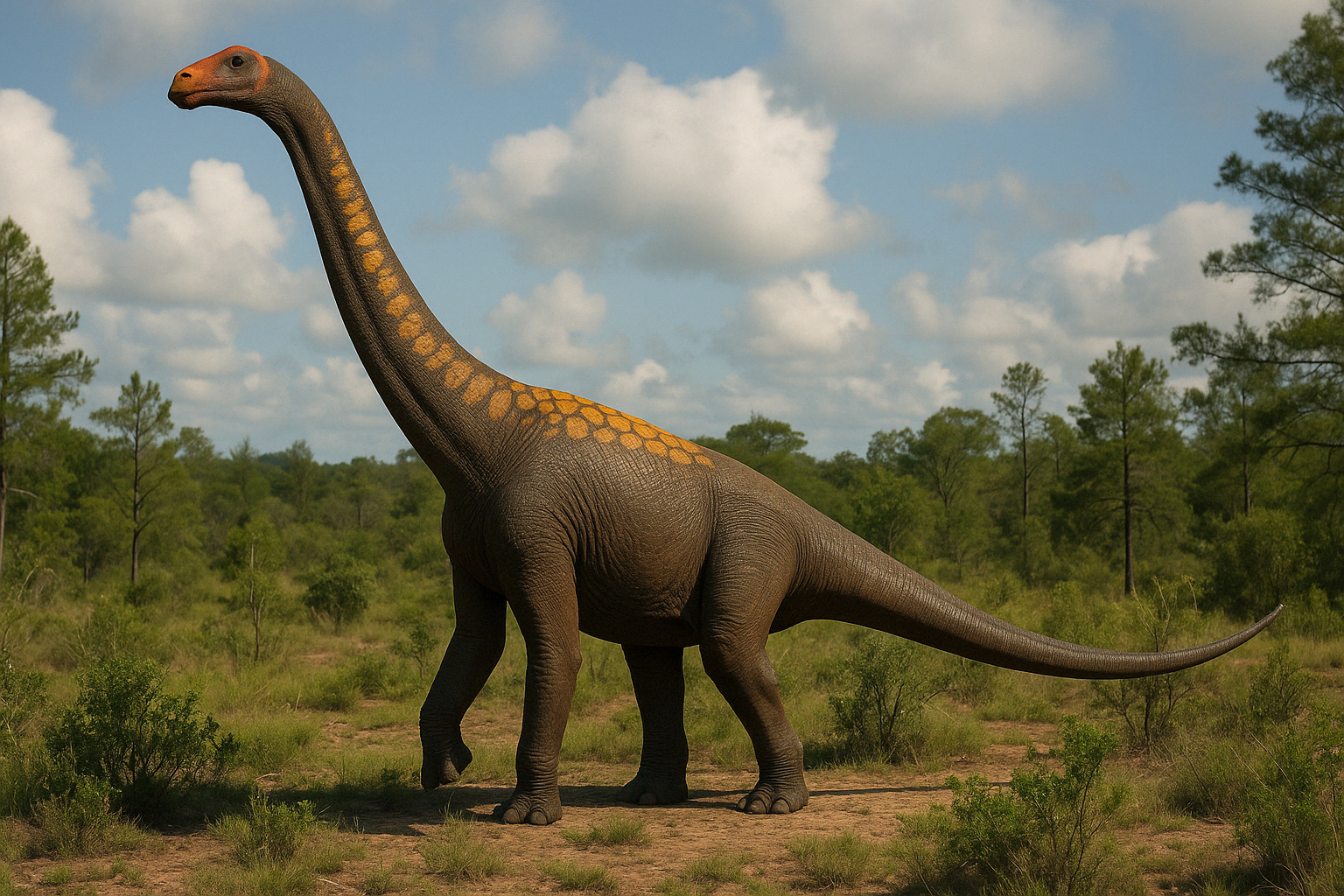
Zhuchengtitan had the classic sauropod body plan: a long neck for reaching high vegetation, a bulky, barrel-shaped body, and a long tail used for balance. Its four pillar-like legs were built to support its immense weight. Its head was relatively small, with peg-like teeth ideal for stripping leaves and soft vegetation.
As a titanosaur, Zhuchengtitan may have had some body armor—small bony nodules called osteoderms embedded in the skin—although no such fossils have been found yet with this genus. Titanosaurs were among the last surviving sauropods before the mass extinction at the end of the Cretaceous, and Zhuchengtitan appears to have been one of the larger ones known from Asia.
Diet and Feeding Behavior
Zhuchengtitan was a herbivore and likely fed on a wide variety of plant material, including ferns, conifers, and flowering plants. Its long neck would have allowed it to reach vegetation at various heights, possibly feeding from both tree canopies and low shrubs.
Its teeth were not suited for chewing, so it likely stripped leaves and swallowed them whole. Like other sauropods, Zhuchengtitan probably relied on a large digestive system to break down plant material through fermentation. It may also have swallowed stones, known as gastroliths, to help grind up tough vegetation in its stomach.
Given its size, Zhuchengtitan would have needed to eat hundreds of pounds of vegetation each day, spending much of its time foraging and moving slowly through the landscape.
Discovery and Fossil Record
Zhuchengtitan was officially named and described in 2011 by a team of Chinese paleontologists led by Mo Jinyou. The genus name means “Zhucheng giant,” a reference to the location where the fossils were found. The type species is Zhuchengtitan zangjiazhuangensis, named after the Zangjiazhuang fossil site.
The known fossil material consists primarily of a partial femur (thigh bone), which was large enough to indicate that the dinosaur it came from was massive. Although the fossils are limited, the discovery added to the growing list of titanosaurs known from Asia and helped fill a geographic gap in our knowledge of Late Cretaceous sauropods.
Scientific Importance
Zhuchengtitan is important because it contributes to the understanding of titanosaur diversity and distribution in Late Cretaceous Asia. Sauropods were once thought to have declined significantly during this time, but discoveries like Zhuchengtitan show that they were still thriving in certain regions right up until the end of the dinosaur era.
It also helps paleontologists piece together the evolutionary relationships between titanosaurs found in South America, Africa, and Asia, shedding light on how these massive dinosaurs spread across ancient continents.
Zhuchengtitan in Popular Culture
Zhuchengtitan is still relatively unknown to the general public, but it has been featured in scientific literature, museum exhibits, and online databases. As more people become interested in Asian dinosaurs and the fascinating fossils found in places like Zhucheng, it’s likely that Zhuchengtitan will continue to gain recognition.
Its incredible size and mysterious nature make it a compelling addition to the list of sauropod giants that once walked the Earth.
Final Thoughts
Zhuchengtitan may not be as famous as Argentinosaurus or Patagotitan, but it played an important role in its ecosystem and offers valuable insight into the lives of the last giant sauropods. With only a few bones to its name, this dinosaur still manages to leave a big impression—quite literally. As new discoveries continue to emerge from China’s rich fossil beds, we may learn even more about this towering titan of the Late Cretaceous.