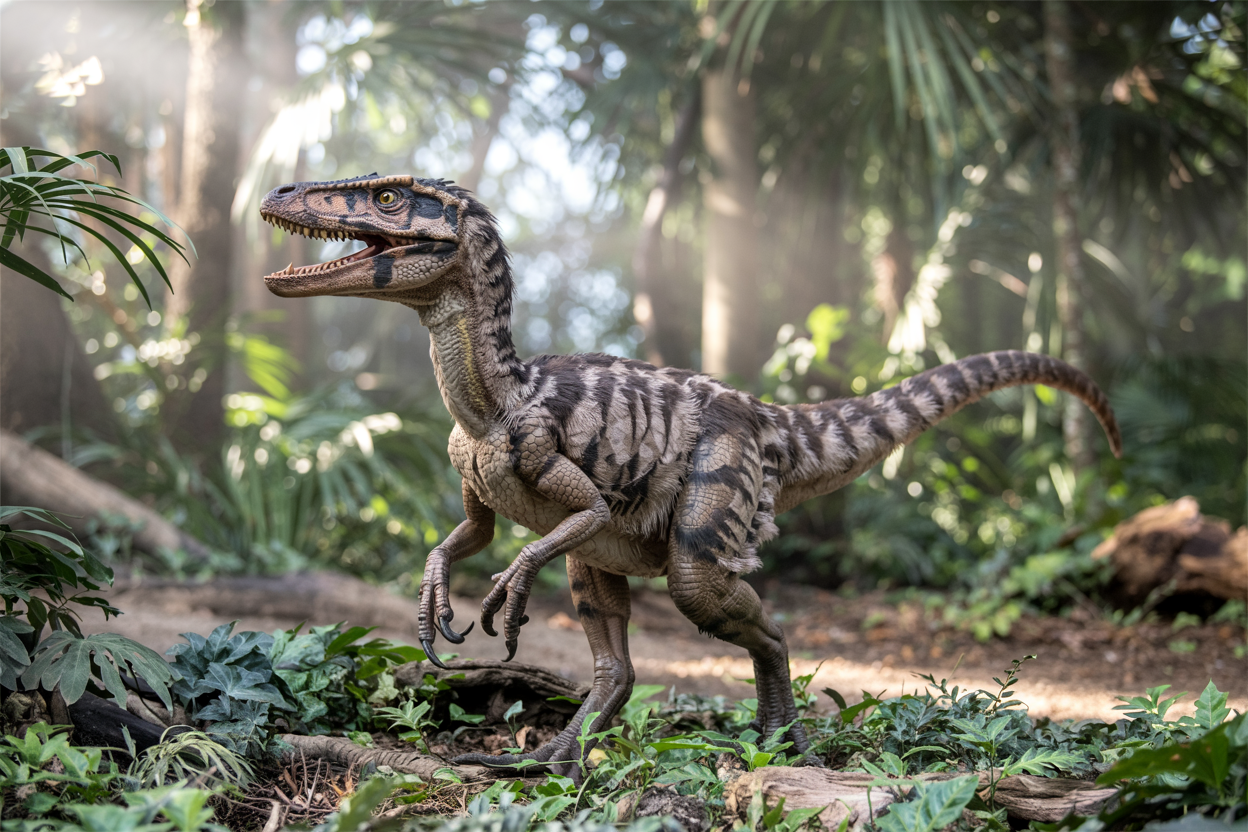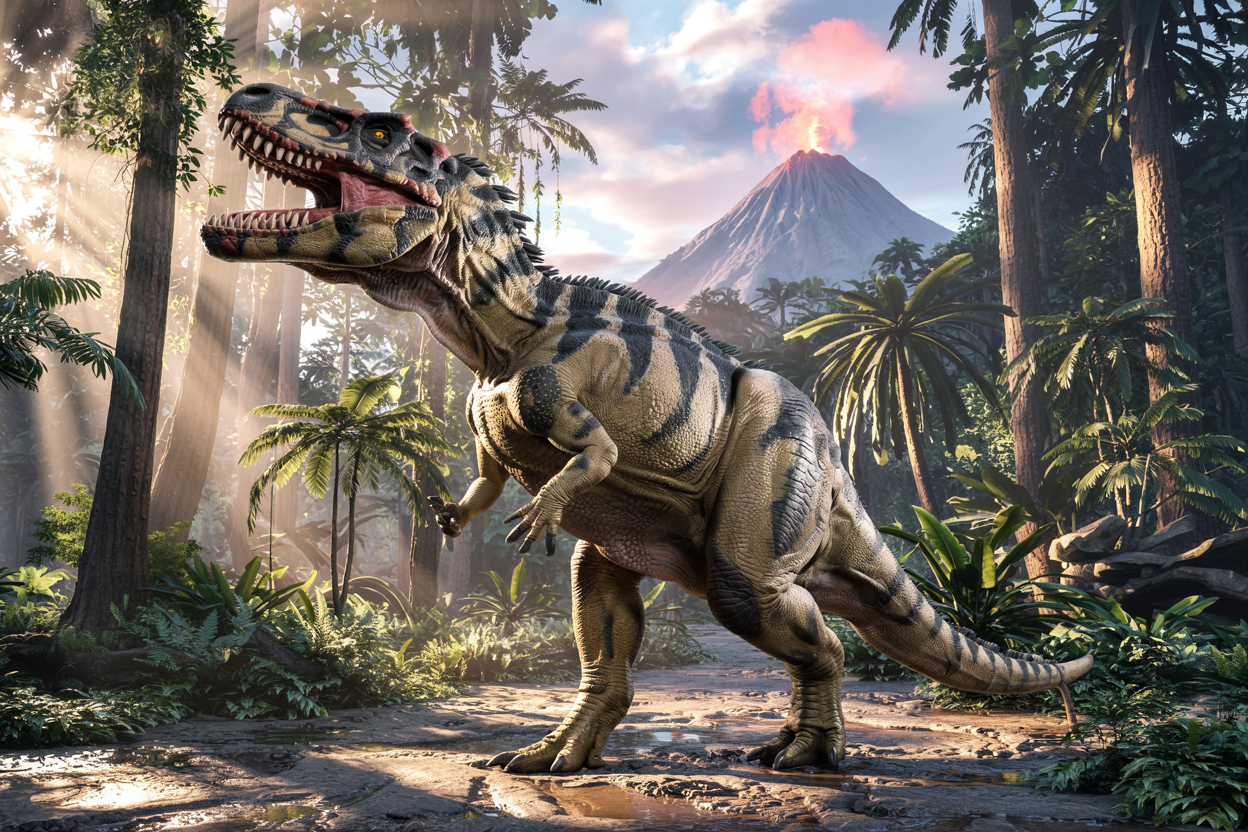
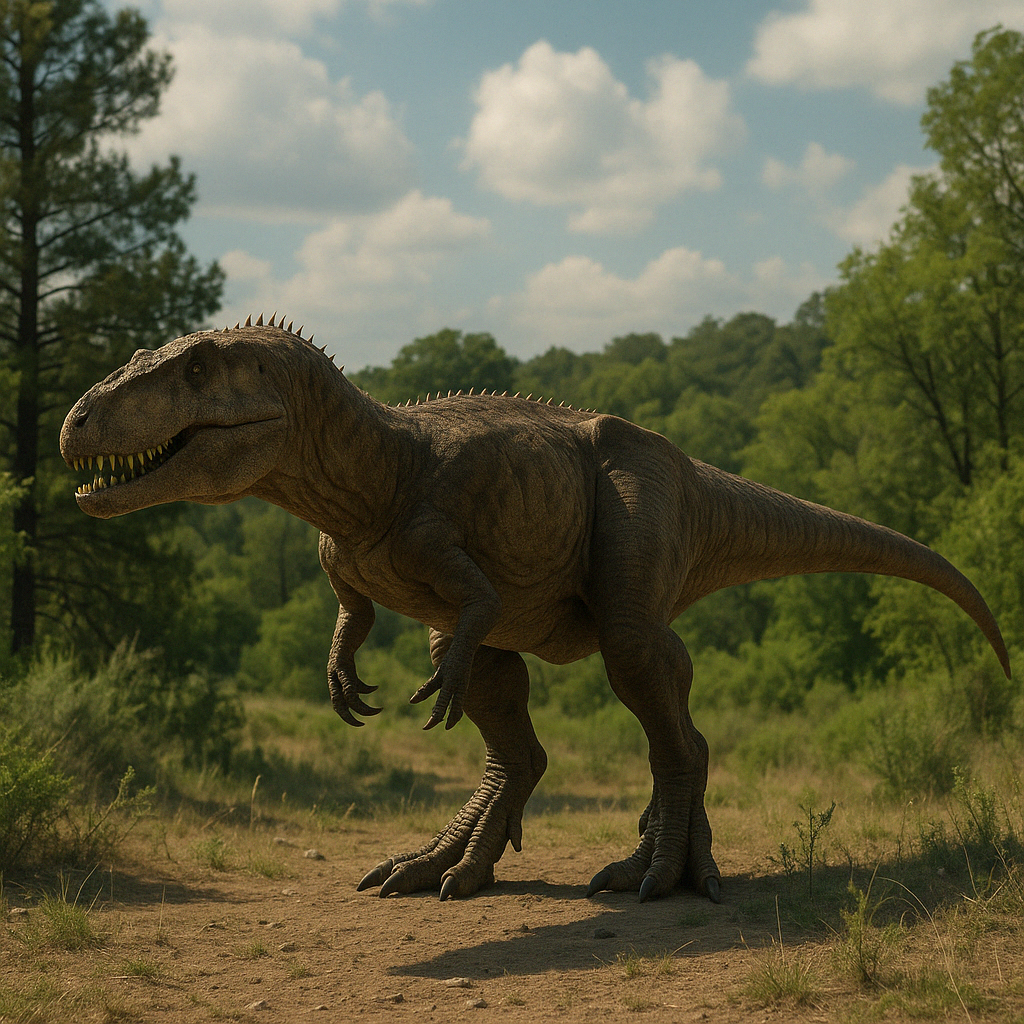
Carcharodontosaurus is the #14 seed in the Theropods division of the Dinosaur Tournament.
Carcharodontosaurus was one of the largest predatory dinosaurs to ever walk the Earth. With a name that means “shark-toothed lizard,” this massive theropod lived in what is now North Africa during the mid-Cretaceous period. Its sharp, serrated teeth and enormous size made it one of the top predators of its time—rivaling even Tyrannosaurus rex in length.
Although Carcharodontosaurus may not be as well-known as some of its famous cousins, it played a key role in the prehistoric ecosystems of its time and remains an important dinosaur for understanding the diversity of large carnivores during the age of dinosaurs.
When and Where It Lived
Carcharodontosaurus lived approximately 100 to 93 million years ago during the mid-Cretaceous period. Its fossils have been found in North Africa, specifically in modern-day countries like Morocco, Algeria, and Egypt. During the Cretaceous, this region was part of a warm, tropical environment made up of river systems, coastal plains, and floodplains.
This landscape was home to a wide variety of dinosaurs, including massive sauropods, armored herbivores, and other large predators like Spinosaurus. In this predator-rich ecosystem, Carcharodontosaurus was one of the apex carnivores.
Size and Physical Characteristics
Carcharodontosaurus was an enormous theropod dinosaur. Estimates suggest it could grow up to 40–44 feet (12–13.5 meters) in length and weigh between 6 and 8 tons. Its size placed it among the largest known carnivorous dinosaurs.
Its skull alone could reach over 5 feet (1.6 meters) in length and was filled with long, serrated teeth resembling those of a great white shark—hence its name. These teeth were designed for slicing through flesh, not crushing bone. The dinosaur’s jaws were long and narrow compared to the short, powerful skull of T. rex, but they were no less deadly.
Carcharodontosaurus had strong, muscular hind limbs for walking and possibly for bursts of speed when hunting. Its arms were shorter but still functional, with three-fingered hands equipped with sharp claws. It also had a long, heavy tail that helped balance its massive head and body.
Hunting and Diet
As a carnivore, Carcharodontosaurus likely preyed on large herbivorous dinosaurs that shared its environment—such as Ouranosaurus, Rebbachisaurus, and juvenile sauropods. Its sharp, bladelike teeth suggest it was well-suited for slicing into flesh rather than crushing bone, which supports the idea that it may have attacked softer areas of the body or used a “slash-and-retreat” strategy when hunting.
There is still debate about whether Carcharodontosaurus hunted alone or in groups, as little direct evidence exists either way. However, its large size and powerful bite certainly made it capable of taking down large prey, even on its own.
Discovery and Fossil History
The first Carcharodontosaurus fossils were discovered in the 1920s in North Africa. The original skull was studied and named in 1931, but unfortunately, the specimen was destroyed during World War II. For many years, knowledge of this dinosaur was limited.
That changed in the 1990s when new and more complete fossils were discovered in Morocco. These finds helped scientists better understand the anatomy, size, and classification of Carcharodontosaurus. One of the best-preserved skulls gave researchers new insights into how the dinosaur lived and how it compared to other giant theropods.
Carcharodontosaurus is now recognized as one of the largest and most important members of the family Carcharodontosauridae, which also includes Giganotosaurus and Mapusaurus—other large predatory dinosaurs from the southern continents.
Carcharodontosaurus vs. Tyrannosaurus Rex
While T. rex is often seen as the king of dinosaurs, Carcharodontosaurus gives it a serious challenge in terms of size. Although both were massive predators, they were quite different in appearance and behavior. T. rex had a shorter, more powerful skull built for bone-crushing, while Carcharodontosaurus had a longer, narrower skull better suited for slicing.
They also lived at different times and in different places. Carcharodontosaurus lived in Africa roughly 30 million years before T. rex appeared in North America, so they never would have encountered one another.
Final Thoughts
Carcharodontosaurus was a truly impressive predator. With its shark-like teeth, massive size, and commanding presence, it ruled the prehistoric landscapes of Cretaceous Africa. Although it was once overshadowed by more famous dinosaurs, ongoing discoveries have helped it earn a place among the giants of the dinosaur world.
As new fossils continue to emerge, Carcharodontosaurus reminds us that there are still plenty of incredible prehistoric creatures waiting to be fully understood. Its story is a testament to the diversity and complexity of life during the age of dinosaurs—and the surprises that science continues to uncover.