Gigantosaurus is the #12 seed in the Theropods division of the Dinosaur Tournament.
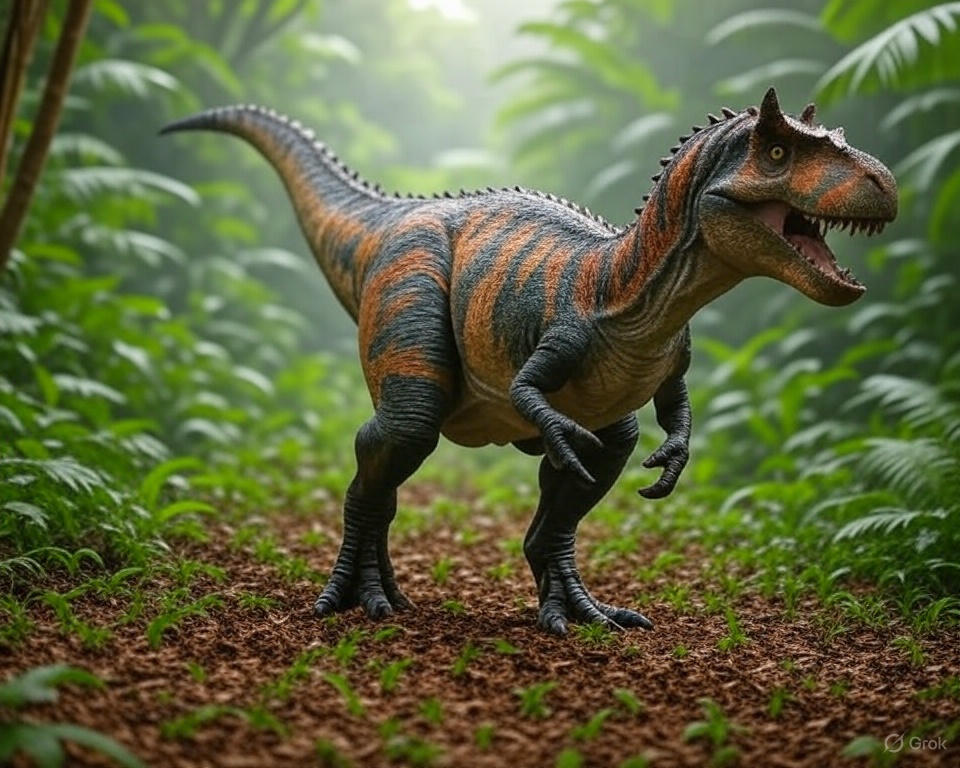
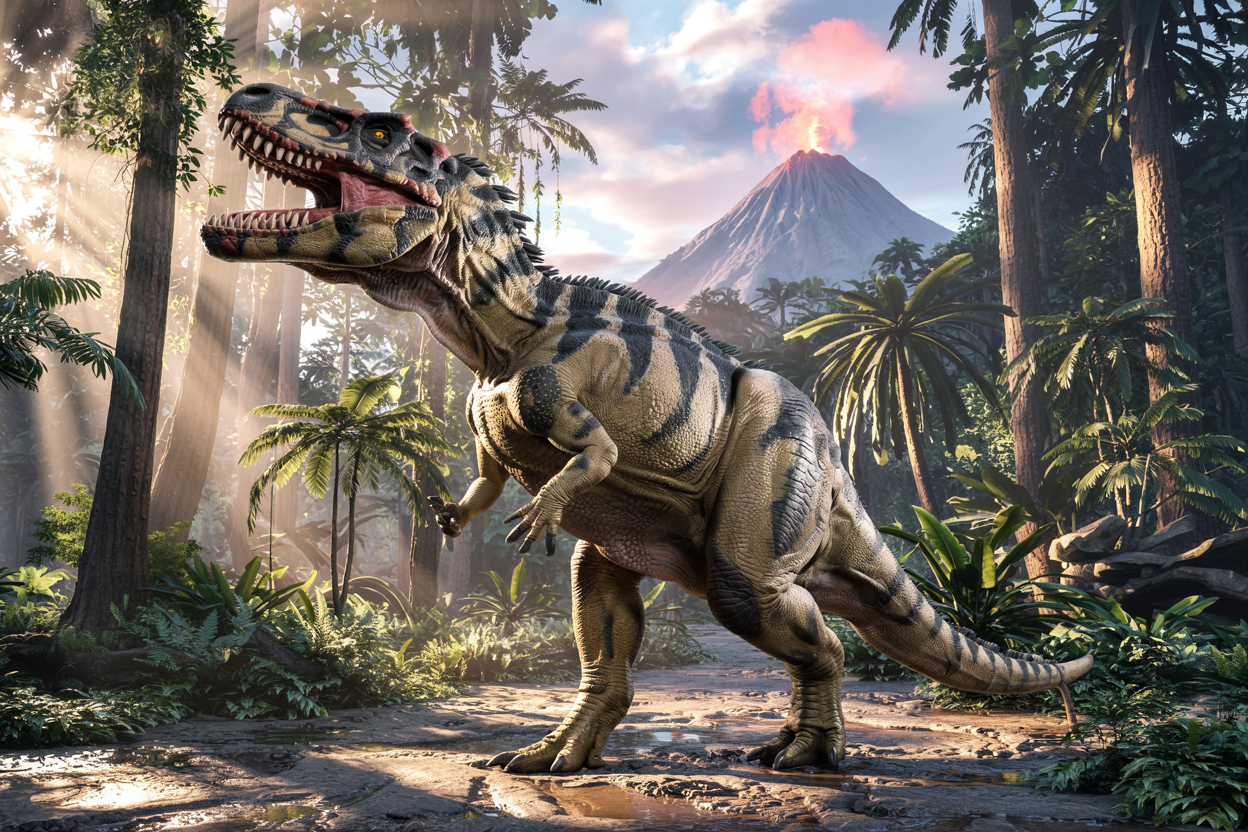
Giganotosaurus was a massive predatory dinosaur that roamed South America during the Late Cretaceous period. Its name means “giant southern lizard,” and it lived up to that title—it was one of the largest carnivorous dinosaurs ever found, rivaling even the mighty Tyrannosaurus rex in size. With its long skull, powerful jaws, and impressive length, Giganotosaurus was the apex predator of its time.
When and Where It Lived
Giganotosaurus carolinii lived about 98 million years ago during the mid to late Cretaceous period. Fossils have been found in what is now Patagonia, Argentina—a region that was once home to a rich ecosystem of giant dinosaurs, including massive sauropods like Argentinosaurus.
The environment would have been warm and semi-arid, with forests, rivers, and plenty of prey for a top predator like Giganotosaurus to hunt.
Size and Physical Features
Giganotosaurus was an enormous theropod dinosaur. Estimates put its length at around 40 to 43 feet (12 to 13 meters) and its weight at roughly 8 tons. That makes it one of the longest known meat-eating dinosaurs—slightly longer than T. rex, though not as heavily built.
Its skull was long and narrow, measuring about 5.5 feet (1.6 meters) from front to back. It had large jaws filled with sharp, serrated teeth designed for slicing through flesh. Unlike the thick, bone-crushing teeth of T. rex, Giganotosaurus had blade-like teeth suited for delivering slashing bites.
It walked on two strong legs and had a long, heavy tail that helped it maintain balance while moving. Its arms were relatively short, but not as small as those of T. rex, and they may have played a role in gripping or stabilizing prey.
Hunting and Diet
Giganotosaurus was a carnivore and the top predator in its ecosystem. Its primary prey likely included large herbivorous dinosaurs such as Titanosaurs, which were common in Cretaceous South America. Given its size and speed, it may have hunted in a way similar to modern-day big cats—using ambush tactics or chasing down slower prey.
Its skull was built for quick, powerful bites rather than crushing force. Some scientists believe it used a “bite and retreat” strategy, delivering slashing bites to weaken its prey before moving in for the kill. There’s also speculation that it may have hunted in groups, although direct evidence for pack behavior is limited.
Discovery and Scientific Importance
The first fossils of Giganotosaurus were discovered in 1993 by an amateur fossil hunter named Rubén Carolini in Patagonia. The find included a partial skeleton, including parts of the skull, pelvis, leg bones, and vertebrae. The species was formally named Giganotosaurus carolinii in 1995 in Carolini’s honor.
Its discovery was a major event in paleontology. Until that point, Tyrannosaurus rex had long held the title of the largest known theropod. Giganotosaurus challenged that status, showing that other continents had produced equally massive carnivores during the age of dinosaurs.
It also helped highlight South America as a hotspot for giant dinosaurs, alongside other impressive finds like Argentinosaurus and Mapusaurus.
Giganotosaurus vs. Tyrannosaurus Rex
Giganotosaurus and T. rex are often compared because of their similar size and role as top predators. However, they lived on different continents and during different time periods. Giganotosaurus lived about 30 million years earlier than T. rex, and their body structures reflect different hunting strategies.
T. rex had a stronger bite and a more robust build, while Giganotosaurus was longer and likely faster. T. rex also had better forward-facing vision, giving it excellent depth perception, while Giganotosaurus had eyes more to the side of its head.
Both were incredibly effective hunters in their own environments, but they were shaped by different evolutionary pressures.
Pop Culture and Public Recognition
Although Giganotosaurus isn’t as well-known as T. rex or Velociraptor, it has gained attention in documentaries, books, and dinosaur-themed media. It was prominently featured in Jurassic World Dominion (2022), which introduced the dinosaur to a broader audience.
Its impressive size and dramatic appearance make it a favorite among dinosaur enthusiasts, especially those interested in lesser-known prehistoric giants.
Final Thoughts
Giganotosaurus was a true giant of the Cretaceous—a fast, powerful predator that ruled the southern continents long before T. rex appeared in North America. Its discovery expanded our understanding of dinosaur diversity and showed that some of the biggest and most fearsome predators lived in places that had been relatively unexplored.
With its long skull, blade-like teeth, and massive frame, Giganotosaurus stands out as one of the most remarkable meat-eaters in the fossil record—and a reminder that there’s always more to discover in the world of dinosaurs.