Velociraptor is the #2 seed in the Theropods division of the Dinosaur Tournament.
Velociraptor is one of the most famous dinosaurs, thanks in part to its starring role in popular movies. But the real creature was quite different from its Hollywood portrayal. Rather than being a human-sized monster, Velociraptor was about the size of a turkey. Still, it was a fast, intelligent predator that played an important role in its ecosystem during the Late Cretaceous period.
Physical Characteristics
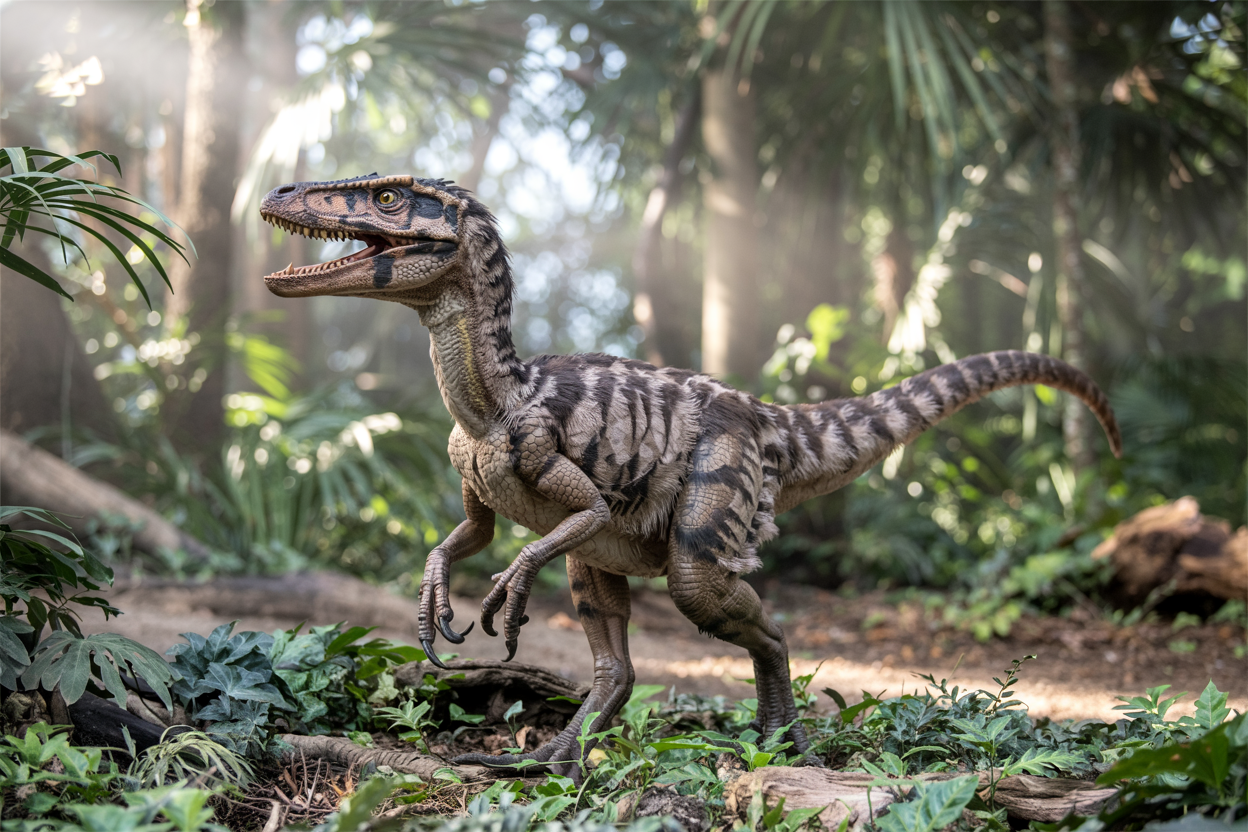
Velociraptor was a small, bipedal theropod dinosaur that lived approximately 75 to 71 million years ago in what is now Mongolia. It measured about 6.5 feet (2 meters) in length, stood roughly 1.6 feet (0.5 meters) tall at the hip, and weighed around 30 pounds (15 kilograms). Despite its relatively small size, it was well-built for speed and agility.
One of Velociraptor’s most distinctive features was the large, curved claw on each foot. This sickle-shaped claw, located on the second toe, could grow over 2.5 inches long and was likely used to grip or slash at prey. Its skull was long and low, with a slightly upturned snout and sharp, serrated teeth.
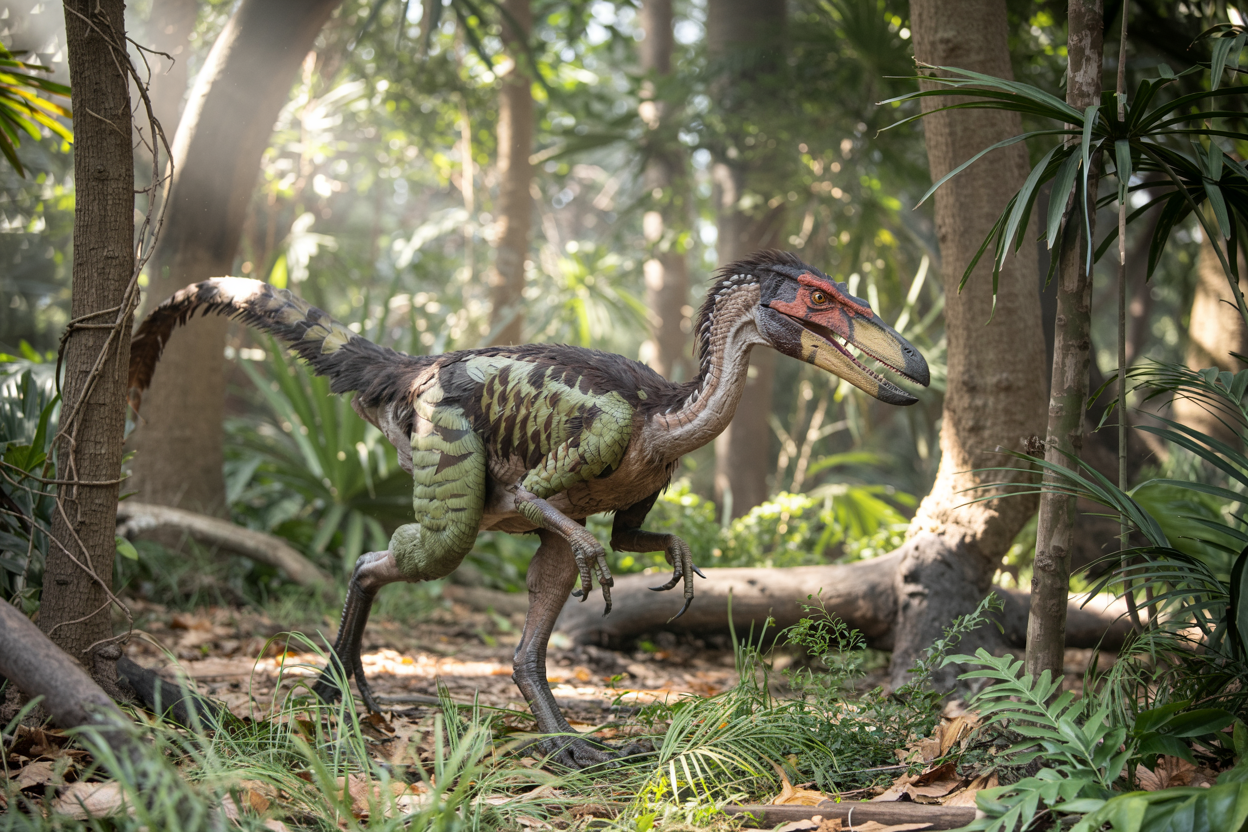
Fossil evidence shows that Velociraptor had feathers, much like modern birds. Though it couldn’t fly, its feathers likely helped with temperature regulation, mating displays, or maneuverability while running. This connection to birds is one reason why paleontologists often refer to dinosaurs like Velociraptor as “non-avian dinosaurs.”
Intelligence and Senses
While not a genius by modern standards, Velociraptor was relatively intelligent compared to many other dinosaurs. Its brain-to-body ratio was higher than most reptiles, suggesting above-average problem-solving abilities and sensory awareness.
Its vision was likely excellent, with eyes positioned on the sides of its head but facing slightly forward—providing some degree of binocular vision. It also likely had a strong sense of smell, which would have been helpful when tracking prey or avoiding larger predators.
Hunting and Diet
Velociraptor was a carnivore, and its diet probably included small to medium-sized animals, including reptiles, mammals, and other dinosaurs. While it has often been portrayed as a pack hunter in films, there’s limited fossil evidence to support this idea. Most scientists believe that Velociraptor hunted alone or may have fed in groups opportunistically rather than coordinating attacks like wolves.
One of the most famous fossils ever found—a Velociraptor locked in combat with a Protoceratops—shows that it could take down prey its own size, though not without risk. This “fighting dinosaurs” fossil shows a Velociraptor’s foot claw embedded in its opponent’s neck while the Protoceratops bites down on its arm. Both animals likely died in a sudden sandstorm, preserving the scene for millions of years.
Fossil Discoveries
The first Velociraptor fossil was discovered in 1923 during an American Museum of Natural History expedition to the Gobi Desert. It was named Velociraptor mongoliensis—meaning “swift thief from Mongolia”—by paleontologist Henry Fairfield Osborn.
Since then, many additional fossils have been found, primarily in Mongolia and China. These include skulls, claws, bones, and feather impressions. These discoveries have helped paint a much clearer picture of what Velociraptor looked like and how it lived.
Misconceptions and Pop Culture
Popular films have often exaggerated the size and behavior of Velociraptor. In reality, the dinosaurs featured in the movies more closely resemble Deinonychus, a larger relative of Velociraptor. While the movie version is human-sized and covered in scaly skin, the real Velociraptor was feathered and about knee-high to an adult human.
Still, the popularity of Velociraptor in pop culture has helped spark public interest in paleontology and led to many important discussions about what dinosaurs were really like.
Evolutionary Links to Birds
Velociraptor is part of the dromaeosaurid family, a group of feathered theropods that are closely related to modern birds. This relationship supports the now widely accepted idea that birds evolved from small, feathered dinosaurs.
Features like a wishbone (furcula), feathers, and similar bone structures link Velociraptor to modern birds, making it an important species for understanding the evolutionary transition from dinosaurs to birds.
Final Thoughts
Velociraptor may not have been the towering predator shown in movies, but it was a fast, intelligent, and deadly hunter in its own right. Its bird-like features, advanced hunting adaptations, and well-preserved fossils make it one of the most studied and fascinating dinosaurs from the Late Cretaceous period.
From its sickle claw to its feathered body, Velociraptor represents the surprising and ever-evolving story of dinosaurs—one that continues to change as new discoveries are made.