Chasmosaurus is the #8 seed in the Cerapods division of the Dinosaur Tournament.
Chasmosaurus was a member of the ceratopsian family, a group of herbivorous dinosaurs known for their facial horns and elaborate frills. While it may not be as famous as its cousin Triceratops, Chasmosaurus was an important and fascinating dinosaur in its own right. Its name, which means “opening lizard,” refers to the large openings—or fenestrae—in its frill, giving it a distinctive look among horned dinosaurs.
When and Where It Lived
Chasmosaurus lived during the Late Cretaceous period, around 76 to 72 million years ago. Fossils have been found primarily in Alberta, Canada, and a few locations in Montana, USA. These regions were part of the western portion of North America known as Laramidia, a landmass separated from the eastern half of the continent by a shallow inland sea.
The environment at the time was warm and humid, with river systems, floodplains, and dense forests. This lush landscape supported a wide range of dinosaur life, including duck-billed hadrosaurs, armored ankylosaurs, predatory tyrannosaurs, and a variety of ceratopsians like Chasmosaurus.
Size and Physical Characteristics
Chasmosaurus was a medium-sized ceratopsian. It measured about 15 to 16 feet (4.5 to 5 meters) in length and weighed roughly 2 to 3 tons. Like other ceratopsians, it walked on all fours, had a bulky, muscular body, and a large head with a distinctive frill.
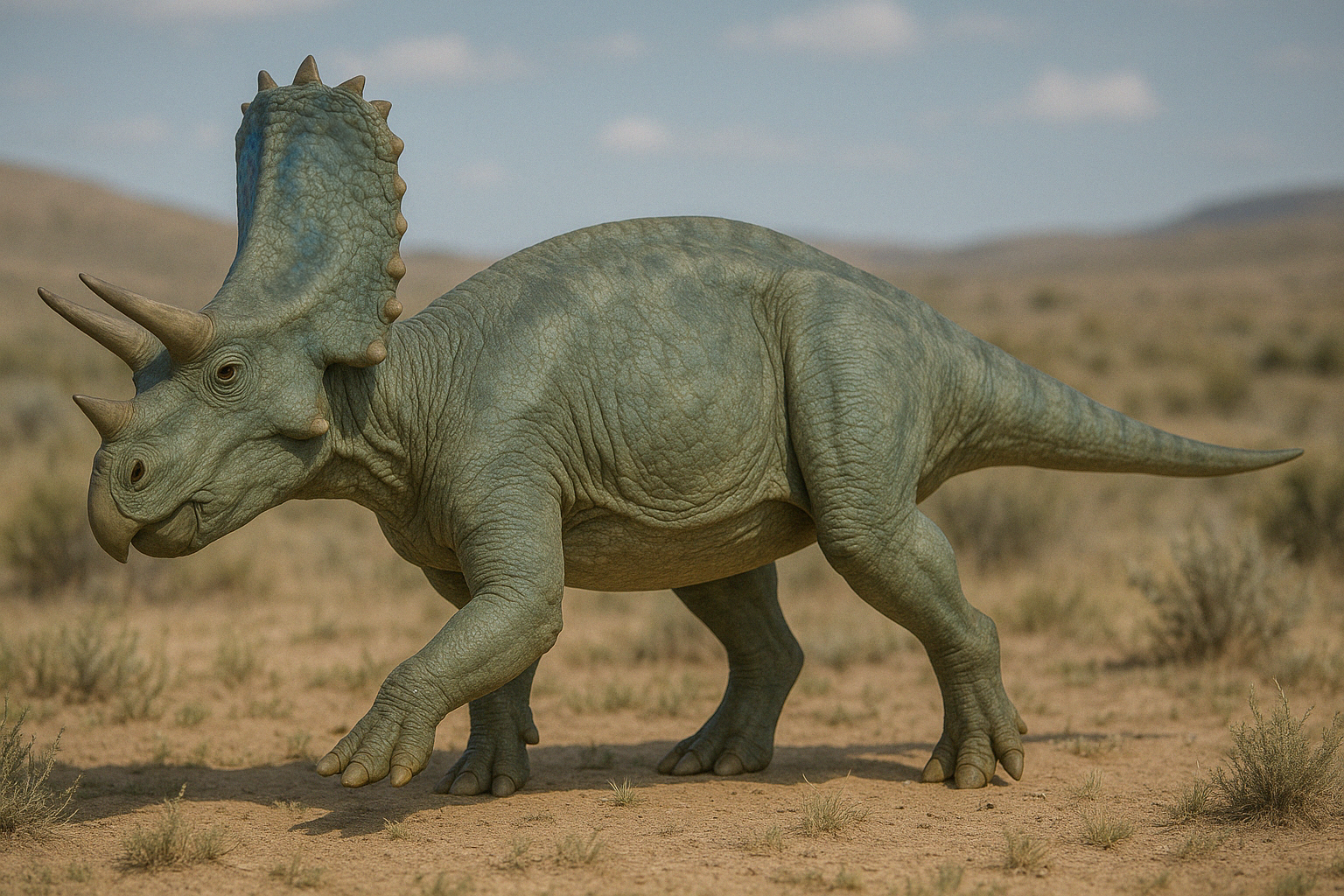
One of Chasmosaurus’s most defining features was its long frill, which extended well behind the head and featured two large openings, or fenestrae. These openings made the frill lighter and may have helped regulate body temperature, though they could have also played a role in display or species recognition.
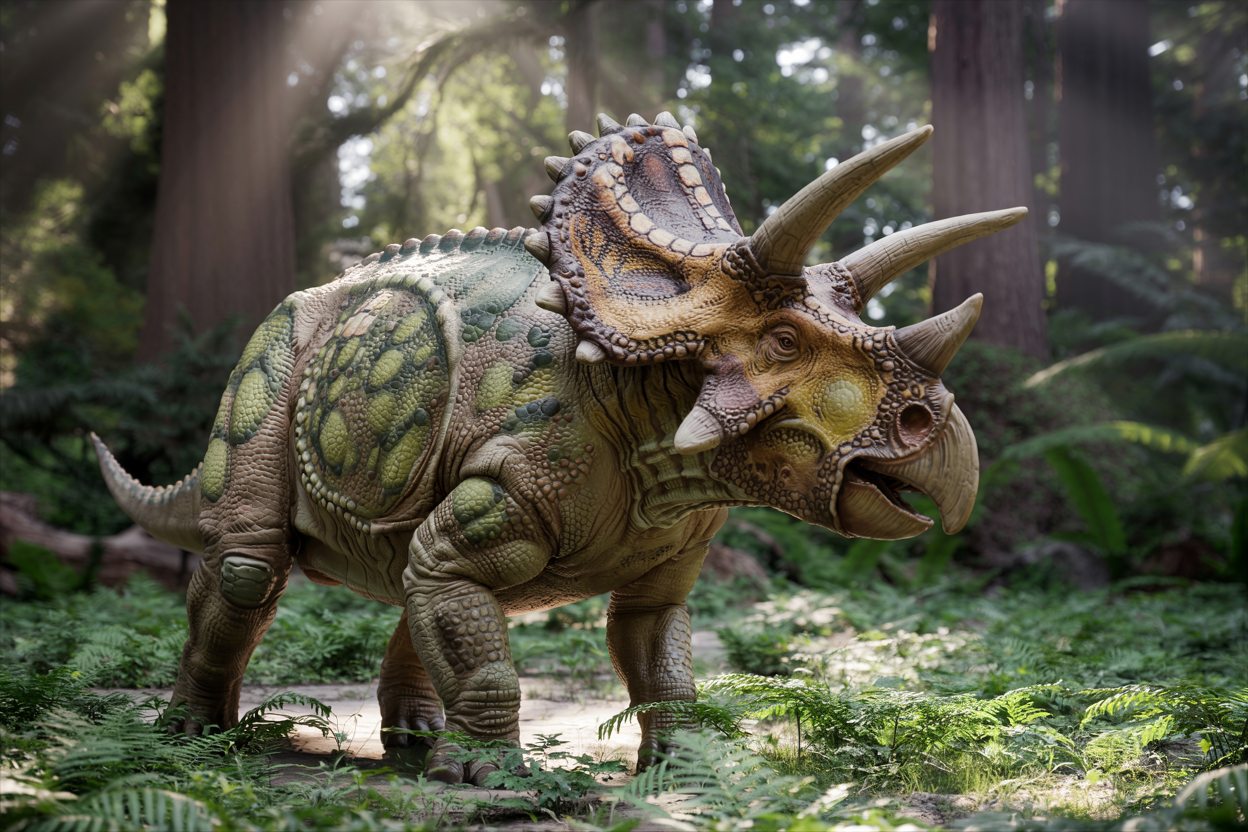
Unlike Triceratops, which had three large horns, Chasmosaurus had a shorter nose horn and two relatively small horns above its eyes. These horns were not especially sharp or long, suggesting they may have been used more for display or ritualistic combat rather than defense.
Diet and Feeding Behavior
Chasmosaurus was a herbivore, feeding on the low-growing vegetation common in its environment. It had a beaked mouth that was ideal for cropping tough plant material such as ferns, cycads, and conifers. Behind the beak were rows of cheek teeth designed for grinding and processing food.
With its low head posture and sturdy build, Chasmosaurus would have been well-suited to grazing close to the ground. It likely spent much of its day moving slowly through forests and floodplains in search of food, possibly in herds for added protection.
Discovery and Fossil Record
The first fossils of Chasmosaurus were discovered in the early 1890s by Lawrence Lambe in Alberta, and the genus was formally named in 1914. Since then, many additional specimens have been unearthed, particularly from the Dinosaur Park Formation in Alberta, which is one of the richest dinosaur fossil sites in the world.
Several species have been named within the Chasmosaurus genus, including Chasmosaurus belli and Chasmosaurus russelli. These species are very similar but show slight differences in frill shape, horn size, and other skull features. Paleontologists continue to study these differences to better understand the diversity within the genus.
Many of the fossils discovered include well-preserved skulls, which have provided scientists with detailed information about the anatomy and variation in Chasmosaurus. Some specimens have even included skin impressions, giving us a rare look at the texture and appearance of the dinosaur’s body covering.
Scientific Importance
Chasmosaurus is a key genus for understanding the evolution of ceratopsians. Its long frill and reduced horns represent one end of the spectrum in ceratopsian skull diversity, contrasting with the short-frilled, heavily horned relatives like Centrosaurus and Pachyrhinosaurus.
Studying Chasmosaurus helps paleontologists explore how frills and horns may have functioned in social behavior, mating displays, and defense. It also provides insight into how ceratopsians adapted to different environments and evolved alongside other herbivorous dinosaurs.
Because so many specimens have been found, scientists can also study variation between individuals and changes over time, which is especially useful for understanding growth patterns and population structure.
Chasmosaurus in Popular Culture
While it doesn’t have the same star power as Triceratops, Chasmosaurus has appeared in a number of documentaries, museum exhibits, and educational books. Its dramatic frill and friendly appearance make it a favorite for illustrating the diversity of horned dinosaurs.
Some paleoartists have portrayed Chasmosaurus with bright colors and patterns on its frill, reflecting the idea that the frill may have been used for visual communication—like the crests of modern birds or lizards.
Final Thoughts
Chasmosaurus may not have been the biggest or most fearsome dinosaur, but its unique skull and long frill make it one of the most visually impressive members of the ceratopsian family. Its fossils continue to shed light on the evolution, behavior, and diversity of horned dinosaurs in the Late Cretaceous. Whether grazing peacefully in herds or showing off its ornate frill, Chasmosaurus remains a fascinating and important part of dinosaur history.