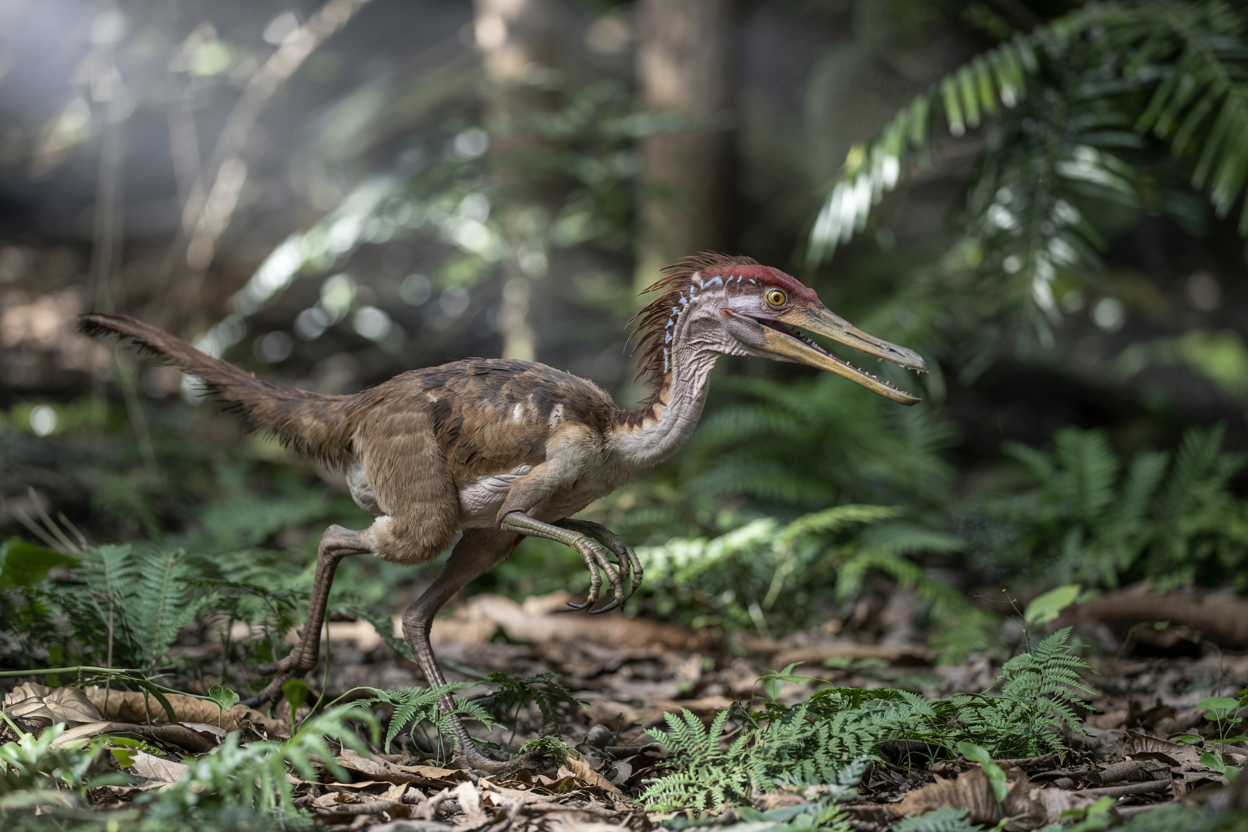
Compsognathus is the #8 seed in the Theropods division of the Dinosaur Tournament.
Compsognathus may not have been the biggest or most fearsome dinosaur, but it holds an important place in paleontology. Small, lightweight, and agile, this little theropod gives us a glimpse into what some of the earliest bird-like dinosaurs were like. Once thought to be the smallest dinosaur ever discovered, Compsognathus is often recognized for its speed, simplicity, and bird-like build.
When and Where It Lived
Compsognathus lived during the Late Jurassic period, about 150 million years ago. Fossils have been found in what is now southern Germany and southeastern France. At the time, these regions were part of a tropical archipelago, with warm, shallow seas, sandy beaches, and lush vegetation—perfect for a small, nimble dinosaur to thrive.
The original specimen was discovered in the 19th century in the Solnhofen limestone of Bavaria, a location also famous for the feathered fossil Archaeopteryx. A second, more complete specimen was found in France in the 1970s, which helped refine scientists’ understanding of this species.
Size and Physical Features
Compsognathus was a small bipedal dinosaur. The German specimen measured around 3.3 feet (1 meter) in length, while the French specimen was slightly larger, possibly reaching 4.6 feet (1.4 meters). It likely weighed around 6 to 8 pounds (3 to 4 kilograms)—roughly the size of a chicken or small turkey.
Its body was slender and built for speed. It had long legs, a narrow head, and a long, stiff tail that helped with balance. Its arms were short but functional, each ending in three clawed fingers. The skull was lightweight with sharp, pointed teeth, indicating it was a carnivore that fed on small prey.
Although no feathers have been found with Compsognathus fossils, it is closely related to feathered theropods. Many paleontologists believe it likely had some feather covering, even if not as extensive as later dinosaurs or early birds.
Diet and Behavior
Compsognathus was a carnivore that probably hunted insects, lizards, and other small animals. One of the most interesting details about this dinosaur comes from its fossilized stomach contents: the German specimen preserved the remains of a small lizard inside its body, providing direct evidence of its diet.
Its long legs suggest it was a fast runner, which would have been helpful for chasing prey or escaping predators. It may have used quick bursts of speed to surprise and snatch up its meals.
Compsognathus likely had keen eyesight and a relatively quick brain for its size, traits that would have helped it react quickly to movement around it.
Discovery and Scientific Importance
The first Compsognathus fossil was discovered in the 1850s and formally described by German paleontologist Johann A. Wagner in 1861. At the time, it was one of the most complete dinosaur skeletons ever found. For decades, it held the title of the smallest known dinosaur.
Its discovery was particularly significant because it provided a clear example of a dinosaur that was bird-like in many ways. When Archaeopteryx was later discovered in the same region, scientists began drawing connections between dinosaurs and birds, using Compsognathus as a point of comparison.
The second specimen, found in France, confirmed many of the earlier ideas and gave researchers a better understanding of the dinosaur’s overall body proportions.
Evolutionary Connections
Compsognathus is part of the group Coelurosauria, a branch of theropod dinosaurs that includes tyrannosaurs, ornithomimids, and birds. It shares many features with early avian dinosaurs and is considered an important species in the story of how birds evolved from small, feathered theropods.
Its lightweight bones, fast movement, and possible feather covering all support the growing body of evidence linking non-avian dinosaurs to modern birds.
Pop Culture and Public Recognition
Compsognathus became more widely known after appearing in the film The Lost World: Jurassic Park (1997), where it was portrayed as a small but dangerous pack hunter. While there’s no fossil evidence of it hunting in groups or attacking large animals, the film helped popularize the dinosaur and introduced it to a new generation.
Its small size and bird-like appearance have made it a favorite in museum exhibits and educational materials about dinosaur evolution.
Final Thoughts
Compsognathus may not have been the largest or most intimidating dinosaur, but it played a key role in our understanding of dinosaur biology and the link between dinosaurs and birds. Its slender build, quick reflexes, and fossilized stomach contents offer rare and valuable insight into life during the Late Jurassic.
As paleontology continues to uncover new species and refine our understanding of old ones, Compsognathus remains an important piece of the puzzle in the evolution of theropods—and a reminder that even the smallest dinosaurs can have a big story to tell.