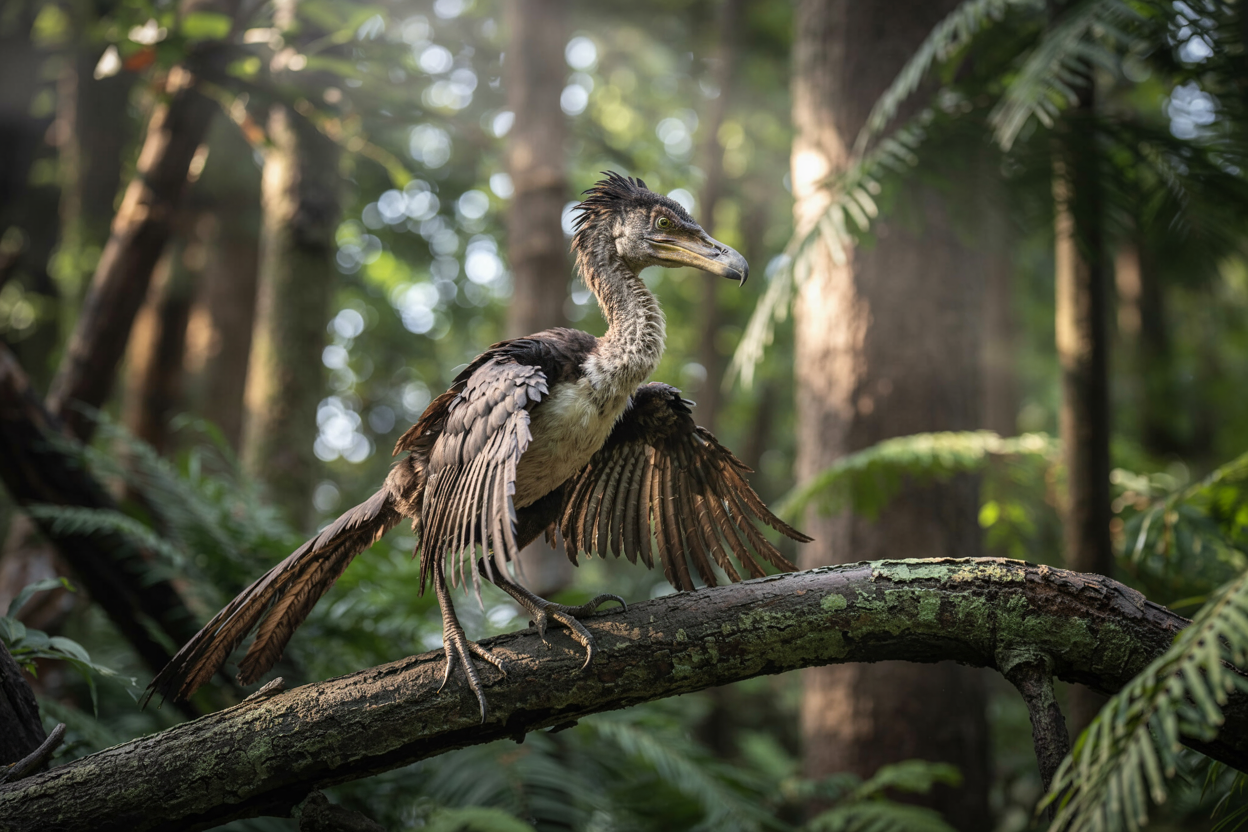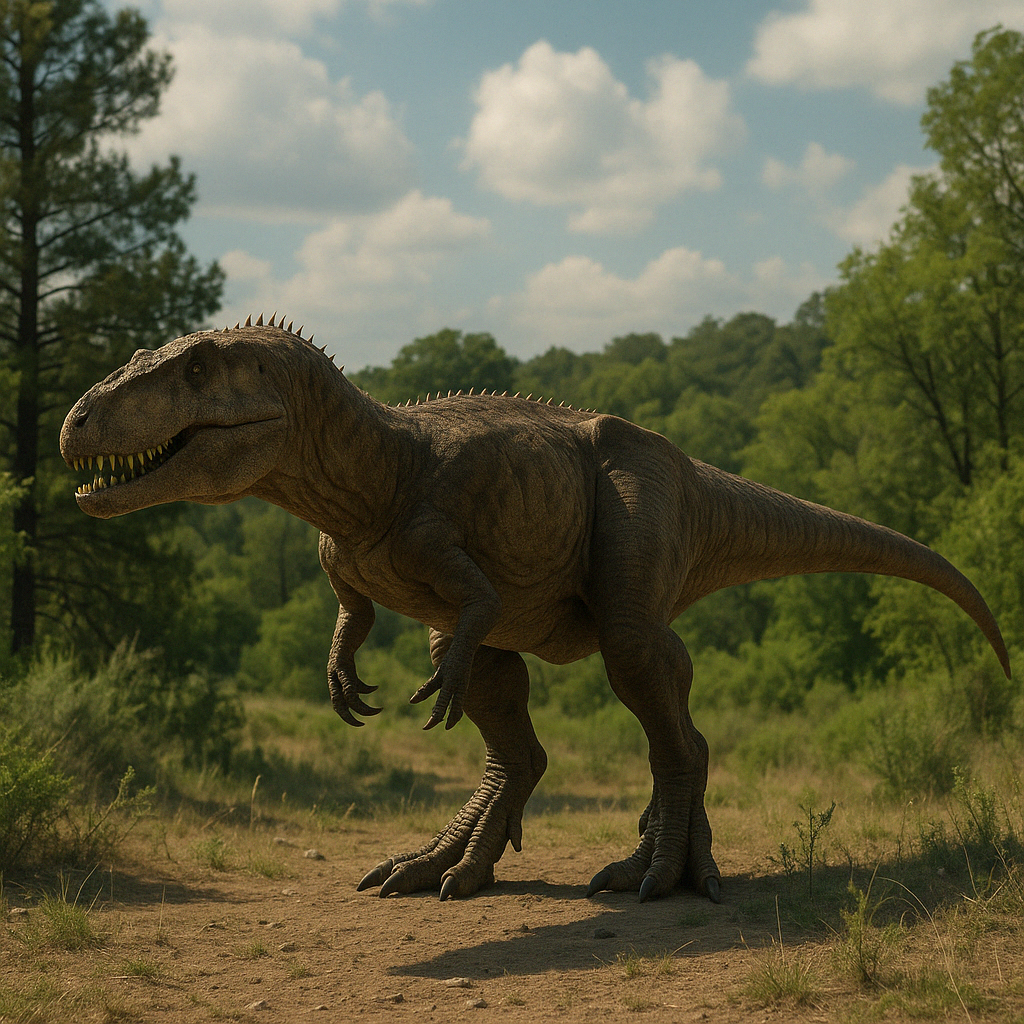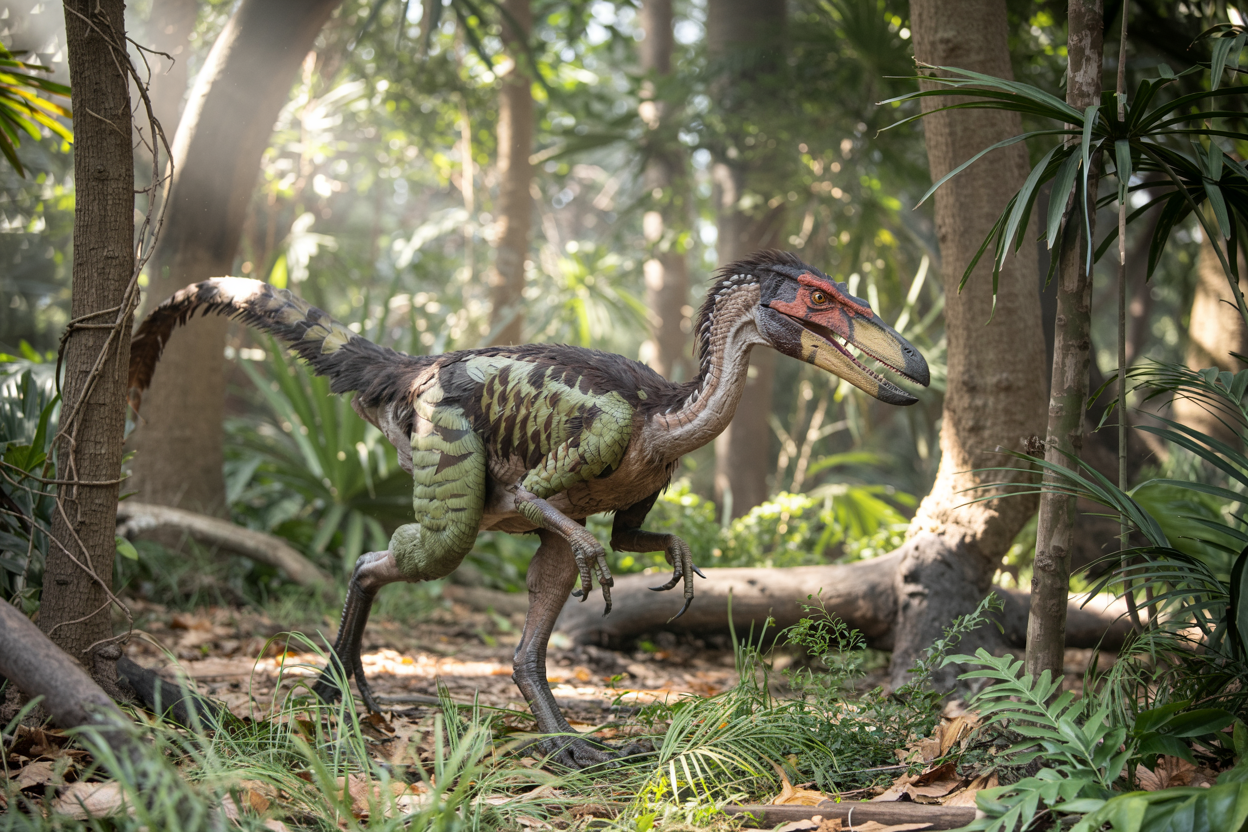
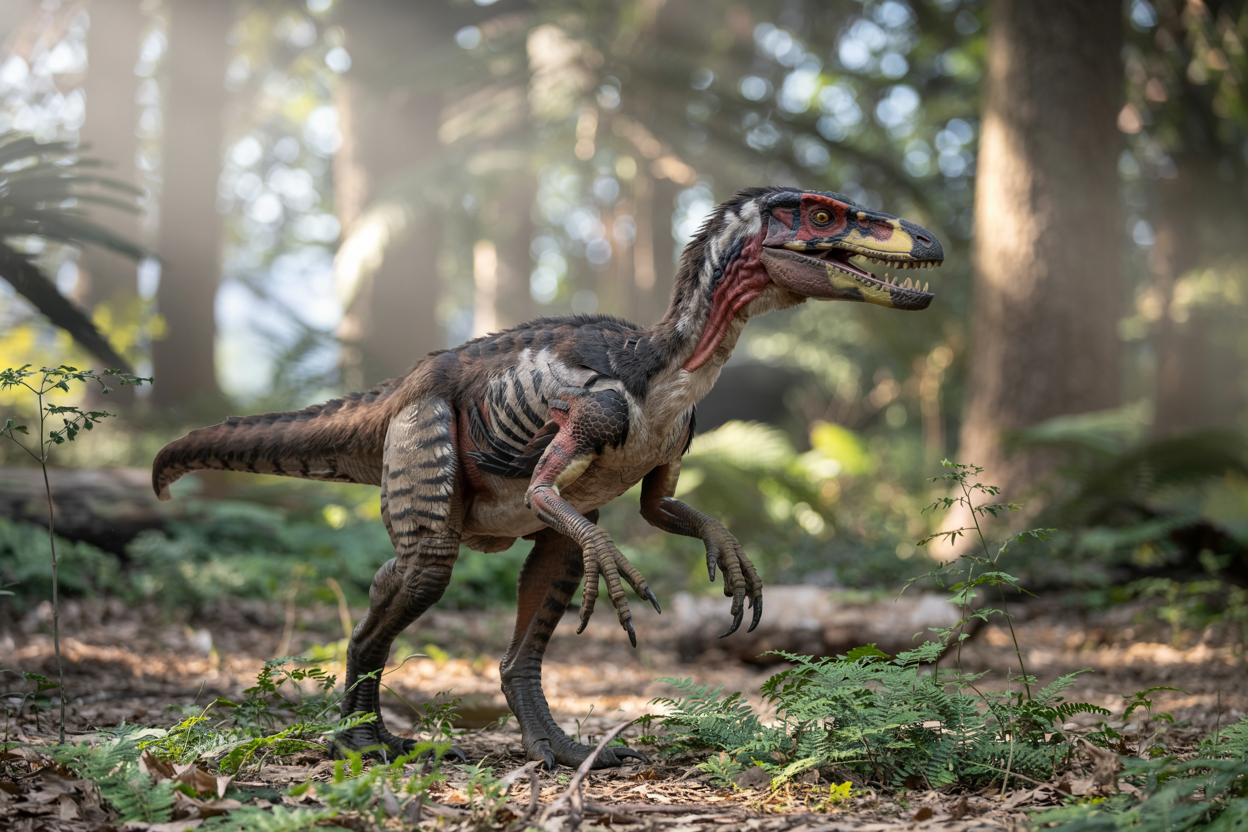
Dromaeosaurus is the #15 seed in the Theropods division of the Dinosaur Tournament.
Dromaeosaurus was a small but powerful predatory dinosaur that lived during the Late Cretaceous period. Although it’s often overshadowed by its more famous cousin Velociraptor, Dromaeosaurus played an important role in the early understanding of raptor-like dinosaurs. With its compact build, strong bite, and sharp claws, this feathered predator was well-adapted for hunting in its prehistoric environment.
When and Where It Lived
Dromaeosaurus lived about 76 to 74 million years ago during the Campanian stage of the Late Cretaceous. Fossils have been discovered in parts of North America, primarily in Alberta, Canada, and Montana, USA. During this time, much of North America was divided by a shallow sea, and Dromaeosaurus lived on the western landmass known as Laramidia. This region was home to a diverse community of dinosaurs, including hadrosaurs, ceratopsians, and other predators like Gorgosaurus and Troodon.
Size and Physical Characteristics
Dromaeosaurus was relatively small compared to many other theropods. It measured around 6 to 7 feet (1.8 to 2.1 meters) in length and weighed approximately 30 to 40 pounds (13 to 18 kilograms). It had a stocky, muscular build with strong hind limbs and a long tail used for balance. Like other members of its family, it had a sickle-shaped claw on the second toe of each foot, which was likely used to grip or slash at prey.
Its skull was short and deep, with a strong bite and robust teeth. Unlike some other raptors that had more slender jaws, Dromaeosaurus had powerful jaw muscles, allowing it to exert significant force when biting. These features suggest it may have relied more on its bite than its claws when hunting.
Though no direct feather impressions have been found with Dromaeosaurus fossils, it likely had a full coat of feathers, as seen in related species. Feathers would have helped with thermoregulation and possibly display or mating behaviors.
Diet and Hunting Behavior
Dromaeosaurus was a carnivore, feeding on small to medium-sized animals. Its strong jaws and blade-like teeth were adapted for tearing flesh, and it likely preyed on reptiles, mammals, and possibly small dinosaurs. It may have hunted alone or opportunistically scavenged from larger carcasses when the chance arose.
Its combination of speed, agility, and power made it an effective predator. The sickle claw, a trademark of dromaeosaurids, was likely used in close encounters to subdue prey. While some raptors are thought to have hunted in packs, there’s no direct evidence to suggest group hunting behavior in Dromaeosaurus specifically.
Discovery and Fossil Record
The first Dromaeosaurus fossil was discovered in 1914 by the famous fossil hunter Barnum Brown in Alberta, Canada. It was formally described and named Dromaeosaurus albertensis in 1922. The fossil included parts of the skull and some limb bones. Although the specimen was incomplete, it was enough to establish Dromaeosaurus as a new genus and species.
For decades, it remained one of the few known dromaeosaurs, making it central to early studies of this group. More complete dromaeosaurids have since been discovered, especially in Asia, but Dromaeosaurus still holds scientific importance for its unique combination of features.
Scientific Importance
Dromaeosaurus is part of the Dromaeosauridae family, a group of bird-like theropods that includes Velociraptor, Deinonychus, and Utahraptor. These dinosaurs are closely related to modern birds and share many anatomical traits, including feathers, hollow bones, and advanced lung structures.
What sets Dromaeosaurus apart from many of its relatives is its robust skull and powerful bite. While other dromaeosaurs relied heavily on speed and agility, Dromaeosaurus was built for strength. This difference in body structure helps scientists understand how diverse dromaeosaurs were and how they adapted to different ecological roles.
Dromaeosaurus in Popular Culture
Compared to Velociraptor, Dromaeosaurus hasn’t received as much attention in movies or books. However, it occasionally appears in documentaries and museum exhibits as an example of early raptor discoveries. Its rugged, powerful appearance makes it a standout among its more slender and agile relatives.
As public interest in feathered dinosaurs continues to grow, Dromaeosaurus is gaining more recognition for its role in shaping our understanding of the connection between dinosaurs and birds.
Final Thoughts
Dromaeosaurus may not be the most famous raptor, but it’s one of the most important. As one of the first dromaeosaurs ever discovered, it has helped paleontologists piece together the complex story of bird-like dinosaurs. With its strong bite, iconic sickle claw, and likely feathered body, Dromaeosaurus represents a fascinating blend of primitive and advanced traits.
Its discovery more than a century ago laid the groundwork for decades of research into how these agile predators lived, hunted, and evolved—and its story is far from over as new fossil finds continue to shed light on its world.