Mymoorapelta is the #16 seed in the Thyreophorans division of the Dinosaur Tournament.
Mymoorapelta is a fascinating example of an early armored dinosaur that lived during the Jurassic period. As one of the most primitive known ankylosaurs, Mymoorapelta provides valuable insights into how these “living tanks” first developed their distinctive body armor and defensive traits.
Though it wasn’t as large or as heavily armored as its later relatives, Mymoorapelta was well-suited to its environment and played an important role in the early evolution of armored dinosaurs.
When and Where It Lived
Mymoorapelta lived around 155 million years ago during the Late Jurassic period. Its fossils were discovered in the Morrison Formation of western North America, specifically near the Mygatt-Moore Quarry in western Colorado—a site that inspired its name.
The Morrison Formation is one of the most famous fossil-rich rock formations in the world and has yielded iconic dinosaurs like Allosaurus, Apatosaurus, and Stegosaurus. During the Late Jurassic, this region was a warm, semi-arid landscape with seasonal rains, river systems, and forests filled with ferns, conifers, and other prehistoric plants.
Mymoorapelta would have shared its ecosystem with a wide variety of other dinosaurs, including large predators and giant sauropods. Its armor was an essential adaptation for surviving among such impressive—and sometimes dangerous—neighbors.
Size and Physical Characteristics
Mymoorapelta was relatively small by ankylosaur standards. It measured about 10 to 13 feet (3 to 4 meters) long and likely weighed around half a ton. Its body was low and wide, supported by four sturdy legs, and built for stability rather than speed.
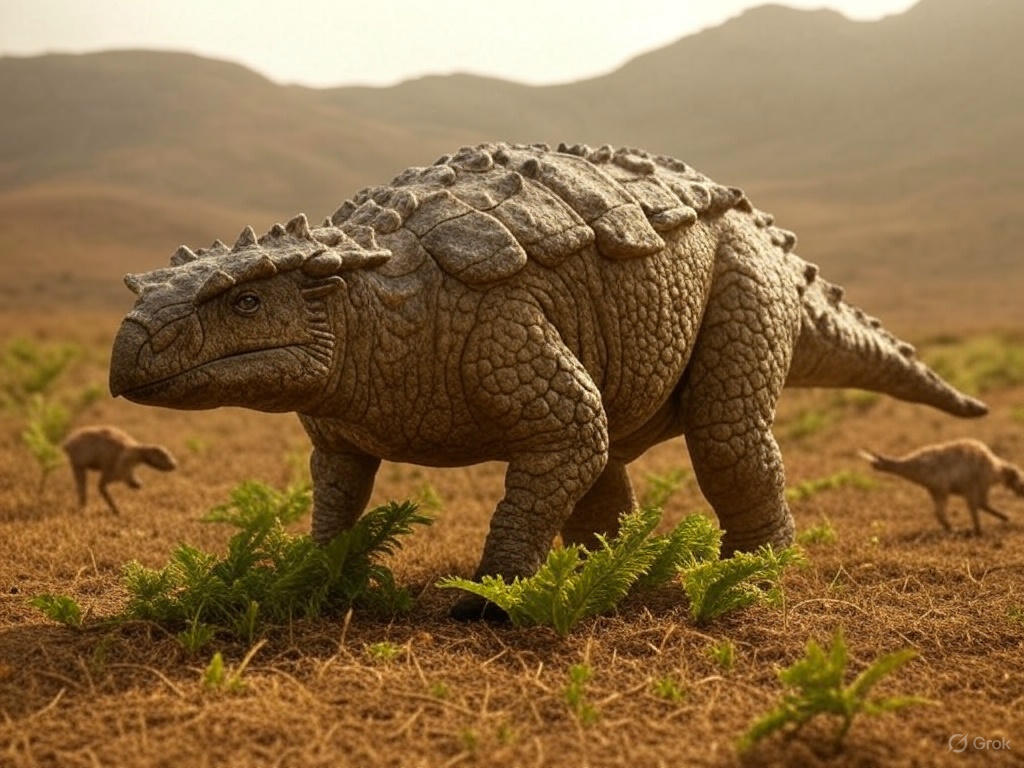
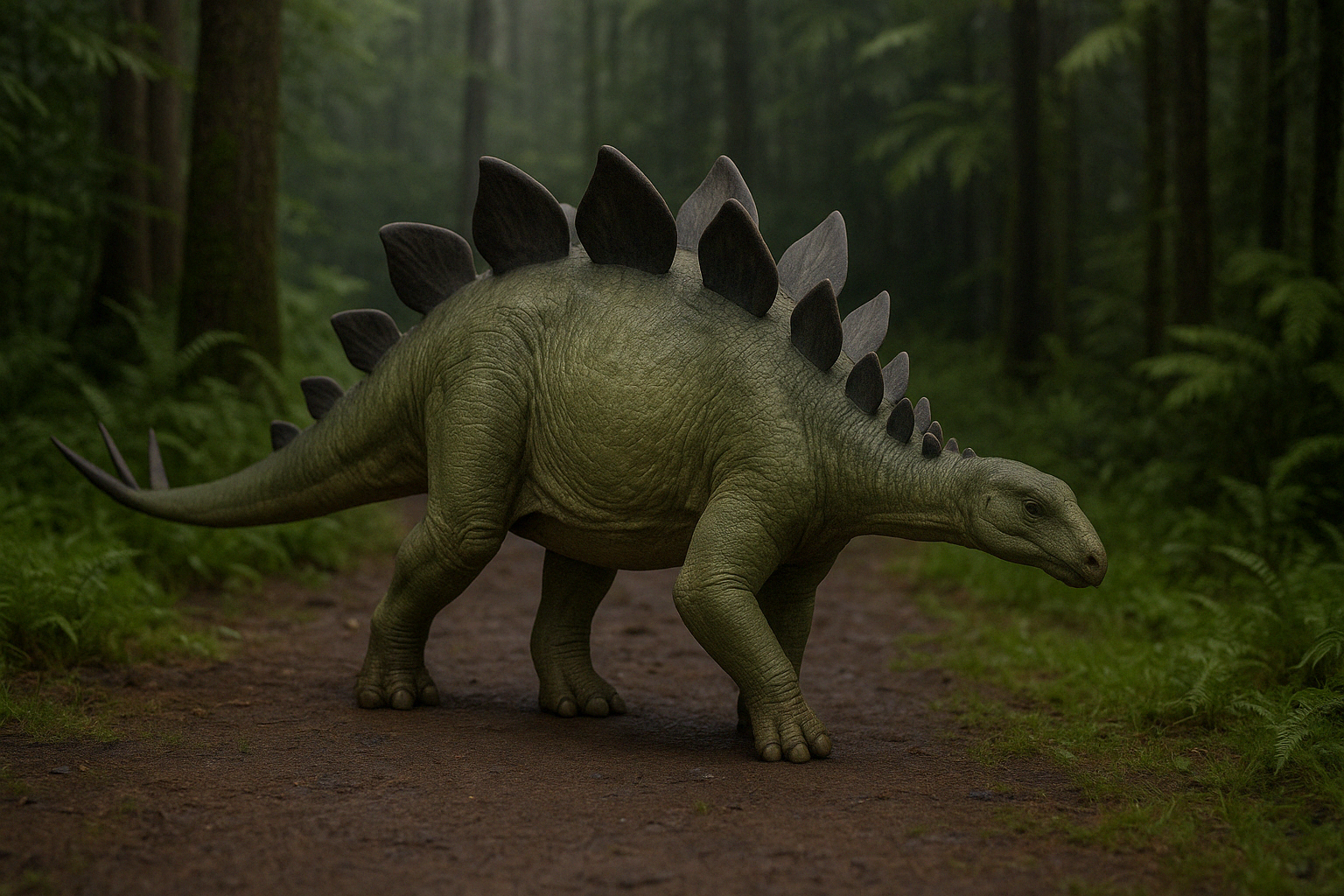
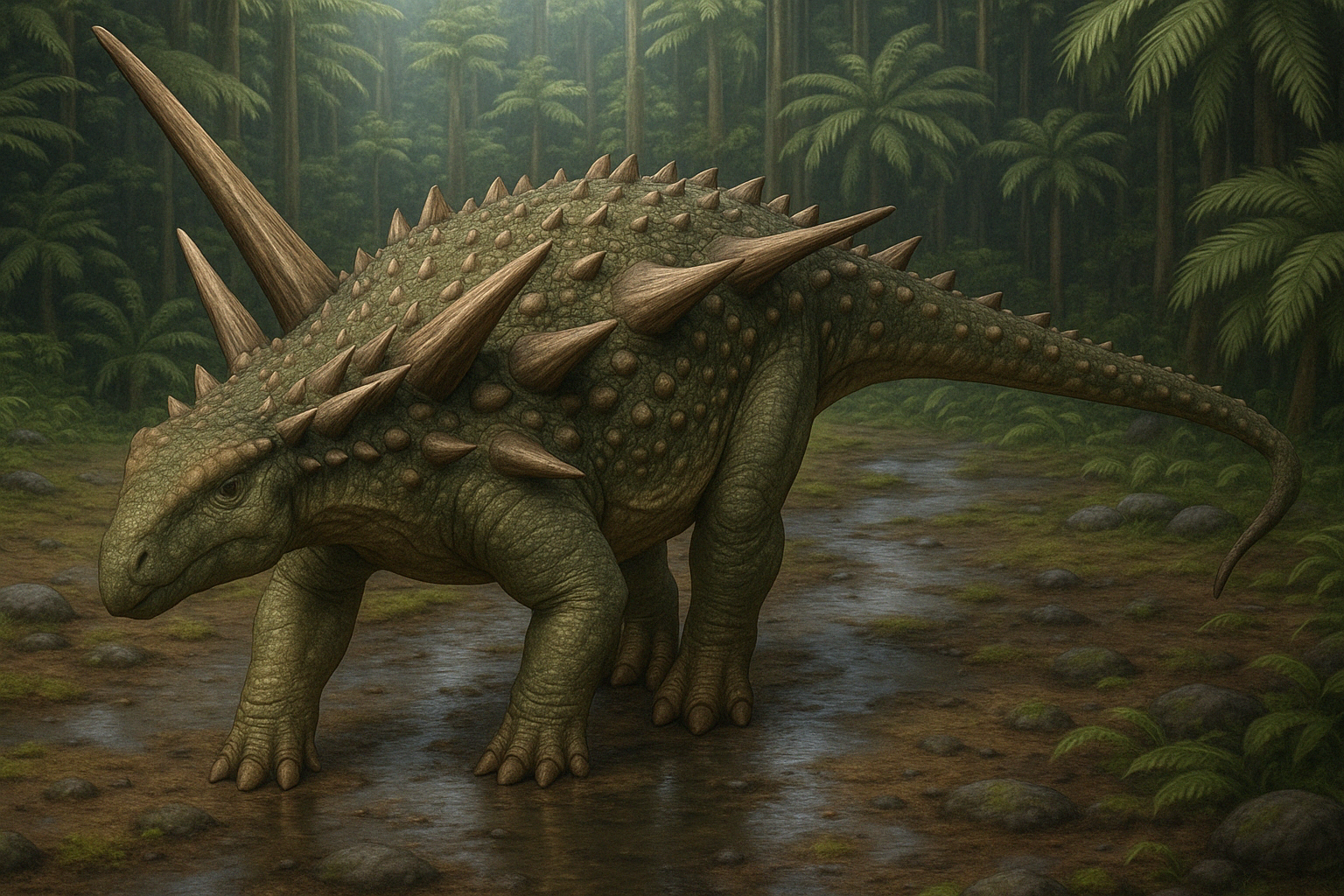
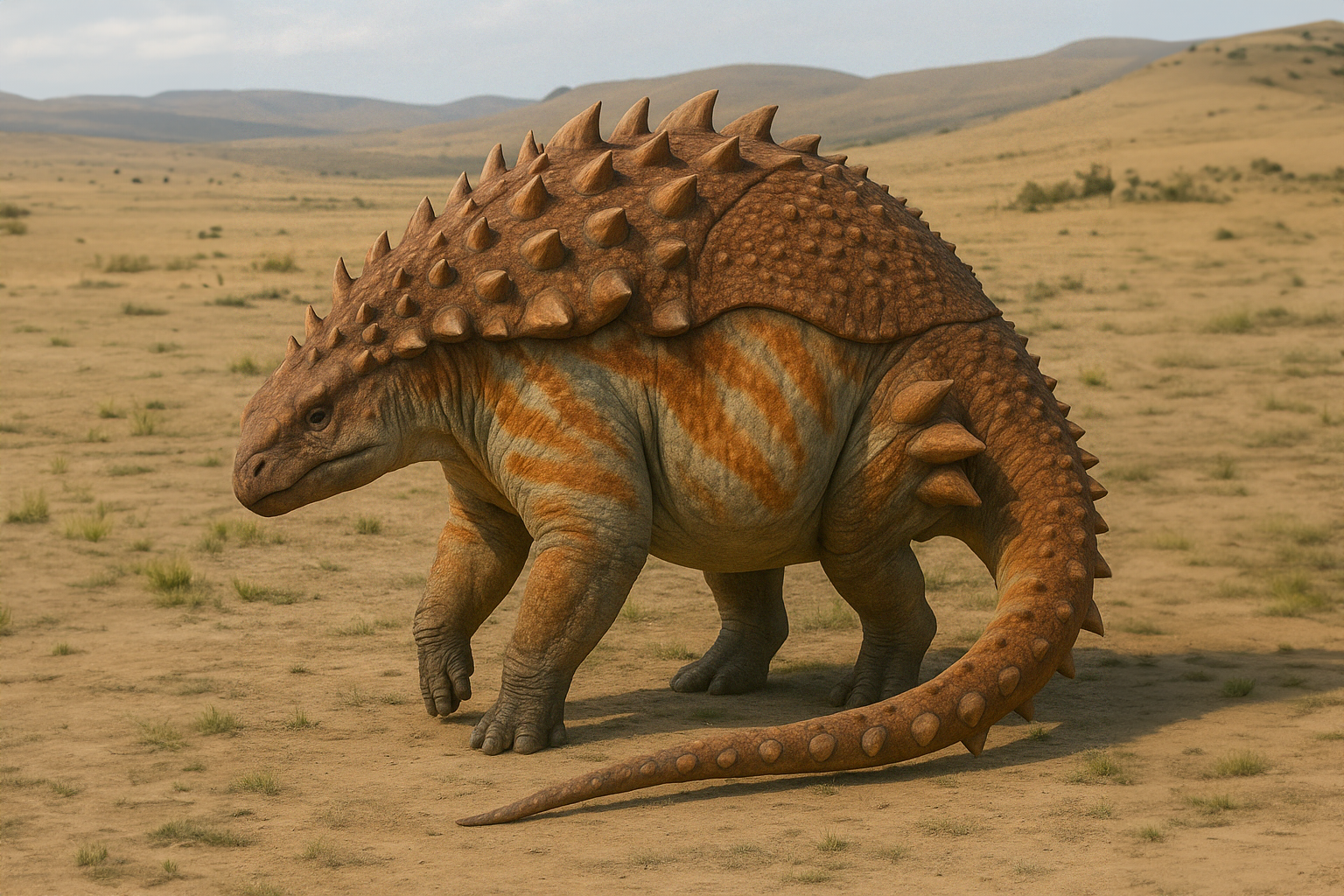
The most distinctive feature of Mymoorapelta was its armor. Like other ankylosaurs, it had bony plates called osteoderms embedded in its skin. These plates were arranged along its back and sides, forming a protective shield against predators. Some of the plates were large and flat, while others were more rounded or slightly keeled. It also had small spikes or ridges along its shoulders and flanks, adding extra protection and possibly making it more difficult for predators to attack from the side.
Unlike its later ankylosaur relatives, Mymoorapelta did not have a club at the end of its tail. Instead, its tail was long and flexible, possibly used to swipe or deter attackers rather than deliver crushing blows.
Diet and Feeding Behavior
Mymoorapelta was a herbivore that fed on low-growing vegetation. With its beaked mouth and small, leaf-shaped teeth, it was well-suited for nipping and slicing soft plants such as ferns, horsetails, and cycads.
Its short neck and low posture suggest that it was a ground-level browser. It likely spent much of its day slowly moving through vegetation-rich areas, using its strong legs to navigate uneven terrain and its armor to protect itself while feeding.
To help digest the tough plant material, Mymoorapelta may have relied on a large, fermentation-based gut. Like some other herbivorous dinosaurs, it might have swallowed stones (gastroliths) to aid in breaking down food in its digestive system, though direct evidence of this behavior hasn’t been found in this species.
Discovery and Fossil Record
Mymoorapelta was first discovered in the early 1980s at the Mygatt-Moore Quarry in Colorado, and it was formally described in 1994. Its name combines “Mygatt-Moore” and “pelta,” the Latin word for shield, highlighting both the location and its armored nature.
Fossil remains of Mymoorapelta include parts of the skull, vertebrae, limbs, and numerous osteoderms. While no complete skeleton has been found, enough material has been recovered to give scientists a solid understanding of its size, shape, and armor arrangement.
It was the first ankylosaur formally described from the Morrison Formation, making it a key find in the study of Jurassic dinosaurs in North America.
Scientific Importance
Mymoorapelta is important because it represents an early stage in the evolution of ankylosaurs. Its anatomy shows a mix of primitive and advanced traits, helping paleontologists trace how armor evolved in this group over time. It also shows that ankylosaurs were already present and adapting during the Jurassic, millions of years before the more famous members of the group appeared in the Cretaceous.
Studying Mymoorapelta helps researchers understand not only the development of armor and body structure in ankylosaurs but also how these dinosaurs interacted with their environment and coexisted with other species in the Morrison ecosystem.
Mymoorapelta in Popular Culture
Mymoorapelta isn’t as well-known as Ankylosaurus or Stegosaurus, but it has started to appear more frequently in books, documentaries, and museum exhibits. Its discovery at the Mygatt-Moore Quarry has made it a popular feature at the nearby Dinosaur Journey Museum in Fruita, Colorado, where visitors can learn about the region’s rich Jurassic history.
Its unique status as one of the earliest North American ankylosaurs makes it a favorite among paleontology fans who are interested in the origins of dinosaur armor.
Final Thoughts
Mymoorapelta may not have had the size or tail club of later armored dinosaurs, but it was a trailblazer in its own right. With its body covered in protective plates and its small but sturdy build, it was well-equipped to navigate the complex and sometimes dangerous ecosystems of the Jurassic world. As one of the earliest ankylosaurs, Mymoorapelta continues to help paleontologists uncover the early story of these incredible, armor-plated dinosaurs.