Gastonia is the #5 seed in the Thyreophorans division of the Dinosaur Tournament.
Gastonia was a heavily armored dinosaur that lived during the Early Cretaceous period. Covered in bony plates and sporting a formidable array of spikes, Gastonia was well-equipped to defend itself against predators. Although not as large or well-known as Ankylosaurus, this fascinating dinosaur has gained attention for its unique armor and the role it played in the ecosystems of early North America. With its low-slung body and impressive natural defenses, Gastonia is a standout member of the ankylosaur family.
When and Where It Lived
Gastonia lived about 125 million years ago during the Early Cretaceous period. Its fossils have been found in what is now Utah, specifically in the Cedar Mountain Formation. This area has produced many important dinosaur discoveries and represents a time of transition between the Late Jurassic and the rise of new dinosaur groups in the Cretaceous.
The environment Gastonia lived in was warm and semi-arid, with seasonal rainfall, river systems, and plenty of vegetation. It shared its habitat with a variety of dinosaurs, including the early tyrannosaur Yutyrannus, sauropods like Cedarosaurus, and the predator Utahraptor, one of the largest known raptors.
Size and Physical Characteristics
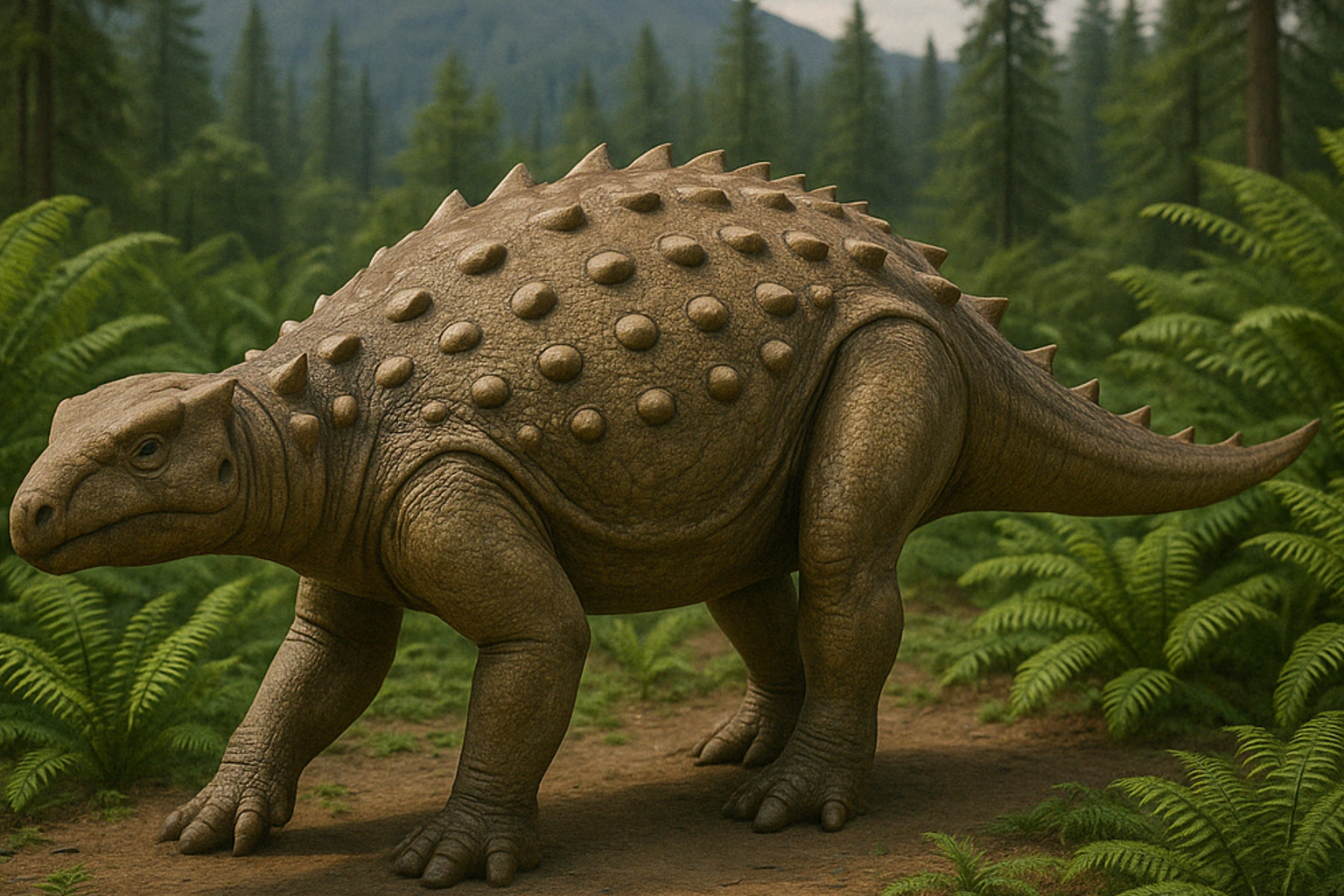
Gastonia was a medium-sized ankylosaur, measuring around 15 to 20 feet (4.5 to 6 meters) in length and weighing approximately 1 to 2 tons. It had a broad, flat body, short legs, and a low profile—traits that made it stable and difficult to flip over, a useful feature for a creature that relied on armor for survival.
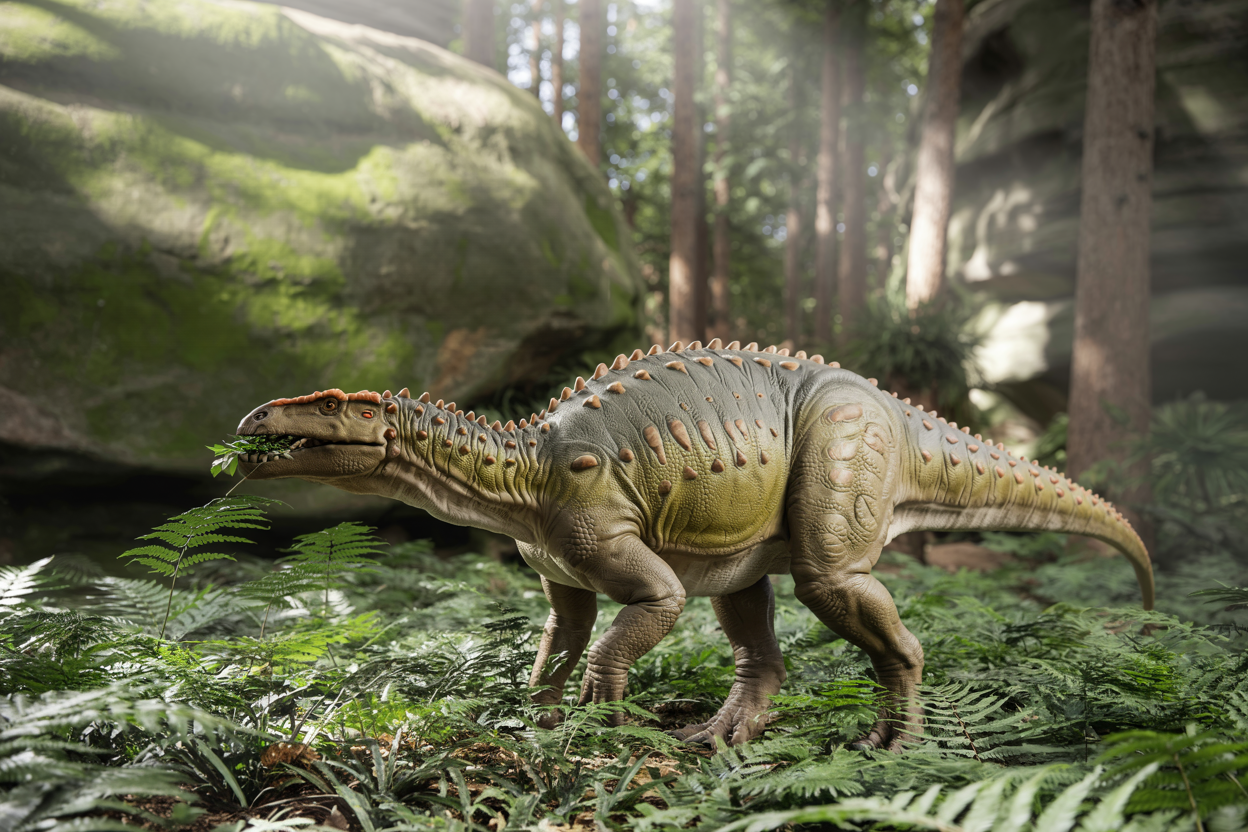
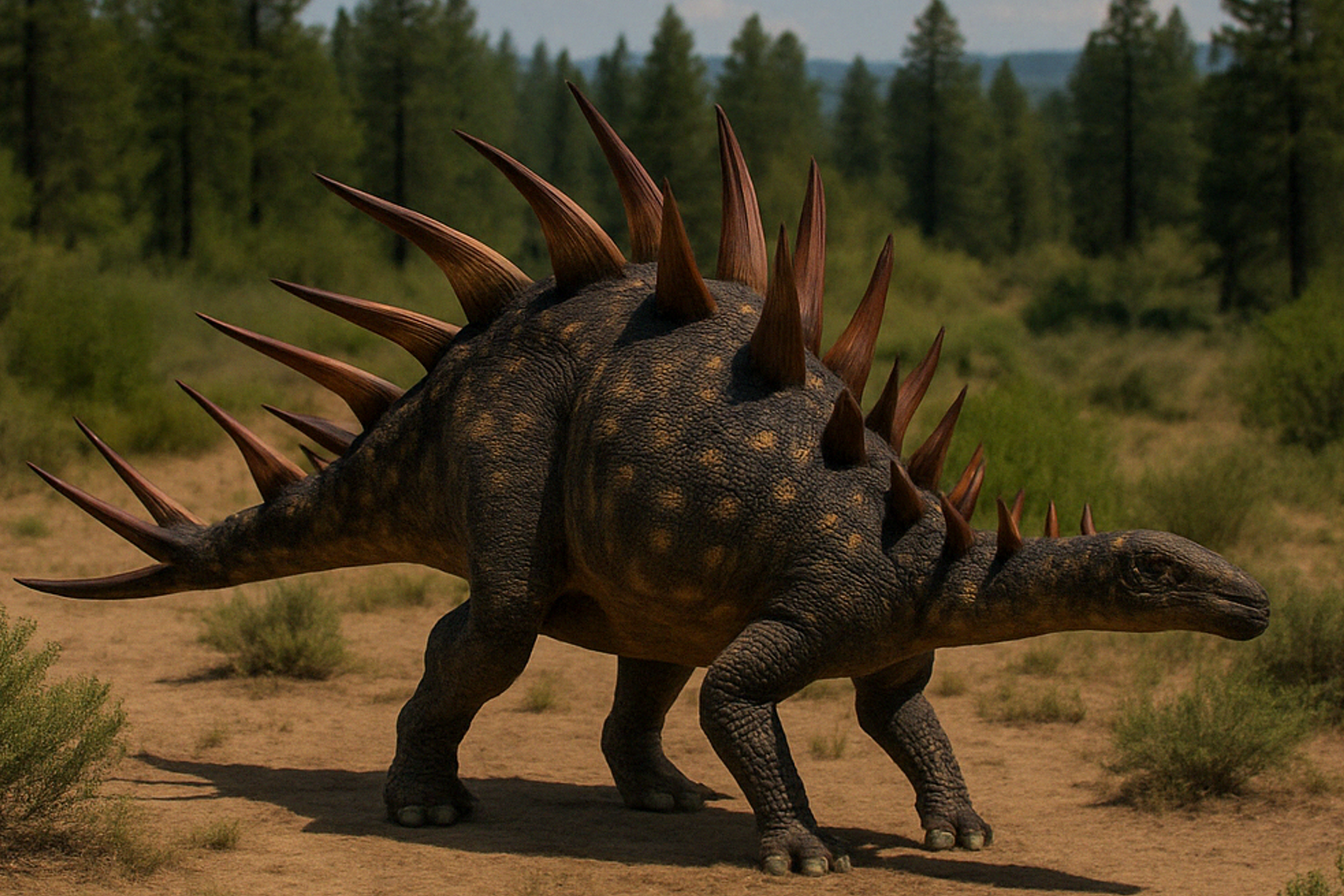
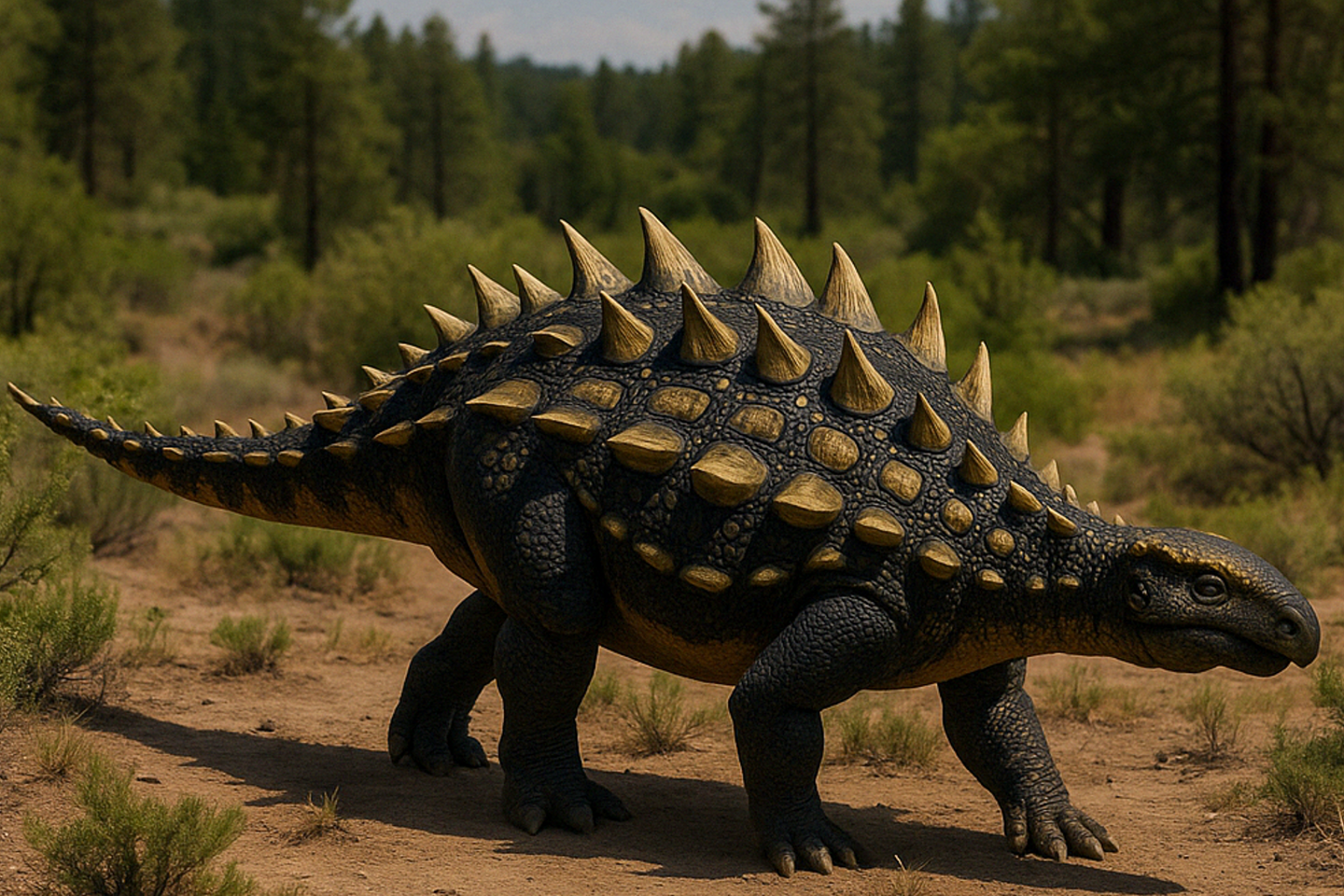
One of Gastonia’s most striking features was its armor. Its back and sides were covered with a mix of bony plates (osteoderms) and long spikes. These spikes projected outward, particularly along its shoulders and flanks, forming a natural barrier against attack. Its head was also armored, with a short snout and beaked mouth used for cropping plants.
Unlike some of its later ankylosaur relatives, Gastonia did not have a tail club. Instead, it relied on its extensive body armor and spikes to deter predators, making it more similar in appearance to members of the nodosaur family.
Diet and Feeding Behavior
Gastonia was a herbivore that fed on low-growing plants. With its short legs and low head position, it likely grazed on ferns, cycads, and early flowering plants. Its beak and small teeth were suited for nipping and slicing vegetation, not for chewing, so it probably swallowed its food in chunks and relied on a fermentation-based digestive system to break it down.
Like other armored dinosaurs, Gastonia may have spent much of its day slowly moving through vegetation-rich areas, using its senses to detect threats and feeding at ground level.
Discovery and Fossil Record
Gastonia was first described in 1998 by paleontologist James Kirkland, who named the type species Gastonia burgei. The genus name honors Robert Gaston, a fossil preparator who helped with the discovery, while the species name honors Donald Burge, a Utah museum director.
The initial discovery site yielded multiple individuals, including partial skeletons and well-preserved armor pieces. These fossils have allowed scientists to reconstruct much of Gastonia’s body and gain a better understanding of its life and defenses.
The fact that so many individuals were found together suggests that Gastonia may have lived in groups, possibly for protection or social behavior—though this remains a topic of ongoing research.
Scientific Importance
Gastonia plays an important role in our understanding of ankylosaur evolution. It lived early in the history of this group and shows a mix of features seen in both nodosaurids and ankylosaurids, helping bridge the gap between these two closely related families.
Its impressive armor and spike arrangement make it one of the most visually distinctive armored dinosaurs, and its well-preserved fossils provide valuable insight into the development of dinosaur defense strategies.
Gastonia is also significant because it lived alongside large predators like Utahraptor, giving researchers a rare opportunity to study predator-prey dynamics in an Early Cretaceous ecosystem.
Gastonia in Popular Culture
While not as famous as some other armored dinosaurs, Gastonia has gained a steady fanbase among dinosaur enthusiasts. It has appeared in books, documentaries, and museum exhibits, often as an example of a well-armored, early ankylosaur.
Its impressive appearance and connection to the well-known Utahraptor help it stand out in discussions about Cretaceous dinosaur diversity and defense adaptations.
Final Thoughts
Gastonia may not have had a tail club, but its rows of spikes and bony armor made it one of the best-defended dinosaurs of its time. With its squat build, low center of gravity, and natural armor, it was more than capable of holding its own in a world filled with predators. As one of the earliest and best-known armored dinosaurs from North America, Gastonia continues to play an important role in the story of how dinosaurs evolved to survive and thrive in diverse environments.