Gargoyleosaurus is the #12 seed in the Thyreophorans division of the Dinosaur Tournament.
Gargoyleosaurus was a small but heavily armored dinosaur that lived during the Late Jurassic period. With a name that literally means “gargoyle lizard,” it’s no surprise this dinosaur had a fearsome appearance—complete with rows of sharp spikes, bony plates, and a skull that looks like it came straight from medieval architecture. Despite its intimidating look, Gargoyleosaurus was a peaceful plant-eater that relied on armor for protection. As one of the earliest known ankylosaurs, it plays an important role in understanding the evolution of this heavily defended group of dinosaurs.
When and Where It Lived
Gargoyleosaurus lived around 155 million years ago during the Late Jurassic period. Its fossils have been found in the Morrison Formation of Wyoming, a famous fossil-rich region in the western United States that has also produced dinosaurs like Allosaurus, Diplodocus, and Stegosaurus.
During the Late Jurassic, this region was a semi-arid floodplain dotted with forests, rivers, and fern-covered areas. Gargoyleosaurus shared its environment with a wide range of dinosaur species, many of them much larger and more aggressive. Its well-armored body helped it survive alongside these Jurassic giants.
Size and Physical Characteristics
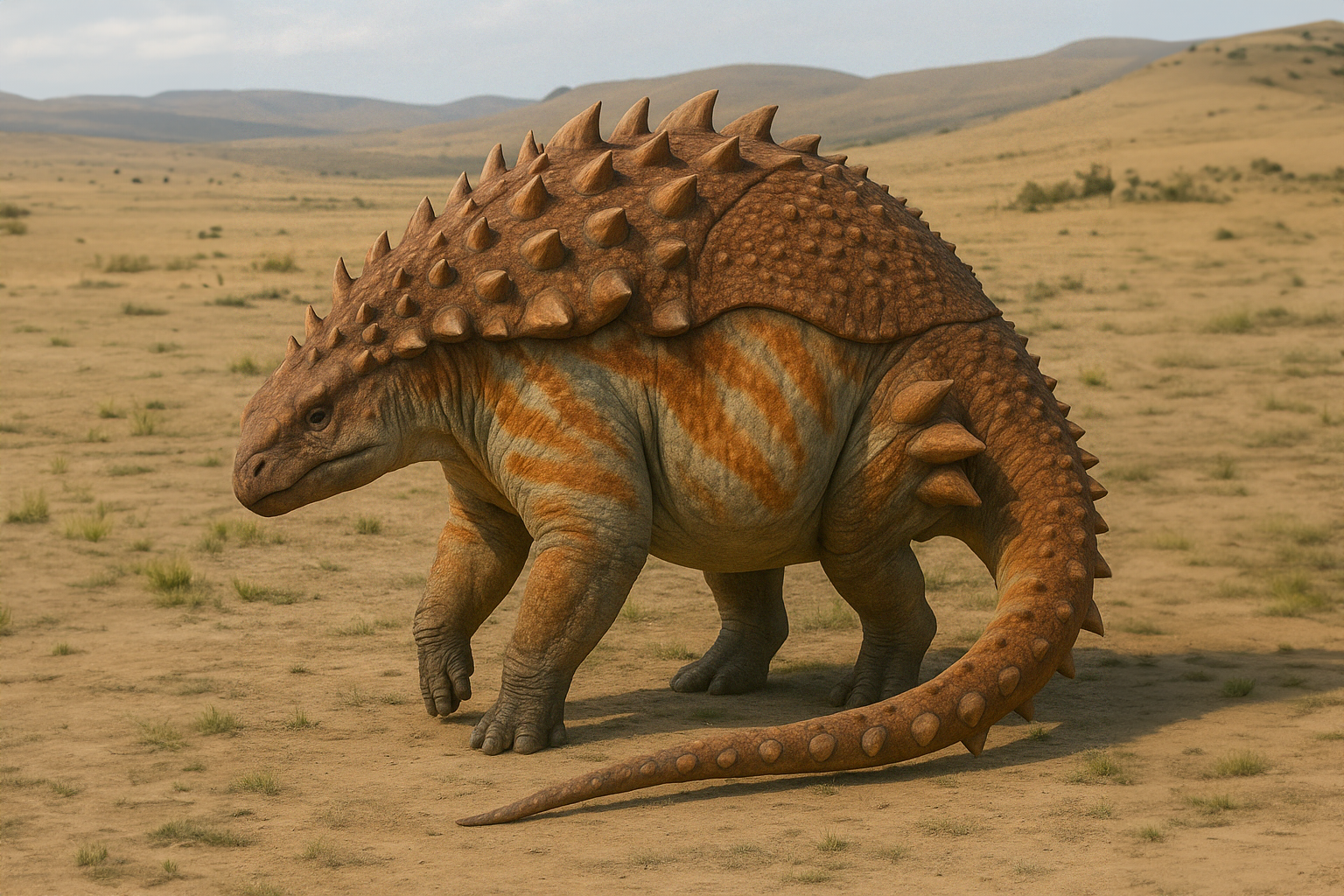
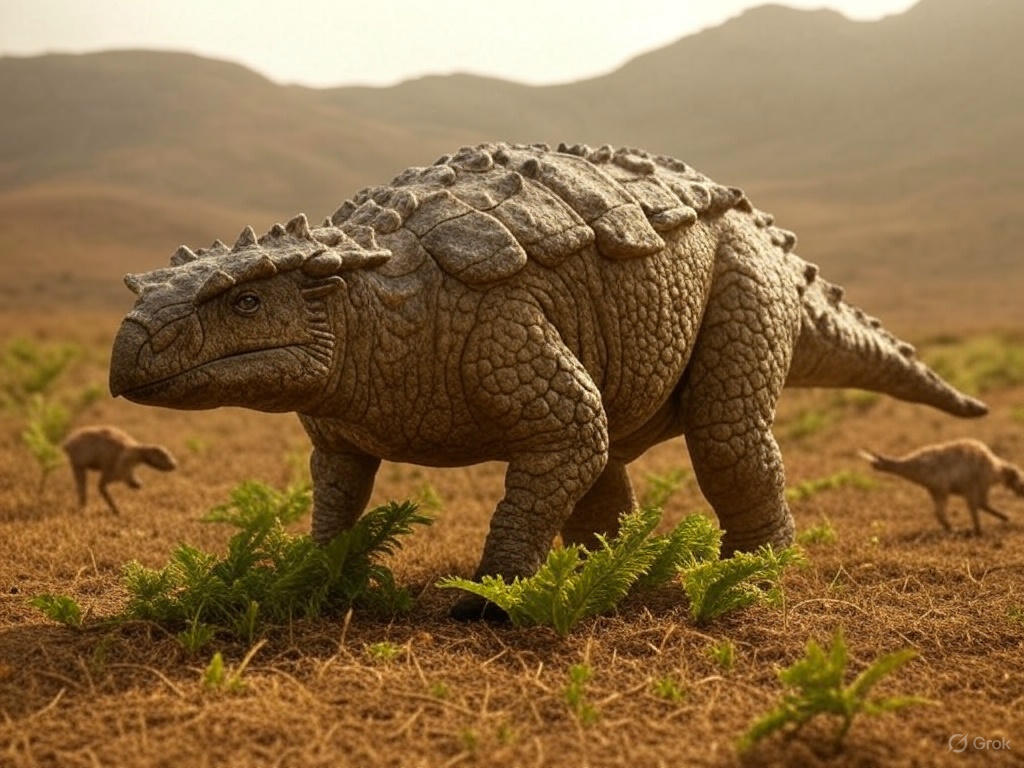
Gargoyleosaurus was relatively small by ankylosaur standards. It measured about 10 feet (3 meters) long and likely weighed around 1,000 pounds (450 kilograms). It had a wide, low-slung body, short legs, and a long tail. Its body was covered in bony plates called osteoderms, which served as armor. These plates ran along its back and sides, forming a protective shield against predators.
One of the most distinctive features of Gargoyleosaurus was the row of sharp spikes that lined its neck and shoulders. These spikes projected outward and could have been used to ward off predators or as a deterrent to attacks from the side.
Its skull was also unique. Gargoyleosaurus had a long, narrow snout and a distinctive beak at the front of its mouth. Its head was heavily armored with bony ridges and horns around the eyes and cheeks, giving it the “gargoyle” look that inspired its name.
Unlike many later ankylosaurs, Gargoyleosaurus did not have a bony tail club. That adaptation came later in the group’s evolution. Instead, it relied on its body armor and spikes for defense.
Diet and Feeding Behavior
Gargoyleosaurus was a herbivore. Its teeth and jaw structure suggest it fed on low-growing plants, including ferns, cycads, and possibly early flowering plants. Its beak was useful for nipping vegetation close to the ground, and its small, leaf-shaped teeth were likely used to slice through soft plant material.
Like other ankylosaurs, Gargoyleosaurus probably swallowed its food with minimal chewing and relied on a large gut to ferment and digest the plant matter. It may have swallowed stones (gastroliths) to help grind food internally, though this behavior hasn’t been directly confirmed for the species.
Its feeding style would have been slow and steady, spending much of the day grazing in low-lying vegetation and moving cautiously through its environment.
Discovery and Fossil Record
Gargoyleosaurus was first discovered in the 1990s at the Bone Cabin Quarry in Wyoming. It was formally described in 1998 by paleontologists Kenneth Carpenter, Clifford Miles, and Karen Cloward. The name Gargoyleosaurus parkpini honors both its gargoyle-like appearance and J.P. Park, a supporter of the fossil excavation.
The fossil remains include a well-preserved skull, vertebrae, limb bones, and much of its armor. The skull of Gargoyleosaurus is one of the earliest complete ankylosaur skulls ever found in North America, making it especially important to researchers studying the origins and diversification of armored dinosaurs.
Scientific Importance
Gargoyleosaurus is one of the oldest known ankylosaurs and helps fill in the early evolutionary history of this group. It combines traits seen in both nodosaurids and ankylosaurids—two subgroups of the ankylosaur family tree. Its narrow skull and body armor suggest it was a transitional form, showing how ankylosaurs developed their signature defenses over time.
Studying Gargoyleosaurus helps paleontologists understand how these animals adapted to their environments and how different forms of armor evolved in response to predators and ecological pressures.
Gargoyleosaurus in Popular Culture
Although not as famous as Ankylosaurus or Stegosaurus, Gargoyleosaurus has made appearances in dinosaur books, documentaries, and museum exhibits. Its unique skull and spiked armor make it a favorite among dinosaur enthusiasts who enjoy learning about the lesser-known but still fascinating members of the prehistoric world.
It’s sometimes featured in video games and toy collections that include armored dinosaurs, especially those focusing on Jurassic-era species.
Final Thoughts
Gargoyleosaurus might not have had a tail club, but its impressive armor and sharp spikes made it a well-protected herbivore in a world full of danger. As one of the earliest known ankylosaurs, it provides an important glimpse into how these “living tanks” got their start. With its distinctive look and fascinating fossil record, Gargoyleosaurus continues to play a key role in the story of dinosaur evolution and defense.