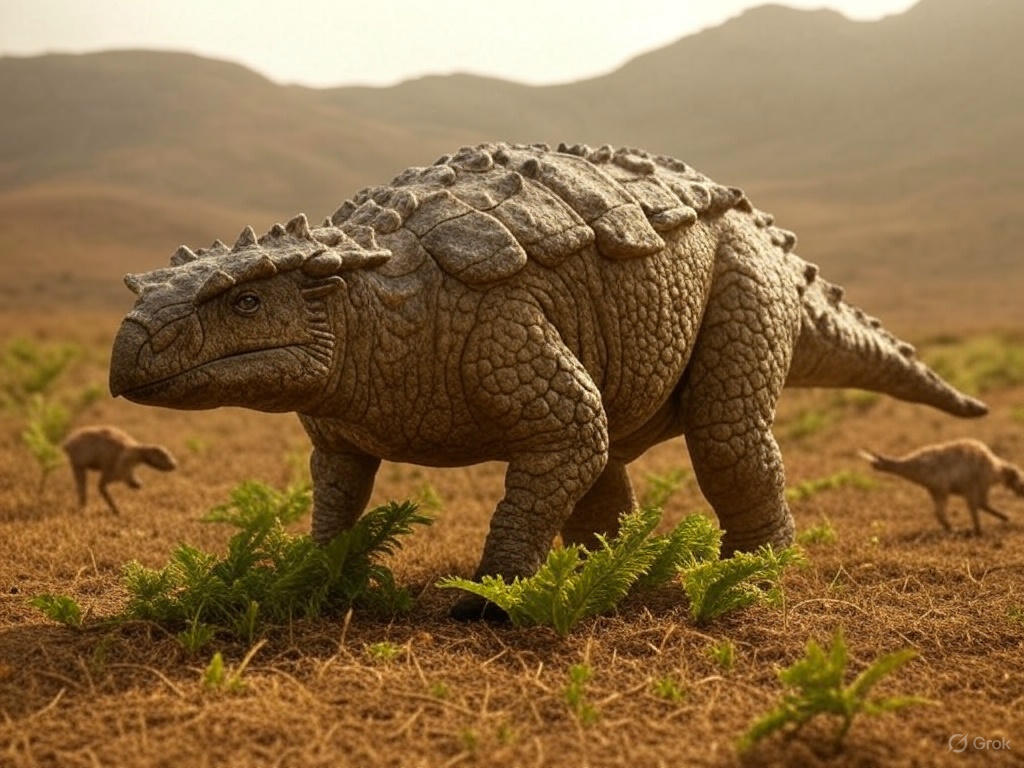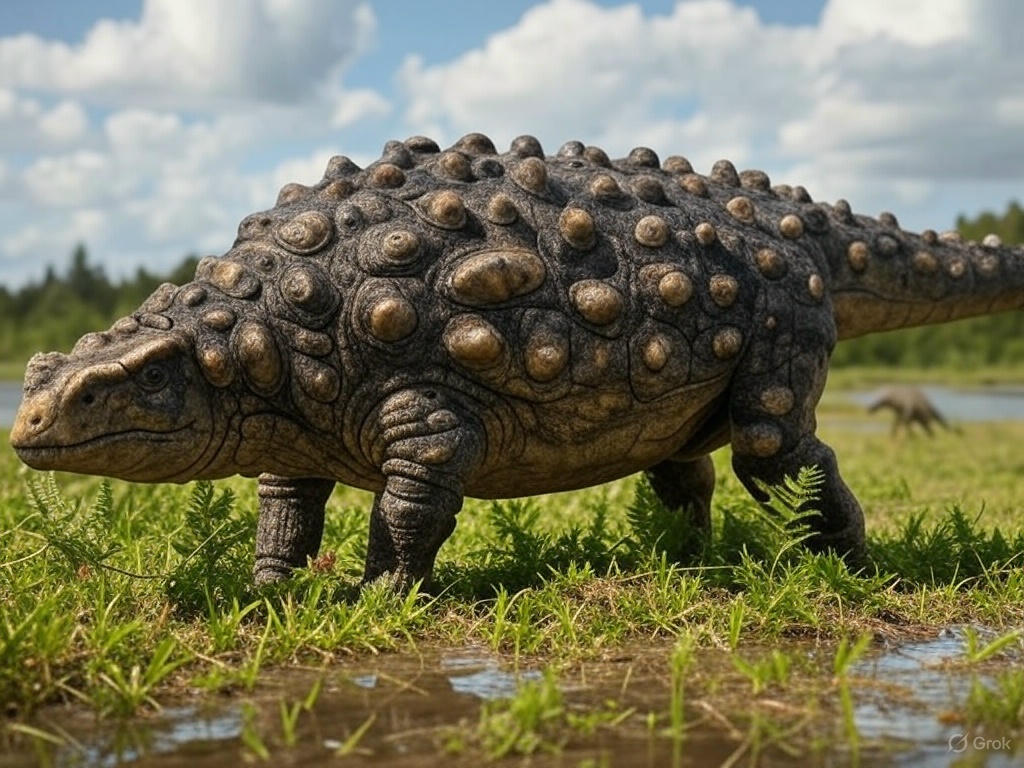
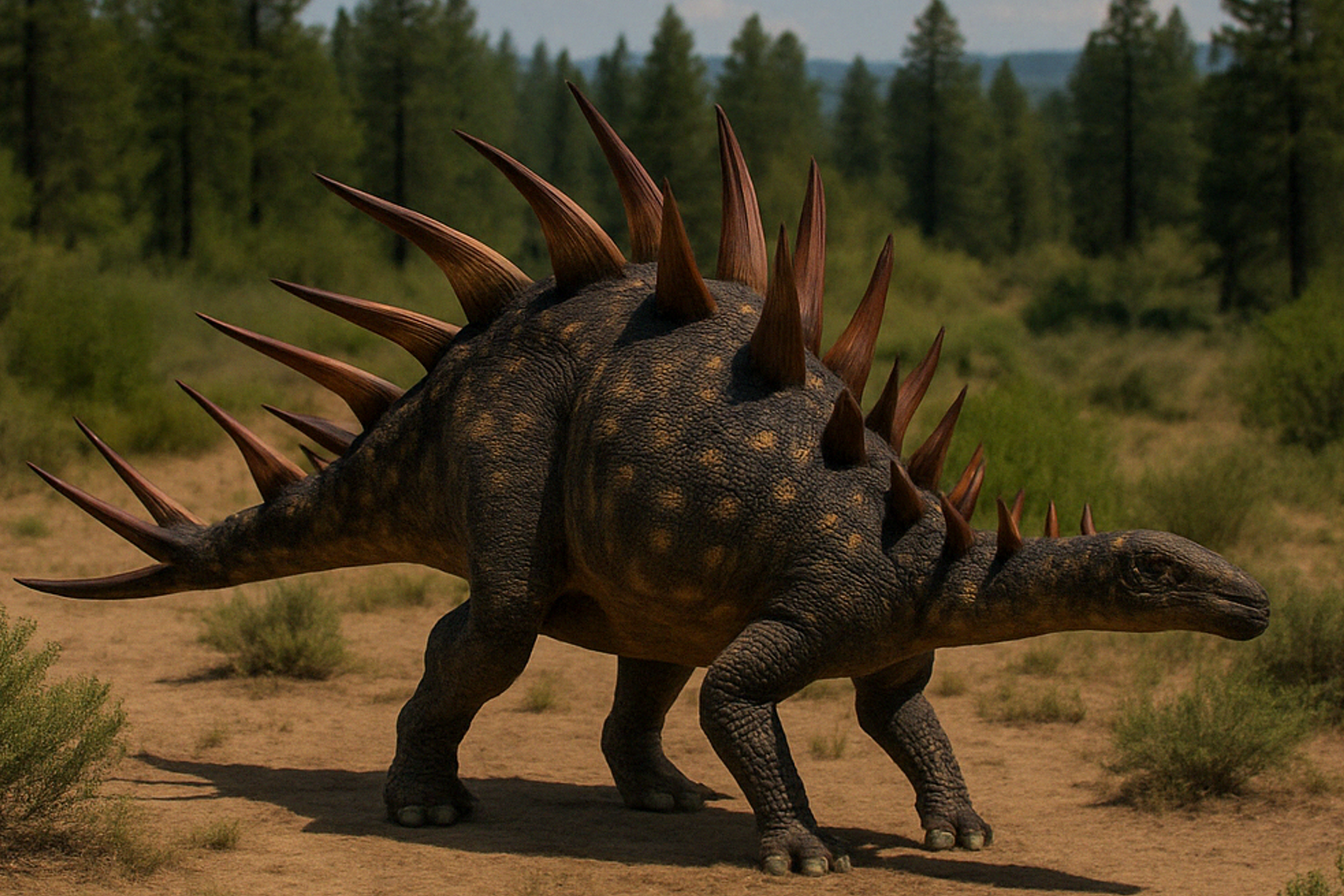
Kentrosaurus is the #4 seed in the Thyreophorans division of the Dinosaur Tournament.
Kentrosaurus may not be as famous as its North American cousin Stegosaurus, but this small, spike-covered dinosaur had plenty of personality—and plenty of armor. With two rows of plates and spikes running along its back and tail, Kentrosaurus was built for defense and made a strong impression on any predator that crossed its path. As a member of the stegosaur family, it offers an important glimpse into how armored dinosaurs evolved and spread across the world.
When and Where It Lived
Kentrosaurus lived during the Late Jurassic period, around 155 to 150 million years ago. Its fossils have been found in Tanzania, in eastern Africa, particularly in the Tendaguru Formation—a rich fossil site that has produced many important dinosaur discoveries.
During the Late Jurassic, the area that is now Tanzania was part of the southern supercontinent Gondwana. The environment would have included river systems, fern prairies, and conifer forests, providing a variety of plant life for herbivores like Kentrosaurus to feed on. It shared its habitat with large sauropods, early theropods, and other ornithischian dinosaurs.
Size and Physical Characteristics
Kentrosaurus was a relatively small stegosaur compared to some of its cousins. It grew to about 15 feet (4.5 meters) in length and weighed roughly 1 ton. Its body was low and wide, supported by four sturdy legs. Like other stegosaurs, it had a small head with a beaked mouth, short front legs, longer back legs, and a stiff tail.
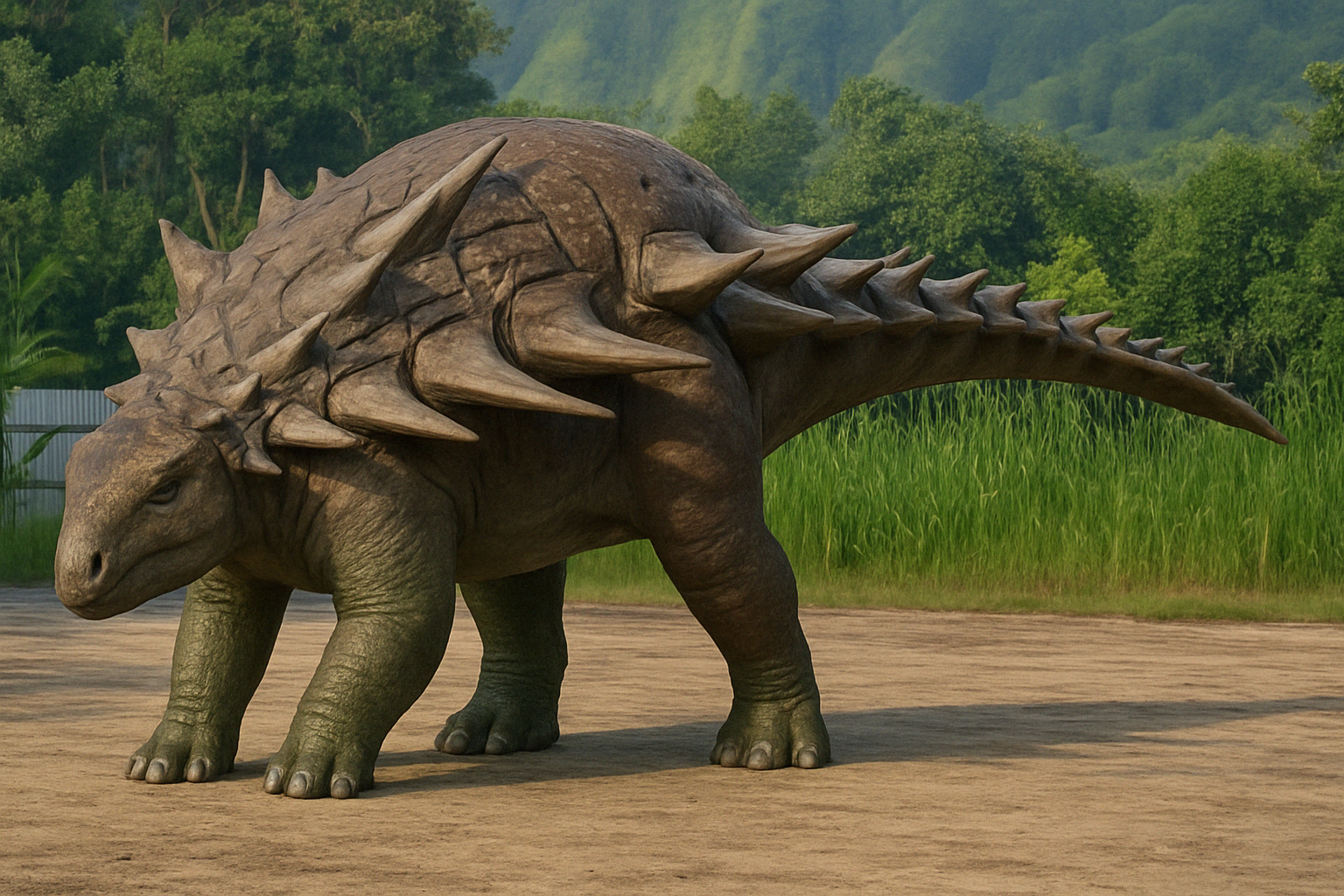
One of Kentrosaurus’s most distinctive features was its armor. Running along its neck and back were a double row of small, triangular plates that gradually transitioned into long, sharp spikes toward the tail. These spikes became especially large on the tail itself, where they were likely used for defense. It also had shoulder spikes that projected outward from each side of its body.
This arrangement made Kentrosaurus look quite formidable despite its modest size. The combination of plates and spikes likely helped it deter predators like large theropods that hunted in its environment.
Diet and Feeding Behavior
Kentrosaurus was an herbivore. Its beaked mouth and small, leaf-shaped teeth were adapted for cropping soft vegetation. It likely fed on low-growing plants such as ferns, cycads, horsetails, and early flowering plants.
With its low-slung head and neck, Kentrosaurus probably spent most of its time browsing close to the ground. Its front legs were much shorter than its hind legs, limiting its ability to rear up, so it likely didn’t feed from higher vegetation.
To digest tough plant material, Kentrosaurus may have used fermentation in a large gut and possibly swallowed stones (gastroliths) to help grind up food in its stomach.
Discovery and Fossil Record
Kentrosaurus was first discovered in the early 20th century by German paleontologist Werner Janensch during an expedition to the Tendaguru Formation in Tanzania. The genus was formally named Kentrosaurus aethiopicus in 1915. The name means “pointed lizard,” referring to its spiky armor.
The original expeditions recovered numerous bones from several individuals, including partial skeletons and skull fragments. These remains made Kentrosaurus one of the best-known African dinosaurs for many years and the most complete stegosaur discovered outside of North America and Europe.
Because the fossils came from multiple individuals, scientists have been able to study different growth stages, giving insight into how Kentrosaurus developed from juvenile to adult.
Scientific Importance
Kentrosaurus holds a special place in the study of stegosaurs. As one of the few known stegosaurs from Africa, it helps scientists understand how these dinosaurs spread across ancient continents and adapted to different environments.
It also provides clues about the evolution of armor in stegosaurs. While Stegosaurus had large back plates and a spiked tail, Kentrosaurus had more spikes than plates, suggesting that different species may have used their armor in different ways—whether for defense, display, or thermoregulation.
Some scientists have even studied how Kentrosaurus might have used its tail in combat. With its flexible tail and sharp spikes, it likely had an effective weapon for fending off predators.
Kentrosaurus in Popular Culture
While Kentrosaurus hasn’t achieved the fame of some larger dinosaurs, it has made appearances in books, museum exhibits, documentaries, and even video games. Its distinctive look—especially the combination of plates, spikes, and shoulder weapons—makes it a favorite among fans of unusual dinosaurs.
Many museums around the world feature reconstructions or skeletal casts of Kentrosaurus, especially in exhibits focused on African dinosaurs or armored species.
Final Thoughts
Kentrosaurus may not have been the biggest dinosaur on the block, but it was certainly one of the most well-defended. With its spike-covered back, shoulder weapons, and powerful tail, this small stegosaur was more than capable of standing its ground. As a key member of the stegosaur family and an important part of Africa’s prehistoric past, Kentrosaurus continues to teach scientists about the diverse ways dinosaurs adapted to survive.