Scelidosaurus is the #11 seed in the Thyreophorans division of the Dinosaur Tournament.
Scelidosaurus is one of the earliest known armored dinosaurs and offers a valuable look at how these heavily protected plant-eaters first evolved. With a long, low body covered in rows of bony plates and a beaked mouth for browsing plants, Scelidosaurus was well-suited to life in the Jurassic landscape. It may not have been the biggest or the most famous, but it holds an important place in the history of dinosaur evolution as one of the earliest complete dinosaur skeletons ever discovered.
When and Where It Lived
Scelidosaurus lived during the Early Jurassic period, around 191 million years ago. Its fossils have been found in what is now England, primarily along the southern coast near Lyme Regis in Dorset. This region is part of the famous Jurassic Coast, a UNESCO World Heritage Site known for its rich fossil beds.
At the time, the area was a warm, coastal environment with beaches, forests, and shallow seas. Scelidosaurus likely lived near river deltas or lowland plains, where vegetation was abundant and predators roamed. Its armor would have offered essential protection in a world that included early carnivorous dinosaurs and large reptiles.
Size and Physical Characteristics
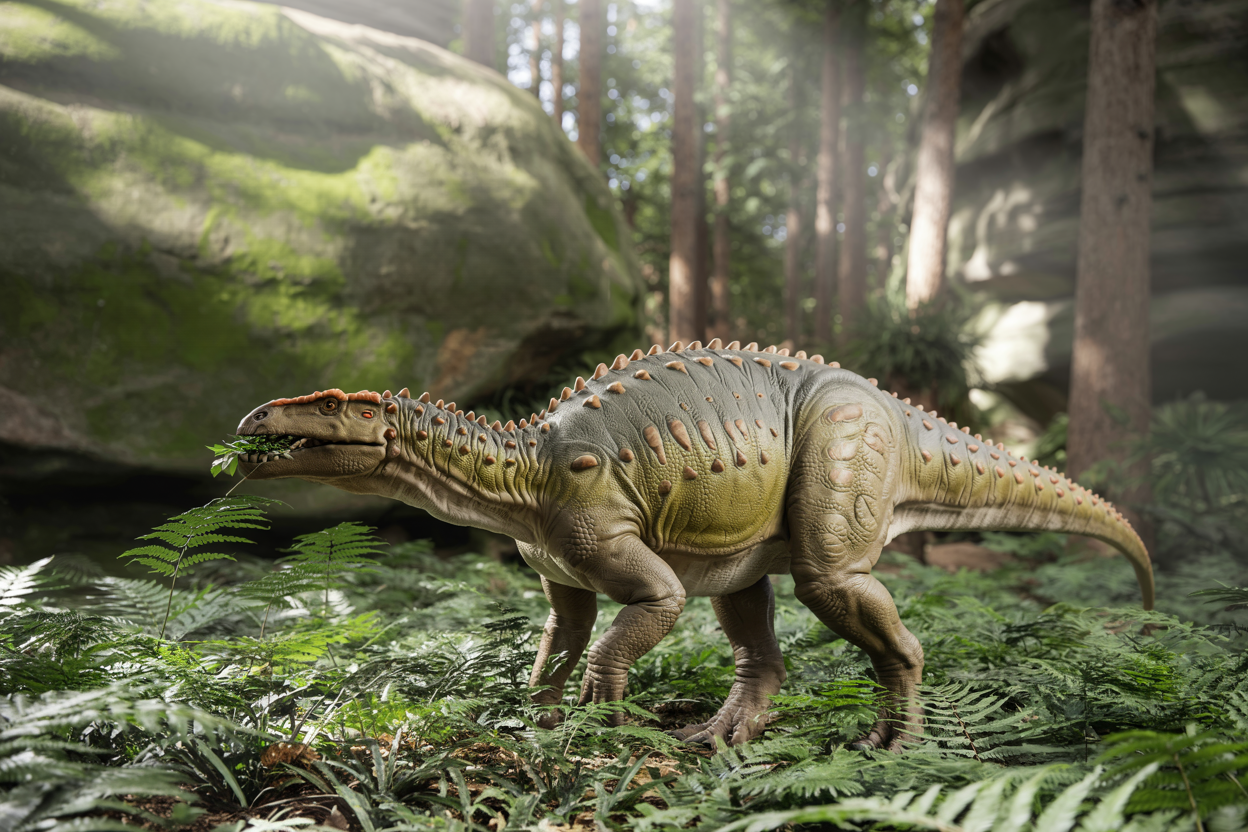
Scelidosaurus was a medium-sized dinosaur, measuring around 13 feet (4 meters) in length and weighing roughly 600 to 900 pounds (270 to 400 kilograms). It had a long, low-slung body, four strong legs, and a relatively small head with a beaked mouth.
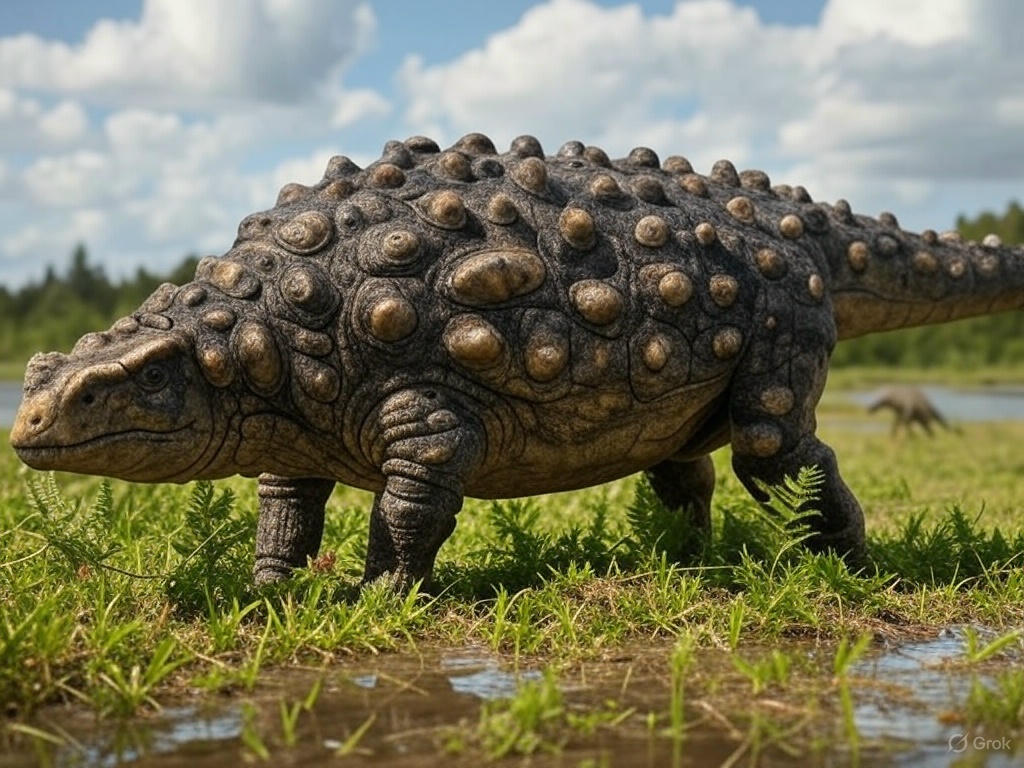
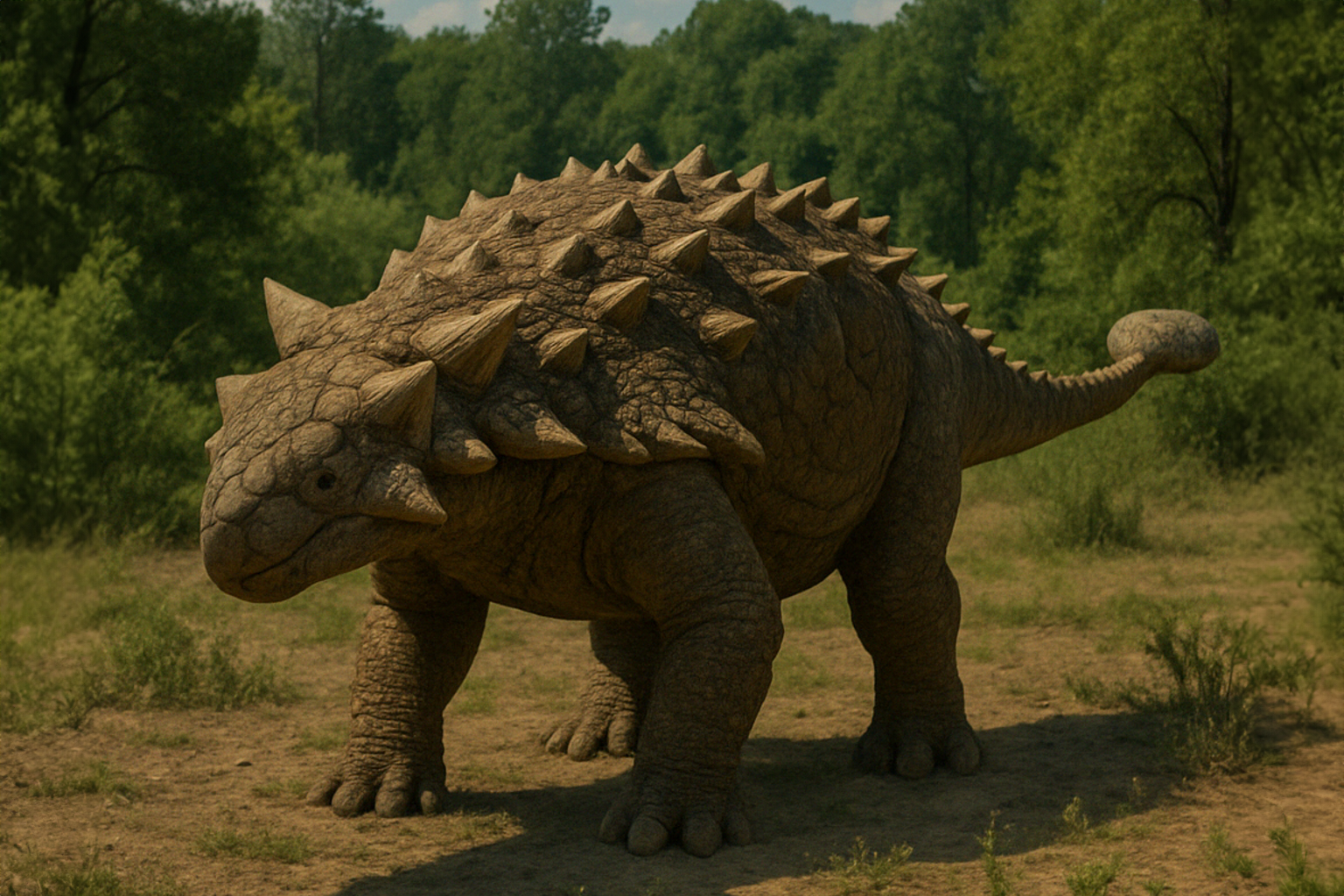
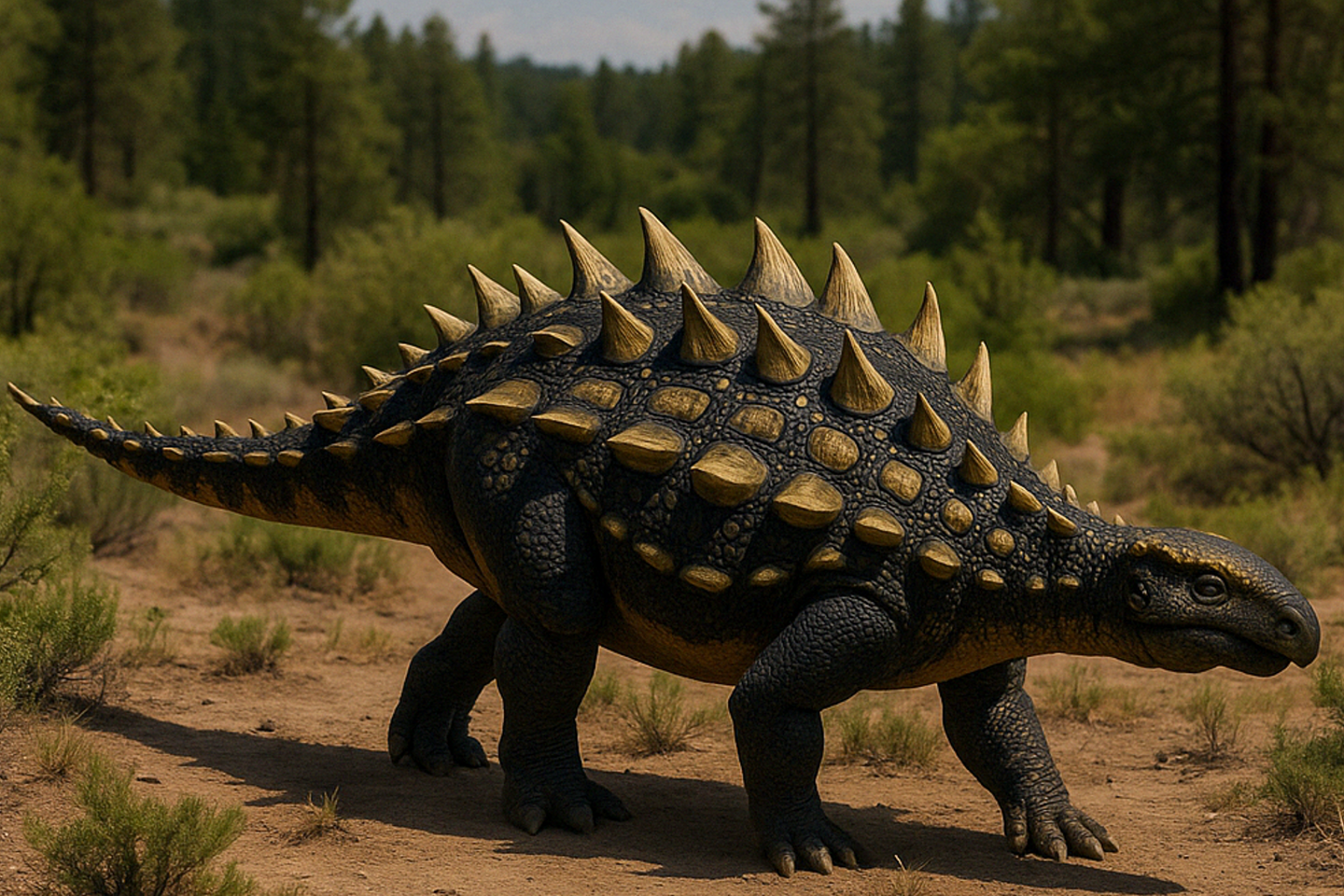
Its most distinctive feature was its armor. Scelidosaurus had rows of bony plates, or osteoderms, running along its back and tail, with additional smaller plates protecting its sides and limbs. These armored plates were embedded in the skin and likely helped deter predators. While it didn’t have the large spikes or tail clubs seen in later armored dinosaurs, its protective coating made it one of the earliest known examples of dinosaur armor.
The body structure of Scelidosaurus suggests that it was primarily a quadruped, walking on all four legs, although it may have been capable of rearing up on its hind legs to reach vegetation or scan for threats.
Diet and Feeding Behavior
Scelidosaurus was an herbivore. Its beak and small, leaf-shaped teeth were suited for cropping low-growing vegetation such as ferns, cycads, and horsetails. It probably fed close to the ground, using its beak to nip off plants and then swallowing them with minimal chewing.
Like many herbivorous dinosaurs, Scelidosaurus likely had a large gut designed for fermenting tough plant material. It may have spent much of its day grazing, slowly moving through its environment in search of food.
Because its teeth and jaws weren’t adapted for grinding or chewing, it may also have swallowed small stones, called gastroliths, to help break down food inside its stomach.
Discovery and Fossil Record
Scelidosaurus was first discovered in the mid-19th century by fossil collector James Harrison in Dorset, England. The fossils were studied and named by renowned paleontologist Richard Owen in 1859. The name Scelidosaurus harrisonii means “limb lizard,” in honor of Harrison, who brought the fossil to scientific attention.
One of the most important aspects of the Scelidosaurus discovery is that the skeleton was nearly complete—a rarity in early dinosaur finds. This made it one of the first dinosaurs to be reconstructed in detail, and it remains one of the best-preserved dinosaurs from the Early Jurassic.
Additional specimens have since been found, including some with soft tissue impressions and well-preserved armor plates. These finds have allowed scientists to study its anatomy in exceptional detail.
Scientific Importance
Scelidosaurus holds a special place in paleontology because of its early position in the dinosaur family tree. It represents a transitional form between more primitive reptiles and the more advanced armored dinosaurs like ankylosaurs and stegosaurs that came later.
Its anatomy provides key clues about the early evolution of body armor, feeding strategies, and limb structure in ornithischian dinosaurs (a group that includes most plant-eating species). Scelidosaurus is sometimes considered a basal thyreophoran, meaning it is one of the earliest known members of the group that would later include armored giants like Ankylosaurus and Stegosaurus.
Because its skeleton is so complete, it continues to be a reference point in the study of early dinosaurs and is helping scientists piece together the origins of armored dinosaurs.
Scelidosaurus in Popular Culture
While Scelidosaurus isn’t as well-known in popular media as some of its more dramatic relatives, it occasionally appears in dinosaur books, documentaries, and museum exhibits. Its importance as one of the first nearly complete dinosaurs ever found ensures it a place in most discussions about early discoveries and the beginnings of dinosaur science.
Its fossils are displayed in several museums in the UK, where it is celebrated as one of Britain’s earliest and most significant dinosaur finds.
Final Thoughts
Scelidosaurus may not have been the flashiest dinosaur, but it was an early trailblazer in the evolution of armor and defense. With its low profile, sturdy build, and rows of bony plates, it was well-adapted for survival in the Early Jurassic world. As one of the first dinosaurs ever studied in detail, Scelidosaurus remains a vital piece of the puzzle in understanding how dinosaurs diversified and evolved into some of the most successful animals in Earth’s history.