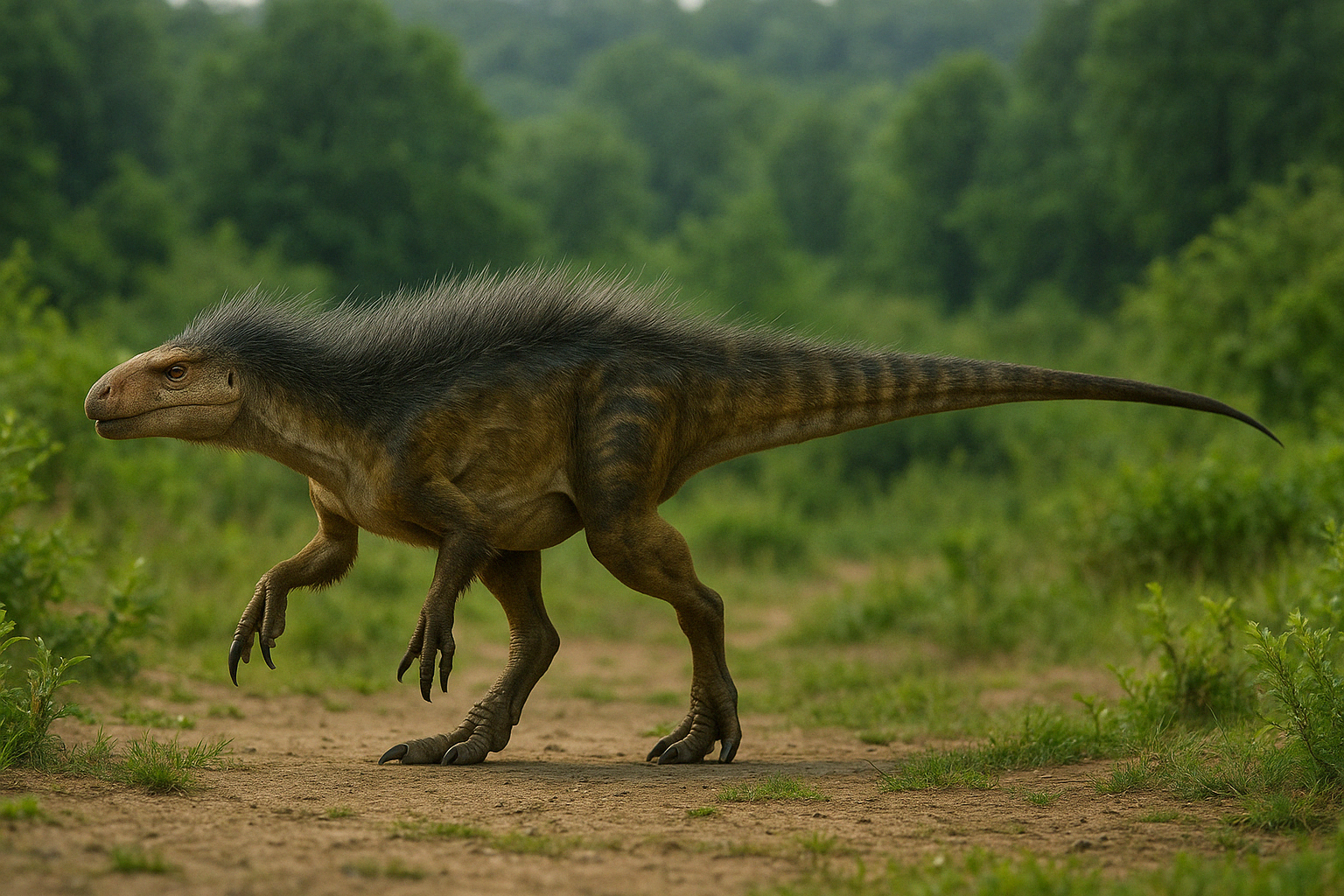
Heterodontosaurus is the #11 seed in the Cerapods division of the Dinosaur Tournament.
Heterodontosaurus may not have been the largest or most fearsome dinosaur, but it certainly stood out for its unusual teeth and surprising features. This small, fast-moving herbivore lived during the Early Jurassic period and is known for having different types of teeth in its mouth—an unusual trait among dinosaurs. Its name, which means “different-toothed lizard,” reflects this fascinating dental arrangement. Despite its small size, Heterodontosaurus offers big insights into early dinosaur evolution.
When and Where It Lived
Heterodontosaurus lived around 200 to 190 million years ago during the Early Jurassic period. Fossils have been found in South Africa, particularly in the Upper Elliot Formation, which is known for preserving a diverse range of early dinosaur species.
During this time, the region was part of the ancient supercontinent Gondwana and featured a semi-arid environment with seasonal rainfall. The landscape likely included open woodlands and scrubby vegetation, along with rivers and lakes that supported a variety of prehistoric animals.
Size and Physical Characteristics
Heterodontosaurus was a small dinosaur, measuring just over 3 feet (about 1 meter) in length and weighing only about 5 to 10 pounds (2 to 4.5 kilograms). It had a lightweight, agile body and was likely capable of moving quickly on its strong hind legs. Its long tail helped it balance as it ran, and its smaller forelimbs may have been used for grasping or manipulating food.
What really made Heterodontosaurus stand out, however, was its teeth. Unlike most reptiles, which typically have teeth of one shape, Heterodontosaurus had three distinct types: small, incisor-like teeth at the front; large, fang-like canines; and flat cheek teeth for grinding. This unusual dental arrangement has sparked a lot of scientific interest and debate over the years.
The function of the sharp canines isn’t fully understood. Some paleontologists believe they were used for defense or display, while others think they may have helped in feeding on tough vegetation or even small prey. The grinding cheek teeth suggest a primarily herbivorous diet, but the canines leave room for interpretation.
Diet and Feeding Behavior
Heterodontosaurus is generally believed to have been an herbivore, feeding on a variety of plants including ferns, cycads, and other low-growing vegetation. Its beak-like mouth and cheek teeth were well-suited for clipping and grinding plant material. However, the presence of fang-like teeth has led some researchers to propose that it may have been an omnivore, occasionally feeding on insects or small animals.
Its ability to chew more thoroughly than most early dinosaurs would have given it a digestive advantage, allowing it to break down fibrous plant material more effectively. Some scientists even suggest that it may have had muscular cheeks to help keep food in its mouth while chewing—a trait more commonly associated with mammals than reptiles.
Discovery and Fossil Record
Heterodontosaurus was first discovered in the 1960s in South Africa. The initial fossils included a well-preserved skull and parts of the skeleton, and they showed clear evidence of the dinosaur’s distinctive teeth. It was officially named Heterodontosaurus tucki in 1962.
Since then, additional fossils have helped build a more complete picture of this early dinosaur. The preservation of skulls and limb bones has allowed paleontologists to study its movement, feeding habits, and evolutionary relationships. Heterodontosaurus is now recognized as one of the most primitive members of the ornithischian dinosaurs—a major group that includes horned dinosaurs, hadrosaurs, and ankylosaurs.
Scientific Importance
Heterodontosaurus is a key species for understanding the early evolution of ornithischian dinosaurs. Its combination of features—such as its diverse tooth types, small size, and agile build—makes it a unique snapshot of evolutionary experimentation during the Jurassic period.
Its unusual dentition suggests that early ornithischians may have been more ecologically flexible than previously thought, possibly occupying a wider range of niches than just plant-eating. It also offers clues about how more advanced herbivorous dinosaurs later developed specialized jaws and teeth for grinding tough vegetation.
Heterodontosaurus in Popular Culture
Although it hasn’t reached the fame of Tyrannosaurus rex or Triceratops, Heterodontosaurus has earned a place in museums, books, and documentaries due to its unique characteristics. Its small size and quirky appearance make it a favorite among younger dinosaur fans and educators looking to showcase the diversity of dinosaur evolution.
In paleoart, Heterodontosaurus is often portrayed as a nimble, bird-like creature with bristly feathers or quill-like structures, based on indirect evidence from related species. These reconstructions help bring the dinosaur to life and highlight its role as an early evolutionary experiment.
Final Thoughts
Heterodontosaurus may not have had the size or strength of the larger dinosaurs that came after it, but it more than made up for that with personality and scientific significance. Its unusual teeth, potential omnivorous habits, and position near the base of the ornithischian family tree make it one of the most intriguing small dinosaurs of the Jurassic. Whether as a quick-footed browser or a curious little omnivore, Heterodontosaurus continues to shed light on the complexity and creativity of dinosaur evolution.