Pachyrhinosaurus is the #13 seed in the Cerapods division of the Dinosaur Tournament.
Pachyrhinosaurus was a unique member of the ceratopsid family, a group of herbivorous dinosaurs known for their elaborate frills and facial horns. But instead of the long, sharp horns seen in relatives like Triceratops, Pachyrhinosaurus had something different—a thick, bony pad on its nose, earning it the name “thick-nosed lizard.” This unusual feature, along with its northern habitat and large body, makes Pachyrhinosaurus one of the most interesting horned dinosaurs of the Late Cretaceous.
When and Where It Lived
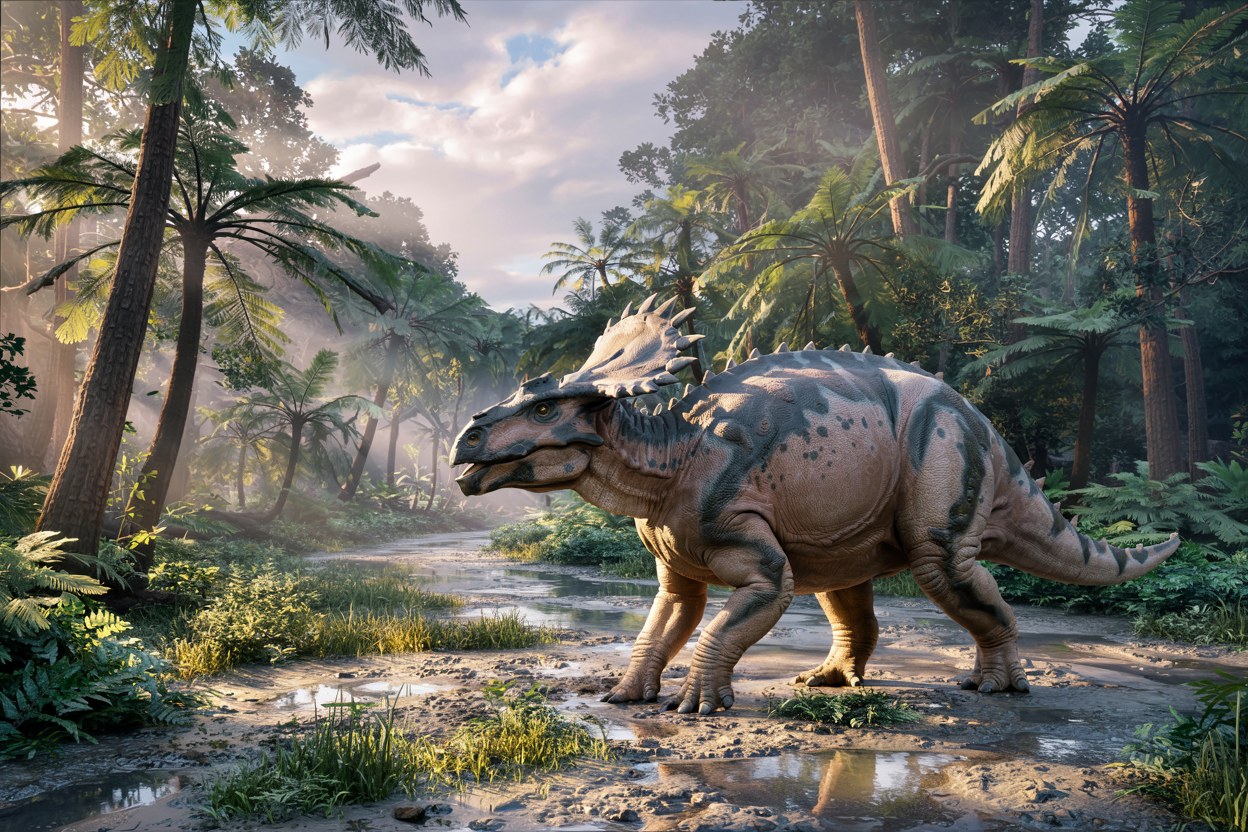
Pachyrhinosaurus lived around 72 to 68 million years ago during the Late Cretaceous period. Fossils have been found in Alberta, Canada, and as far north as Alaska. These regions were once part of a lush coastal plain with rivers, forests, and swamps—though they also experienced dramatic seasonal changes, including periods of darkness during the winter months.
Despite the northern location, the climate during the Late Cretaceous was warmer than today, supporting a variety of plant life and dinosaurs. Pachyrhinosaurus would have shared its environment with other ceratopsians, hadrosaurs, ankylosaurs, and large theropods like Albertosaurus.
Size and Physical Characteristics
Pachyrhinosaurus was a large, four-legged herbivore. It measured about 20 to 26 feet (6 to 8 meters) in length and weighed an estimated 4 to 5 tons. Like other ceratopsids, it had a bulky body, a short tail, and a large skull with a frill at the back.
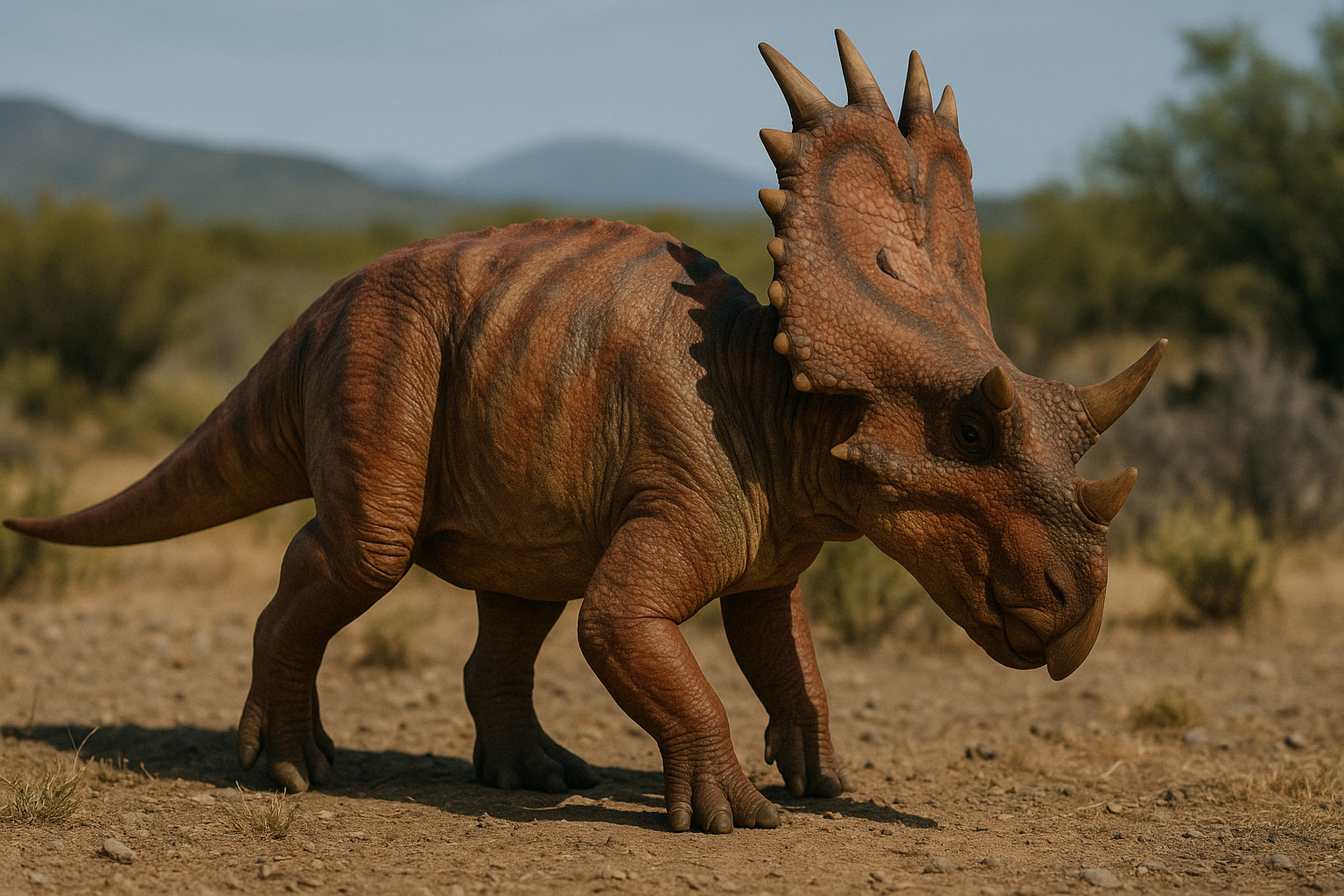
What really set Pachyrhinosaurus apart was the thick, bony mass on its nose and, in some individuals, over the eyes. Instead of growing long, sharp horns like its relatives, this dinosaur developed large bosses—broad, flat areas of bone. These bosses may have supported keratin coverings, much like the horn sheaths on modern animals such as musk oxen or rhinos.
The frill at the back of the head was decorated with horn-like projections, which varied between individuals and species. This variation suggests that the frill and bosses may have played a role in display, mate attraction, or species recognition—similar to how deer and antelope use antlers today.
Diet and Feeding Behavior
Pachyrhinosaurus was a herbivore that fed on the abundant plant life of its environment. With its beak-like mouth and rows of grinding cheek teeth, it could process tough vegetation like ferns, conifers, and flowering plants. Its strong jaw muscles and dental batteries allowed it to chew food more thoroughly than many earlier dinosaurs.
Like other ceratopsians, it likely fed close to the ground, using its beak to snip plants and its teeth to grind them down. It may have also traveled in herds, using numbers as a defense against predators and helping to locate new feeding grounds more efficiently.
Discovery and Fossil Record
Pachyrhinosaurus was first discovered in Alberta, Canada, and was formally described in 1950. Since then, fossils have been found at several sites, including a massive bonebed in Alberta that contains remains from dozens of individuals. Another significant discovery came from the North Slope of Alaska, where fossils were found in what was once a polar environment—suggesting these dinosaurs were adapted to seasonal darkness and cold.
At least three species of Pachyrhinosaurus are currently recognized: Pachyrhinosaurus canadensis, Pachyrhinosaurus lakustai, and Pachyrhinosaurus perotorum. Each species differs slightly in the shape and arrangement of the horns and frill ornaments.
Some fossil sites have preserved individuals of different ages, allowing scientists to study how Pachyrhinosaurus grew and changed over time. Juveniles had smaller, less developed bosses, which suggests that these structures may have become more prominent as the animals matured—possibly linked to social behavior or mating.
Scientific Importance
Pachyrhinosaurus is important for several reasons. Its unique nasal boss offers insight into the diversity of horn and frill development among ceratopsians. It challenges the idea that all horned dinosaurs used their horns primarily for defense, suggesting that display and social behavior were just as important.
The discovery of Pachyrhinosaurus fossils in Arctic regions has also opened up new questions about how dinosaurs adapted to extreme environments. These animals would have had to survive long periods of darkness, seasonal food shortages, and colder temperatures than those in more southern habitats.
Studies of bonebeds suggest that Pachyrhinosaurus may have lived in herds and possibly migrated seasonally—behavior similar to that of modern large herbivores like caribou.
Pachyrhinosaurus in Popular Culture
Pachyrhinosaurus has gained popularity in recent years thanks to documentaries, museum exhibits, and its starring role in the animated film Walking with Dinosaurs: The Movie (2013). Its distinctive look makes it a favorite among dinosaur enthusiasts and a compelling subject for paleoart.
Many museums in North America now include Pachyrhinosaurus in their dinosaur halls, often featuring reconstructed skeletons and life-size models that showcase its impressive skull.
Final Thoughts
With its thick nose, dramatic frill, and life in the far north, Pachyrhinosaurus stands out as one of the most unusual ceratopsians. It was a powerful herbivore that may have used display and social behavior as much as physical strength to survive. Thanks to a rich fossil record and its surprising adaptations, Pachyrhinosaurus continues to offer new insights into dinosaur diversity, behavior, and life in ancient polar ecosystems.