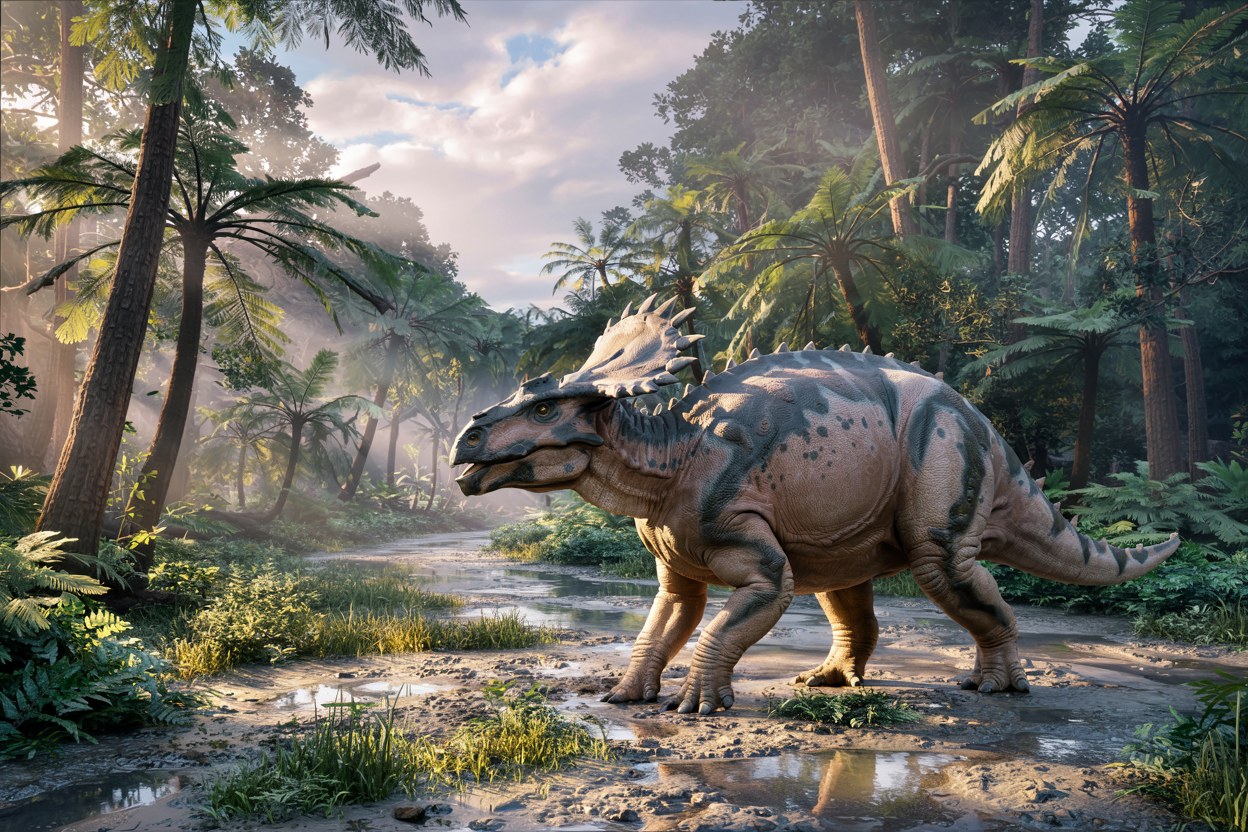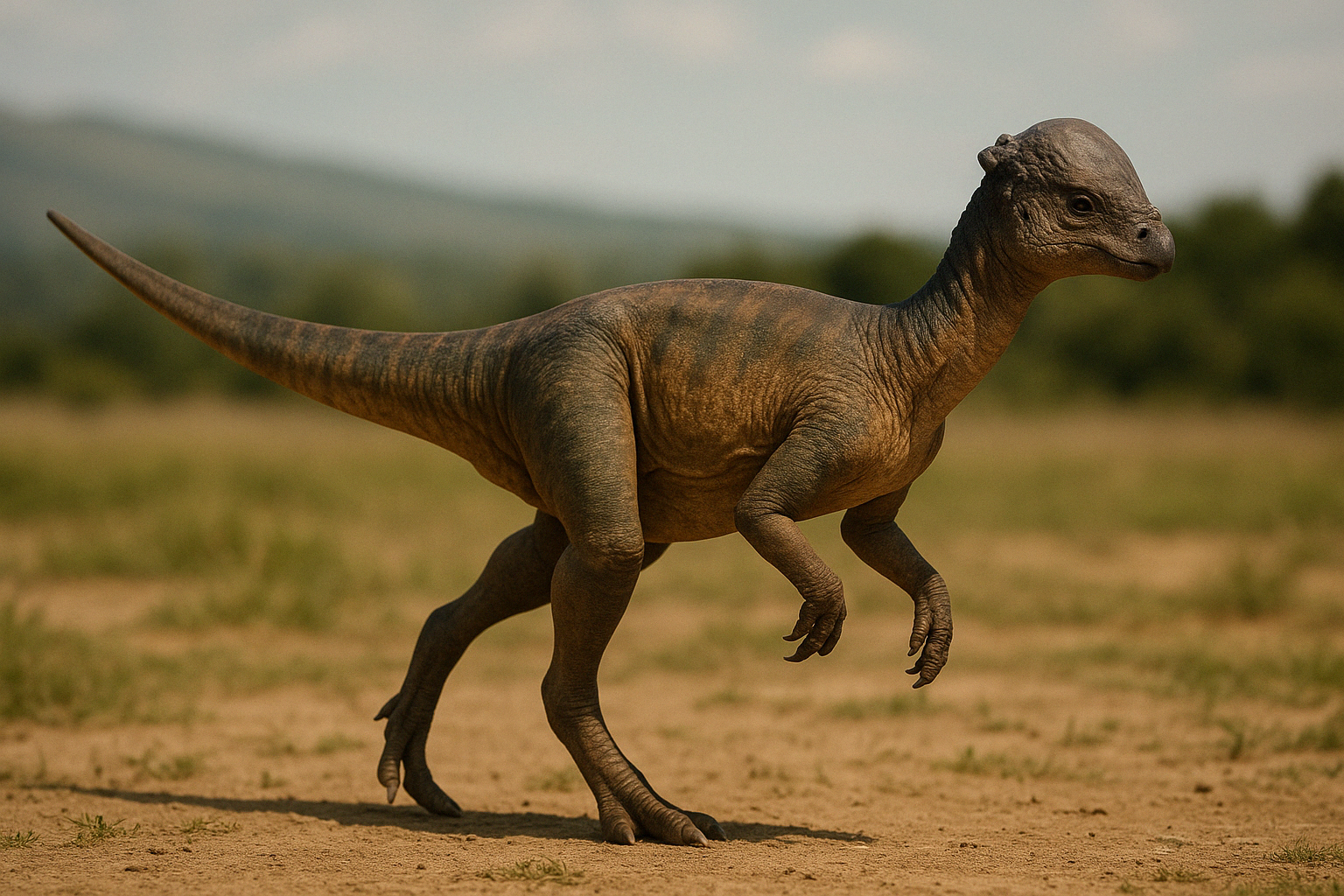
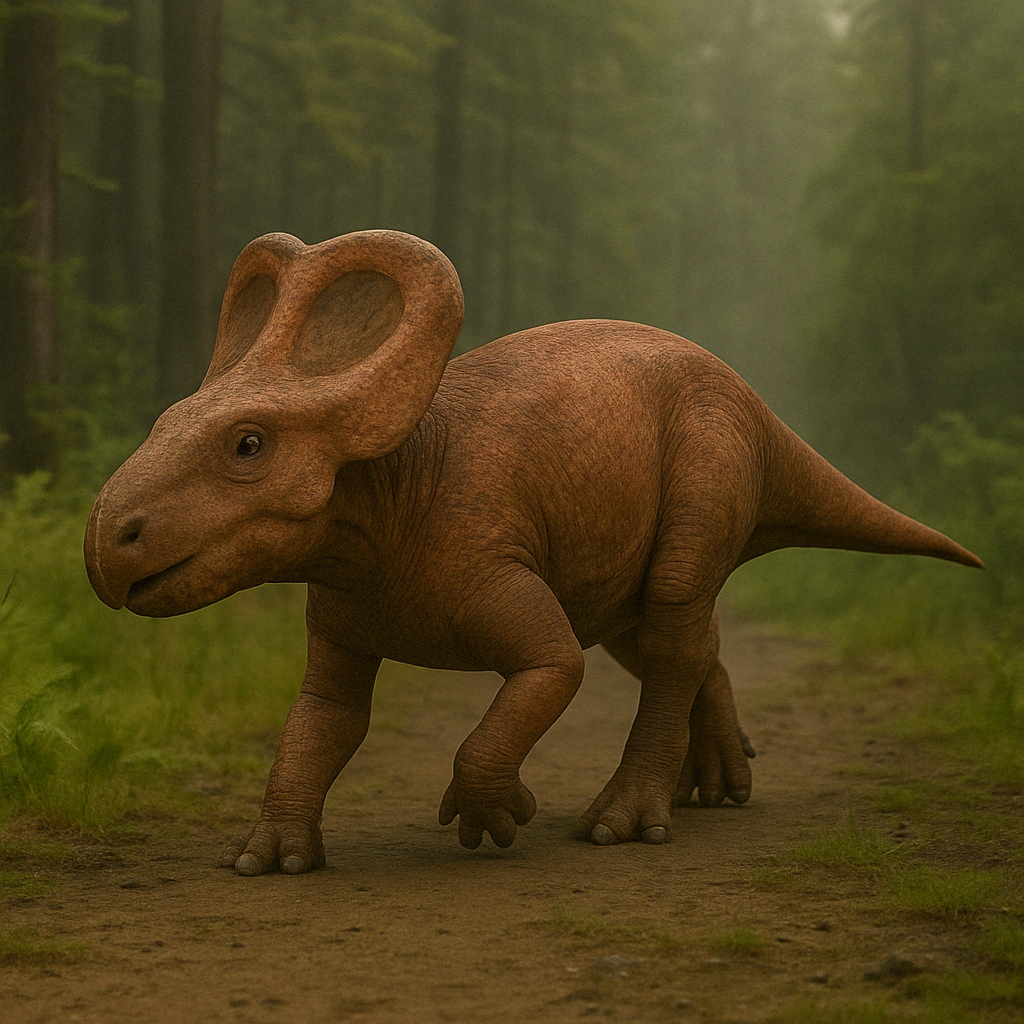
Protoceratops is the #7 seed in the Cerapods division of the Dinosaur Tournament.
Protoceratops may not have been the biggest dinosaur of its time, but it was certainly one of the most fascinating. With its parrot-like beak, distinctive frill, and important role in dinosaur evolution, Protoceratops has captured the attention of paleontologists for over a century. Often described as a “sheep-sized” dinosaur, it lived in herds, possibly cared for its young, and left behind some of the most iconic fossil discoveries ever found.
When and Where It Lived
Protoceratops lived during the Late Cretaceous period, approximately 75 to 71 million years ago. Its fossils have been discovered in Mongolia, particularly in the Djadokhta Formation of the Gobi Desert. This region was once a dry, sandy environment with sand dunes and occasional oases, very different from the lush, forested habitats of many other dinosaurs.
Despite the harsh environment, the area supported a wide variety of life, including other small dinosaurs, lizards, mammals, and even early birds. Protoceratops was a key part of this ecosystem, and its fossils are among the most commonly found in the region.
Size and Physical Characteristics
Protoceratops was a relatively small dinosaur. Adults typically measured about 6 feet (1.8 meters) in length and weighed around 400 pounds (180 kilograms). It walked on all four legs and had a compact, muscular body with a large head and a short tail.
Its most distinctive feature was its skull. Protoceratops had a broad, rounded frill at the back of its head, made of bone and possibly used for display, protection, or species recognition. Unlike its larger ceratopsian cousins, such as Triceratops, it didn’t have large horns—though it did have a small bump or short horn-like structure on its nose.
The beak of Protoceratops was strong and curved, similar to that of a modern parrot. This beak was ideal for biting through tough, fibrous plants, making Protoceratops well-adapted to its arid environment.
Diet and Feeding Behavior
Protoceratops was a herbivore that fed on the dry, hardy vegetation available in its desert-like habitat. Its diet likely included cycads, ferns, and other low-growing plants. Its beak allowed it to crop plants close to the ground, and rows of cheek teeth helped it grind up its food before swallowing.
It’s thought that Protoceratops may have had a relatively slow metabolism compared to some other dinosaurs, which would have helped it survive in an environment where food and water were not always plentiful.
Discovery and Fossil Record
Protoceratops was first discovered in the 1920s by a team from the American Museum of Natural History, led by Roy Chapman Andrews. The expeditions to Mongolia’s Gobi Desert yielded a treasure trove of Protoceratops fossils, including complete skeletons, nests with eggs, and even juveniles.
One of the most famous fossils ever found was that of a Protoceratops locked in combat with a Velociraptor. This fossil, known as the “Fighting Dinosaurs,” preserved the two animals in the middle of a struggle—possibly buried quickly by a sandstorm or collapsing dune. It remains one of the most dramatic and important paleontological discoveries ever made.
Another groundbreaking find was the discovery of fossilized dinosaur eggs associated with Protoceratops nests. At the time, these were the first dinosaur eggs ever positively linked to a specific species, providing valuable evidence about dinosaur reproduction and nesting behavior.
Scientific Importance
Protoceratops holds a special place in the study of dinosaur evolution. It was a member of the ceratopsian family, which includes famous horned dinosaurs like Triceratops, but Protoceratops lived earlier and represents a more primitive stage in the evolution of this group.
Because so many Protoceratops fossils have been found—including individuals of different ages—it has provided scientists with detailed information about growth, development, and behavior. The presence of juveniles and nests suggests that these dinosaurs may have cared for their young, a behavior that links them more closely with birds.
Its relatively simple skull structure, compared to later ceratopsians, also helps paleontologists understand how features like large horns and frills evolved over time.
Protoceratops in Popular Culture
While it may not be as flashy as Tyrannosaurus rex or as heavily armored as Ankylosaurus, Protoceratops has earned its place in the dinosaur spotlight. It appears in children’s books, documentaries, museum exhibits, and even in video games and animated films.
Its approachable size, curious look, and dramatic fossil history make it a favorite among educators and dinosaur enthusiasts alike.
Final Thoughts
Protoceratops proves that you don’t have to be huge or heavily armed to be interesting. With its iconic frill, strong beak, and role in some of paleontology’s greatest discoveries, this small ceratopsian has had a big impact on how we understand the lives of dinosaurs. Whether as a nesting parent, a desert survivor, or the unlucky opponent of a Velociraptor, Protoceratops continues to inspire curiosity and admiration nearly a century after its discovery.