Polacanthus is the #7 seed in the Thyreophorans division of the Dinosaur Tournament.
Polacanthus was a small but impressively armored dinosaur that lived during the Early Cretaceous period. With its back covered in bony plates and a body lined with sharp spikes, Polacanthus was built to withstand attacks from predators. It may not have had a tail club like some of its relatives, but it made up for it with an intimidating suit of armor. As one of the earliest known armored dinosaurs from Europe, Polacanthus plays an important role in understanding the evolution of these fascinating plant-eaters.
When and Where It Lived
Polacanthus lived approximately 130 to 125 million years ago during the Early Cretaceous. Fossils have been found primarily in southern England, particularly on the Isle of Wight, a region well known for its rich dinosaur fossil beds. Additional fragmentary remains have also been reported in other parts of the United Kingdom and possibly Spain.
During the Early Cretaceous, what is now England was part of a warm, subtropical environment with rivers, floodplains, and fern-covered forests. This region supported a diverse range of dinosaurs, including carnivores like Baryonyx and herbivores like Iguanodon. Polacanthus would have lived among them, relying on its armor for protection rather than speed or size.
Size and Physical Characteristics
Polacanthus was a medium-sized member of the ankylosaur group. It grew to around 13 to 16 feet (4 to 5 meters) long and likely weighed about 1 to 2 tons. It had a low-slung body, short legs, and a wide, sturdy frame.
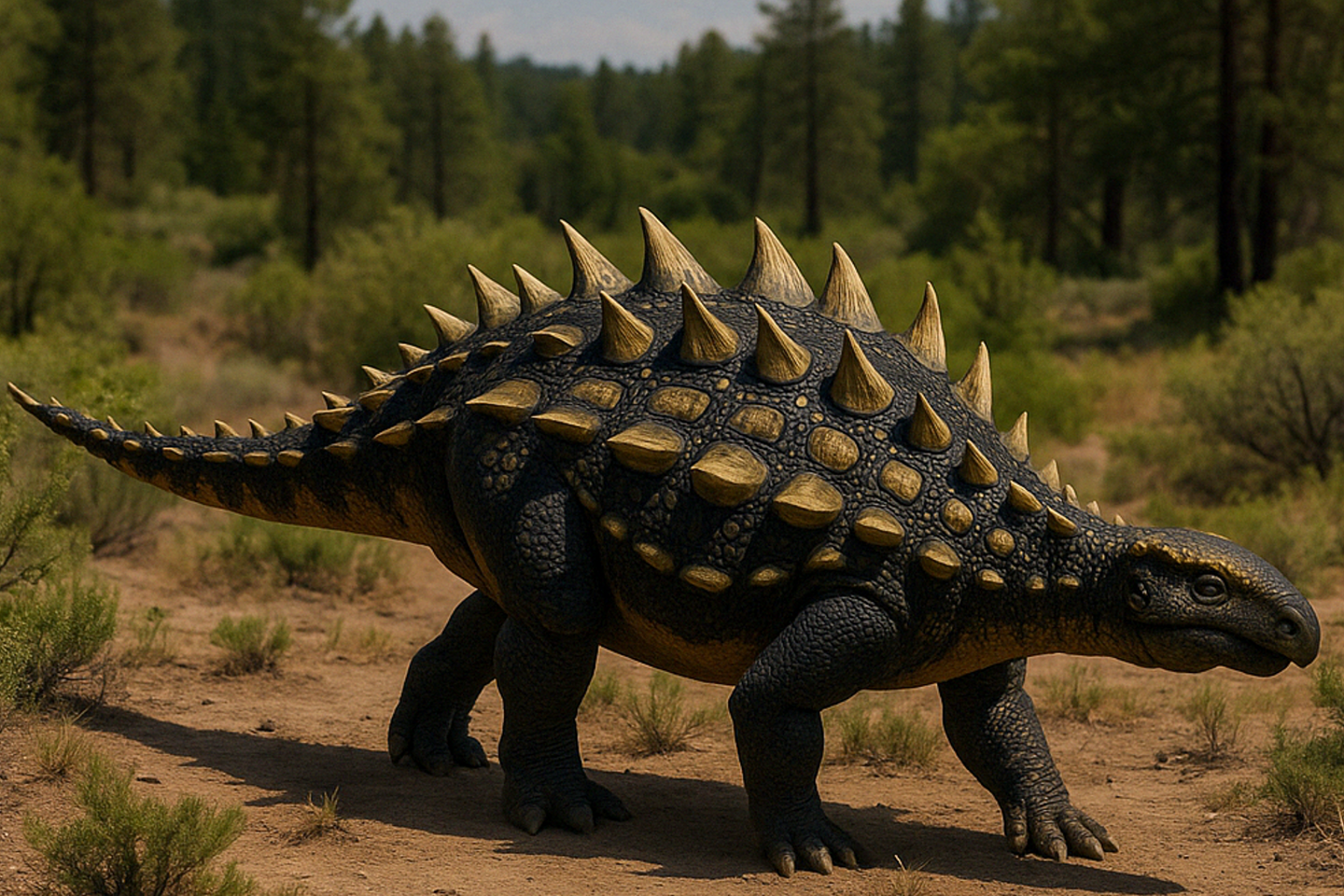
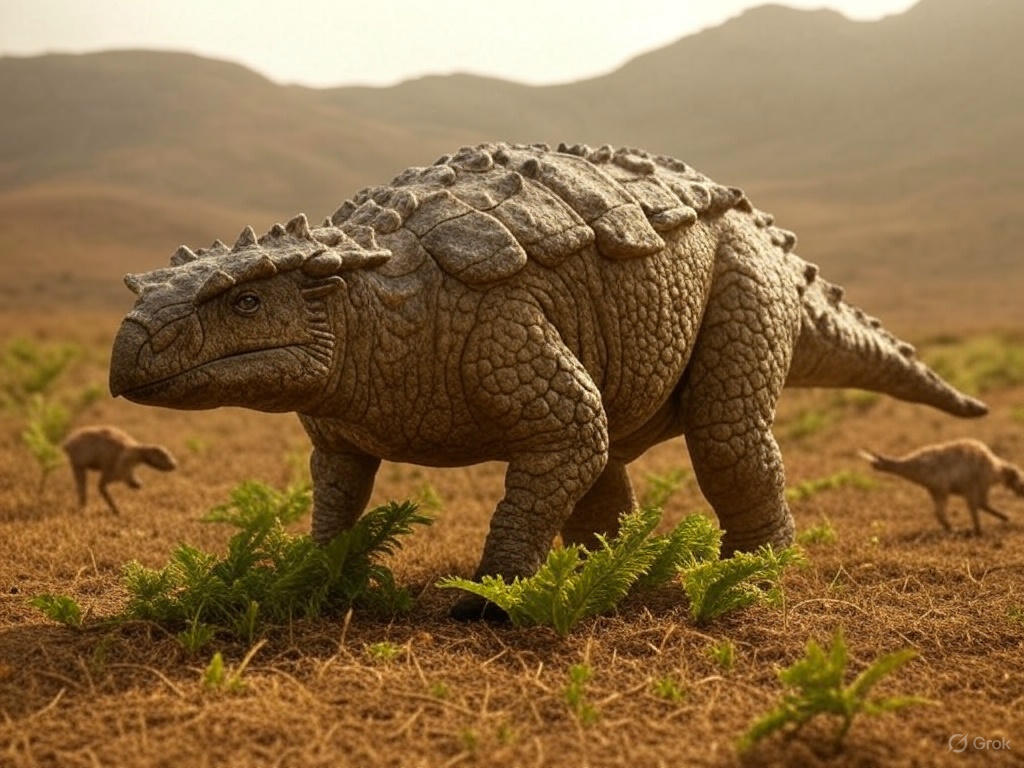
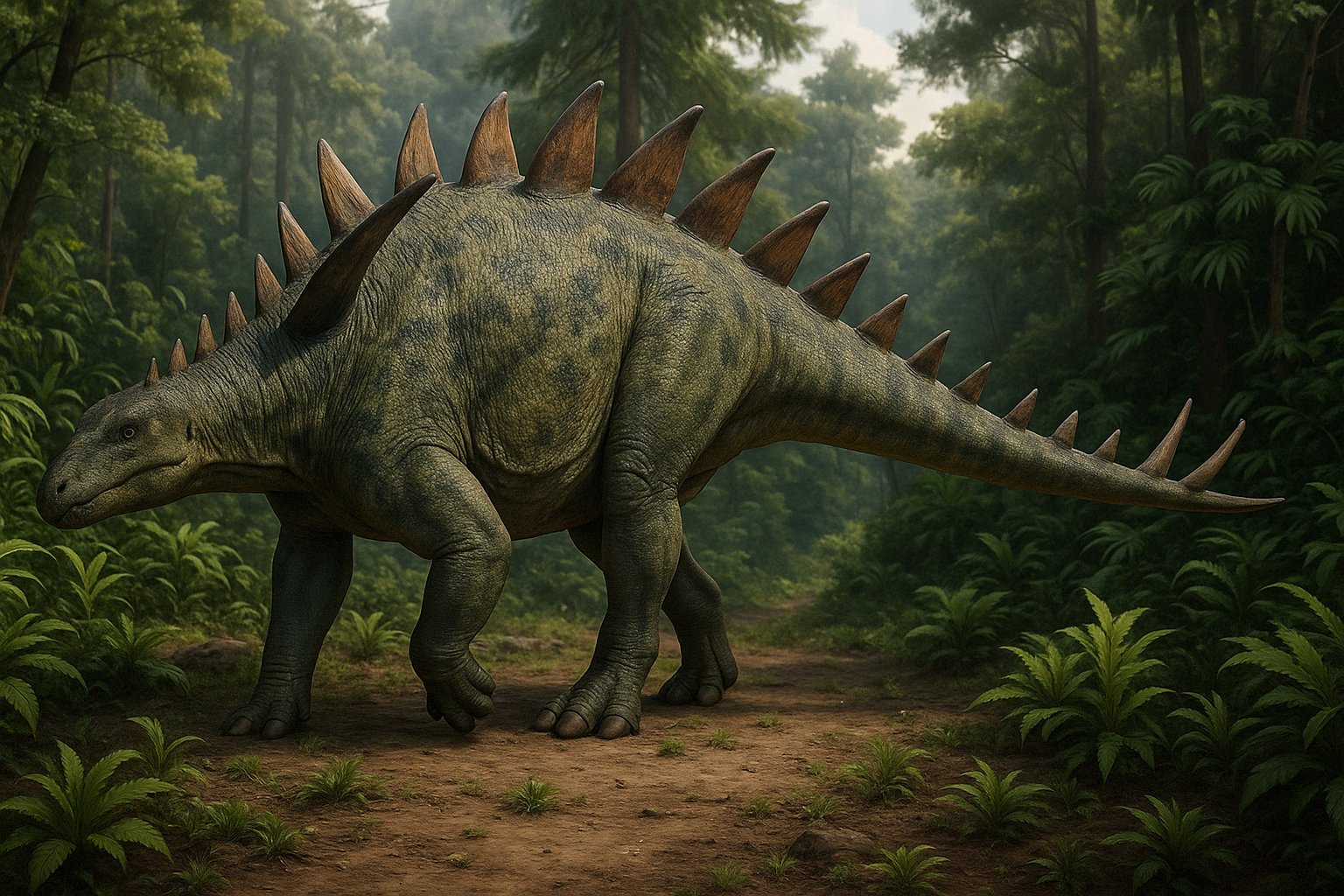
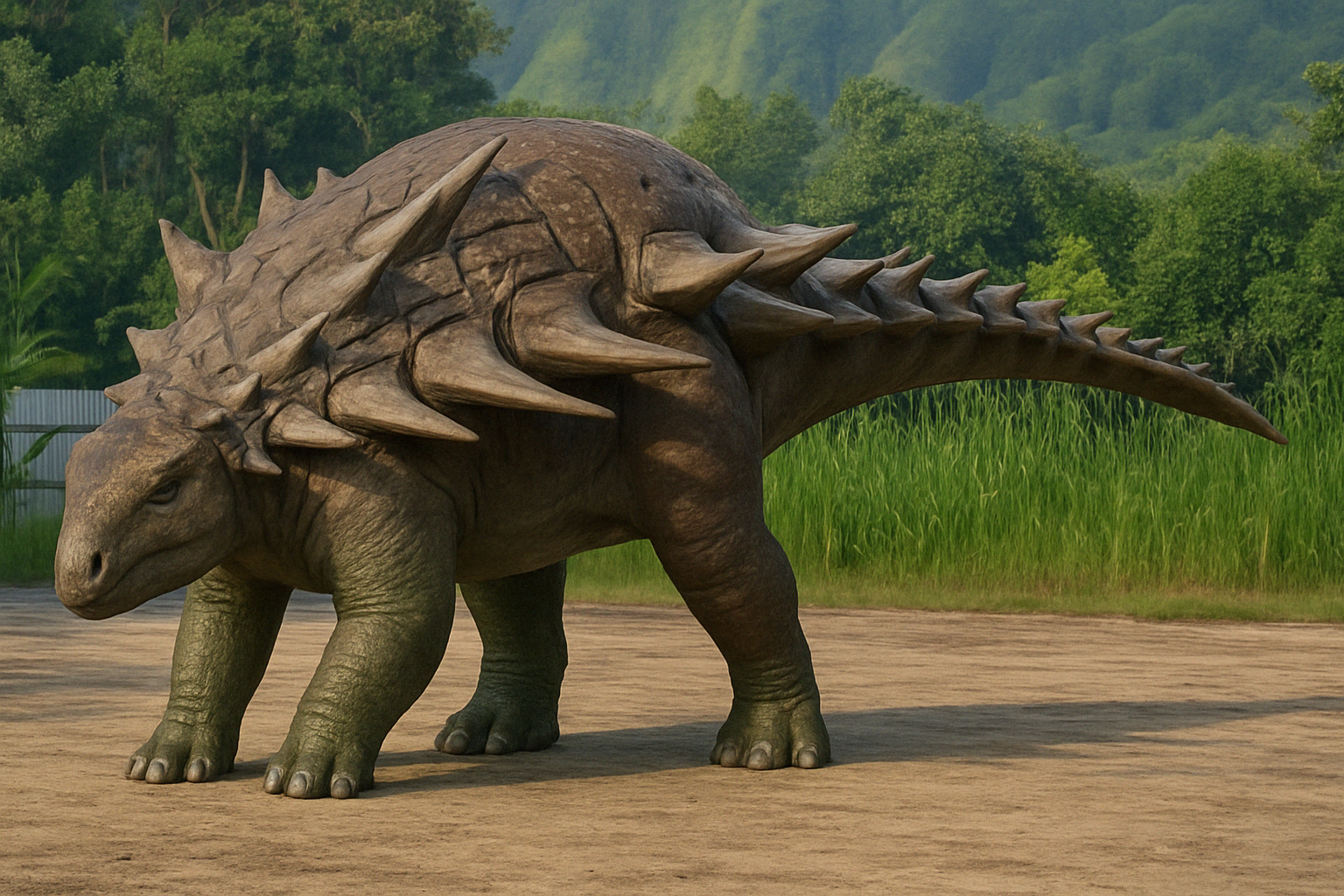
Its most distinctive feature was its armor. Bony plates, called osteoderms, were embedded in the skin across its back and sides, forming a protective shell. These plates were complemented by sharp spikes that lined the flanks and shoulders. One of its most notable features was a large, flat shield-like plate over the hips—called a sacral shield—which was unique among many armored dinosaurs.
Unlike some of its later ankylosaur relatives, Polacanthus did not have a bony club at the end of its tail. Instead, it relied on its side spikes and armor to fend off attacks, possibly using its tail as a whip-like deterrent rather than a blunt-force weapon.
Diet and Feeding Behavior
Polacanthus was a herbivore. Its mouth was equipped with a beak and small, leaf-shaped teeth suited for cropping low-growing vegetation. It likely fed on ferns, cycads, and other soft plants that grew near the forest floor.
With its low head and short neck, Polacanthus browsed close to the ground. It didn’t have complex chewing teeth like later plant-eaters but would have processed food using a large gut, where fermentation helped break down tough plant material over time.
It probably spent much of its time foraging slowly, relying on its armor to protect it from predators while it moved through the undergrowth.
Discovery and Fossil Record
Polacanthus was first described in 1865 by British paleontologist William Fox, based on fossils found on the Isle of Wight. The name Polacanthus foxii means “many-spiked one,” a fitting description for a dinosaur so heavily armored.
Since then, several additional specimens have been discovered, mostly consisting of partial skeletons. These include vertebrae, limb bones, and various armor plates, but no complete skull has been found to date. As a result, some aspects of Polacanthus’s head shape and exact classification within the ankylosaur family remain uncertain.
Despite these gaps, the fossil evidence paints a fairly clear picture of its overall appearance and lifestyle. Ongoing studies continue to clarify its relationship to other early armored dinosaurs.
Scientific Importance
Polacanthus is an important dinosaur for understanding the early evolution of ankylosaurs, especially in Europe. It belongs to a group sometimes called polacanthines, which are thought to represent a more primitive branch of the ankylosaur family tree.
Its body armor, in particular, offers insight into how these defenses evolved and diversified over time. The sacral shield and side spikes are especially interesting features that set it apart from both nodosaurids and ankylosaurids.
By studying Polacanthus and its relatives, scientists can trace the development of different armor strategies among plant-eating dinosaurs and how these adaptations helped them thrive in a predator-rich world.
Polacanthus in Popular Culture
While not as widely known as Ankylosaurus or Stegosaurus, Polacanthus has earned a place in museum exhibits and dinosaur books, especially those focused on European dinosaurs. Its spiked armor and distinctive body shape make it visually striking, and it’s often included in educational materials highlighting early armored dinosaurs.
It occasionally appears in dinosaur toy lines and documentaries and is a favorite among fans of lesser-known but well-defended dinosaurs.
Final Thoughts
Polacanthus may not have been the biggest or the flashiest dinosaur, but it was certainly one of the best protected. With its sharp spikes, tough skin, and low center of gravity, it was more than ready to handle whatever threats came its way. As one of the earliest armored dinosaurs in Europe, Polacanthus holds an important place in the story of dinosaur evolution and continues to capture the imagination of paleontologists and dino fans alike.