Nodosaurus is the #8 seed in the Thyreophorans division of the Dinosaur Tournament.
Nodosaurus was one of the earliest armored dinosaurs ever discovered and gives its name to an entire family of tank-like herbivores—the nodosaurids. With a body covered in thick, bony plates and a low, heavy frame, Nodosaurus relied on passive defense to survive in a world filled with hungry predators. Though not as flashy as some of its relatives, it was a key player in the evolution of armored dinosaurs and helped pave the way for better-known species like Ankylosaurus and Edmontonia.
When and Where It Lived
Nodosaurus lived around 110 to 100 million years ago during the Late Cretaceous period. Its fossils were first found in the Frontier Formation of Wyoming, and possible remains have been discovered in other parts of western North America, including Kansas and Utah.
At the time, North America was a warm, coastal region with forests, rivers, and open floodplains. Nodosaurus would have shared its environment with early hadrosaurs, small theropods, and possibly large predators like Acrocanthosaurus. Its natural defenses helped it thrive in this diverse and sometimes dangerous ecosystem.
Size and Physical Characteristics
Nodosaurus was a medium-sized dinosaur. It measured about 20 to 23 feet (6 to 7 meters) in length and may have weighed around 3 tons. Its body was low and wide, built for stability rather than speed. It walked on all four legs, with short, strong limbs that supported its heavy frame.
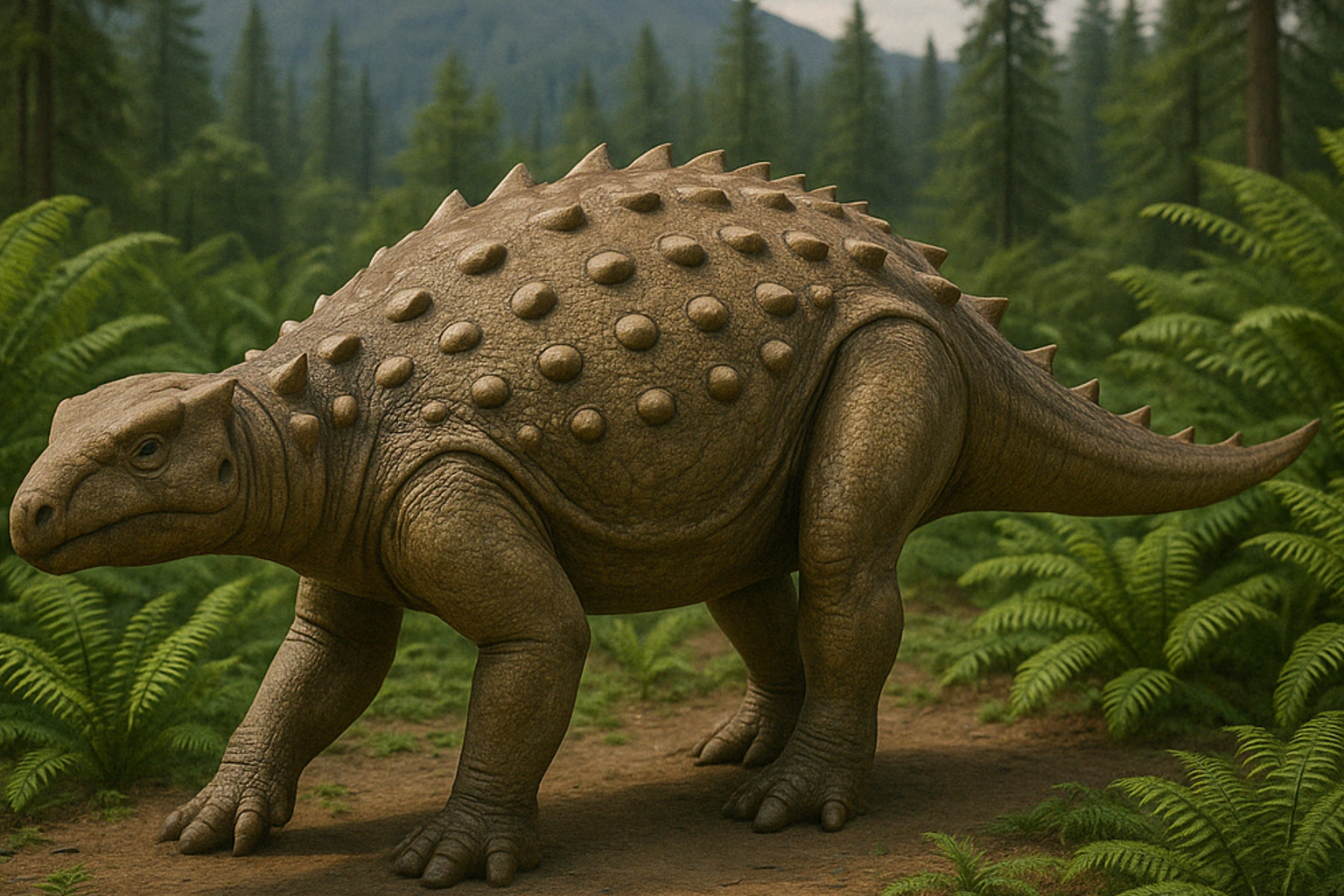
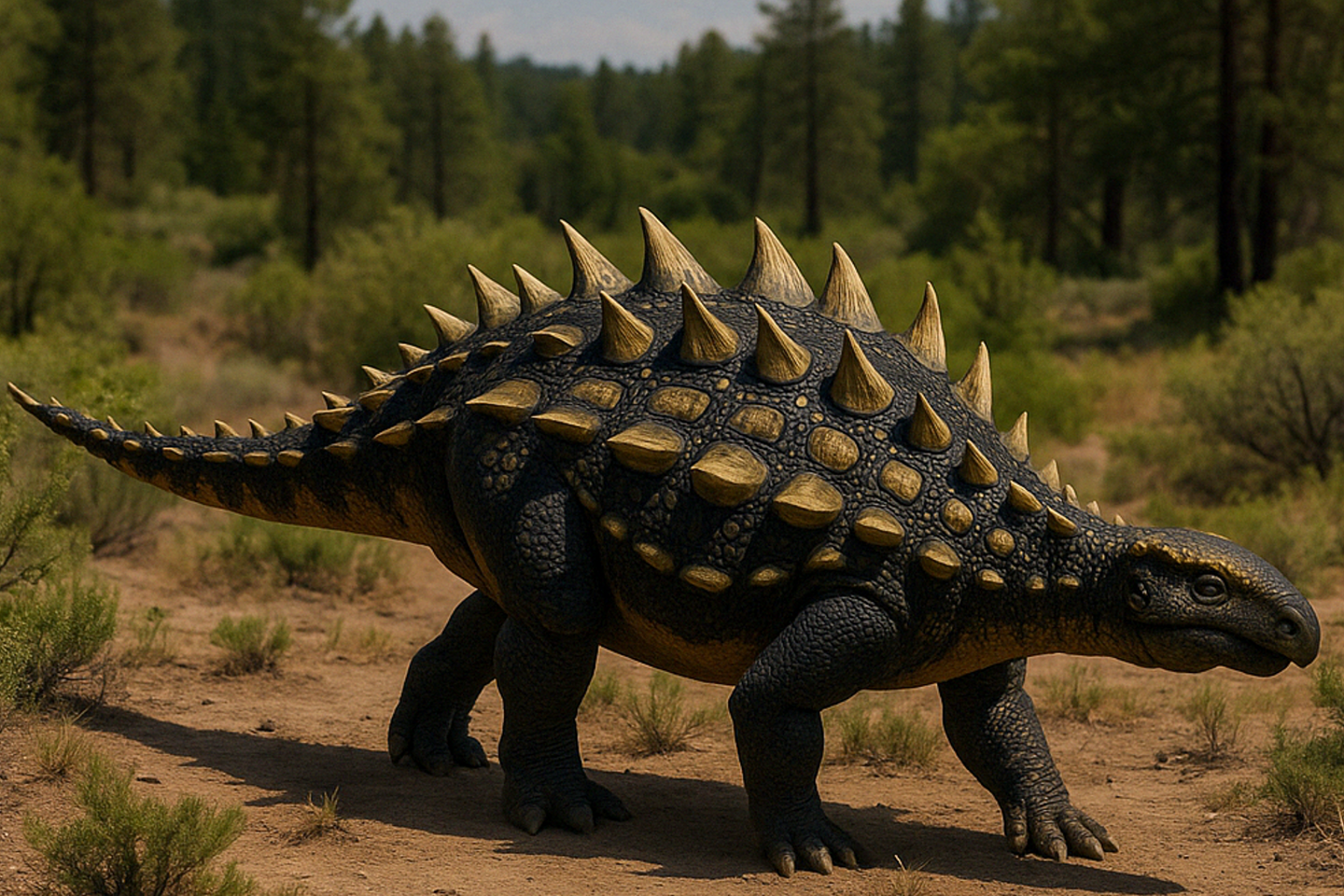
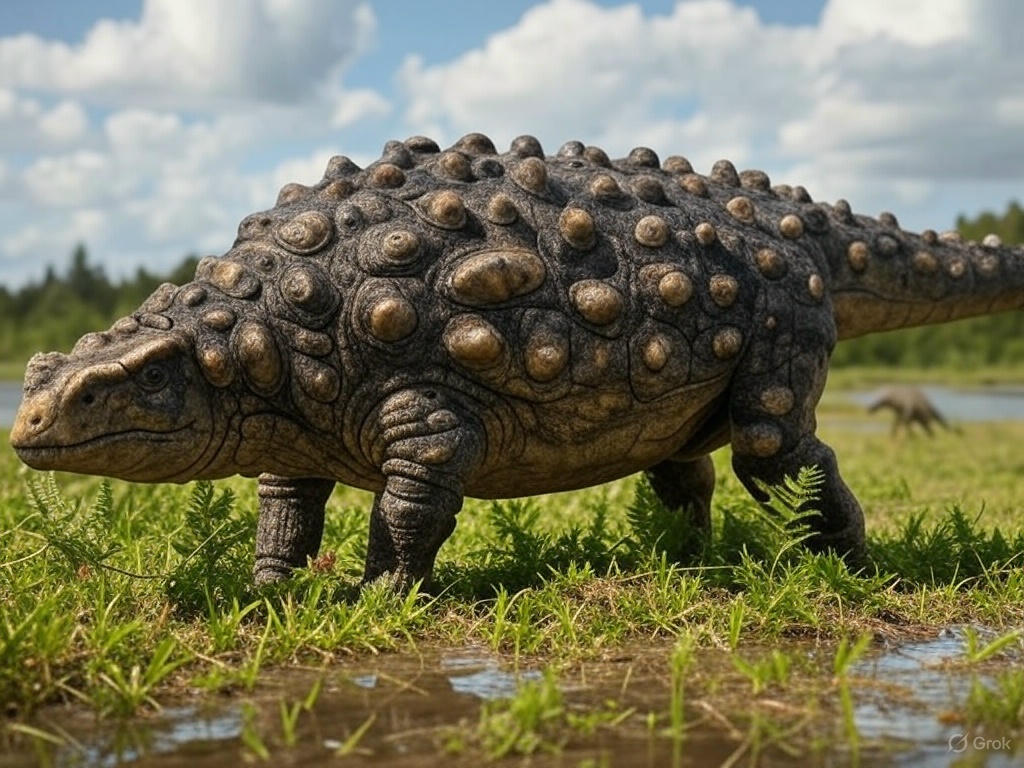
The most distinctive feature of Nodosaurus was its armor. Its back and sides were covered in rows of bony plates, or osteoderms, embedded in the skin. These plates provided excellent protection from bites and slashes. Some osteoderms were flat and rounded, while others were shaped more like cones or small spikes.
Unlike ankylosaurids, Nodosaurus did not have a tail club. Instead, its long tail was likely used for balance and perhaps as a simple defensive weapon, but it lacked the bony, mace-like structure found in some later relatives. It also had a relatively narrow head with a beak-like mouth and small teeth, ideal for browsing on tough, fibrous plants.
Diet and Feeding Behavior
Nodosaurus was an herbivore. Its diet likely consisted of ferns, cycads, horsetails, and other low-growing vegetation. Its head was held low to the ground, and its small teeth were adapted for slicing or crushing plant material rather than chewing it thoroughly.
Like many other armored dinosaurs, Nodosaurus probably relied on a large gut and a fermentation-based digestive system to break down its food. It may have swallowed small stones, known as gastroliths, to help grind up tough plant fibers in its stomach.
Its feeding style was likely slow and steady. Nodosaurus would have moved through its environment with a deliberate pace, grazing on whatever vegetation was within reach.
Discovery and Fossil Record
Nodosaurus was one of the first armored dinosaurs ever described. It was named in 1889 by American paleontologist Othniel Charles Marsh, based on fossils found in Wyoming. The name Nodosaurus textilis means “knobbed lizard,” referring to the distinctive nodules of armor covering its body.
The original fossil included parts of the vertebrae, ribs, limbs, and armor plates, but no skull was found. Since then, additional fragments believed to belong to Nodosaurus or closely related species have been discovered, but a complete skeleton is still missing. As a result, some aspects of its anatomy remain speculative, especially its head and tail structure.
Despite the incomplete remains, Nodosaurus is considered the type genus for the family Nodosauridae—a group of armored dinosaurs that includes Edmontonia, Sauropelta, and Panoplosaurus.
Scientific Importance
Nodosaurus is important because it helped define an entire family of armored dinosaurs. It provides a snapshot of an early stage in the evolution of defensive adaptations like body armor and heavy builds.
Its discovery in the 19th century helped scientists begin to understand how dinosaurs could use protection instead of speed or size to survive. It also highlighted the diversity of herbivorous dinosaurs in the Late Cretaceous and the different strategies they used to avoid becoming prey.
By studying Nodosaurus and its relatives, paleontologists can track how armor evolved and diversified across millions of years—and how these adaptations helped armored dinosaurs occupy unique ecological niches.
Nodosaurus in Popular Culture
Although Nodosaurus is not as well-known as Ankylosaurus, it holds a special place in dinosaur history. It’s often included in books, museum exhibits, and educational displays focused on the evolution of dinosaur armor.
Its name appears in lists of dinosaur “firsts” and is sometimes featured in documentaries and online articles that explore the origins of nodosaurids and other armored plant-eaters.
Final Thoughts
Nodosaurus may not have had flashy weapons or towering size, but it was a true pioneer in dinosaur defense. Its bony armor and slow, sturdy build made it one of the earliest examples of passive protection in the dinosaur world. As the namesake of the nodosaur family, Nodosaurus reminds us that sometimes, survival doesn’t depend on being the biggest or the fastest—just on being too well-armored to bother with.