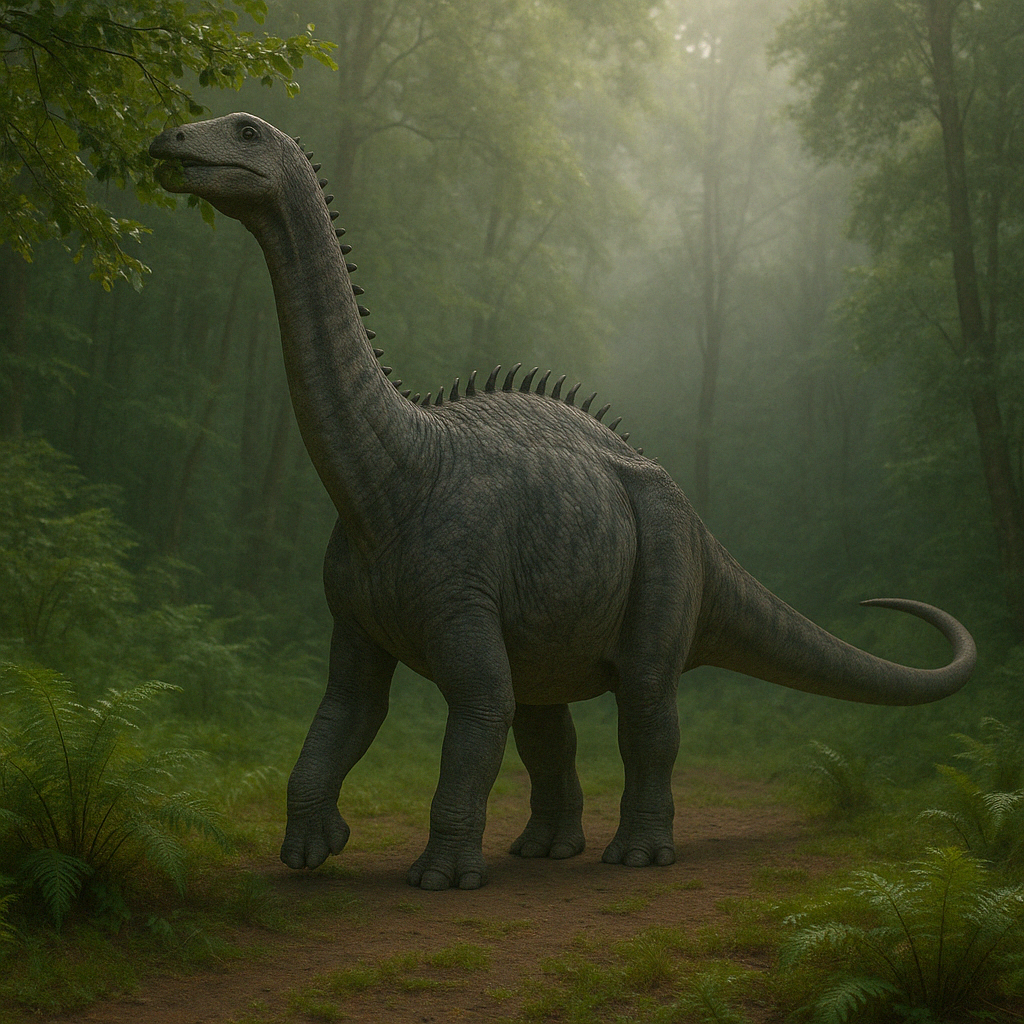
Rebbachisaurus is the #10 seed in the Sauropods division of the Dinosaur Tournament.
Rebbachisaurus was a fascinating sauropod dinosaur that lived during the mid-Cretaceous period. Unlike its more famous long-necked cousins such as Diplodocus or Brachiosaurus, Rebbachisaurus had several unusual features—including what may have been a sail or ridge running down its back. Discovered in North Africa, this unique herbivore helps paleontologists understand the diversity of sauropods, especially in regions that are still relatively under-explored.
When and Where It Lived
Rebbachisaurus lived around 100 to 95 million years ago during the Late Early to early Late Cretaceous period. Its fossils have been found in the Kem Kem Beds of Morocco and the Tegana Formation, with other possible remains discovered in Algeria, Tunisia, and Niger. This indicates it had a wide distribution across what was then a lush, tropical landscape filled with rivers, lakes, and dense vegetation.
At the time, North Africa was a part of the southern supercontinent Gondwana. Rebbachisaurus would have lived alongside other dinosaurs like Spinosaurus, Carcharodontosaurus, and various types of crocodyliforms and fish. It was part of a complex and dynamic ecosystem that included both aquatic and terrestrial life.
Size and Physical Characteristics
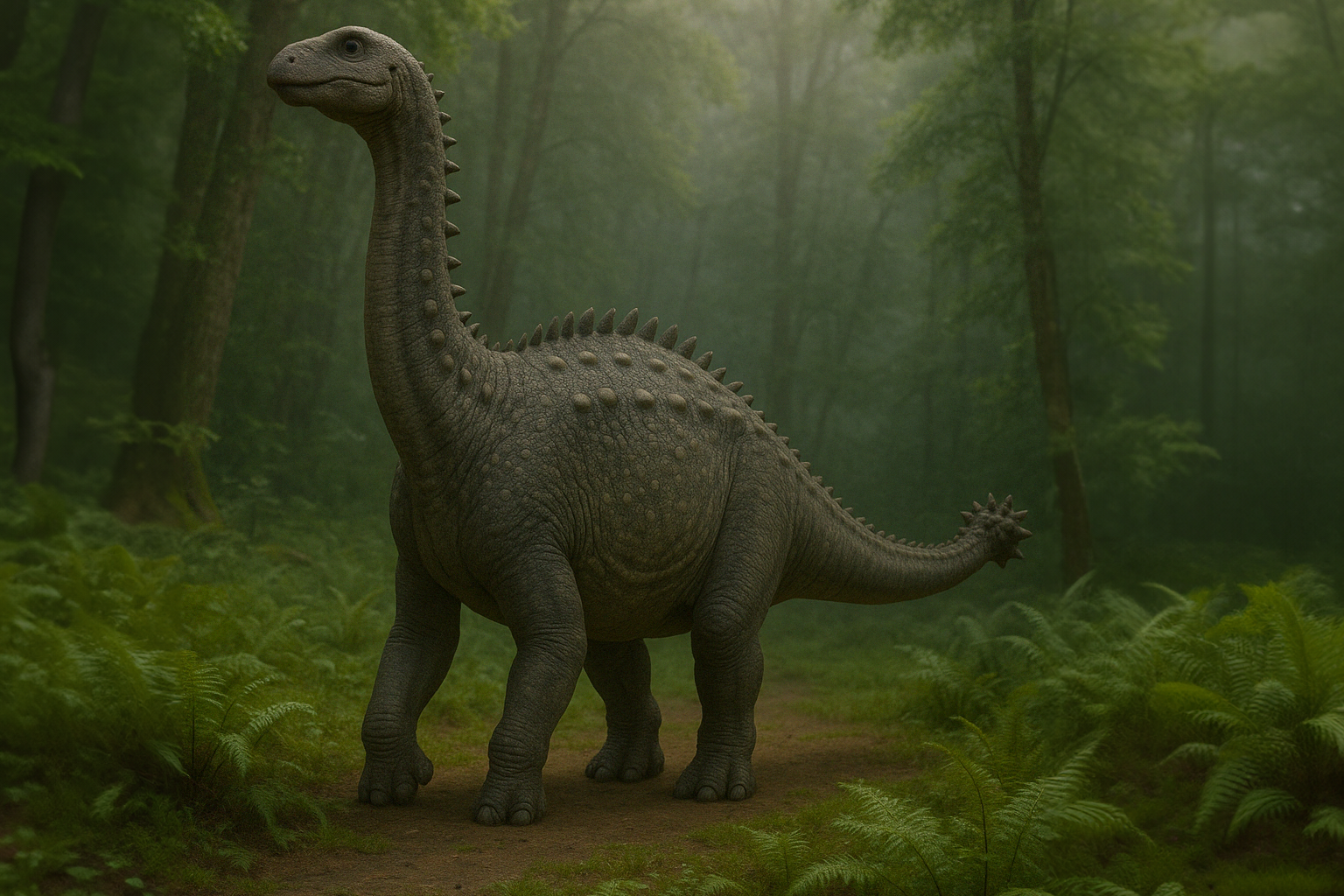
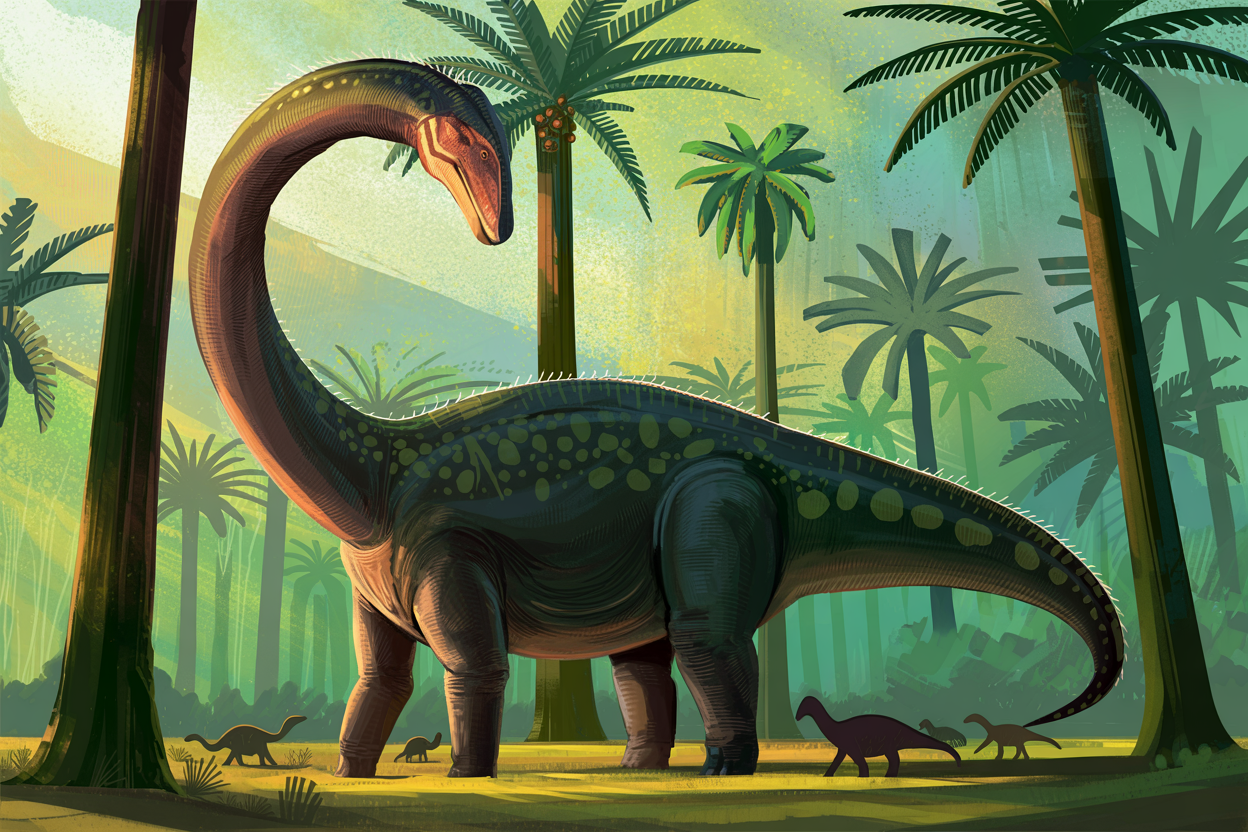
Rebbachisaurus was a medium-sized sauropod by sauropod standards. Estimates suggest it could reach lengths of 40 to 66 feet (12 to 20 meters) and may have weighed around 10 to 15 tons. Like other sauropods, it had a long neck and tail, a massive body, and four thick legs for supporting its weight.
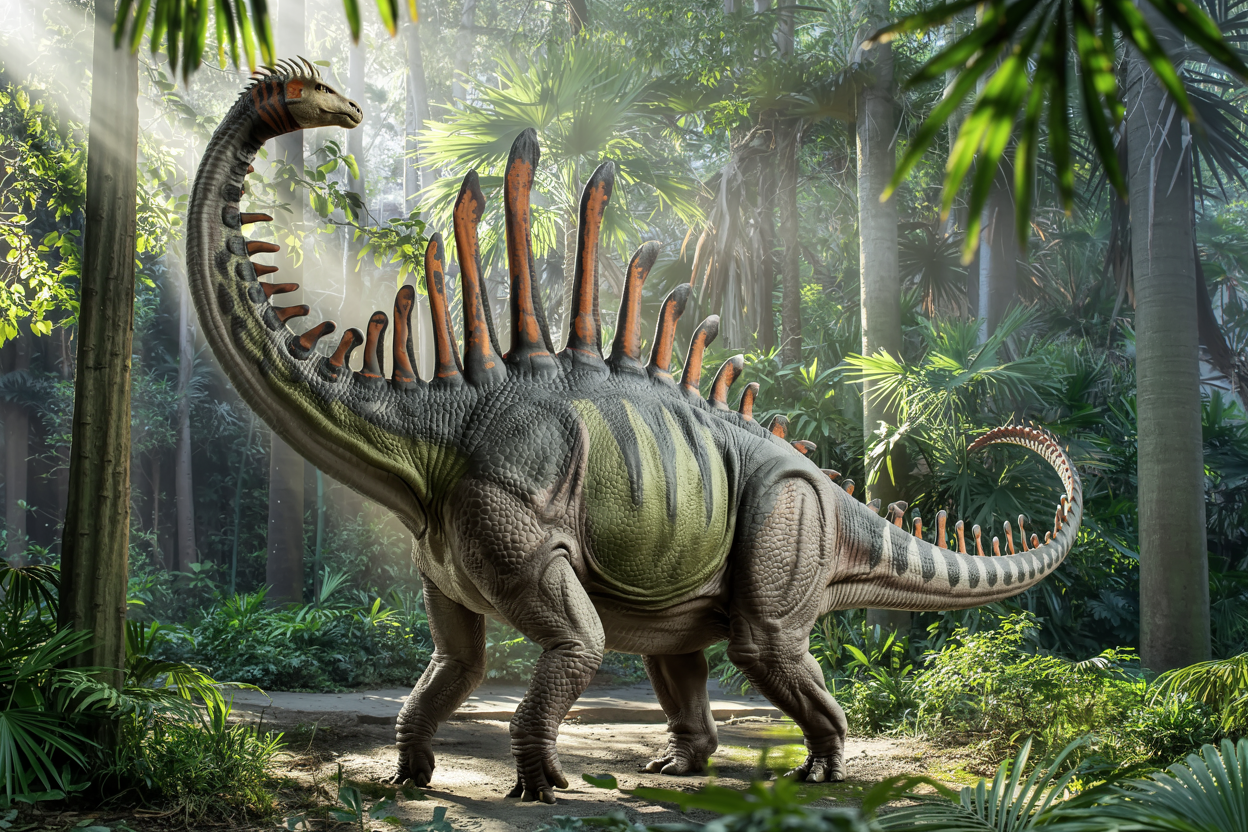
What makes Rebbachisaurus truly distinctive is its spine. Fossils show that it had extremely tall neural spines—bony projections sticking up from the vertebrae. These may have supported a ridge or sail-like structure along its back, similar to what is seen in Spinosaurus, though their exact function remains uncertain. The sail may have helped regulate body temperature, store fat, or serve as a display feature to attract mates or intimidate rivals.
Rebbachisaurus also had a relatively small head with long, narrow jaws. Its teeth were pencil-shaped and arranged in a way that suggests it was adapted for grazing or browsing on softer vegetation.
Diet and Feeding Behavior
As an herbivore, Rebbachisaurus fed on a variety of plants available in its environment. Its long neck allowed it to reach vegetation both high and low, and its teeth were suited for stripping leaves rather than chewing them.
It likely consumed large quantities of plant matter daily and relied on a massive digestive system to break down the fibrous food through fermentation. Like many other sauropods, Rebbachisaurus may have swallowed stones, called gastroliths, to help grind food in its stomach.
Its feeding behavior would have allowed it to coexist with other herbivores by targeting different types or heights of vegetation, reducing direct competition for resources.
Discovery and Fossil Record
Rebbachisaurus was first described in 1954 by French paleontologist René Lavocat, based on fossils found in Algeria. The genus name means “Rebbachi lizard,” named after the Rebbachi people who lived in the region. The type species is Rebbachisaurus garasbae.
Since then, additional fossil material has been found in other parts of North Africa. While the remains are often fragmentary, they include vertebrae, limb bones, and parts of the skull. These discoveries have confirmed that Rebbachisaurus belonged to a unique group of sauropods known as the Rebbachisauridae.
Rebbachisaurids are considered more primitive than some of the more famous Cretaceous sauropods and show a mix of features that make them important for understanding sauropod evolution and biogeography.
Scientific Importance
Rebbachisaurus plays a key role in understanding the diversity and distribution of sauropods during the mid-Cretaceous period, especially in Gondwana. Its unusual spine and body structure show how different sauropods could evolve specialized features for various ecological roles.
It also provides evidence that Africa was home to a wide range of sauropod types even after they had started to decline in other parts of the world. Rebbachisaurus and its relatives filled an important ecological niche in the environments of ancient North Africa.
Rebbachisaurus in Pop Culture
While not as well-known as T. rex or Triceratops, Rebbachisaurus has appeared in a few documentaries, museum exhibits, and dinosaur reference books. Its unique look—especially the tall spines—has helped it gain attention from dinosaur enthusiasts interested in lesser-known species.
As interest grows in African dinosaurs and the ecosystems of Gondwana, Rebbachisaurus is likely to become more prominent in educational materials and public displays.
Final Thoughts
Rebbachisaurus may not be the largest or most famous sauropod, but its distinctive spine and intriguing fossil history make it a valuable piece of the dinosaur puzzle. As a medium-sized, sail-backed sauropod from Cretaceous Africa, it helps scientists understand how dinosaurs adapted to different environments and how diverse the sauropod family truly was. With more discoveries sure to come, Rebbachisaurus remains an exciting dinosaur with a story still unfolding.