Sauropelta is the #6 seed in the Thyreophorans division of the Dinosaur Tournament.
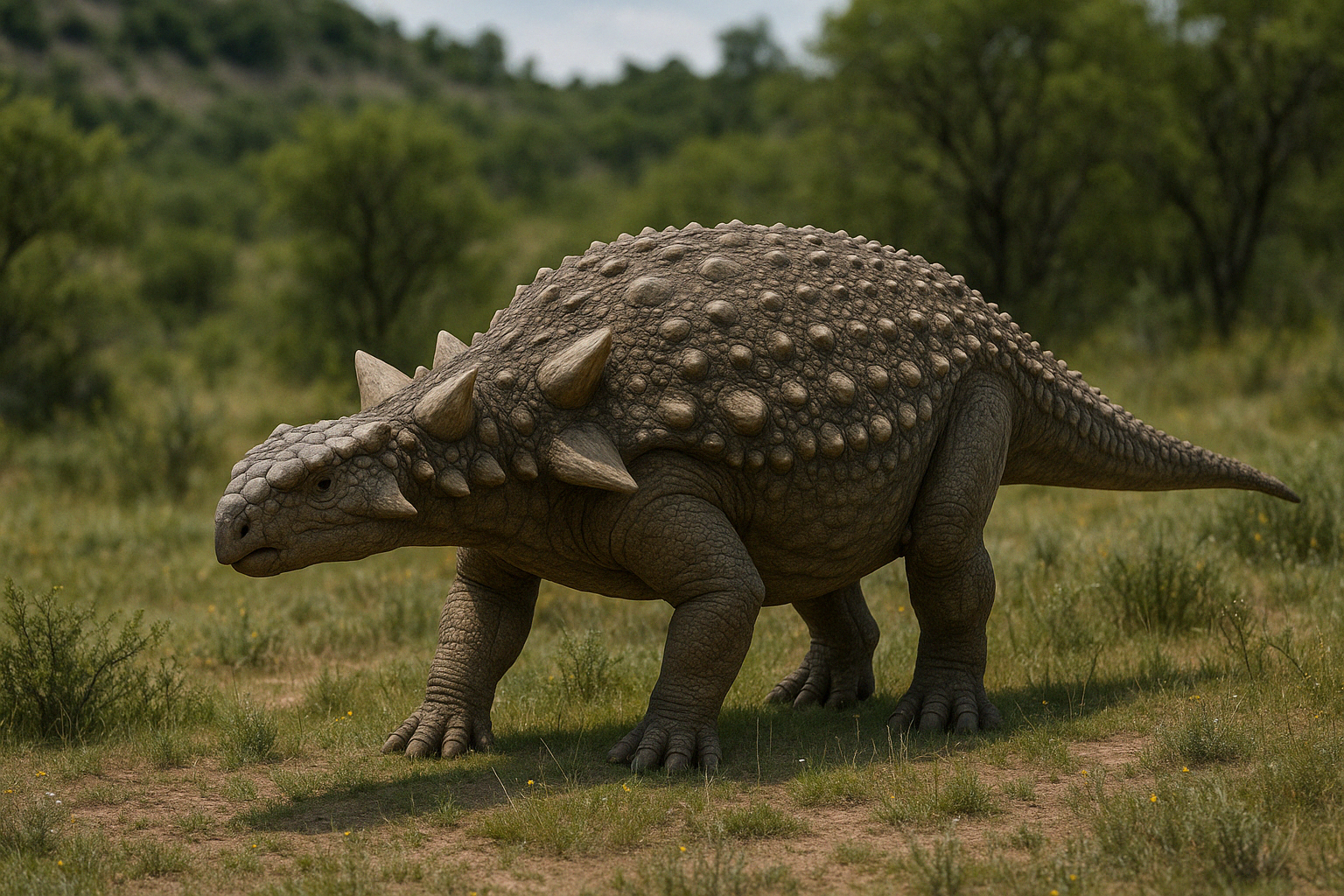
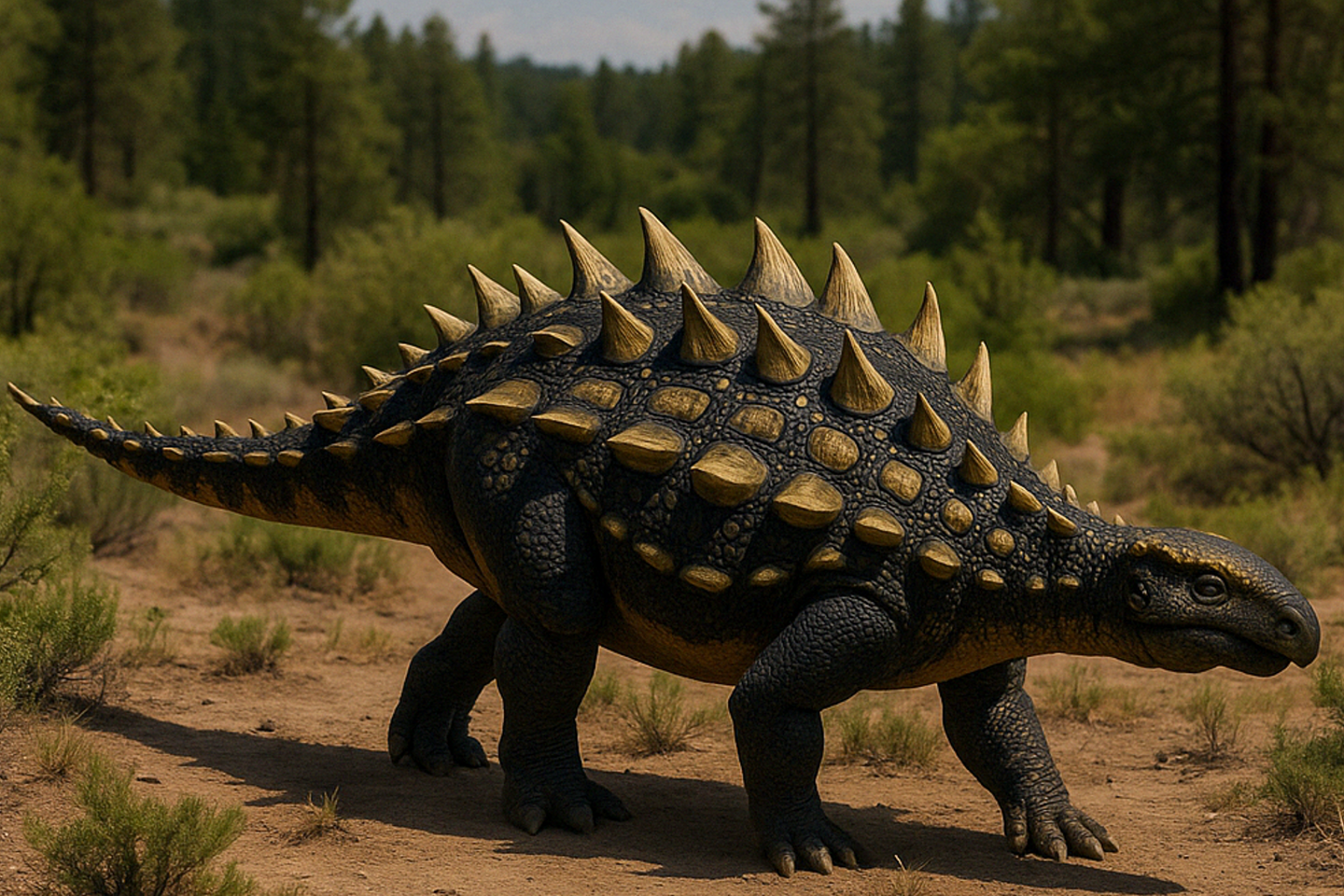
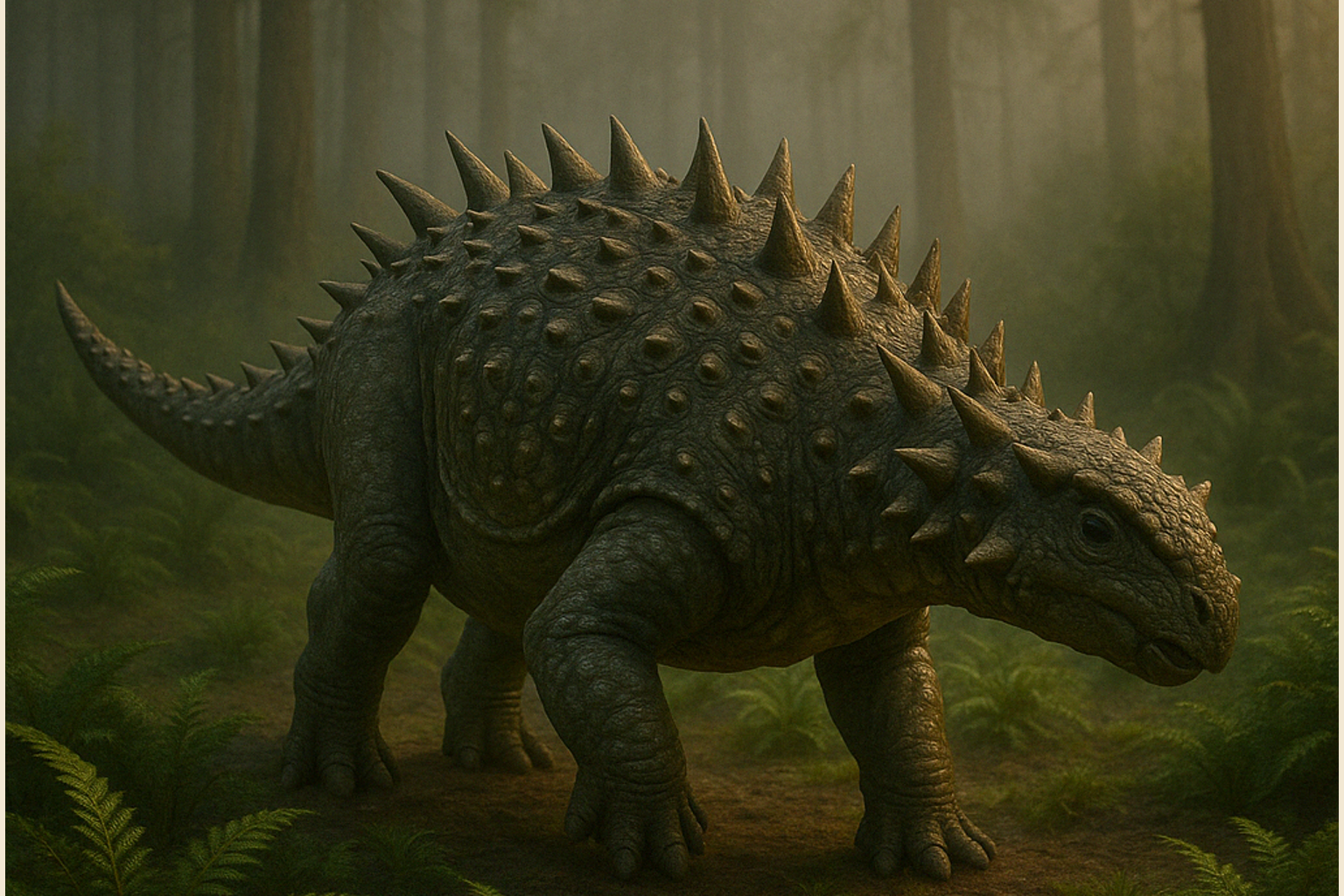
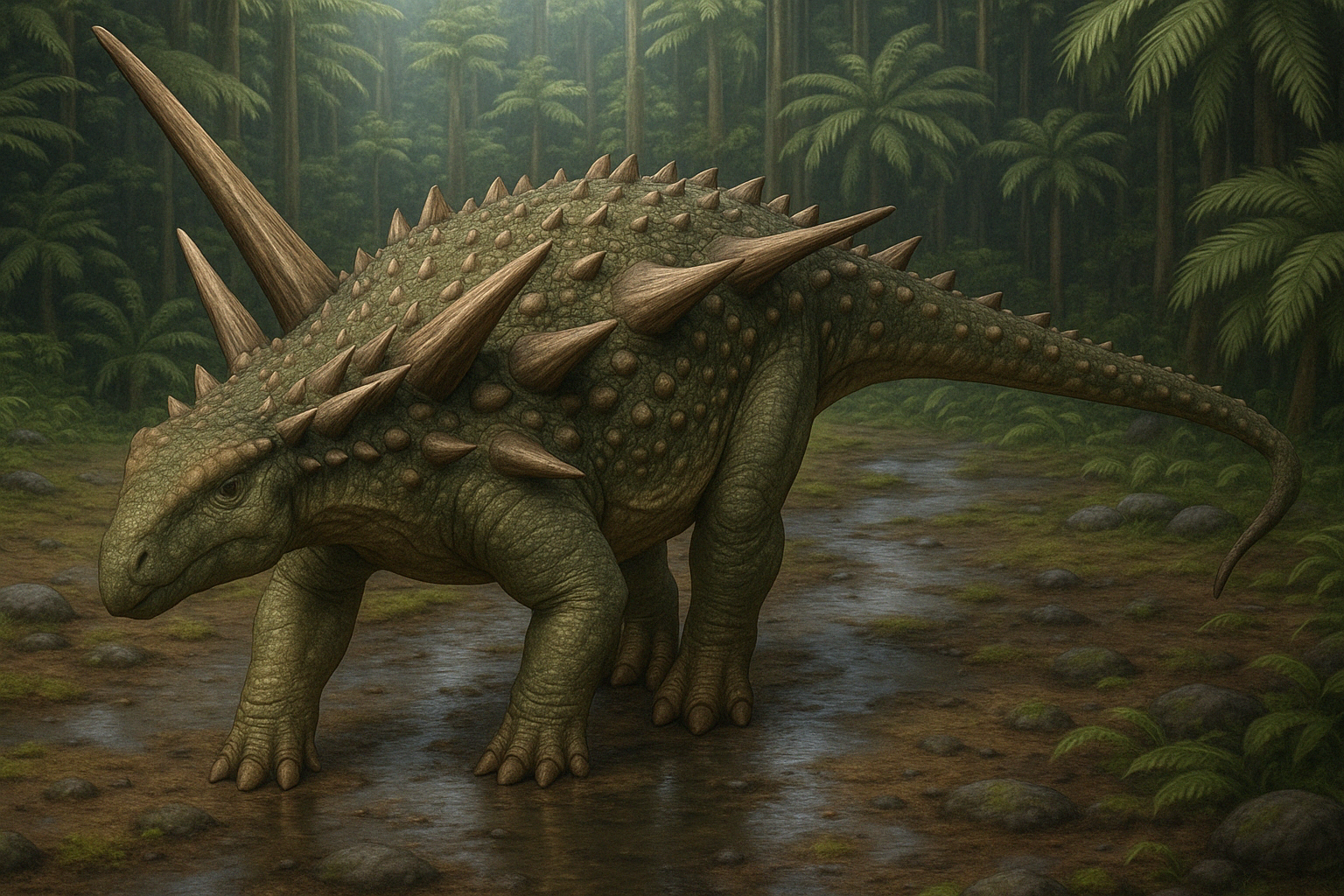
Sauropelta was a heavily armored dinosaur that lived during the Early Cretaceous period. With a low-slung body, thick skin covered in bony plates, and long spikes protecting its neck and shoulders, Sauropelta was built for defense. Although it wasn’t as massive or famous as some of its relatives, it was one of the earliest and best-known nodosaurid dinosaurs, providing valuable insight into how armored dinosaurs evolved.
When and Where It Lived
Sauropelta lived about 108 to 104 million years ago during the Early Cretaceous period. Fossils have been found in what is now the western United States, especially in Montana and Wyoming. These remains come from the Cloverly Formation, a rock layer that has yielded many important dinosaur fossils from the early part of the Cretaceous.
At the time, North America was a lush, forested region with rivers, floodplains, and a warm climate. It was home to a variety of plant-eating dinosaurs, as well as fast, agile predators. In this environment, Sauropelta’s heavy armor made it a difficult target for would-be attackers.
Size and Physical Characteristics
Sauropelta was a medium-sized dinosaur, measuring about 16 to 20 feet (5 to 6 meters) long and weighing between 1.5 and 2 tons. It had a long, low body supported by four sturdy legs, with a relatively short neck and a long, muscular tail.
What made Sauropelta stand out was its impressive armor. Its back and sides were lined with bony plates called osteoderms, embedded in its skin for protection. Most striking of all were the long, pointed spikes along its neck and shoulders, which likely served as a deterrent to predators and may have been used in defense or display.
Unlike some of its later ankylosaurid cousins, Sauropelta did not have a tail club. Its defensive strategy relied more on passive protection—thick armor and sharp spikes—than on active tail-swinging attacks.
Diet and Feeding Behavior
Sauropelta was an herbivore, feeding on low-growing plants. Its head was close to the ground, and its mouth featured a beak and small teeth adapted for cropping ferns, cycads, and other soft vegetation.
It likely spent much of its day browsing for food, moving slowly through forests and open areas. Its teeth suggest it didn’t chew much, instead swallowing plant material that was broken down in its large digestive system, possibly aided by gut bacteria and fermentation.
Like many other herbivorous dinosaurs, Sauropelta may have swallowed stones (gastroliths) to help grind up plant material in its stomach.
Discovery and Fossil Record
Sauropelta was first described in 1970 by American paleontologist John H. Ostrom, based on fossils discovered in Montana in the 1930s and 1940s. The name Sauropelta edwardsorum means “lizard shield,” a fitting title for such a well-armored dinosaur. The species name honors fossil collector Ned Edwards.
Sauropelta is one of the best-known nodosaurids because of the quality and completeness of its fossils. Specimens include skulls, vertebrae, limb bones, and much of its armor. These fossils have helped scientists reconstruct its appearance in detail and study its armor layout and growth patterns.
Scientific Importance
Sauropelta holds an important place in the study of armored dinosaurs. As an early nodosaurid, it shows how this group developed heavy armor and specialized defenses before the appearance of more derived forms like Ankylosaurus. Its fossils provide clues about the evolution of body armor, tail structure, and feeding adaptations among ankylosaurs.
Its presence in the Cloverly Formation also helps paleontologists understand the ecosystem of Early Cretaceous North America and the types of animals that lived alongside each other during this period of evolutionary transition.
Sauropelta in Popular Culture
While Sauropelta doesn’t have the fame of some larger dinosaurs, it has appeared in books, documentaries, and museum displays focused on armored dinosaurs or the Early Cretaceous. Its distinctive spikes and heavy body make it a memorable addition to any dinosaur lineup.
It is occasionally featured in educational materials and dinosaur toy lines, often as an example of early defensive adaptations among herbivorous dinosaurs.
Final Thoughts
Sauropelta may not have been the biggest or flashiest dinosaur, but it was incredibly well-protected. Its rows of armor and long shoulder spikes made it a tough opponent for any predator, and its sturdy build helped it thrive in the forests and plains of Early Cretaceous North America. As one of the earliest and best-known nodosaurids, Sauropelta offers a valuable look at the early evolution of armored dinosaurs and the many ways these prehistoric animals adapted to survive.