Pachycephalosaurus is the #3 seed in the Cerapods division of the Dinosaur Tournament.
Pachycephalosaurus is one of the most unique dinosaurs of the Late Cretaceous period, best known for its thick, dome-shaped skull. Often portrayed as the “head-butting” dinosaur, Pachycephalosaurus has become a favorite among paleontology fans thanks to its unusual appearance and the mystery surrounding how it used its famous skull. As the largest known member of the pachycephalosaur family, it holds a special place in the study of dinosaur behavior and anatomy.
When and Where It Lived
Pachycephalosaurus lived around 70 to 66 million years ago during the very end of the Cretaceous period, just before the mass extinction that wiped out most dinosaurs. Its fossils have been found in North America, particularly in Montana, South Dakota, and Wyoming. Some remains have also been reported in Alberta, Canada.
During its time, the environment in western North America was warm and lush, with coastal plains, forests, and rivers providing an ideal habitat for a wide variety of dinosaur species. Pachycephalosaurus shared this ecosystem with well-known contemporaries like Tyrannosaurus rex, Triceratops, and Ankylosaurus.
Size and Physical Characteristics
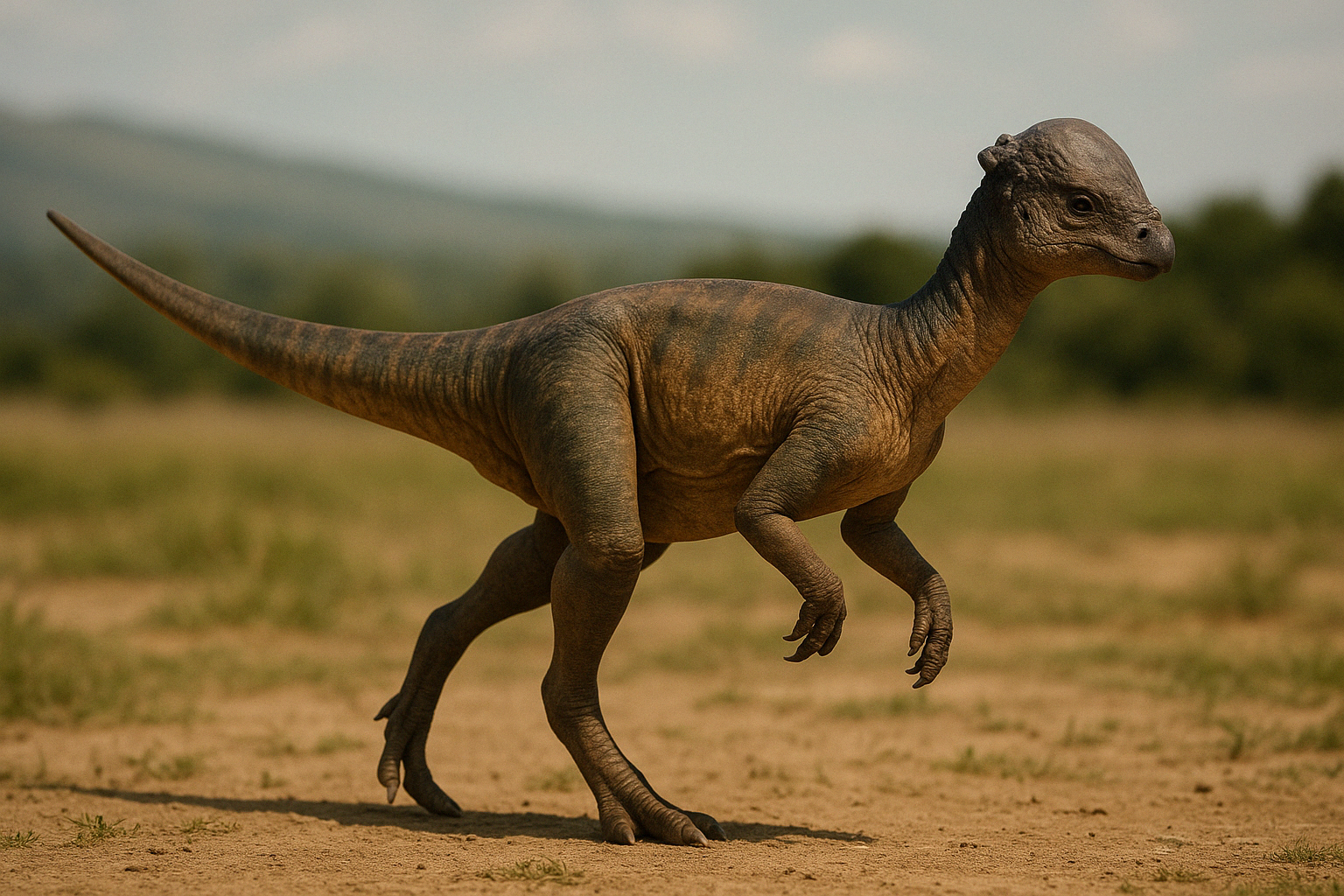
Pachycephalosaurus was a bipedal, herbivorous dinosaur that likely grew to around 15 feet (4.5 meters) in length and weighed nearly 1,000 pounds (450 kilograms). It had a bulky body, long tail for balance, and short forelimbs. Its legs were relatively strong, suggesting it was capable of quick, agile movement.
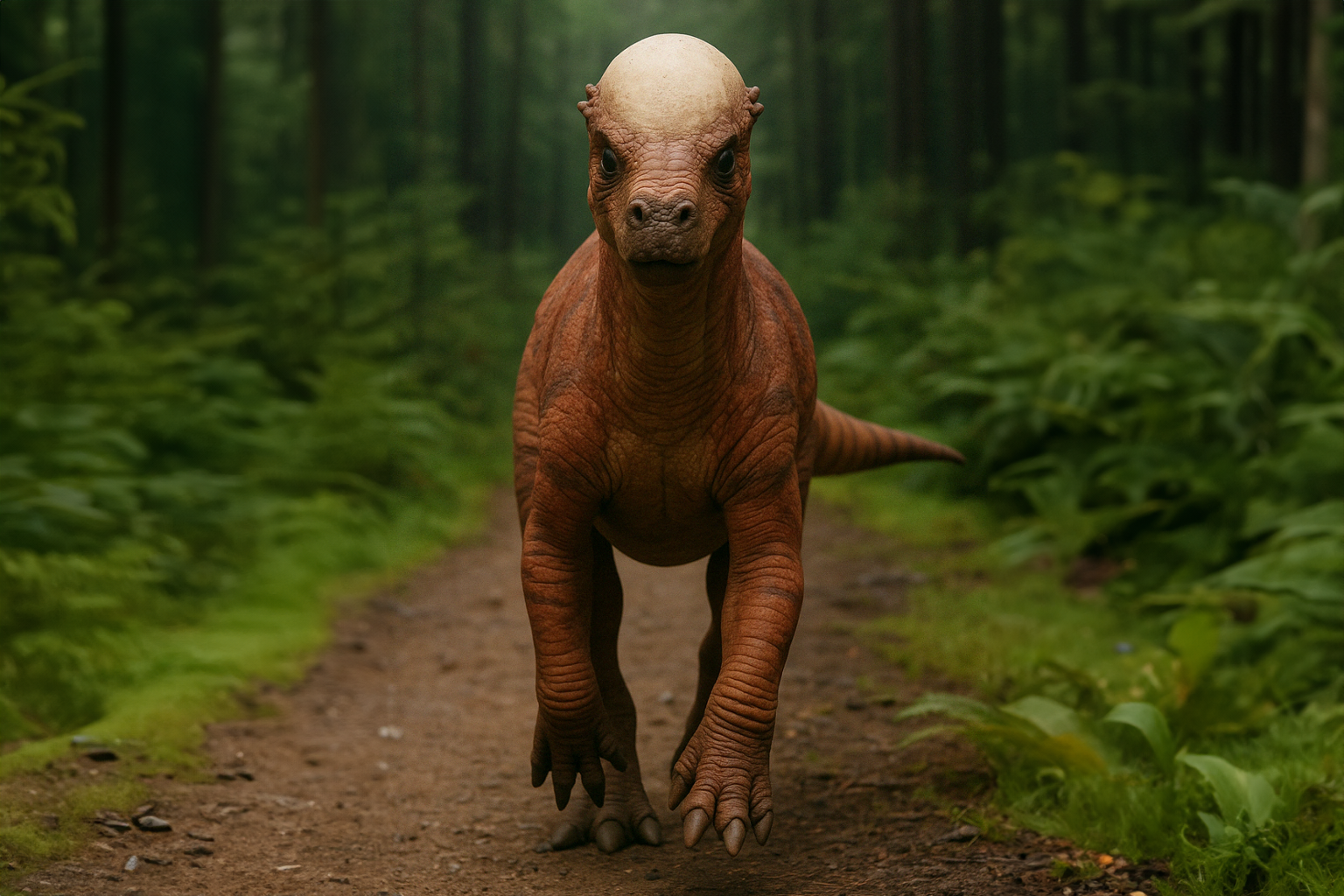
Its most distinctive feature was its skull. Pachycephalosaurus had a thick, bony dome on the top of its head that could measure over 10 inches (25 centimeters) thick. This dome was surrounded by small, bony knobs and ridges, giving it a rough, ornamented look. The purpose of the dome has been debated for years, with theories ranging from head-butting behavior to display or species recognition.
Despite its thick skull, the brain of Pachycephalosaurus was relatively small. Its eyes faced slightly forward, which may have helped it judge distance—a useful trait if it did engage in physical contests with other members of its species.
Diet and Feeding Behavior
Pachycephalosaurus was a plant-eater, though the exact details of its diet are still uncertain due to the limited number of complete skulls and jaws found. It had small, leaf-shaped teeth that were likely adapted for eating soft vegetation such as leaves, fruits, and seeds. Its beak would have been useful for cropping plants, while its cheek teeth were suited for simple chewing.
Some scientists believe it may have been an opportunistic omnivore, eating insects or small vertebrates occasionally, but there’s no strong evidence to support this theory.
Discovery and Fossil Record
Pachycephalosaurus was first described in 1931 by paleontologist Charles W. Gilmore, based on skull fragments discovered in Montana. The name Pachycephalosaurus wyomingensis means “thick-headed lizard from Wyoming,” a nod to both its anatomy and one of the regions where it was found.
Because most of the fossils attributed to Pachycephalosaurus are skull fragments or isolated bones, much of its skeleton remains poorly known. In fact, for many years, scientists debated whether some dome-headed fossils belonged to separate species or represented juveniles or different growth stages of the same dinosaur. Today, many of those fossils are considered to be from younger Pachycephalosaurus individuals or closely related species.
Scientific Importance
Pachycephalosaurus has played a key role in discussions about dinosaur behavior, especially when it comes to combat and social interaction. The thick skull dome led many researchers to propose that it was used in head-butting contests, similar to the behavior seen in modern-day animals like bighorn sheep. Others have suggested that the dome may have been used for flank-butting or visual displays rather than direct combat.
CT scans and biomechanical studies have produced mixed results. Some support the head-butting theory, while others argue that the skull and neck structure wouldn’t have supported such impacts. The debate continues, making Pachycephalosaurus one of the more mysterious dinosaurs in terms of behavior.
Its place in the evolutionary tree is also important. Pachycephalosaurus represents the peak of dome development within its family, helping scientists understand how these unique structures evolved over time.
Pachycephalosaurus in Popular Culture
Thanks to its distinctive look, Pachycephalosaurus has appeared in movies, documentaries, toys, and museum exhibits. It’s been featured in several Jurassic Park films, where it’s often shown charging with its dome-like head. While this makes for great entertainment, the real behavior of Pachycephalosaurus is still open to scientific interpretation.
Its name and appearance make it a favorite among kids and dinosaur enthusiasts, especially those interested in lesser-known species that stand out from the usual lineup of predators and horned dinosaurs.
Final Thoughts
Pachycephalosaurus may not have been the biggest or fiercest dinosaur of its time, but it certainly had one of the most unusual heads in the prehistoric world. Whether it used its dome for combat, display, or something else entirely, it remains one of the most intriguing examples of dinosaur evolution. As new fossils and research continue to emerge, scientists may one day uncover the true purpose behind this thick-headed dinosaur’s most famous feature.