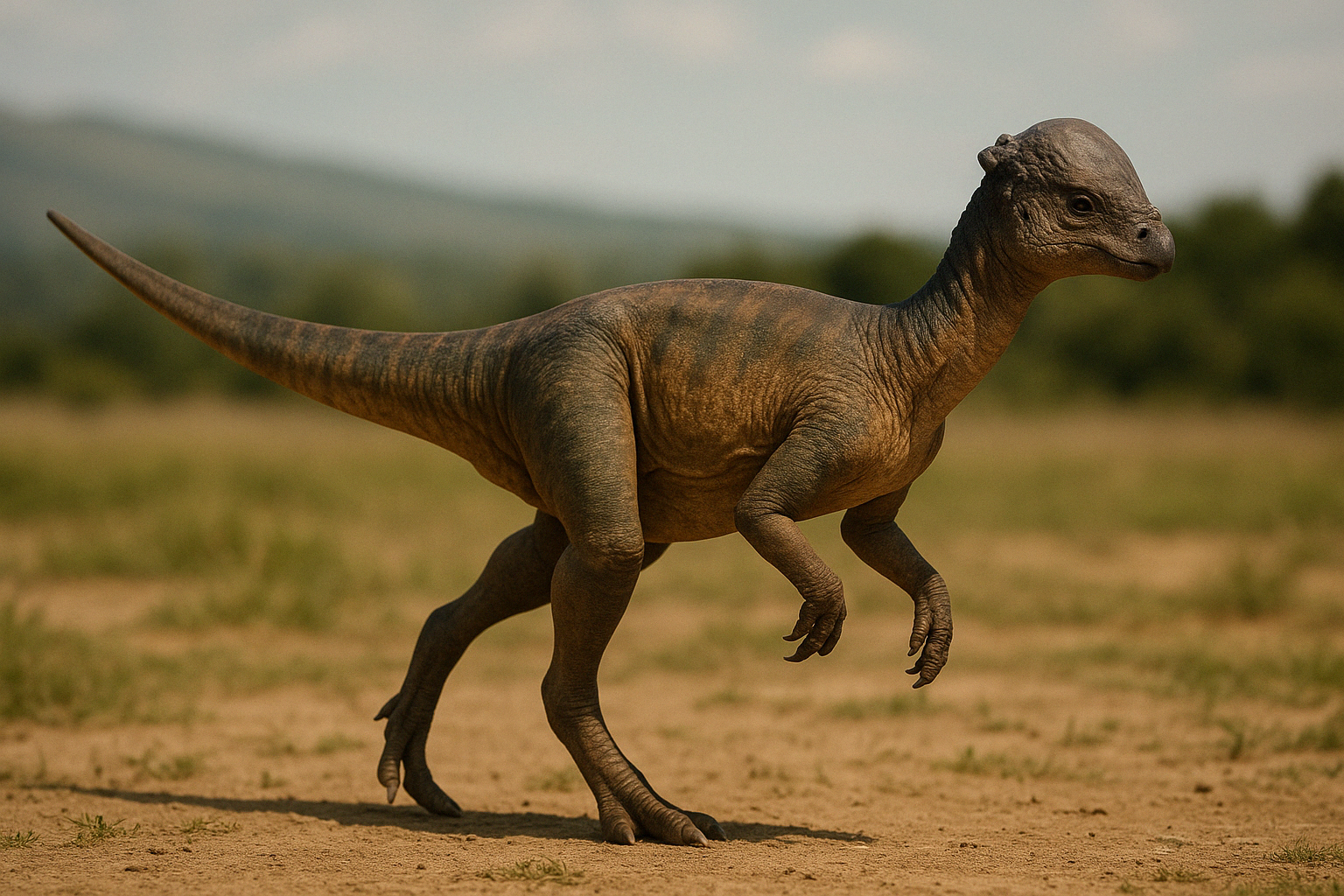
Stegoceras is the #14 seed in the Cerapods division of the Dinosaur Tournament.
Stegoceras was a small, bipedal dinosaur best known for its thick, dome-shaped skull. As one of the earliest and most well-known members of the pachycephalosaur group, it helps paint a clearer picture of dinosaur behavior, anatomy, and diversity during the Late Cretaceous. Though it lacked the size and flash of some of its contemporaries, Stegoceras remains an important piece of the dinosaur puzzle.
When and Where It Lived
Stegoceras lived around 77 to 74 million years ago during the Late Cretaceous period. Its fossils have been found in western North America, particularly in Alberta, Canada, and parts of Montana, USA. These areas were part of the ancient landmass known as Laramidia, which was separated from eastern North America by an inland sea.
During Stegoceras’s time, the region featured a warm, humid climate with river systems, forests, and floodplains. It was home to a variety of dinosaur species, including hadrosaurs, ceratopsians, ankylosaurs, and large predators like Gorgosaurus.
Size and Physical Characteristics
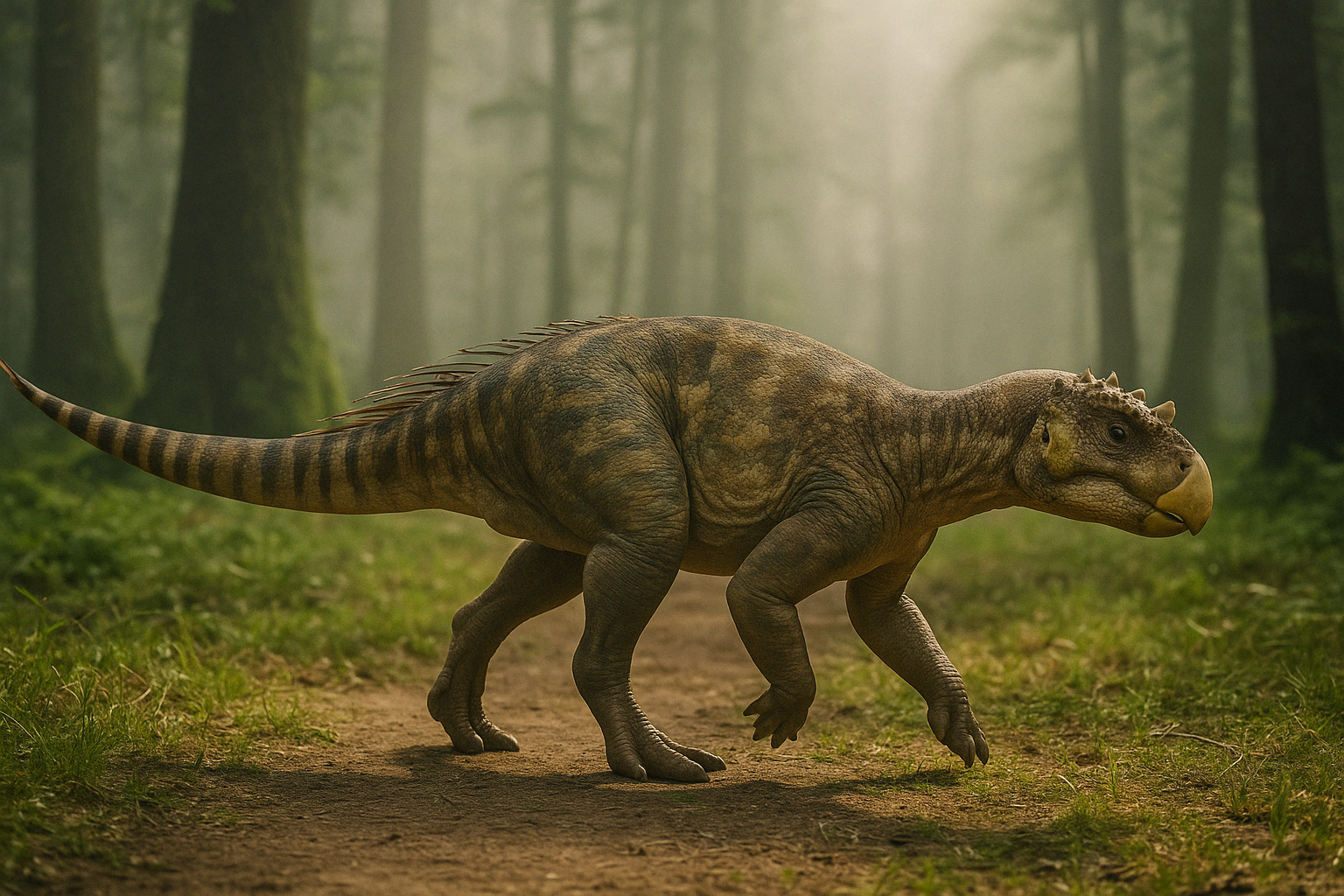
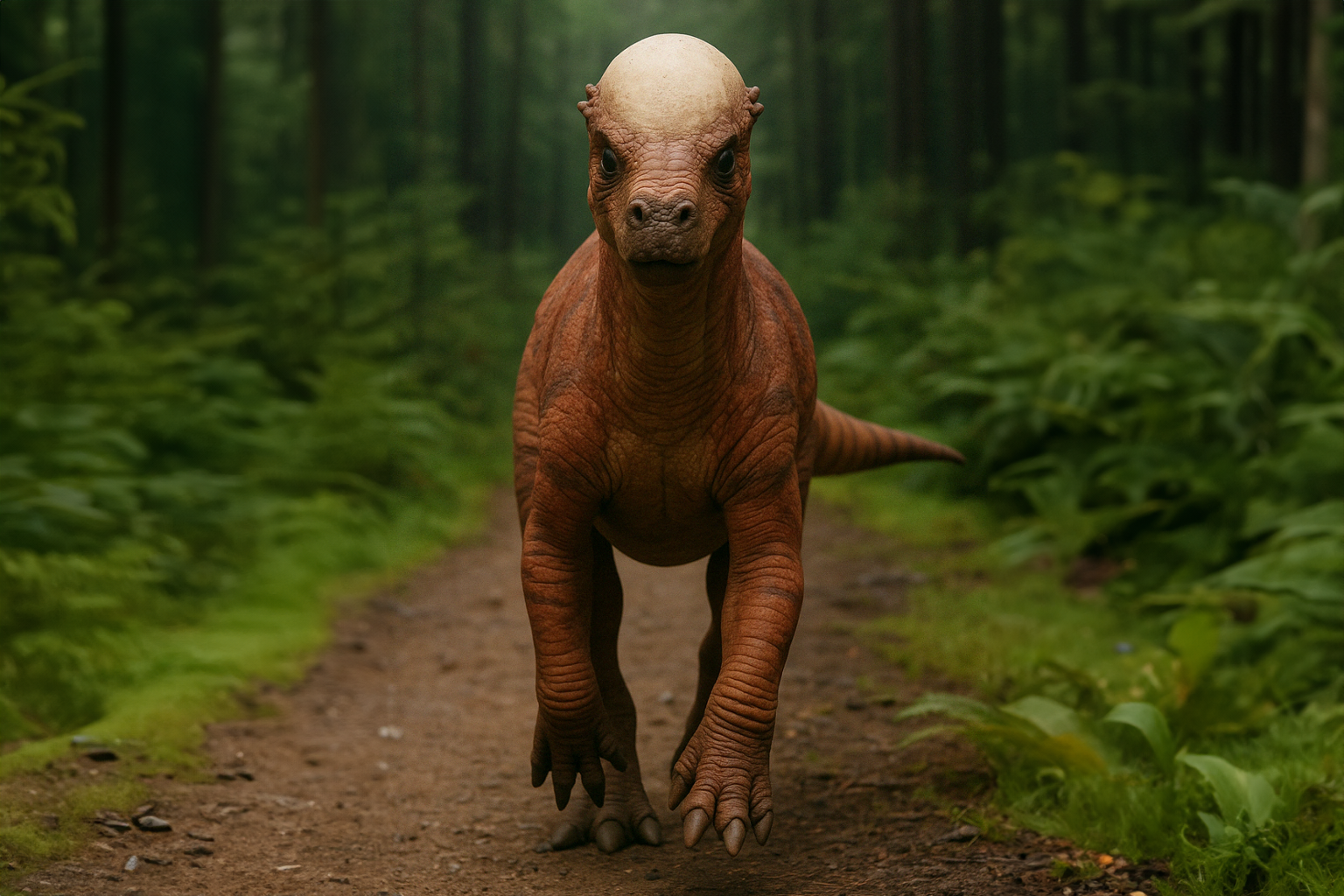
Stegoceras was a relatively small dinosaur. It measured about 6 to 8 feet (1.8 to 2.5 meters) long and weighed around 75 to 100 pounds (35 to 45 kilograms). It had long legs, a stiff tail for balance, and small arms that were not used for locomotion.
The most distinctive feature of Stegoceras was its skull. The top of its head was shaped like a rounded dome made of thick bone, often more than 2 inches (5 cm) thick. This dome was surrounded by small bony knobs and ridges, giving the head a textured, armor-like appearance.
The rest of its body was built for agility. Its long hind limbs suggest it was a quick runner, possibly able to escape predators through speed and maneuverability rather than strength.
Diet and Feeding Behavior
Stegoceras was a herbivore, and possibly an omnivore. Its teeth were small and leaf-shaped—good for eating soft vegetation like ferns, leaves, and fruit. Some paleontologists believe it may have also eaten insects or small vertebrates, though plant material was likely the main part of its diet.
It had a narrow beak at the front of its mouth and cheek teeth further back, indicating it could nip off plants and chew them before swallowing. Its jaws weren’t especially powerful, so it probably fed on easily digestible vegetation found close to the ground.
Discovery and Fossil Record
Stegoceras was first described in 1902 by Canadian paleontologist Lawrence Lambe. Since then, dozens of specimens have been found, including skulls of various sizes and partial skeletons. These fossils have allowed scientists to study its growth stages and how the dome developed over time.
Stegoceras remains are especially common in Alberta’s Dinosaur Park Formation, a site rich in Late Cretaceous fossils. Some skulls show signs of injury or wear, which may provide clues about how these dinosaurs used their thick skulls in daily life.
Scientific Importance
Stegoceras has played a central role in research on pachycephalosaur behavior—especially the long-running debate over whether they used their domed heads for combat. The traditional view is that males may have engaged in head-butting, much like modern-day goats or sheep, either to establish dominance or compete for mates.
Biomechanical studies of Stegoceras skulls support this idea. The dome’s structure suggests it could absorb impact and distribute force, possibly protecting the brain during head-to-head collisions. However, some scientists propose alternative behaviors like flank-butting (using the head to strike the body) or using the dome for visual display.
Its fossils have also contributed to understanding dinosaur growth and development. Juvenile Stegoceras specimens had flatter skulls that became more domed with age, suggesting that the dome may have functioned as a maturity signal or played a role in social structure.
Stegoceras in Popular Culture
While not as well-known as Tyrannosaurus or Triceratops, Stegoceras has made its way into books, documentaries, and museum exhibits. Its unique dome makes it a standout in any dinosaur display, and it’s often used to illustrate lesser-known dinosaur behaviors like head-butting.
The dinosaur has appeared in several educational shows and animated series aimed at kids, often portrayed as scrappy and tough despite its small size.
Final Thoughts
Stegoceras may have been small, but it was far from ordinary. With its thick, dome-shaped skull, swift legs, and intriguing behavior, it adds a unique perspective to the world of Late Cretaceous dinosaurs. Whether it used its head for defense, display, or competition, Stegoceras continues to offer valuable insights into the complexity and adaptability of dinosaur life. Its fossils remind us that even the smallest dinosaurs had stories worth uncovering.