Utahceratops is the #15 seed in the Cerapods division of the Dinosaur Tournament.
Utahceratops was a large, horned dinosaur that lived in what is now the western United States during the Late Cretaceous period. As a member of the ceratopsid family—a group of herbivorous dinosaurs known for their horns and frills—Utahceratops stood out thanks to its broad skull, unique horn configuration, and massive size.
Discovered in the red rock formations of Utah’s Grand Staircase-Escalante region, this dinosaur is helping scientists better understand the diversity and evolution of horned dinosaurs in North America.
When and Where It Lived
Utahceratops lived around 76 million years ago during the Campanian stage of the Late Cretaceous period. Its fossils were found in the Kaiparowits Formation of southern Utah, a region that was once part of a subtropical coastal plain near the western edge of the Western Interior Seaway—a shallow sea that split North America into two landmasses.
The environment where Utahceratops lived was lush and vibrant, with a mix of forests, wetlands, and river systems. It shared this habitat with a wide range of other dinosaurs, including duck-billed hadrosaurs, armored ankylosaurs, and predators like Teratophoneus, a relative of Tyrannosaurus rex.
Size and Physical Characteristics
Utahceratops was a large and robust dinosaur, measuring about 22 feet (6.7 meters) in length and weighing an estimated 3 to 4 tons. Like other ceratopsids, it had a heavy, quadrupedal build with strong limbs, a deep chest, and a short tail.
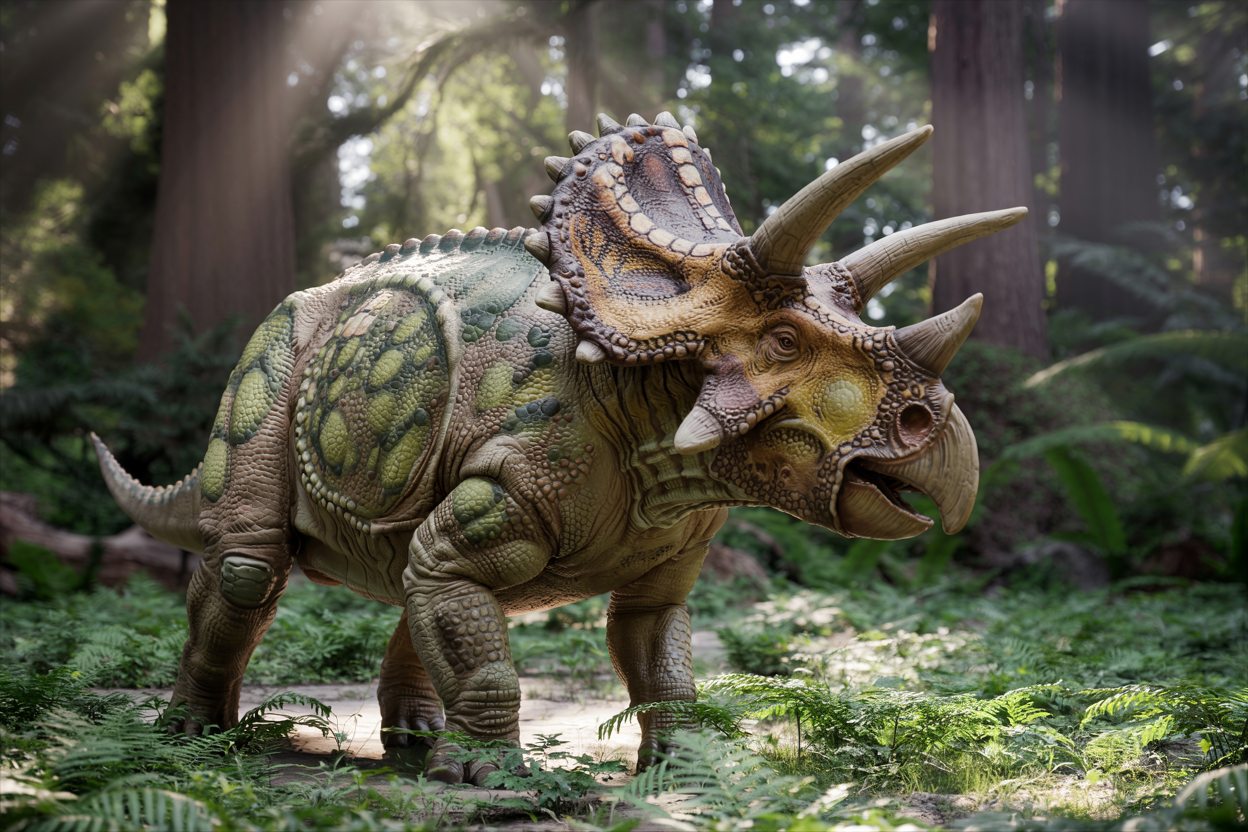
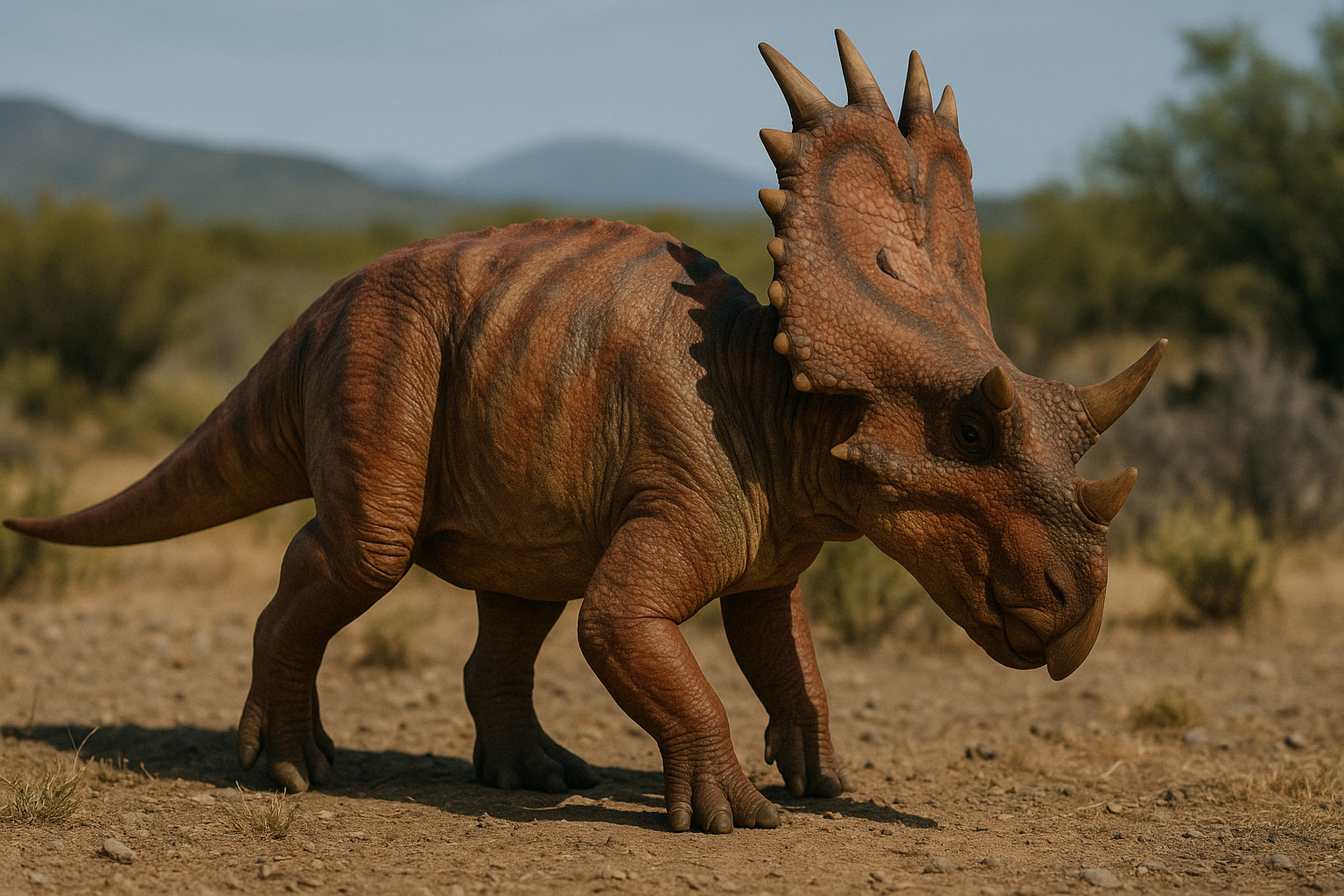
The most striking feature of Utahceratops was its head. Its skull was massive—over 7 feet (2.2 meters) long—with a large frill at the back and three facial horns. It had two prominent horns above its eyes that curved slightly outward, and a shorter horn on its nose. The frill was wide and somewhat squared-off, with a row of small bony projections, or epoccipitals, along the edges.
Unlike some of its more famously horned relatives, such as Triceratops or Styracosaurus, the horns of Utahceratops were not especially long or sharp. This suggests that they may have been used more for display and social signaling than for combat or defense.
Diet and Feeding Behavior
Utahceratops was a herbivore that fed on the diverse plant life of its Late Cretaceous ecosystem. With its sharp beak, it could clip tough vegetation, while its rows of cheek teeth allowed it to grind down fibrous plants like ferns, cycads, and flowering shrubs.
Its large head and strong jaw muscles made it a highly efficient eater, capable of processing large amounts of plant material. Like other ceratopsians, it likely fed low to the ground, moving slowly through forests and floodplains in search of food.
Utahceratops may have traveled in herds, which would have helped protect individuals from predators and allowed for more efficient foraging.
Discovery and Fossil Record
Utahceratops was first described in 2010 based on fossils discovered in Grand Staircase-Escalante National Monument in southern Utah. The species name, Utahceratops gettyi, honors Mike Getty, a paleontologist who played a key role in discovering and excavating the specimen.
Several partial skeletons and skull fragments have been found, giving paleontologists a clear picture of what this dinosaur looked like. Its discovery helped confirm that southern Laramidia (the western landmass of North America) had a distinct community of dinosaurs that differed from those in the north.
The Kaiparowits Formation, where Utahceratops was found, is one of the richest dinosaur fossil sites in North America. The area has produced numerous new species and continues to be a hotspot for paleontological discoveries.
Scientific Importance
Utahceratops has provided valuable insight into the evolution and diversity of ceratopsians. Its unique skull shape and horn arrangement show that horned dinosaurs experimented with a wide variety of headgear designs—likely driven by social interactions like mate attraction and species recognition.
The discovery of Utahceratops and other southern species supports the idea that different regions of Laramidia had distinct dinosaur faunas. This kind of regional variation is known as “dinosaur provincialism,” and it helps scientists understand how geography, climate, and ecosystems shaped the evolution of dinosaurs across the continent.
Utahceratops in Popular Culture
While Utahceratops isn’t as widely known as Triceratops, it has begun to appear in museum exhibits, documentaries, and educational materials focused on the incredible fossil discoveries from southern Utah. Its wide frill and unique horn shape make it a favorite subject for paleoartists and dinosaur enthusiasts.
It has been featured in exhibits at the Natural History Museum of Utah and has helped bring attention to the importance of protecting fossil-rich public lands.
Final Thoughts
Utahceratops may not have had the flashiest horns or the fiercest reputation, but it was a powerful herbivore that played a key role in its ecosystem. With its massive skull, distinct frill, and role in revealing dinosaur diversity in the American Southwest, Utahceratops is an important piece of the Late Cretaceous puzzle. As new discoveries continue to emerge from Utah’s fossil beds, this horned giant is sure to remain a key figure in our understanding of dinosaur evolution and behavior.