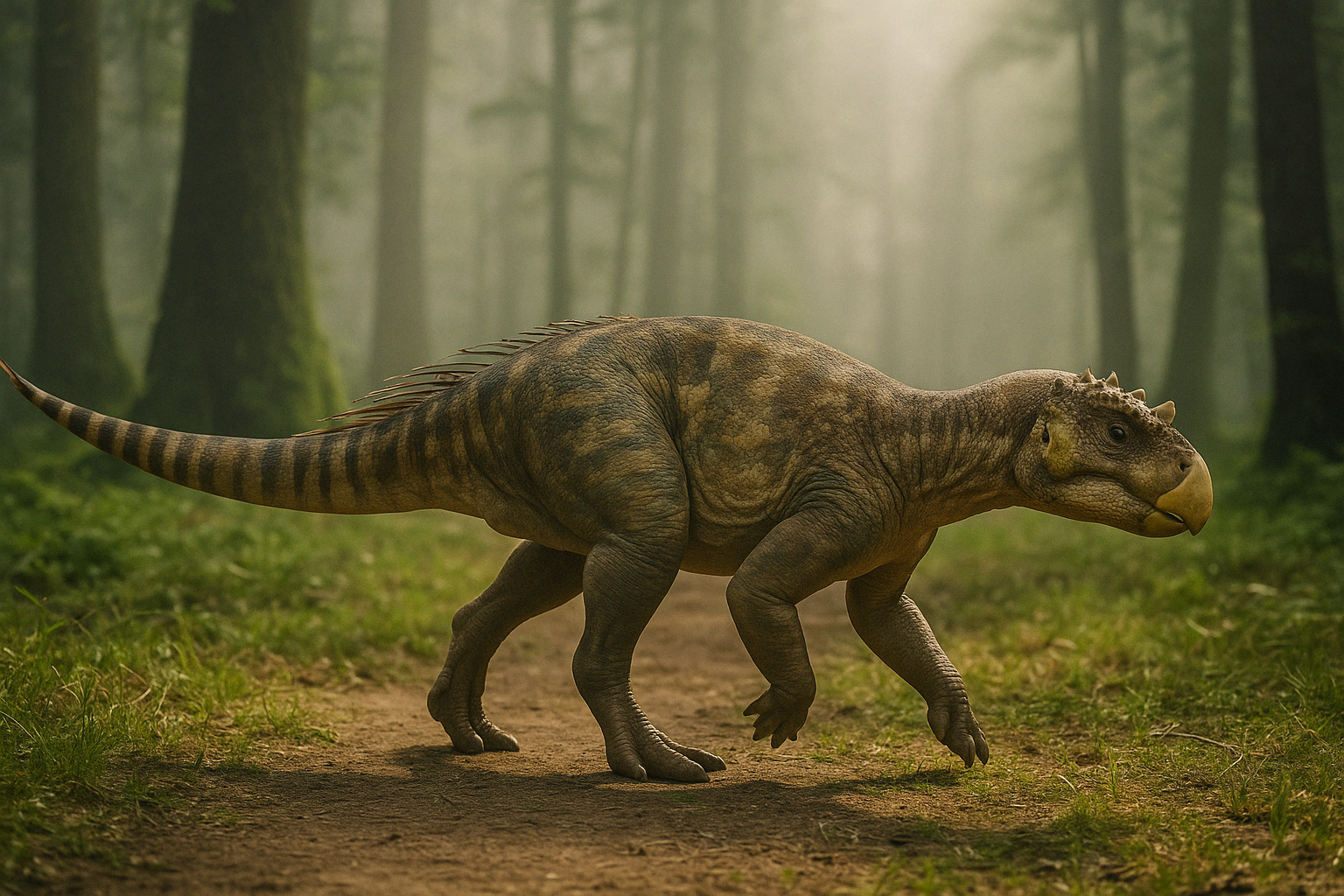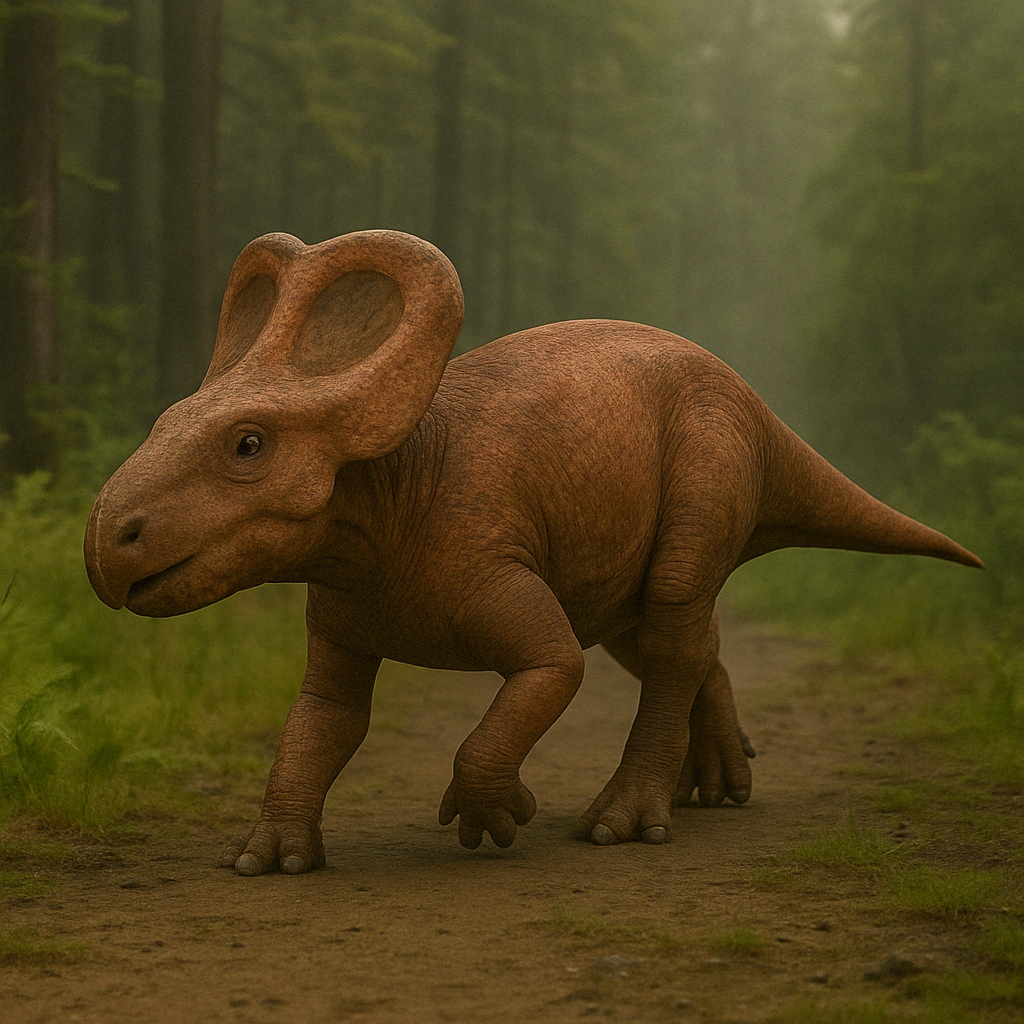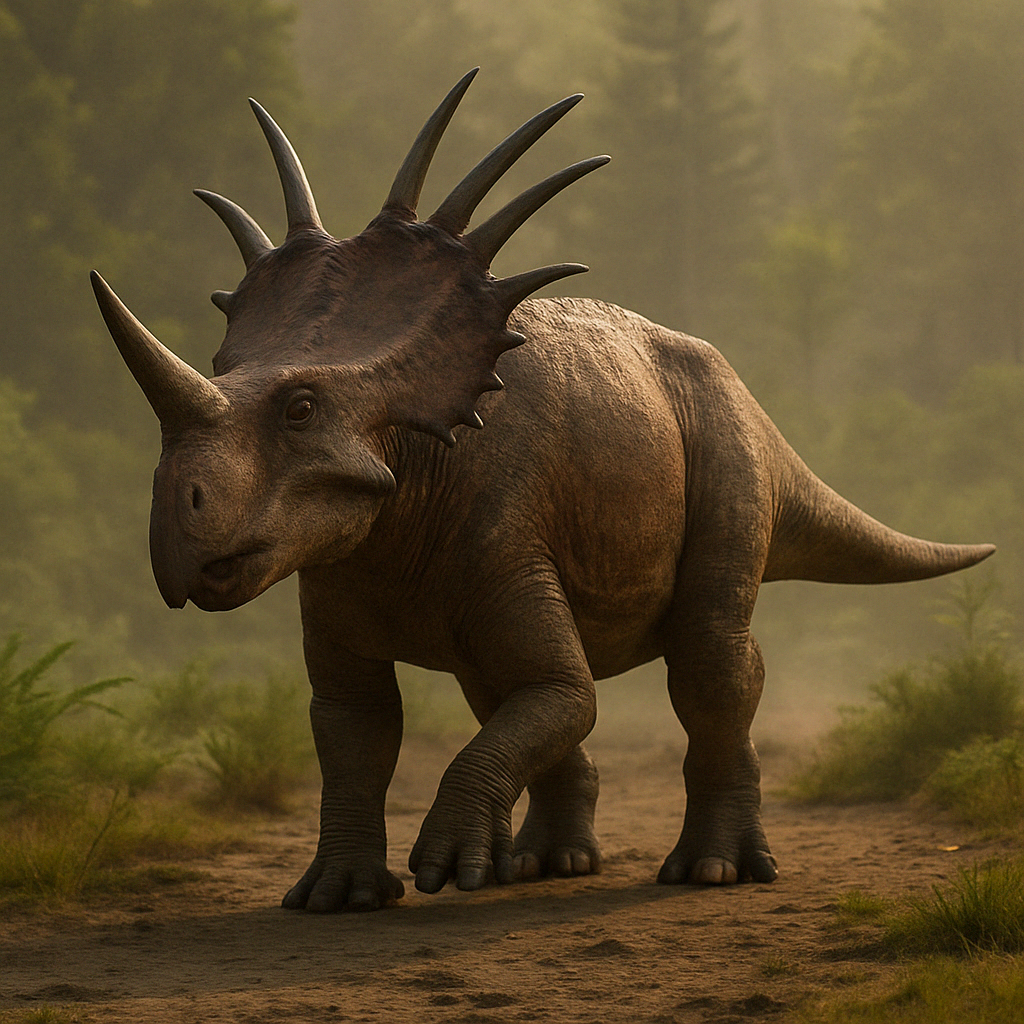
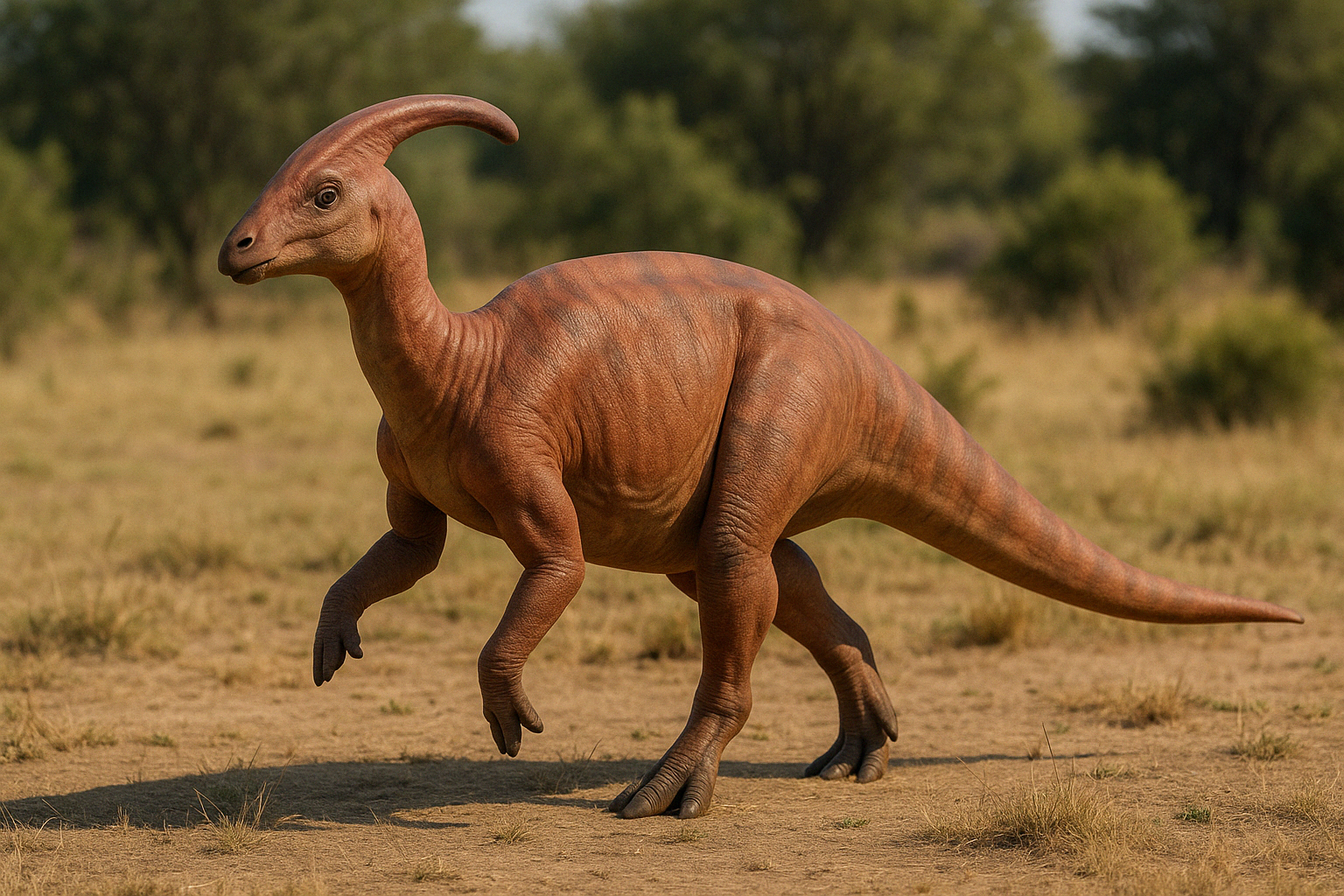
Parasaurolophus is the #2 seed in the Cerapods division of the Dinosaur Tournament.
Parasaurolophus is one of the most recognizable and intriguing dinosaurs from the Late Cretaceous period. Known for its long, curved head crest, this plant-eating dinosaur has fascinated scientists and dinosaur fans alike for decades. With its unique appearance, advanced vocal capabilities, and strong social behavior, Parasaurolophus remains one of the most well-known members of the hadrosaur family—also called duck-billed dinosaurs.
When and Where It Lived
Parasaurolophus lived around 76 to 73 million years ago during the Late Cretaceous period. Fossils have been found in North America, especially in Alberta, Canada, and in the U.S. states of New Mexico and Utah. These areas were once part of a lush coastal region known as Laramidia—a strip of land that formed the western side of the ancient North American continent when a shallow sea split the landmass in two.
During this time, the environment was warm and supported a variety of plant life, including ferns, conifers, and flowering plants. This rich ecosystem was home to many dinosaurs, including predators like Tyrannosaurus and Albertosaurus, and herbivores like Triceratops, Edmontosaurus, and of course, Parasaurolophus.
Size and Physical Characteristics
Parasaurolophus was a large, bipedal or quadrupedal herbivore. It could grow up to 30 feet (9 meters) in length and weigh around 2.5 tons. Like other hadrosaurs, it had a long, powerful tail, strong hind legs, and smaller forelimbs. Its beak-like mouth and rows of grinding teeth were ideal for chewing tough plant material.
What truly sets Parasaurolophus apart is the crest on its head. This long, backward-curving structure was actually an extension of the skull and contained hollow tubes. The crest could reach lengths of over 5 feet (1.5 meters) in some individuals and varied in shape and size depending on the species and possibly age or sex.
Scientists believe the crest served several functions, including communication, species recognition, and possibly thermoregulation. Some research suggests it may have allowed Parasaurolophus to produce low-frequency sounds, making it one of the earliest animals known to have used vocal resonance.
Diet and Feeding Behavior
Parasaurolophus was a herbivore, feeding on a wide range of vegetation. Its beak and specialized cheek teeth, known as dental batteries, made it well-adapted for processing fibrous plants. It likely fed on ferns, conifers, horsetails, and flowering plants.
It could move on all fours while browsing low-lying plants but may have also reared up on its hind legs to reach higher vegetation. Its advanced chewing system, which involved constant tooth replacement and complex jaw movement, allowed it to break down plant material more efficiently than many other herbivores of its time.
Discovery and Fossil Record
The first Parasaurolophus fossil was discovered in 1920 in Alberta, Canada, and was described by William Parks in 1922. Since then, additional fossils have been found in New Mexico and Utah, revealing that the genus included at least three species: Parasaurolophus walkeri, Parasaurolophus cyrtocristatus, and Parasaurolophus tubicen.
The fossils range from partial skeletons to nearly complete skulls, including well-preserved crests. These discoveries have allowed paleontologists to study how the shape of the crest differed among species and possibly between males and females.
One remarkable find—a juvenile specimen discovered in Utah—has helped scientists understand how the crest developed as the animal matured. In younger individuals, the crest was much smaller, suggesting it grew gradually with age.
Scientific Importance
Parasaurolophus is important to paleontology for several reasons. It represents one of the most advanced hadrosaurs and is a key example of how dinosaurs evolved specialized adaptations for communication and social behavior.
Its elaborate crest provides insight into the evolution of dinosaur vocalization and display structures. The internal tubes of the crest have been digitally reconstructed to simulate the sounds it might have produced, giving scientists a rare glimpse into the “voice” of a dinosaur.
Parasaurolophus also helps scientists understand the diversity and distribution of Late Cretaceous herbivores across North America.
Parasaurolophus in Popular Culture
Parasaurolophus has appeared in many documentaries, books, movies, and television shows. Its unique look makes it a favorite in dinosaur-themed media, including appearances in the Jurassic Park and Jurassic World franchises.
It is also a common feature in museum exhibits and educational programs, where its crest helps explain how dinosaurs may have communicated with each other.
Final Thoughts
Parasaurolophus was more than just a strange-looking dinosaur—it was a sophisticated, social animal that used sound, sight, and movement to interact with others in its herd. With its striking crest and advanced adaptations, it stands out as one of the most interesting plant-eaters of the dinosaur world. From its vocal abilities to its family dynamics, Parasaurolophus continues to capture the curiosity of scientists and the public alike.