Psittacosaurus is the #9 seed in the Cerapods division of the Dinosaur Tournament.
Psittacosaurus is one of the most well-known and well-studied dinosaurs from the Early Cretaceous period. Its name means “parrot lizard,” a nod to the parrot-like beak that gave it a very distinct look. Although it wasn’t a large or flashy dinosaur, Psittacosaurus has earned a special place in paleontology thanks to the abundance of fossils, evidence of its growth stages, and even rare skin impressions and soft tissue preservation.
When and Where It Lived
Psittacosaurus lived during the Early Cretaceous period, roughly 125 to 100 million years ago. Its fossils have been found throughout central and eastern Asia, especially in China, Mongolia, Russia, and Thailand. This wide distribution shows that Psittacosaurus was a highly adaptable dinosaur that thrived in a range of environments.
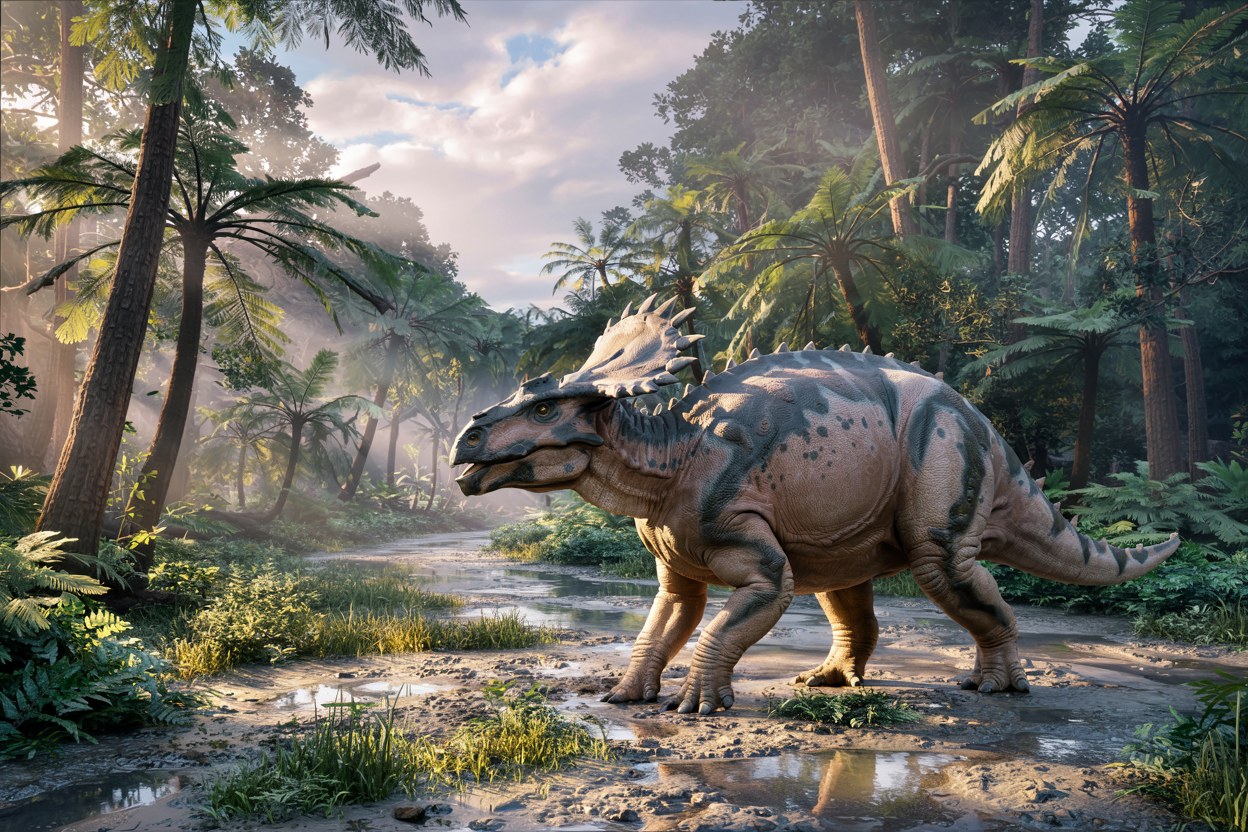
The landscapes where it lived were likely a mix of forests, river valleys, and open plains, with seasonal rainfall and a variety of plant life. Psittacosaurus lived alongside early mammals, reptiles, and other small to medium-sized dinosaurs.
Size and Physical Characteristics
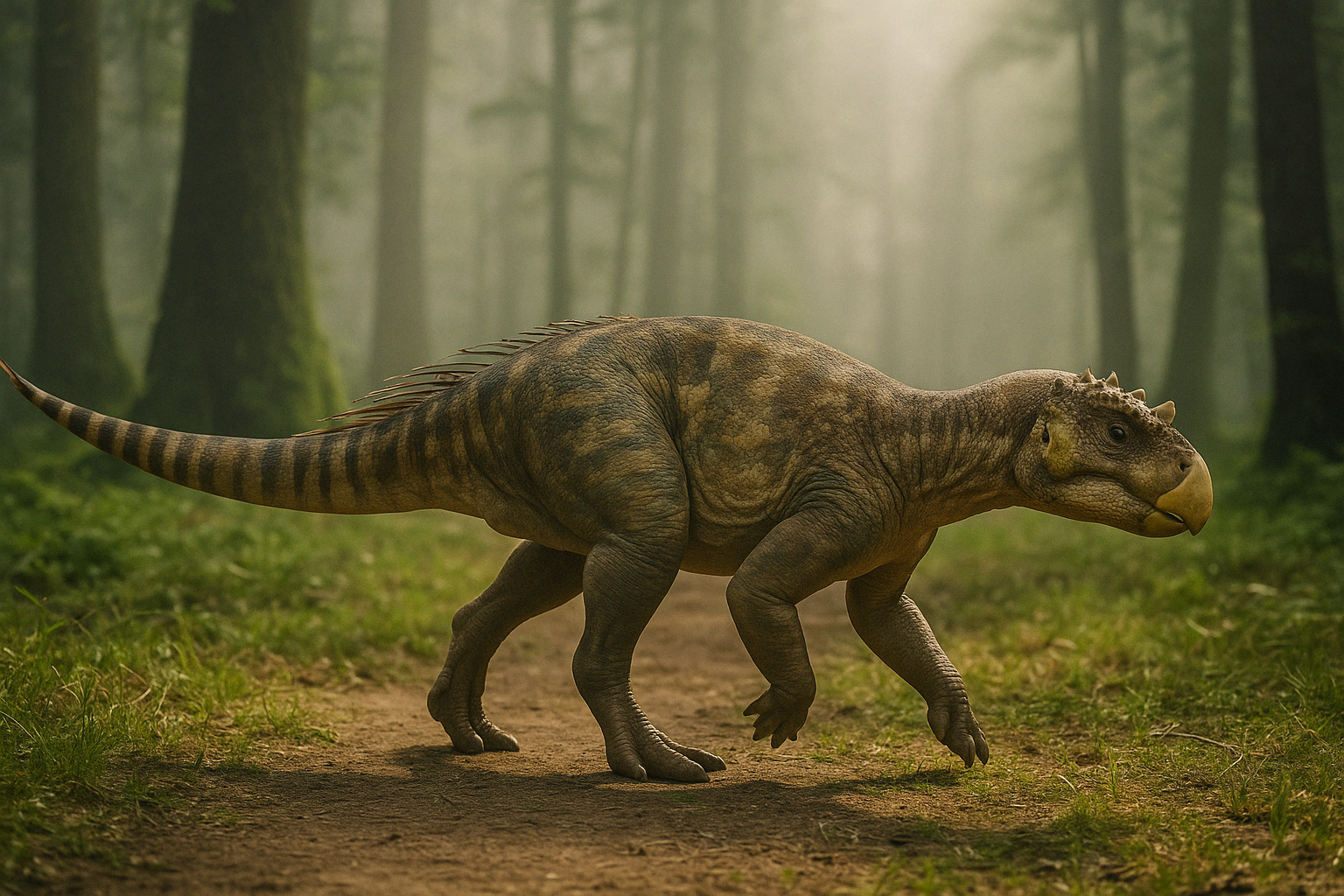
Psittacosaurus was a small, bipedal dinosaur. Most species were around 4 to 6 feet (1.2 to 1.8 meters) in length and weighed between 40 and 90 pounds (18 to 40 kilograms). It had a compact, lightweight body, long hind legs, shorter front limbs, and a stiff tail that helped it balance while moving on two legs.
Its most distinctive feature was its head. The short, deep skull had a strong, curved beak at the front—similar in shape to a modern parrot’s. This beak was ideal for clipping tough vegetation, and behind it were rows of cheek teeth for further processing food.
Some species of Psittacosaurus also had a row of long, bristle-like structures on their tails. These structures weren’t true feathers but may have served a display function, possibly for attracting mates or signaling to others in the group. The presence of these bristles has made Psittacosaurus a key species for understanding the evolution of feather-like structures in dinosaurs.
Diet and Feeding Behavior
Psittacosaurus was a herbivore. Its beak was perfectly adapted for cutting tough plants, and fossilized stomach contents suggest it fed on a diet of ferns, cycads, and possibly seeds or fruits. It likely swallowed small stones (gastroliths) to help grind and digest tough plant fibers in its stomach.
Though it primarily moved on two legs, Psittacosaurus may have dropped to all fours when feeding at ground level or navigating uneven terrain. Its flexible limbs and lightweight frame gave it agility and maneuverability, useful traits in environments with mixed vegetation.
Discovery and Fossil Record
Psittacosaurus was first described in 1923, and since then, dozens of species have been named. While not all of these names have held up to further scrutiny, several valid species are still recognized. The genus is considered one of the most prolific in the fossil record, with over 400 individual specimens discovered—ranging from hatchlings to fully grown adults.
Many of these fossils are exceptionally well-preserved. Some even include skin impressions, bristle-like tail structures, and evidence of pigmentation. In one extraordinary fossil, scientists identified preserved patterns of light and dark shading on the body, suggesting that Psittacosaurus had camouflage suited for life in a forested environment.
The fossil record has also revealed clusters of juvenile Psittacosaurus fossils grouped near an adult, offering possible evidence of parental care—an exciting insight into dinosaur behavior.
Scientific Importance
Psittacosaurus is incredibly important to paleontologists for several reasons. First, its wide geographic distribution and the sheer number of fossils allow scientists to study variation between individuals and species. This helps answer questions about growth, development, and evolution.
Second, because it is considered a basal (or early) member of the ceratopsian group—which later produced horned dinosaurs like Triceratops—Psittacosaurus helps researchers understand how ceratopsians evolved over time.
Third, the preserved bristles and skin details provide rare glimpses into dinosaur appearance and physiology that are often missing from larger or older species.
Psittacosaurus in Popular Culture
While it may not be as famous as Tyrannosaurus rex or Velociraptor, Psittacosaurus has made its way into documentaries, books, museum exhibits, and even video games. Its small size and unique appearance make it a favorite among dinosaur enthusiasts and educators, especially when teaching about early ceratopsians or dinosaur growth.
Because many fossils have been found in lifelike poses with complete skeletons, Psittacosaurus is often featured in realistic museum dioramas and scientific reconstructions.
Final Thoughts
Psittacosaurus may not have had horns or a massive frill, but this little parrot-beaked dinosaur continues to make big contributions to our understanding of prehistoric life. From its exceptional fossils to its role in ceratopsian evolution, Psittacosaurus is a perfect example of how even small dinosaurs can have a major impact in the world of paleontology. Whether you’re interested in dinosaur behavior, anatomy, or evolution, there’s a lot to learn from this ancient forest dweller.