Styracosaurus is the #5 seed in the Cerapods division of the Dinosaur Tournament.
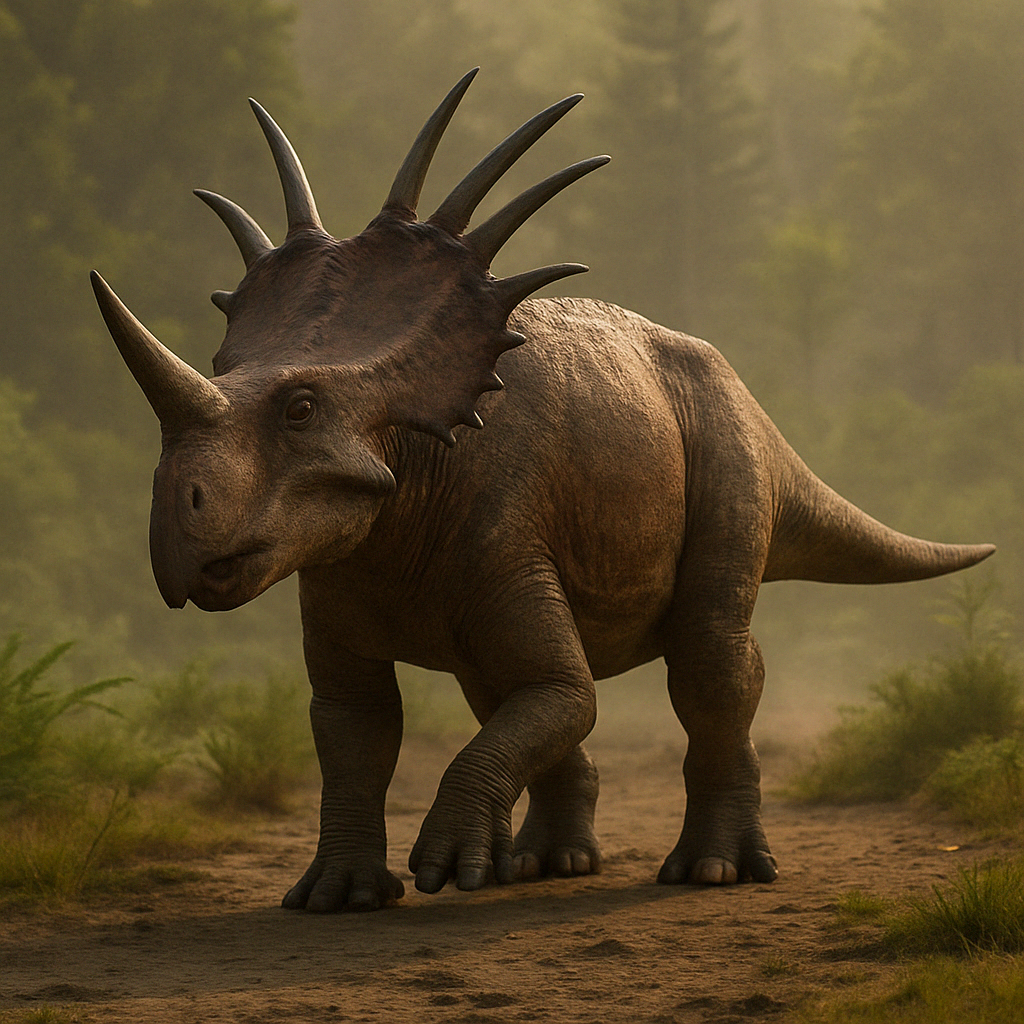
Styracosaurus was a striking member of the ceratopsian family, known for its impressive array of facial horns and long spikes that extended from the back of its frill. While it may not be as famous as its close relative Triceratops, Styracosaurus had one of the most dramatic skulls of any dinosaur. With a large horn on its nose and up to six long spikes fanning out from its neck frill, it was a truly unforgettable sight on the prehistoric plains of Late Cretaceous North America.
When and Where It Lived
Styracosaurus lived around 75 to 74 million years ago during the Campanian stage of the Late Cretaceous period. Its fossils have been found in Alberta, Canada, particularly in the Dinosaur Park Formation—a region well known for its rich and diverse collection of dinosaur fossils.
At the time, this area was part of a coastal plain with a warm, humid climate. It was home to a wide variety of dinosaurs, including hadrosaurs, tyrannosaurs, ankylosaurs, and other ceratopsians. Styracosaurus would have lived in herds, moving through a landscape filled with ferns, cycads, conifers, and flowering plants.
Size and Physical Characteristics
Styracosaurus was a medium-sized ceratopsian. It measured around 18 to 20 feet (5.5 to 6 meters) long and weighed roughly 2.5 to 3 tons. Like other ceratopsians, it had a large, bulky body, a short tail, and strong, stocky legs that supported its heavy frame.
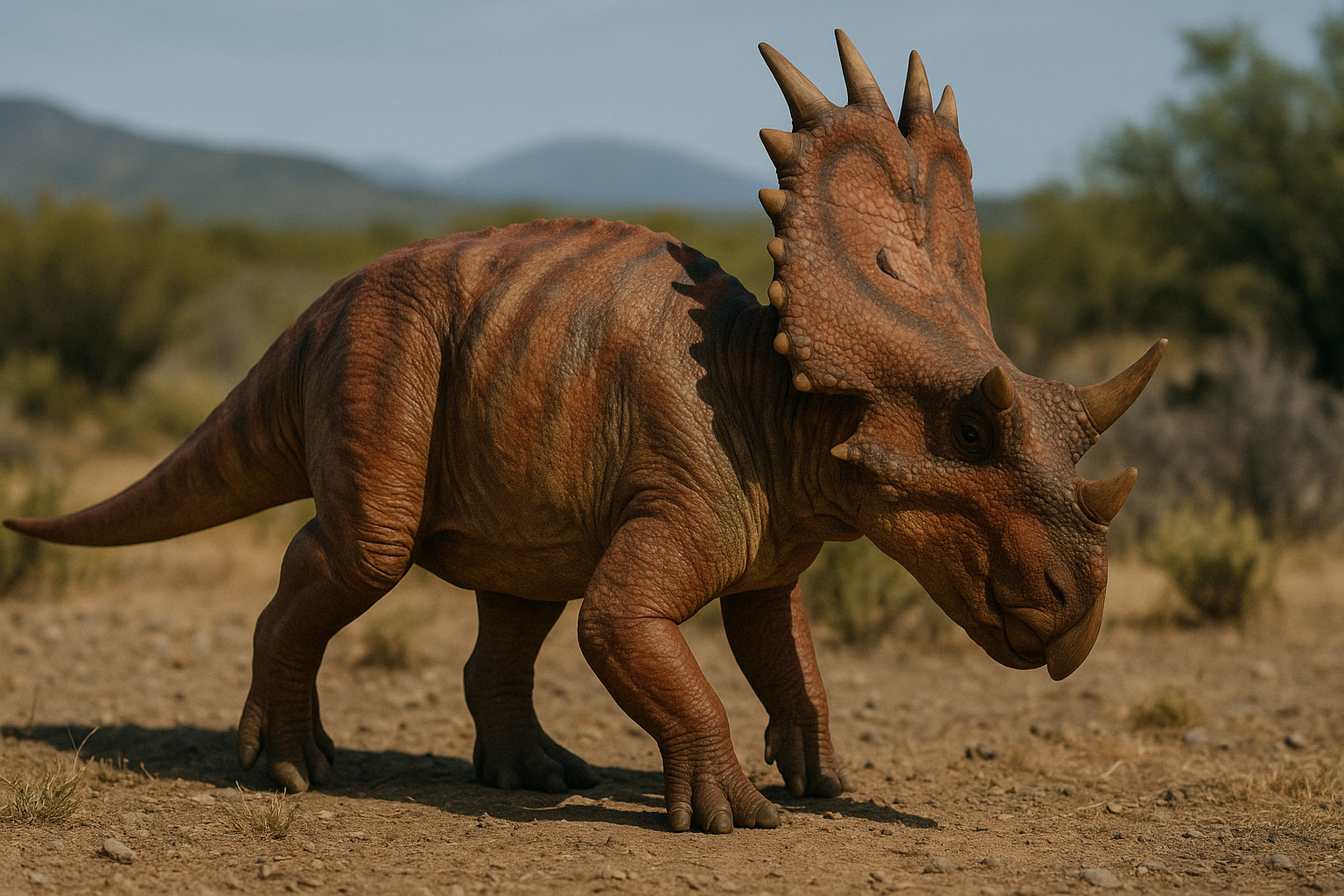
Its most distinctive features were on its head. It had a single, long nose horn that could reach up to 2 feet (60 cm) in length. But the most eye-catching part of its skull was the frill—a bony shield that extended from the back of the head and featured up to six long spikes radiating from the top and sides. Smaller horn-like projections adorned the edges of the frill as well.
Unlike Triceratops, which had prominent brow horns, Styracosaurus had only small or reduced horns above its eyes, if any at all.
Diet and Feeding Behavior
Styracosaurus was a herbivore that fed on low-lying vegetation. Its beak-like mouth and shearing teeth allowed it to clip and chew tough plants such as ferns, cycads, and flowering plants. Its strong jaw muscles helped it process large amounts of plant material, and it likely had a complex digestive system for fermenting fibrous vegetation.
With its low head posture and short neck, Styracosaurus would have primarily browsed at ground level or just above, using its parrot-like beak to crop plants as it moved along.
Discovery and Fossil Record
Styracosaurus was first discovered in 1913 by Canadian paleontologist Lawrence Lambe, who named the species Styracosaurus albertensis. The name means “spiked lizard from Alberta,” a reference to its impressive skull and the region where it was found.
Since the original discovery, several more specimens have been uncovered, some of which include nearly complete skulls and partial skeletons. These finds have helped paleontologists reconstruct the appearance and behavior of Styracosaurus in greater detail.
There has been some debate about how many species of Styracosaurus exist, with some researchers suggesting that differences in skull shape could represent individual variation, age differences, or even separate species. Recent studies using 3D scanning and digital analysis are helping to clarify these questions.
Scientific Importance
Styracosaurus is an important dinosaur for understanding ceratopsian diversity and evolution. Its elaborate frill and horns provide insight into how these features may have evolved for display, species recognition, or defense.
Some scientists believe the frill’s primary purpose was for visual communication—possibly used to attract mates or intimidate rivals. Others suggest that it could have helped regulate body temperature or played a minor defensive role by making the animal appear larger or more threatening.
By comparing Styracosaurus to other horned dinosaurs like Centrosaurus, Pachyrhinosaurus, and Triceratops, researchers can trace how these features changed over time across different ceratopsian lineages.
Styracosaurus in Popular Culture
While not quite as famous as Triceratops, Styracosaurus has appeared in numerous books, documentaries, and movies. It’s a popular dinosaur in museum exhibits and toy lines due to its dramatic appearance and recognizable skull.
One of its most well-known pop culture appearances was in the 1988 animated film The Land Before Time, where a character named Spike is modeled after Styracosaurus. It’s also featured in several dinosaur video games and educational programs.
Final Thoughts
With its dramatic frill and spiked appearance, Styracosaurus stands out as one of the most visually impressive dinosaurs of the Cretaceous. Its fossils have helped paleontologists understand the diversity and complexity of horned dinosaurs, while its distinctive look continues to make it a favorite among dinosaur enthusiasts. Whether it was using its horns for display or defense, Styracosaurus remains a shining example of how evolution shaped some of the most iconic creatures to ever walk the Earth.