Ceratosaurus is the #16 seed in the Theropods division of the Dinosaur Tournament.
Ceratosaurus was a fearsome predator that roamed North America and parts of Europe during the Late Jurassic period. With a distinctive horn on its snout, sharp teeth, and a long tail, it stood out among the other meat-eating dinosaurs of its time. Although not as large as some of its Jurassic contemporaries, Ceratosaurus was a fast, agile hunter with a unique appearance that continues to capture the imagination of paleontologists and dinosaur fans alike.
When and Where It Lived
Ceratosaurus lived around 156 to 145 million years ago during the Late Jurassic period. Fossils have been found in the Morrison Formation of the western United States, particularly in Colorado, Utah, and Wyoming. Additional remains attributed to Ceratosaurus or closely related species have been found in Portugal and possibly Africa, suggesting it had a wider distribution than originally believed.
During the Jurassic, these areas were warm, semi-tropical environments filled with rivers, floodplains, and forests. Ceratosaurus shared its ecosystem with a variety of dinosaurs, including the massive herbivores Apatosaurus and Diplodocus, and other predators like Allosaurus and Torvosaurus.
Size and Physical Characteristics
Ceratosaurus was a medium-sized theropod dinosaur. It measured about 20 to 25 feet (6 to 7.5 meters) in length and weighed roughly 1 to 2 tons. It had a long, flexible tail that made up a large portion of its body length and helped with balance as it moved.
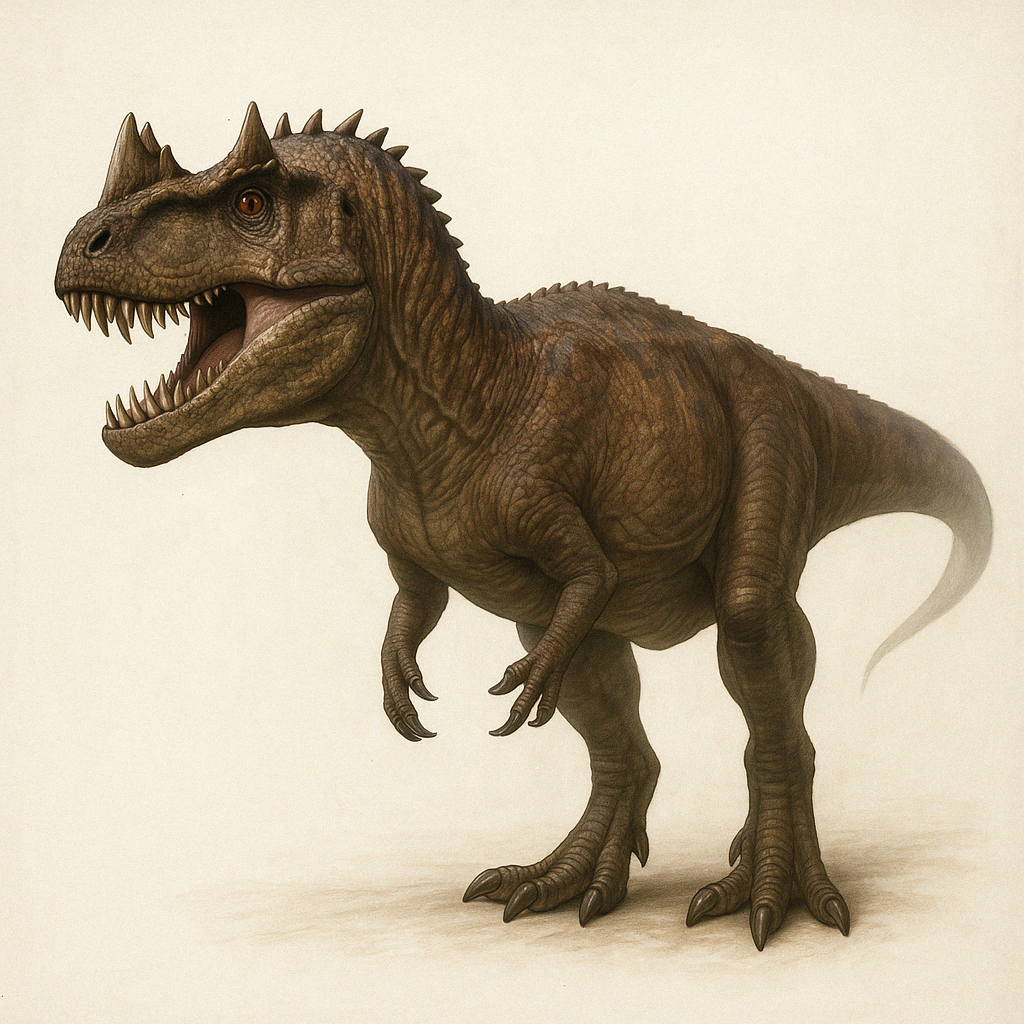
One of the most recognizable features of Ceratosaurus was the horn on the top of its snout. This horn was made of bone and likely covered in keratin in life, similar to the horns seen in modern animals. In addition to the nasal horn, it had two smaller horn-like ridges above its eyes, giving its skull a striking appearance.
Ceratosaurus had sharp, blade-like teeth and strong jaws capable of inflicting serious damage to prey. Its body was relatively slender and built for speed, with long hind limbs and three-toed feet. Its arms were short but muscular, with four fingers tipped with sharp claws. Fossilized skin impressions suggest it may have had rows of small, bony scutes (armor-like scales) along its back—an unusual trait among theropods.
Diet and Hunting Behavior
Ceratosaurus was a carnivore and likely an opportunistic hunter. It probably fed on a wide range of prey, including smaller herbivorous dinosaurs, juveniles of larger species, and possibly even aquatic or semi-aquatic animals. Some paleontologists believe it may have hunted fish or other creatures near rivers and lakes, thanks to its long, low skull and strong jaws.
Its size and agility would have made it effective at ambushing or chasing down prey. Although it shared its habitat with larger predators like Allosaurus, Ceratosaurus may have occupied a slightly different ecological niche—possibly hunting in more forested or wetter environments to avoid direct competition.
Discovery and Fossil History
Ceratosaurus was first discovered in the late 19th century during the famous “Bone Wars,” a period of intense fossil collecting and rivalry between paleontologists Othniel Charles Marsh and Edward Drinker Cope. The first nearly complete skeleton was found in 1884 by Marshall P. Felch in Colorado and later described by Marsh in 1884, who named it Ceratosaurus nasicornis, meaning “horned lizard with a nose horn.”
Since then, additional Ceratosaurus specimens have been found, including individuals of different sizes and possible species variations. These discoveries have helped researchers better understand its anatomy, behavior, and place in the dinosaur family tree.
Scientific Importance
Ceratosaurus belongs to a group of theropods known as Ceratosauria. This group is distinct from other large theropods like Allosaurus and Tyrannosaurus, and its features—such as the nasal horn, armored skin, and primitive skeletal traits—offer insight into early theropod evolution.
It represents a more ancient lineage of meat-eating dinosaurs that thrived alongside more advanced theropods during the Late Jurassic. By studying Ceratosaurus, paleontologists can learn more about the diversity and adaptability of early carnivorous dinosaurs.
Ceratosaurus in Pop Culture
Ceratosaurus has made occasional appearances in dinosaur documentaries, museum exhibits, and films. It was featured briefly in Jurassic Park III and has been included in several dinosaur-themed books and educational programs. While it hasn’t reached the iconic status of T. rex or Velociraptor, its unique look and historical importance make it a favorite among dinosaur enthusiasts.
Its distinctive horned face and combination of primitive and advanced features continue to make it one of the more unusual and intriguing theropods from the Jurassic period.
Final Thoughts
Ceratosaurus may not have been the largest predator of its time, but it was certainly one of the most distinctive. With its sharp teeth, impressive speed, and unmistakable horned skull, it was well-adapted to thrive in the rich ecosystems of the Late Jurassic. Its discovery more than a century ago marked an important milestone in the study of dinosaurs, and it continues to provide valuable clues about the evolution of meat-eating dinosaurs.
As more fossils are unearthed and studied, Ceratosaurus remains a key player in our ever-expanding understanding of prehistoric life.